Why go
Of all the trips out of Bruges, the ride to Damme is the easiest, the gentlest and, on a fine day, the most memorable. A flat, paved path runs beside a straight canal under rows of tall poplars, through open countryside, to a small town that was once the port of Bruges. You can be there in under half an hour, see the town in a couple of hours, and be back in Bruges for the evening.
It is also the best way to understand the history of Bruges. The wealth of the medieval city came by water from the sea, through the Zwin inlet and Damme. Riding out along the canal, you follow the route that made Bruges rich.
Some links on this page are affiliate links. If you book through one we may earn a commission, at no extra cost to you. It does not affect what is recommended here, and no sight page on this site carries one.
Somewhere to leave bags on a travel day, and mobile data for trains and route maps.
Damme and the Zwin
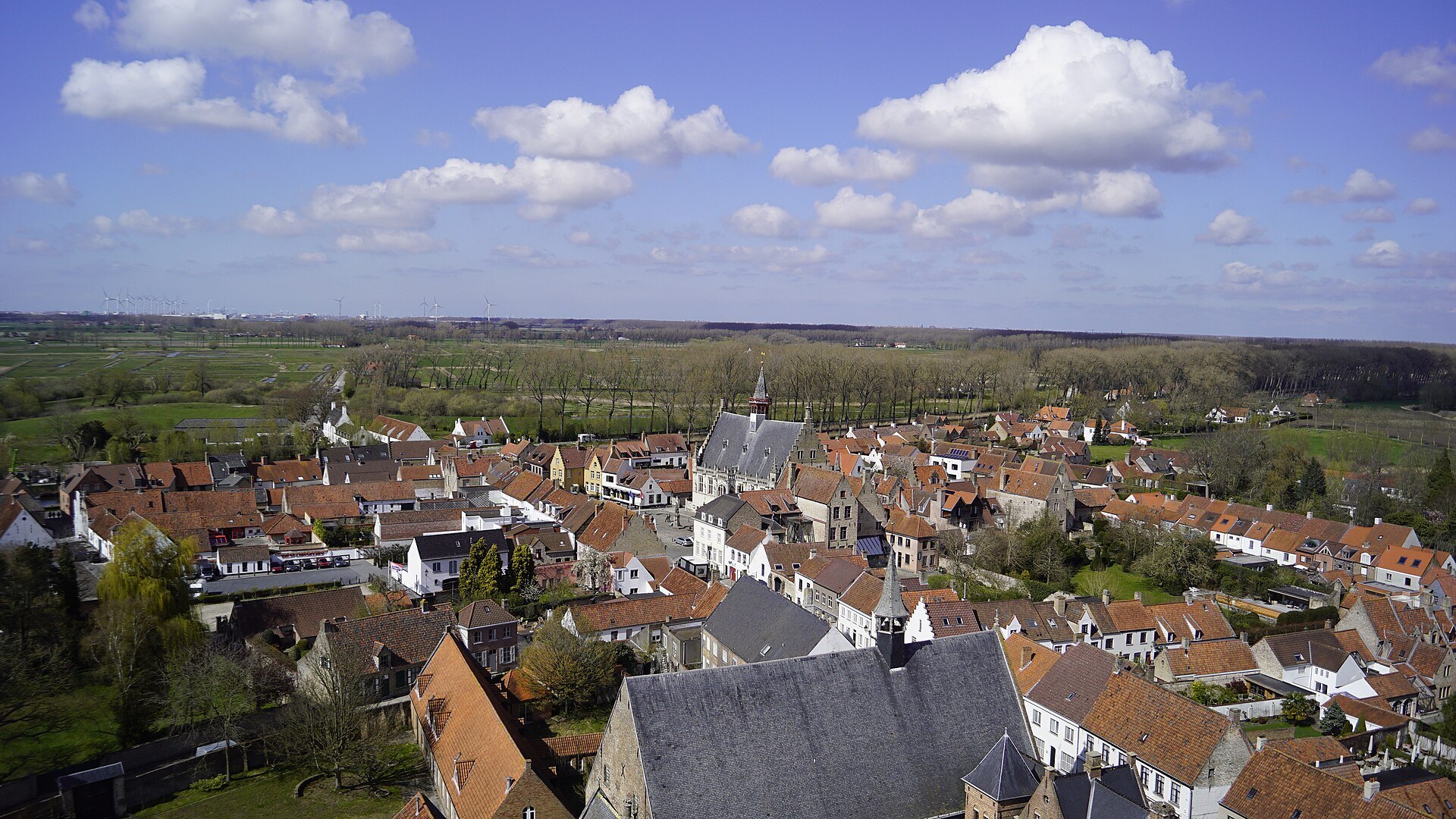
Damme served as the transshipment port for Bruges until the Zwin, the tidal inlet that connected the region to the sea, silted up. A storm in 1134 had opened that channel, and for three centuries ships and goods came in through it; after 1500 the silting ended the golden age of both towns.
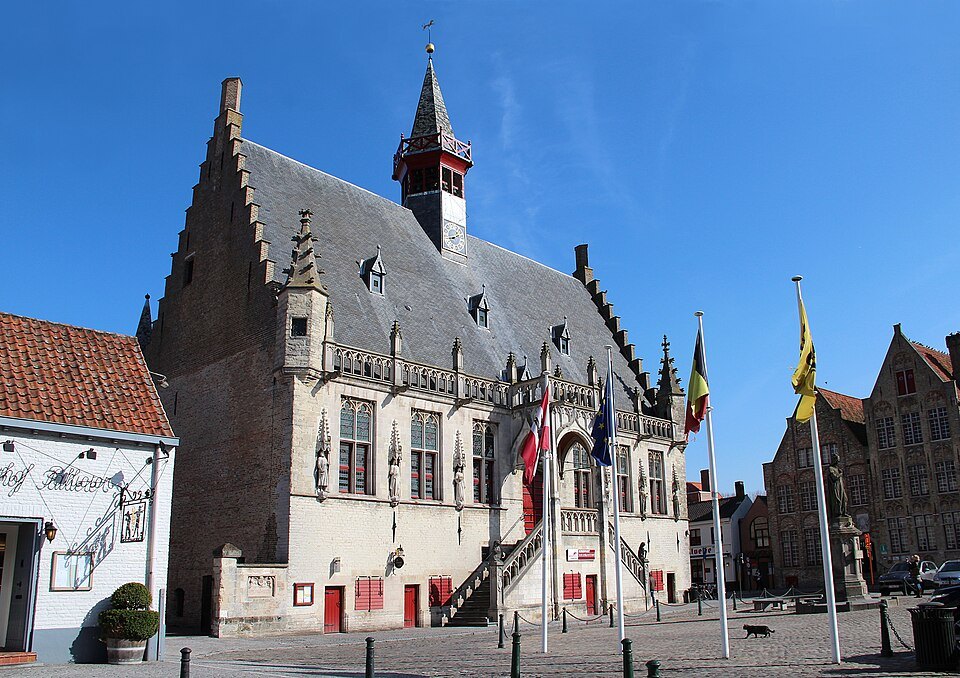
Damme stayed small and quiet as a result. Today it is a town of old brick houses around a fifteenth-century town hall, known in Flanders as the literary home of Tijl Uilenspiegel, the prankster hero of Flemish legend.
The ride along the Damse Vaart
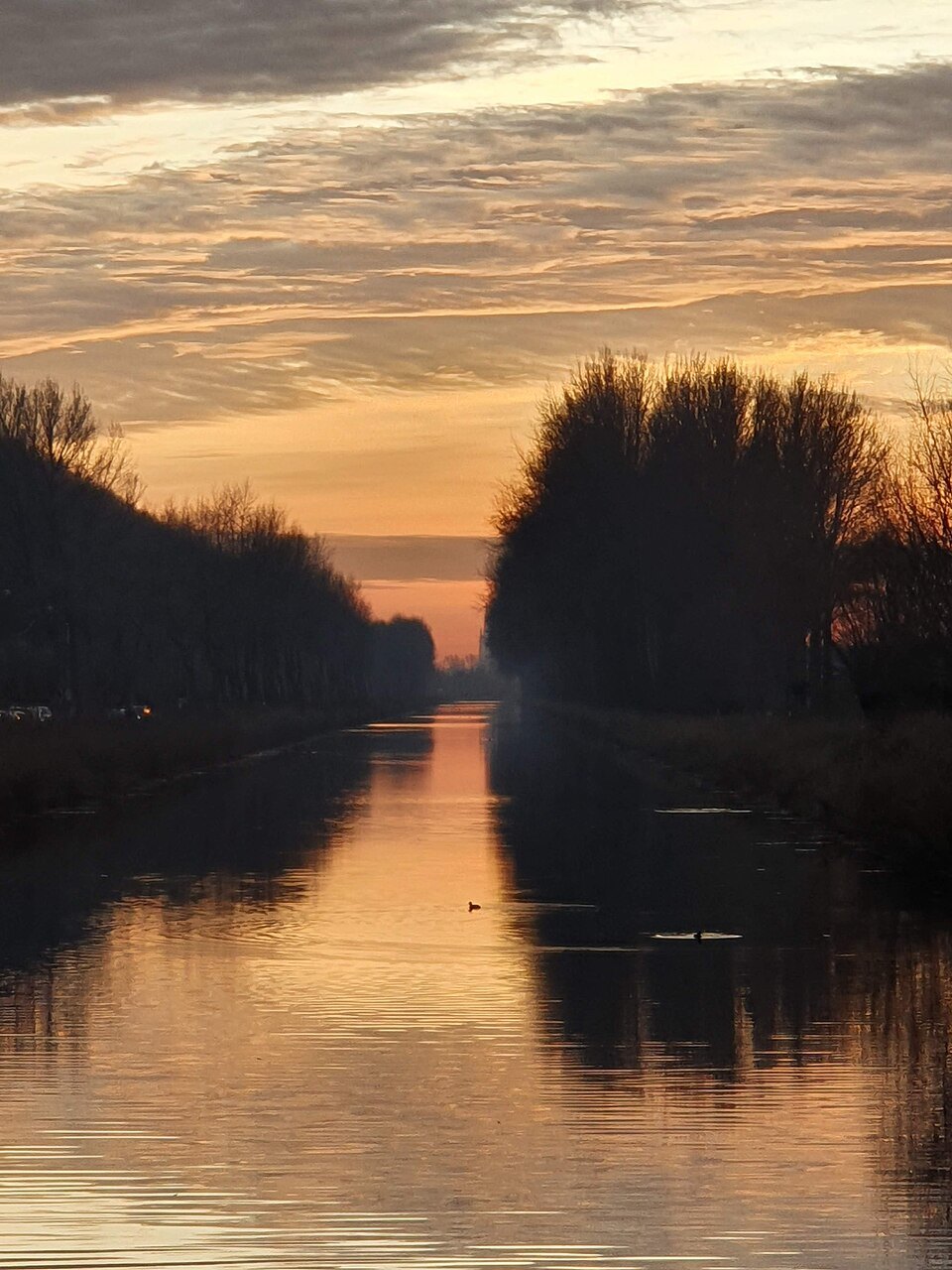
The route follows the Damse Vaart, the canal that runs north-east from Bruges towards Damme. The towpath is flat and paved the whole way, covering roughly seven kilometers, and there is no navigation needed beyond staying beside the water. Visit Bruges describes the canal as one of the most beautiful pieces of nature in Belgium, lined with poplars more than a century old, their trunks twisted by the wind.
Allow under half an hour each way at an easy pace, more if you stop for photographs. The path is popular with local cyclists and walkers, so keep right and ring your bell when passing. On a windy day, remember that the return may be into the wind across open land.
The straightness of the canal is part of its character. For long stretches the water, the path and the double line of trees run towards a vanishing point, with fields opening on either side, and the landscape feels very different from the enclosed streets of Bruges only minutes behind you.
Renting a bike
Bikes can be rented at shops around Bruges, and shared bike systems such as Blue-bike and Hoppy operate in the city. Choose a bike with gears if you are not used to riding, and check the lights and brakes before you set off.
Inside Bruges, the whole historic center is a bicycle zone, where cars may not overtake cyclists and bikes can ride both ways on some one-way streets. Follow the signs out of the old town towards the canal, and you are quickly on the quiet towpath. Getting around has more on cycling in the city.
What to see in Damme
Start at the fifteenth-century town hall, the town's finest building, in the center. Then walk to the Church of Our Lady and climb its tower: the steep stairs lead to a wide view over the town and the flat Zwin region that once carried ships to Bruges.
Tijl Uilenspiegel has his own museum in the town, devoted to the legend and the many ways the character has been told and illustrated. Beyond the sights, Damme is a place for a slow walk, a pause by the water and a look at the countryside that surrounds it. Visit Damme, the town's tourist office, publishes current information.
Coming back by boat
For a change of pace, one way can be made by water. From April until mid-November, the Lamme Goedzak paddle steamer sails between Bruges and Damme, and the trip takes about thirty-five minutes. You can take your bike on board, so a popular plan is to ride out along the canal and sail back, or the reverse.
The boat runs a limited number of sailings each day, so check its timetable before you set out and plan the ride around it. Outside the sailing season, the bike or the bus is the way to go.
Walking, families and other seasons
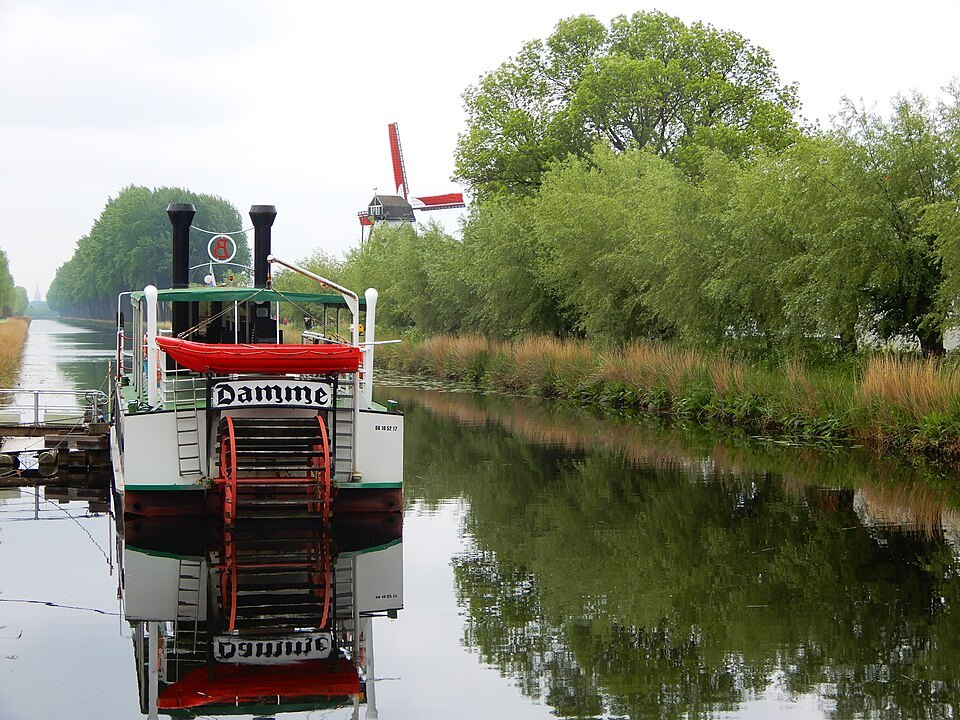
If you would rather not cycle, the towpath is just as pleasant on foot. At roughly seven kilometers each way, the walk is a long but level outing; many walkers go one way on foot and take the paddle steamer for the other during the sailing season, or use the bus to Damme Centrum.
The ride suits families well. The path is flat, separated from traffic and easy to follow, and Damme is small enough for children to explore without getting tired. Build in stops along the canal, and bring snacks, since there is little along the way.
The trip works in every season, but each is different. Spring brings fresh green to the poplars; summer is warm and busy; autumn turns the trees gold and thins the crowds; and in winter the bare branches and flat, misty fields have a stark beauty, though the boat does not sail and daylight is short.
Making a day of it
The ride and the town fit easily into a morning or an afternoon. Pack water and a waterproof, since the canal has little shelter, and set out early on summer weekends, when the path is busiest.
Back in Bruges, the ramparts make a natural continuation for anyone still on a bike: follow the green ring past the city gates and the windmills. For other trips, including Ghent and the coast, see day trips, and for fitting a half day into a longer stay, the itineraries.
Read next
- Getting HereDriving to Bruges means parking at the edge and walking inWhy Bruges discourages cars in its old town, which car parks and park-and-ride sites to use, the free bus from the station car park, and rules for driving inside.Read
- ItinerariesSeeing Bruges in a single day without spending it in queuesA walking plan for one day in Bruges that puts the famous squares early and late, the museums in the middle, and keeps lines and crowds to a minimum.Read
- Getting HereGetting from Brussels Airport to Bruges by train, and what to do with your bagsHow the train from Brussels Airport to Bruges works, how long it takes, the one change you may need, and how to handle luggage on arrival.Read