What Bruges is
Bruges — Brugge in Dutch — is a city of about 119,000 people in West Flanders, in the Dutch-speaking north of Belgium. Its old center sits inside an oval ring of canals and ramparts, and nearly everything a visitor comes for lies within it; the choice between the quiet streets and the ones near the squares is most of where to stay. Trains stop at the station just outside the ring, about a quarter of an hour's walk from the Markt (getting here), and inside it you get around on foot.
What you walk past
The city received its charter in 1128. A storm in 1134 opened a channel to the sea at the Zwin, and for three centuries Bruges was one of the great ports of the north: Genoese and Hanseatic merchants traded here, and a bourse opened in 1309. The dukes of Burgundy held court in the city in the 15th century, when Jan van Eyck and Hans Memling painted in it — the story of the Flemish masters. After 1500 the Zwin silted up and the golden age ended; Bruges grew poor and built little new, and much of the medieval city survived. In both world wars it came through almost undamaged.
Read the city
- Jan van Eyckplein
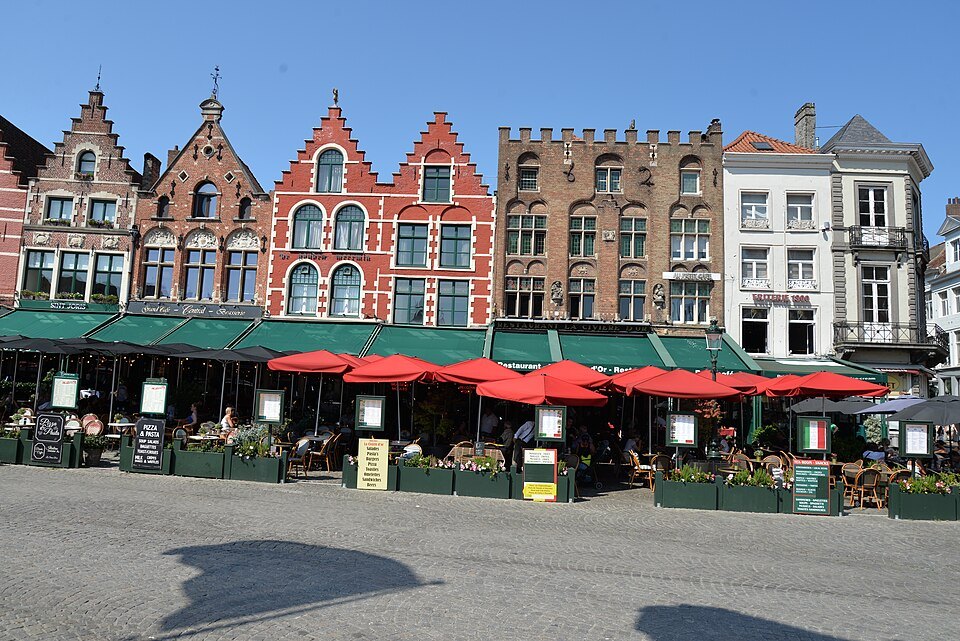
- The Markt
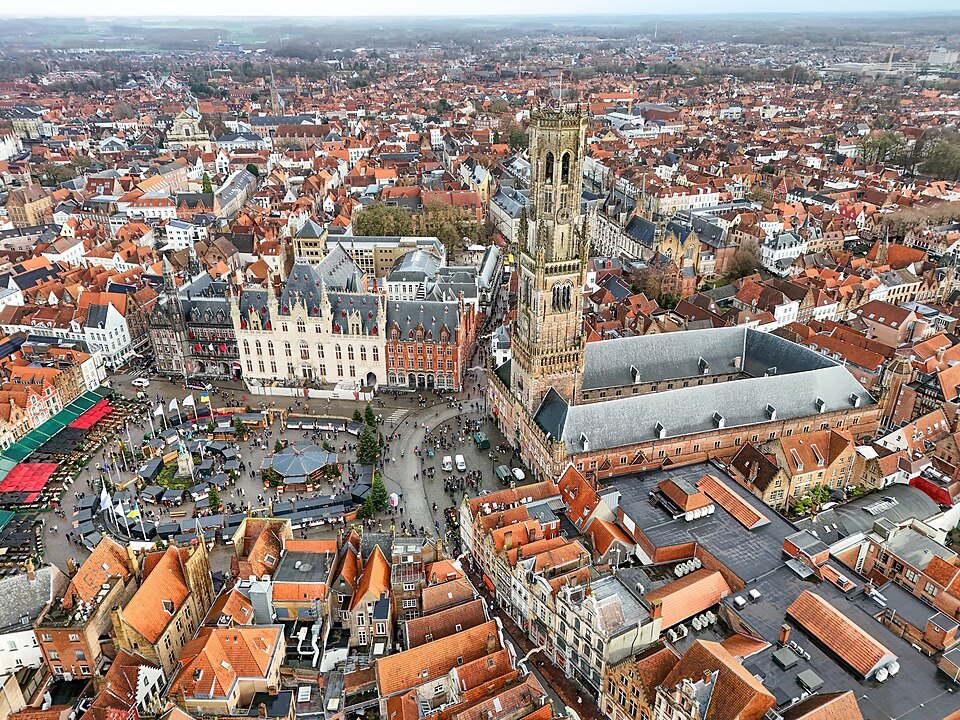
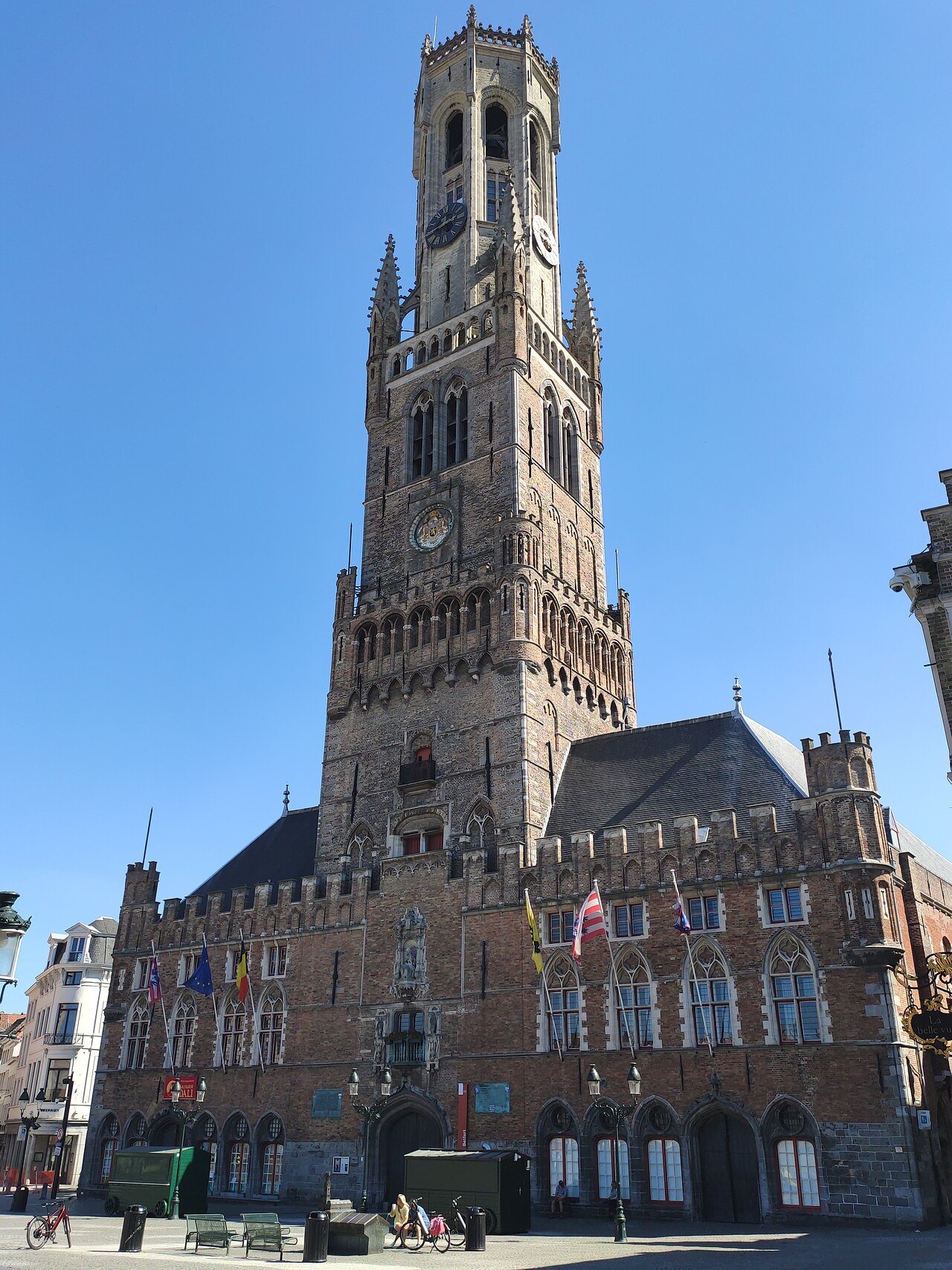
- The Belfry
- The Burg
- Basilica of the Holy Blood
- Groenerei
- Rozenhoedkaai
- The Dijver
- The Canal Boats
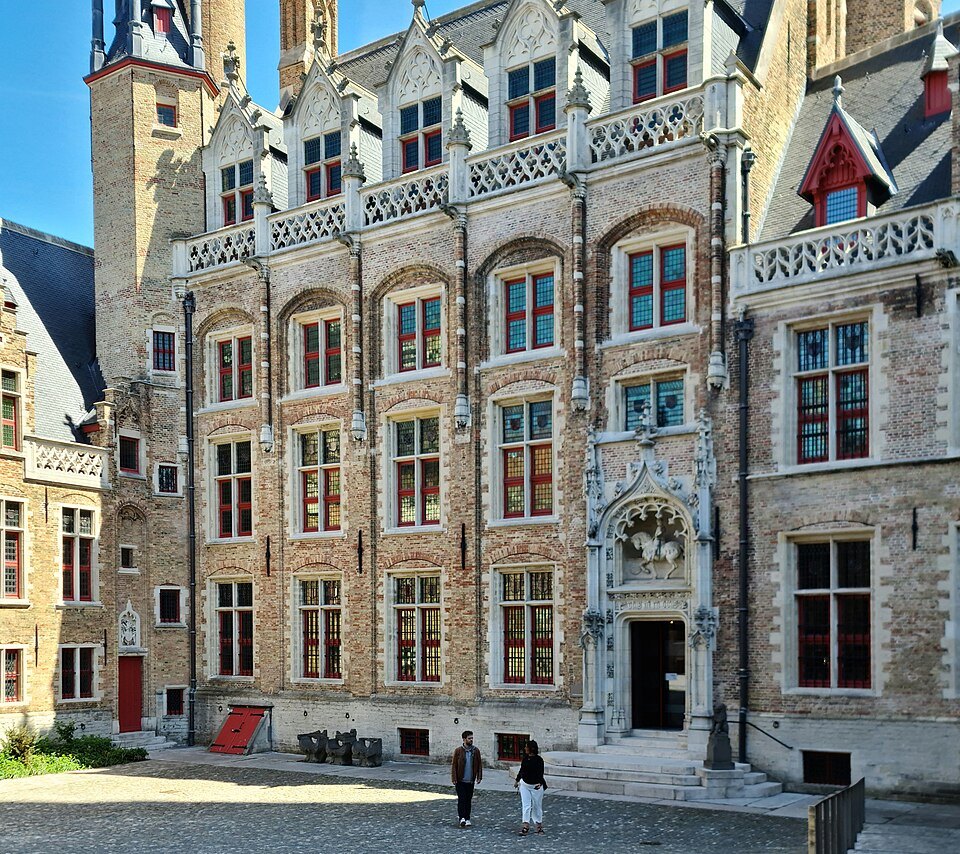
- Gruuthuse Museum
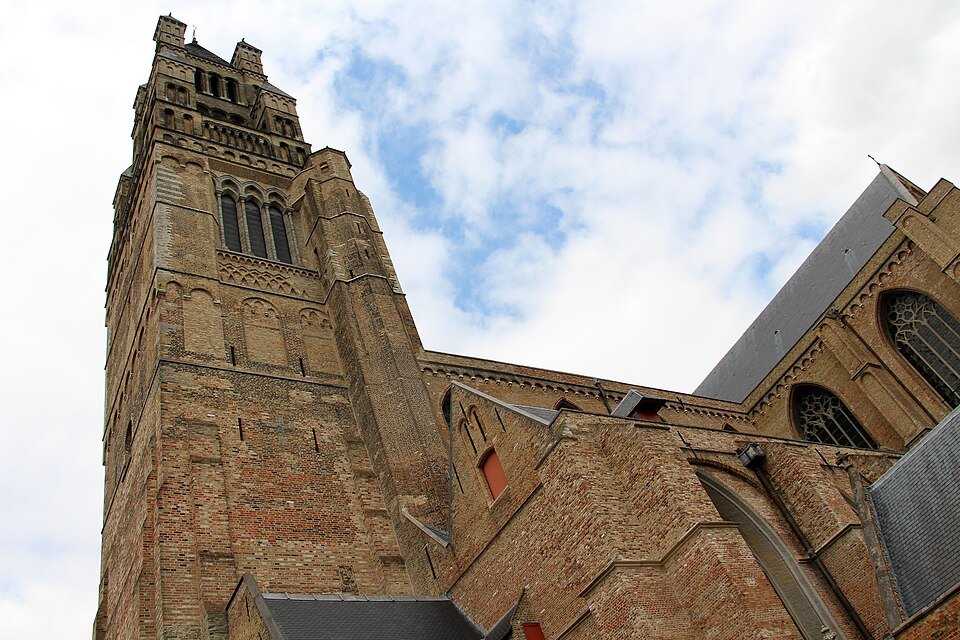
- St. Salvator's Cathedral
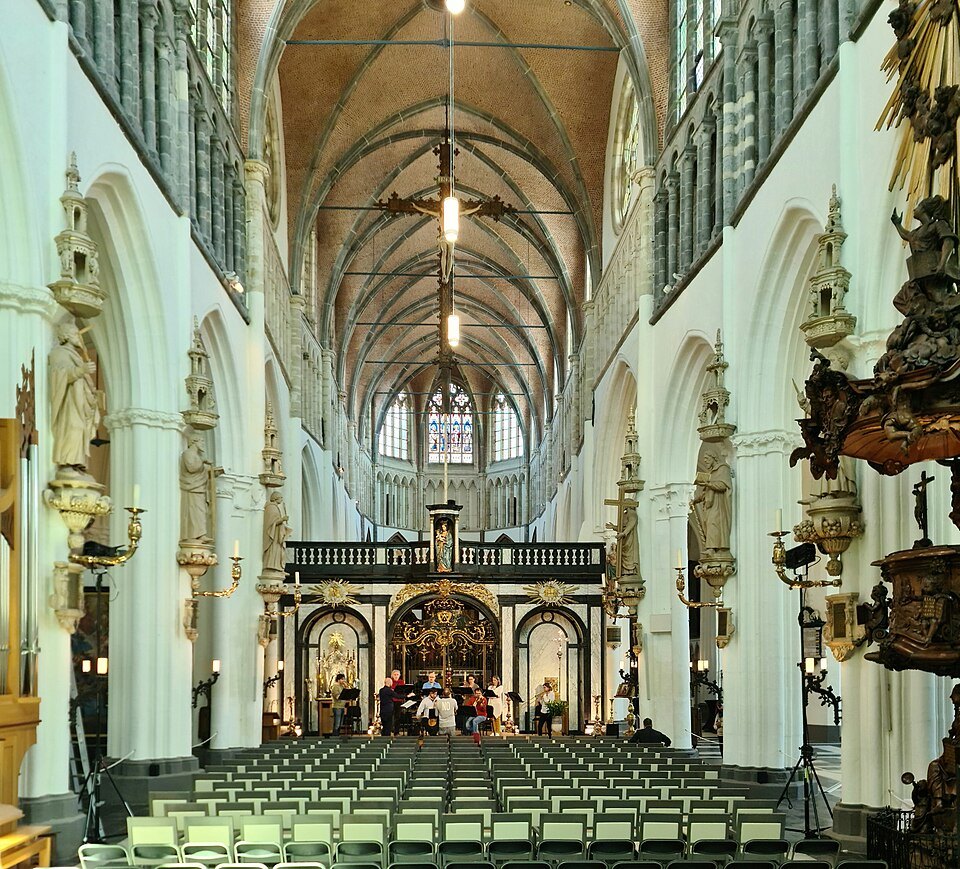
- Church of Our Lady
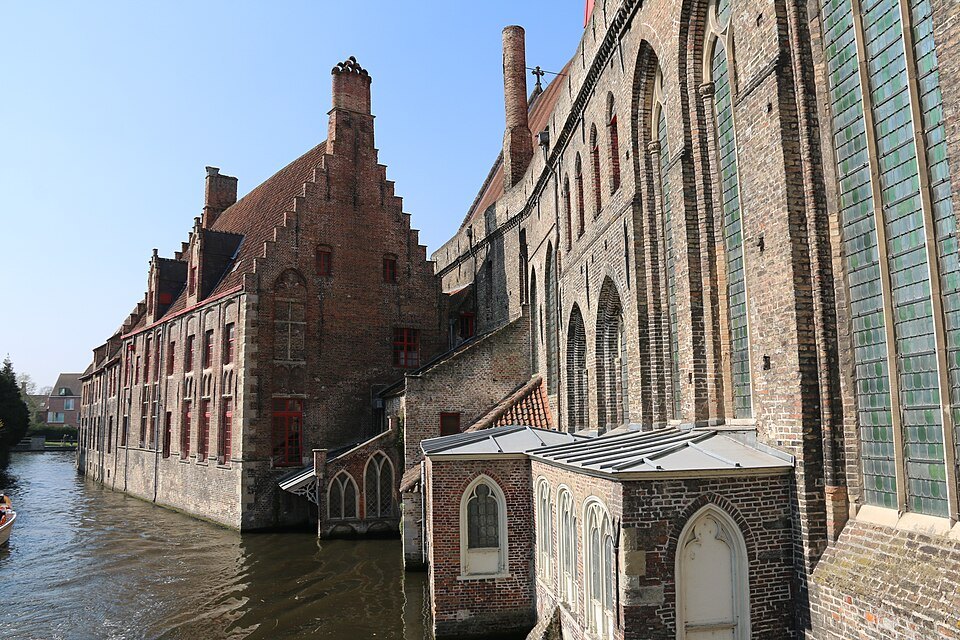
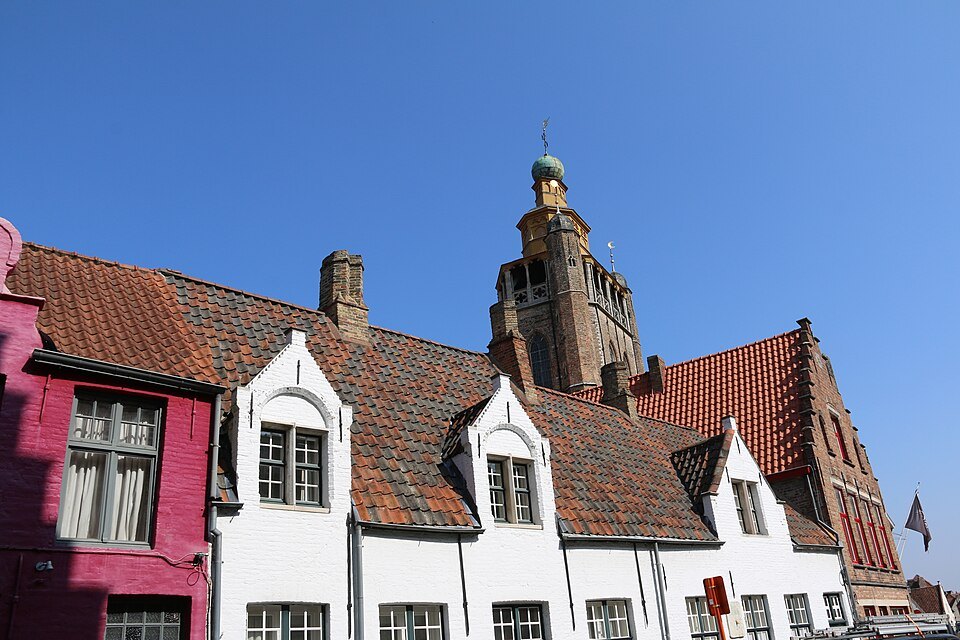
- St. John's Hospital
- The Beguinage
- Minnewater
- Jerusalem Church
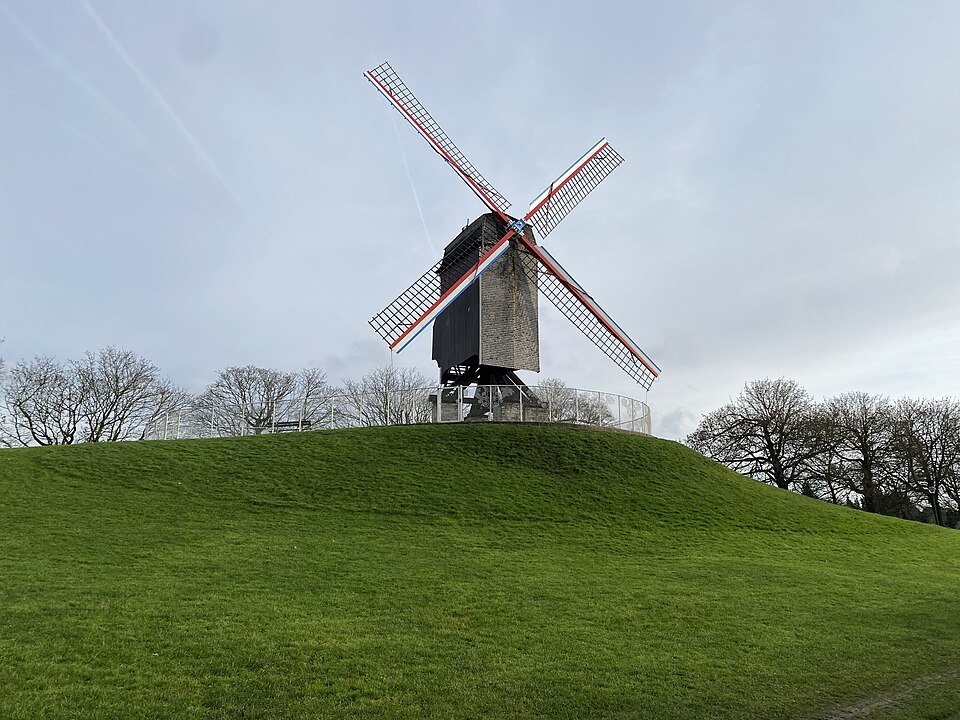
- The Kruisvest Windmills
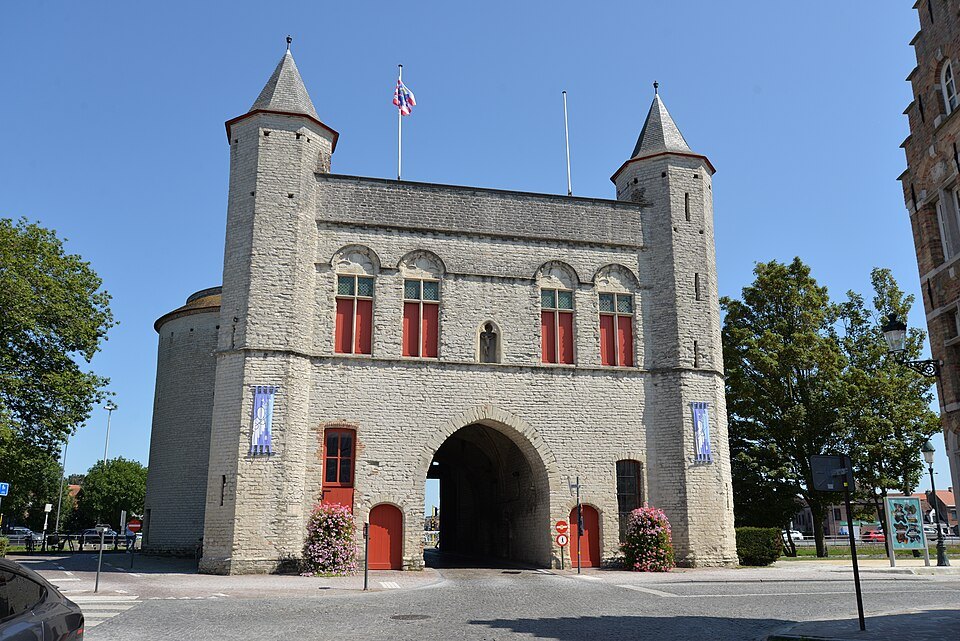
- The City Gates
Schematic, not to scale; the numbers are the sights below.
What it is known for
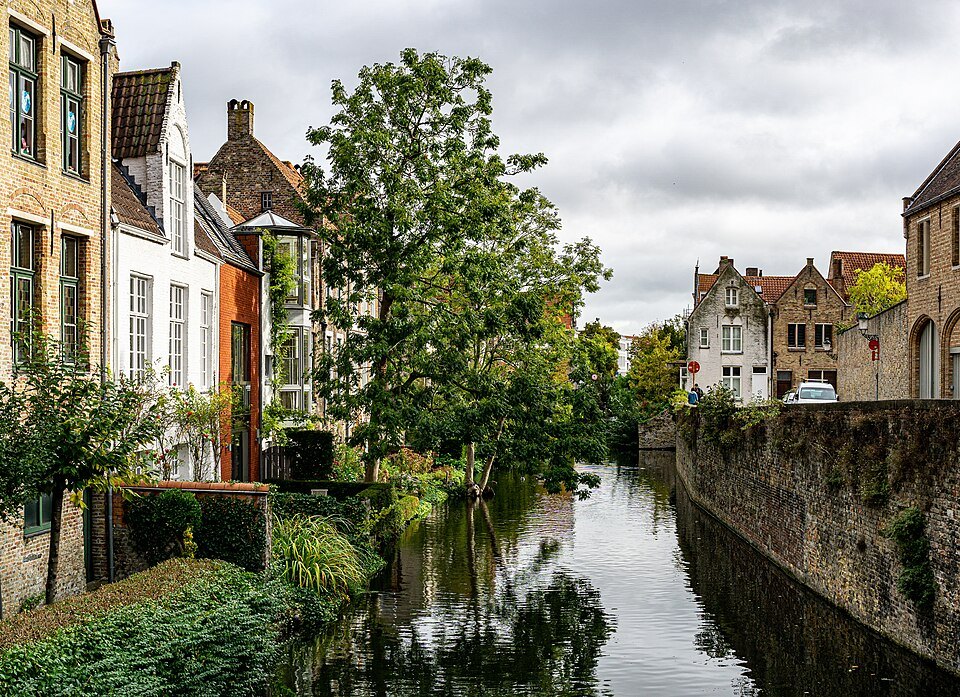
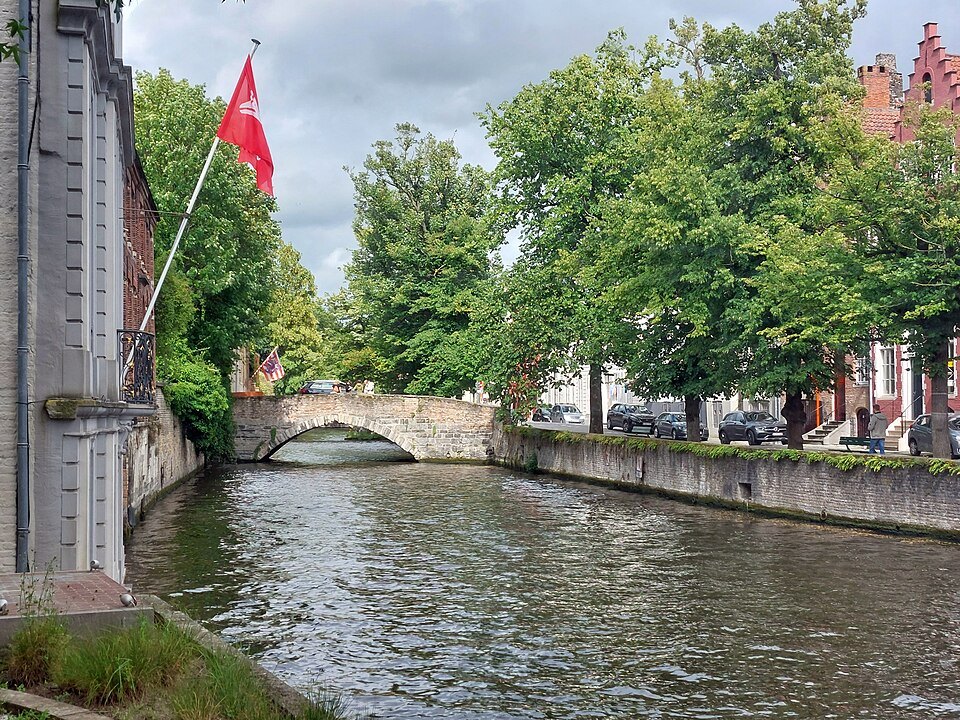
For its canals, the reien, seen from an open boat or the quays (the canals), and for a historic center on the UNESCO list since 2000. As one of the first tourist cities of the 19th century, and for Georges Rodenbach's novel Bruges-la-Morte of 1892. For beer, stew and chocolate (eating and drinking). Begin with the sights, see what is worth booking ahead, pick a season and an itinerary, and keep a day for the day trips to Ghent, Damme and the coast.
A walk through the city
The merchants' square
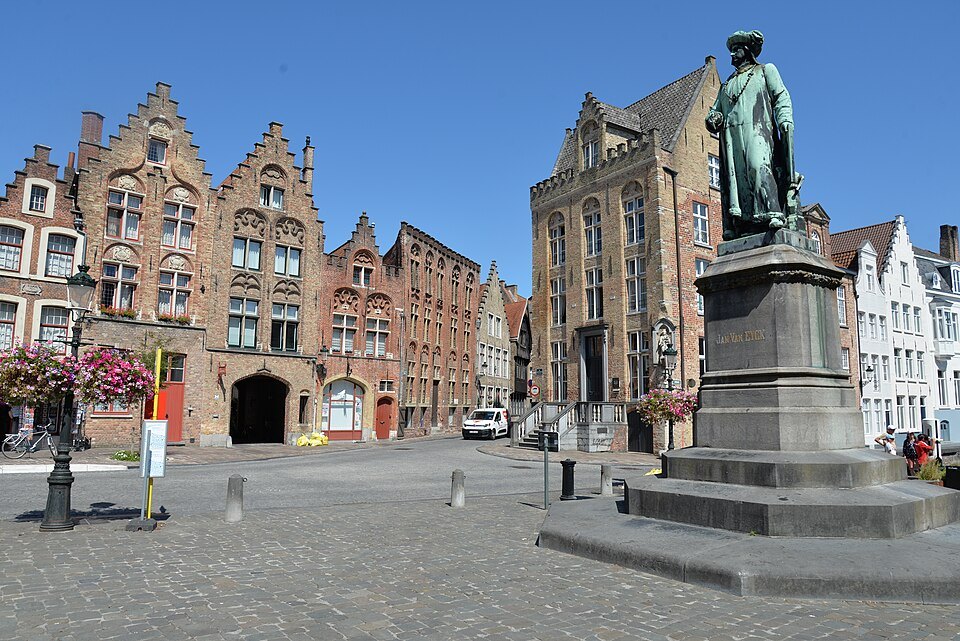
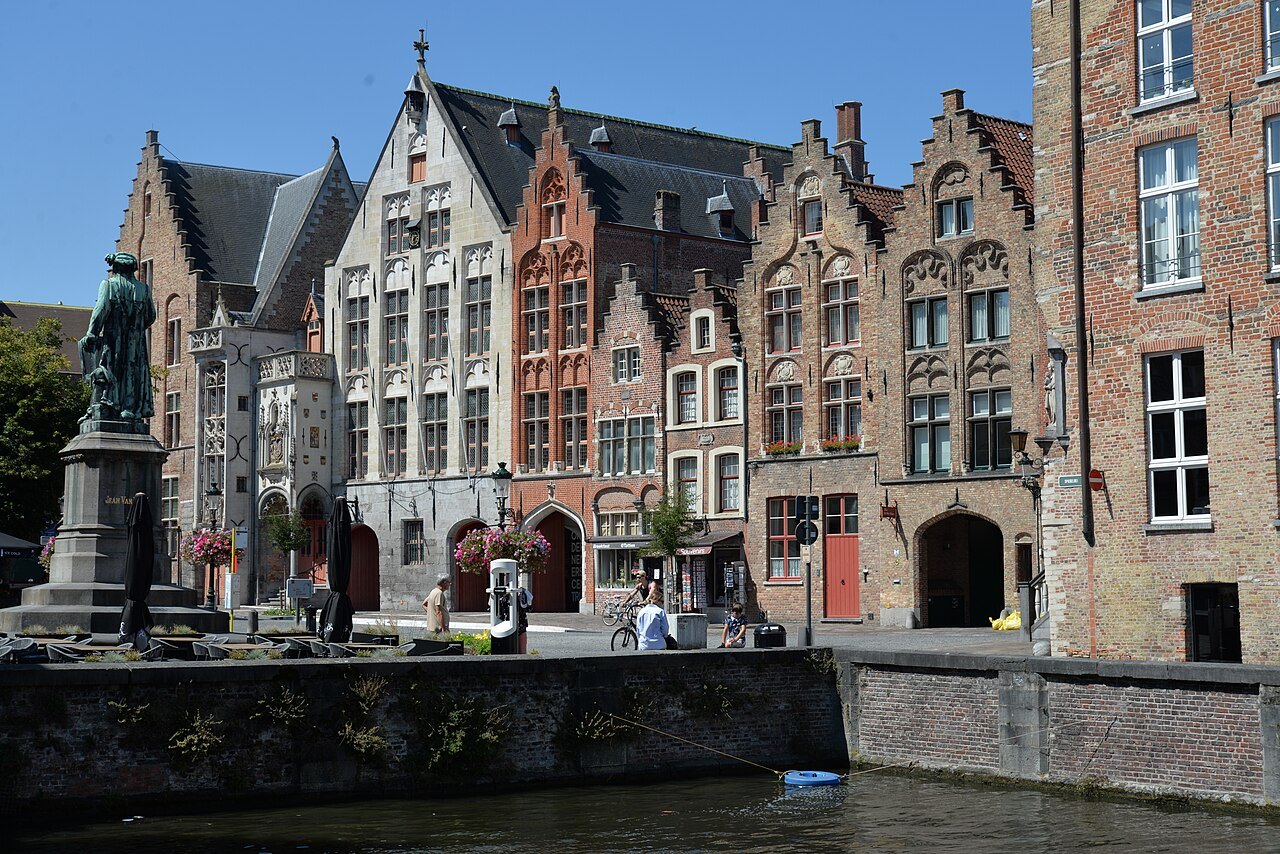
Start in the north, at Jan van Eyckplein, where the Spiegelrei canal ends among merchants' houses. This was the harbor quarter; the square was laid out after 1787, named after the painter in 1844, and given his statue in 1878. The slender tower on its west side belongs to the Poortersloge, where the city's burghers once met.
The Burg
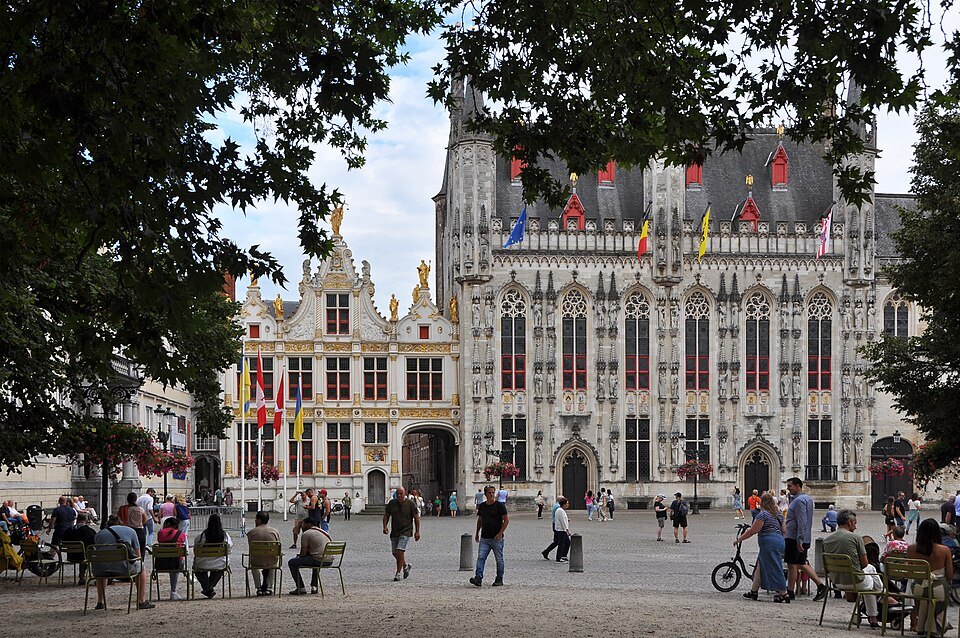
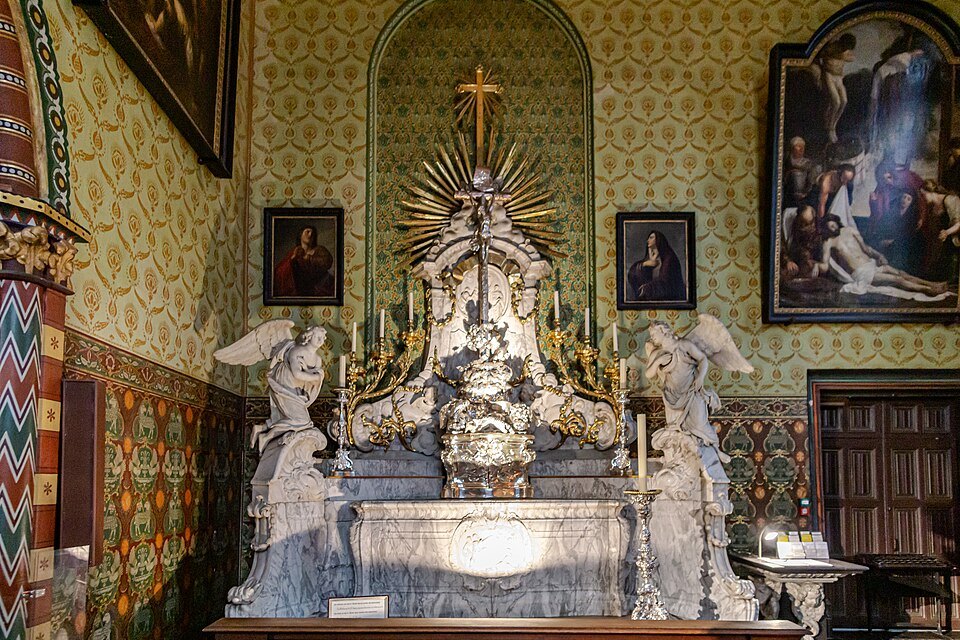
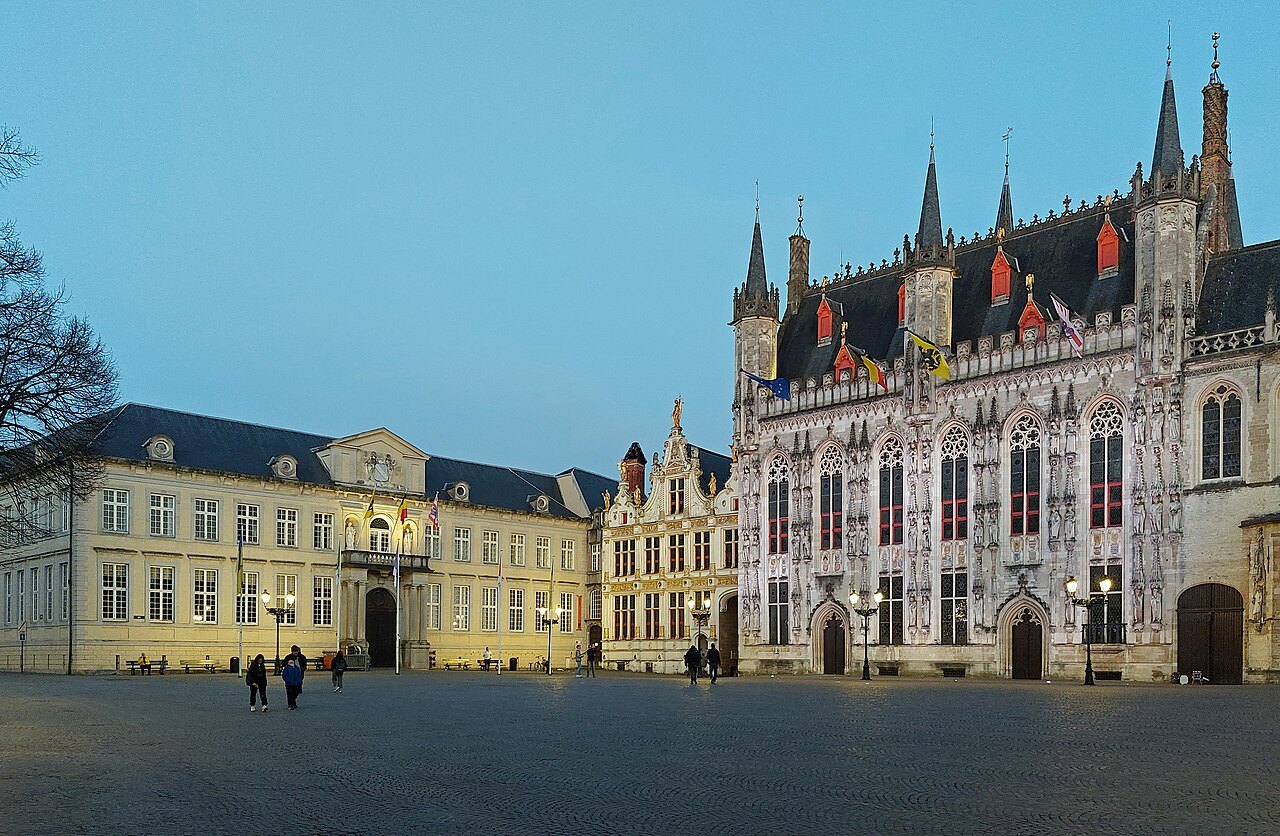
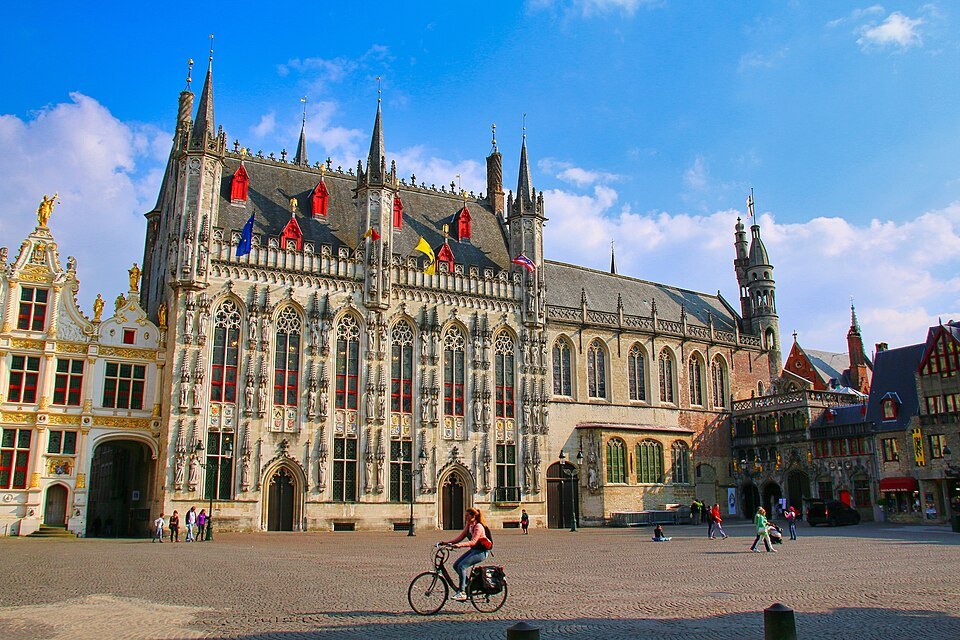
A short street leads to the Burg, the square of government. Its City Hall, built between 1376 and 1421, is one of the oldest in the Low Countries. In the corner, the Basilica of the Holy Blood sets a Romanesque chapel of 1134–1149 beneath a later Gothic one. Tradition says a crusader count brought the relic in 1150; no record places it in Bruges before the 1250s.
The rosary quay
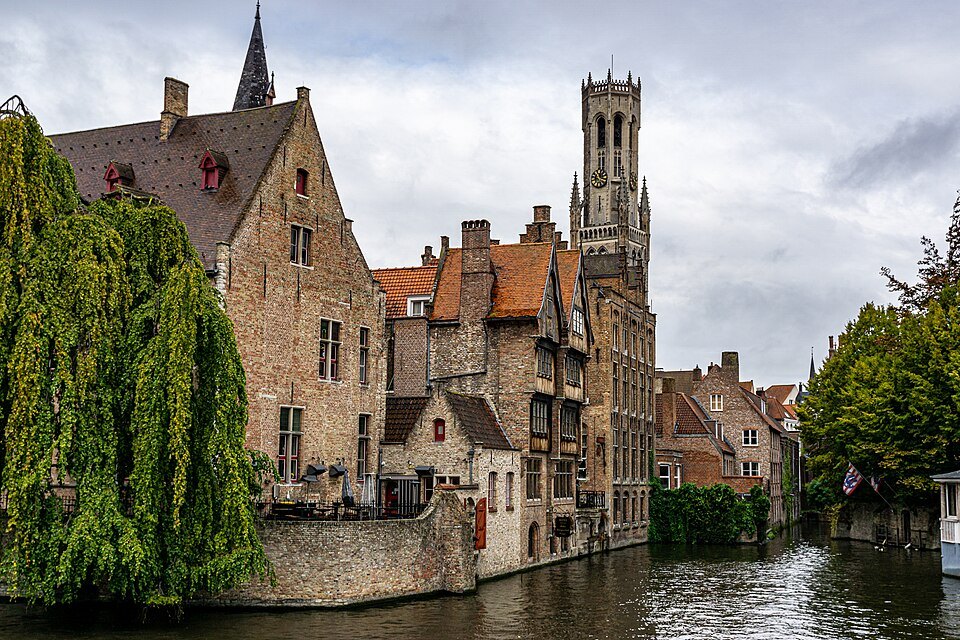
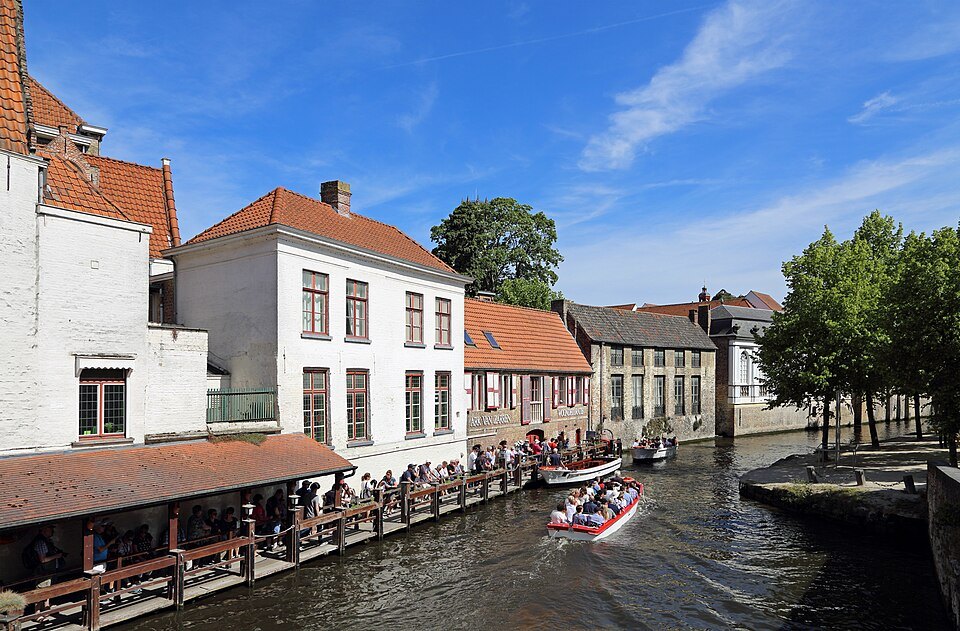
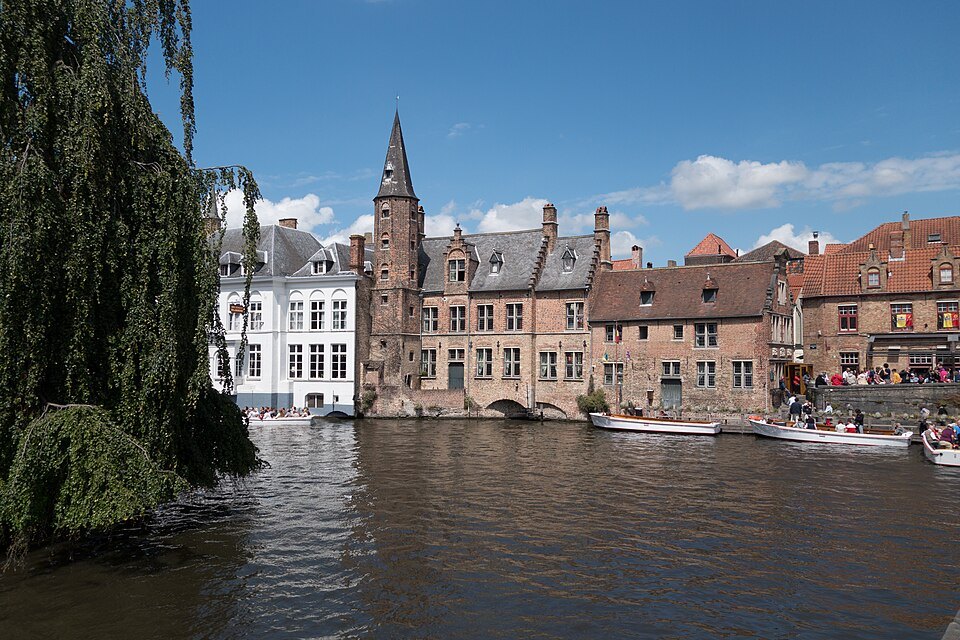
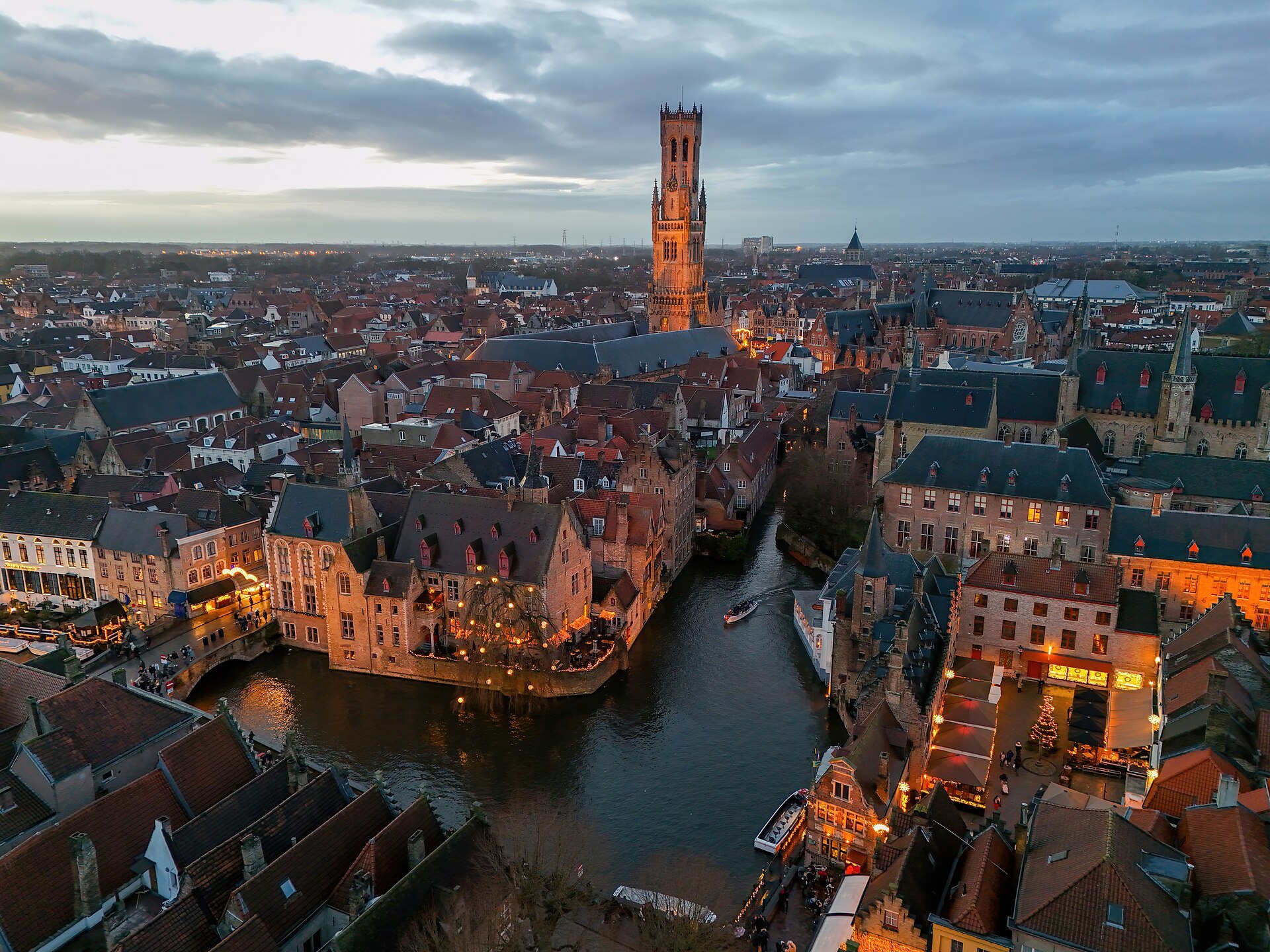
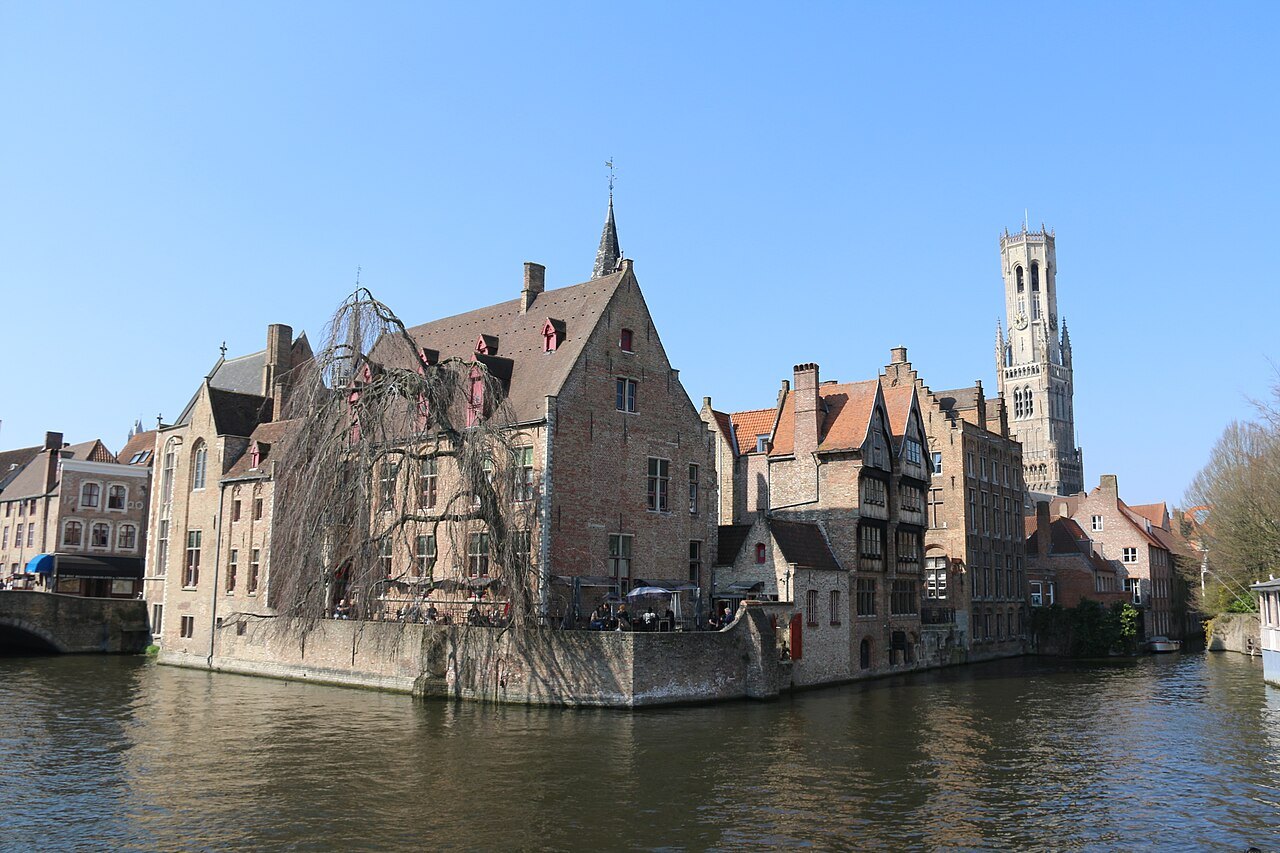
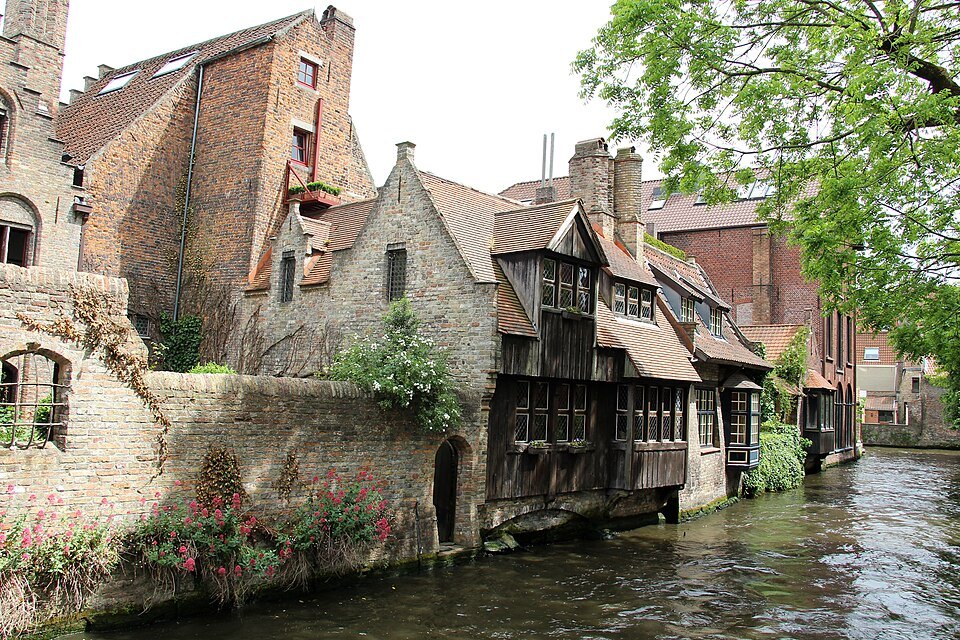
Round the corner, the Rozenhoedkaai bends along the water with the Belfry rising behind its roofs — the view most photographs of Bruges are taken from. For centuries it was the salt quay; the name comes from the rosary stalls that stood here in the 18th century. The canal boats leave from landing stages close by.
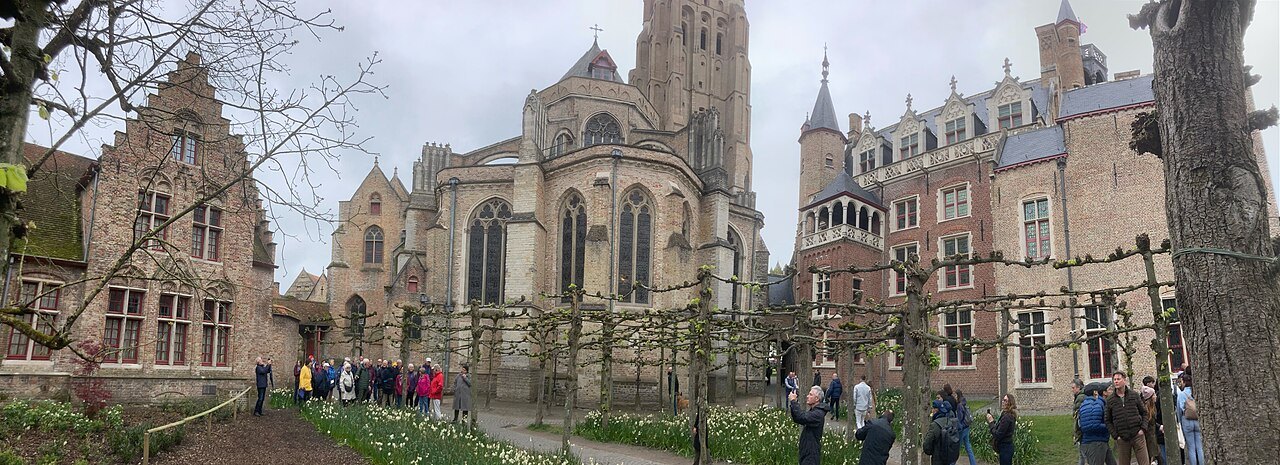
Our Lady's tower
Along the Dijver, past the museums, the brick tower of the Church of Our Lady climbs to 115.6 meters. Inside is a marble Madonna and Child by Michelangelo, bought in Italy by two Bruges merchant brothers and given to the church in 1514. Opposite stands St. John's Hospital, founded in the 12th century and a hospital until 1977.
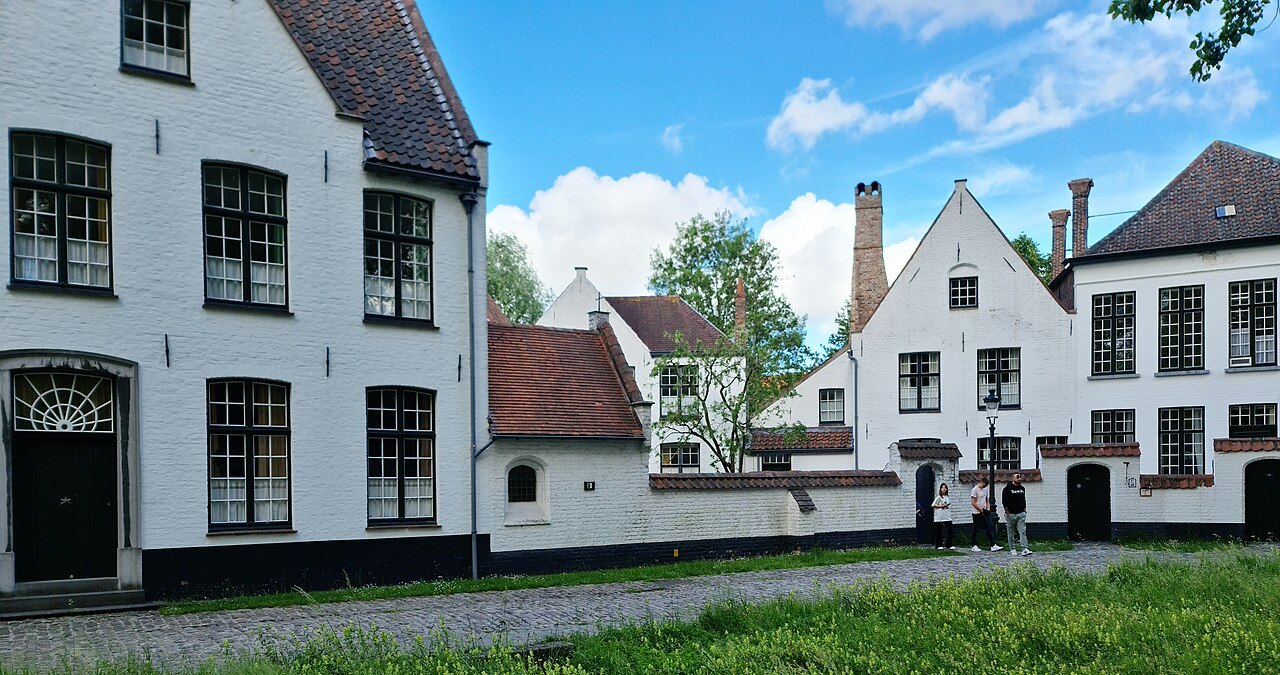
The beguinage
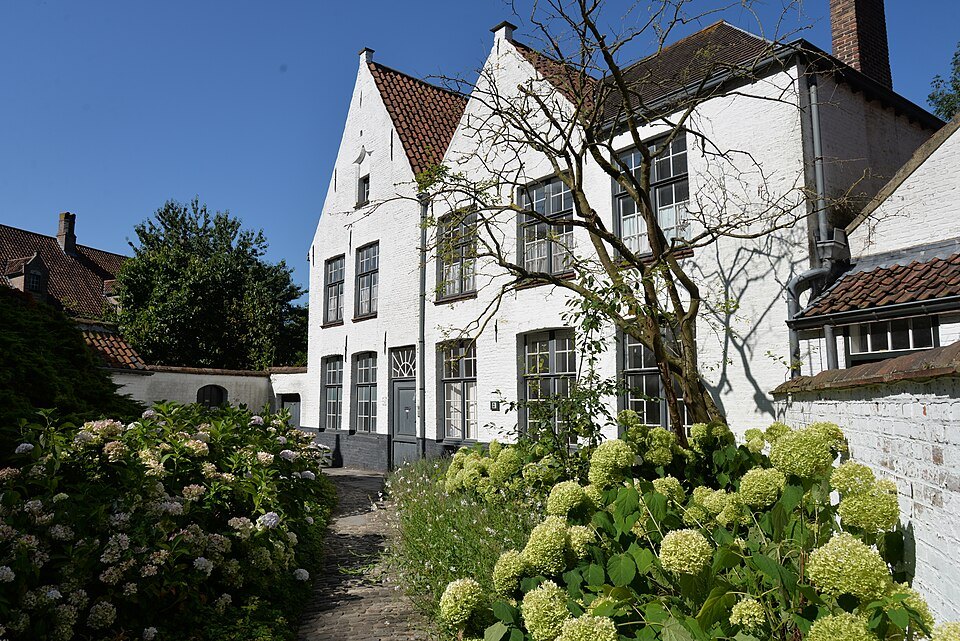
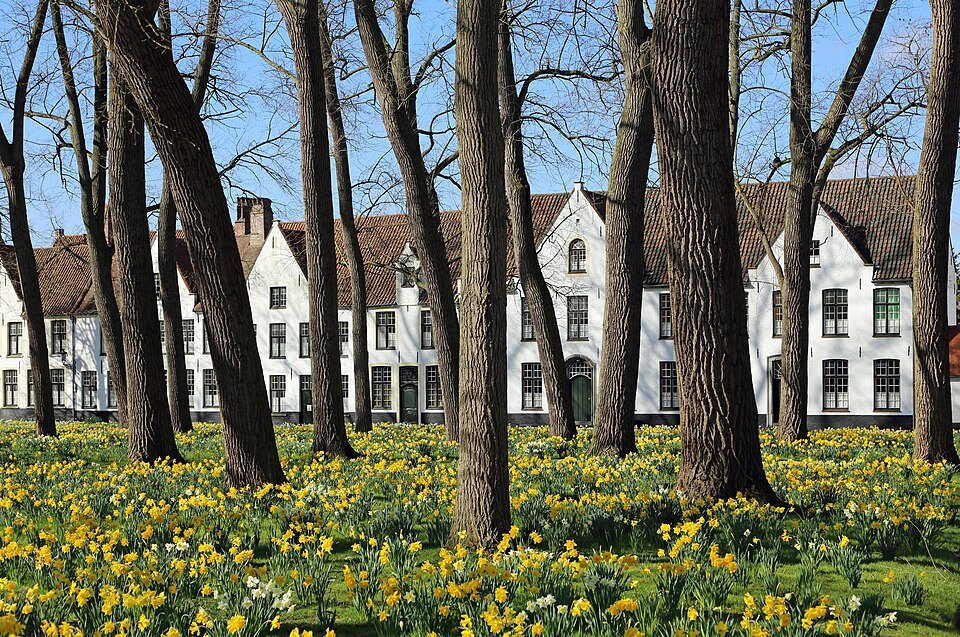
South again, a bridge and a gate lead into the Beguinage, founded around 1244 for beguines — laywomen who lived together without taking vows. White houses stand round a lawn of tall trees; since 1927 Benedictine nuns have lived here, and visitors are asked to keep their voices down.
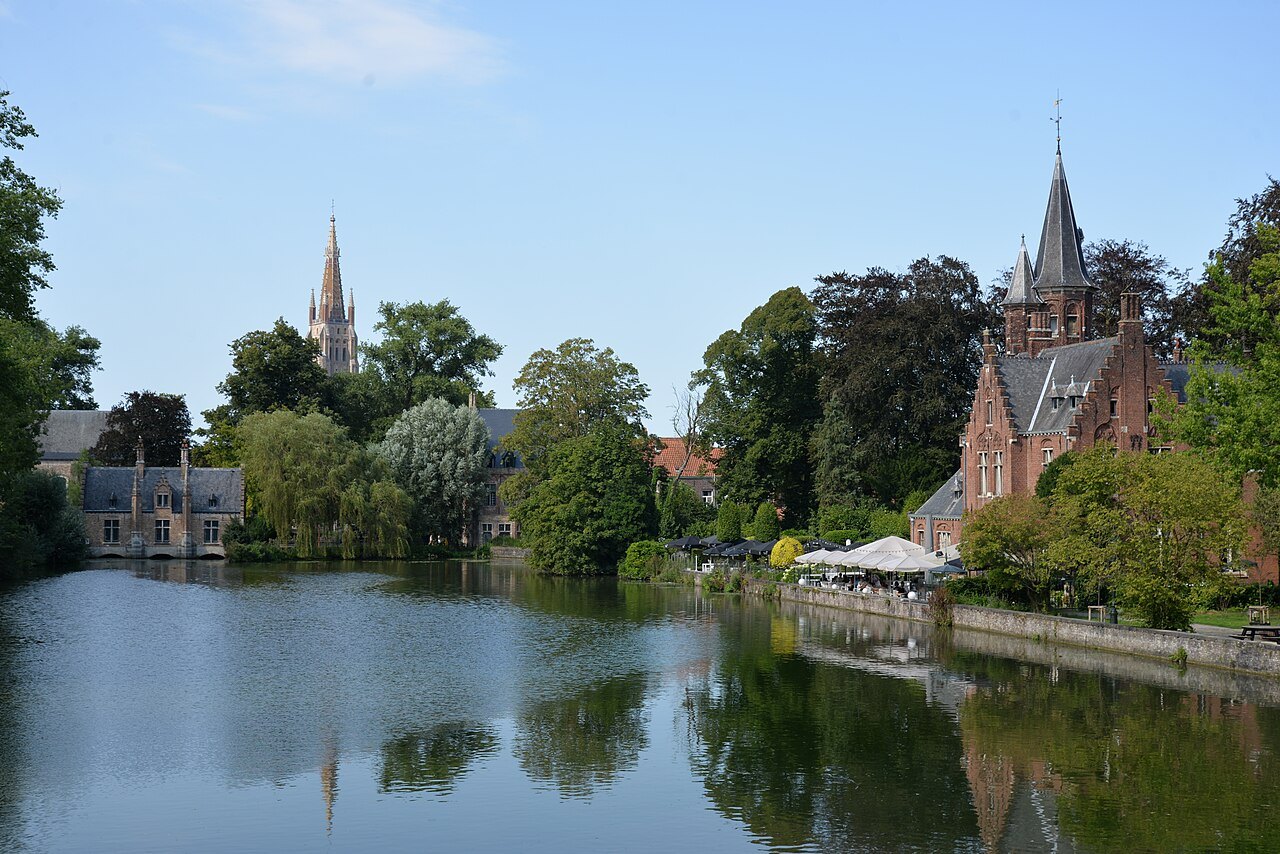
The Minnewater
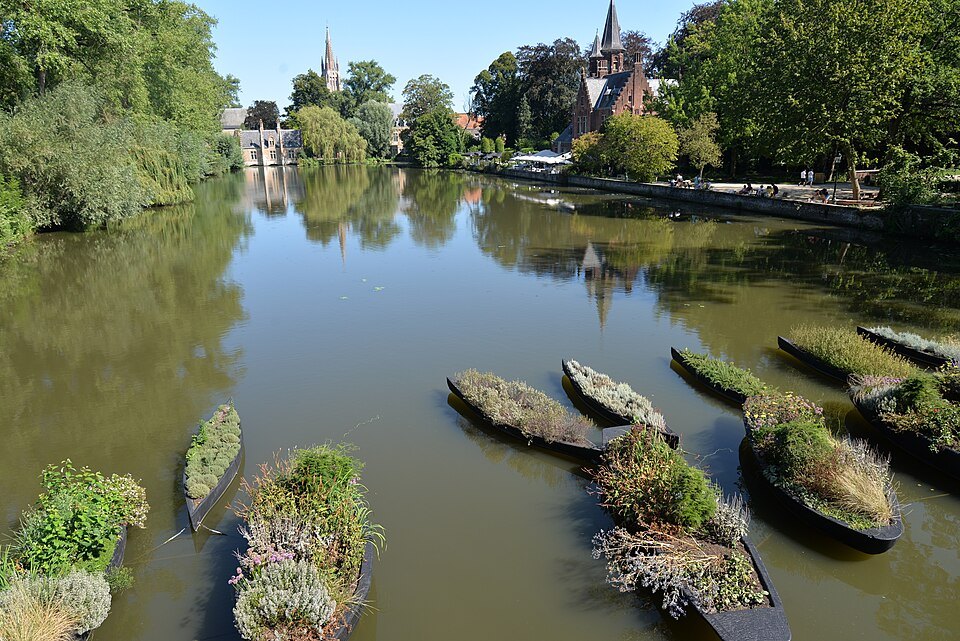
Beyond the beguinage the canal widens into the Minnewater, a reservoir dug in the 13th century to steady the water flowing into the city. Guides call it the Lake of Love; that is a romantic legend, and the origin of the name is still argued over. A brick powder tower stands at its southern end.
Three things to know first
- ArrivingThe trains stop outside the ring.Trains from Brussels take about an hour and from Ghent about half an hour. The station is a quarter of an hour's walk from the Markt, and buses make the short run in.Getting here
- The streetsInside the ring, walk.The old center is small enough to cross on foot. Drivers are asked to park by the station or at the car parks on the edge of town.Getting around
- The calendarSpring is daffodils; summer is crowds.Day visitors fill the squares from late morning in summer. Evenings, weekdays and the months either side are quieter.When to come
Belgium · West FlandersAbout 119,000 peopleDutchEuroCity charter 1128UNESCO World Heritage since 2000
The guide, section by section
- Eighteen places, one page eachThe SightsFrom the Belfry to the windmills on the ramparts: what each one is, what you see, and how long to give it.
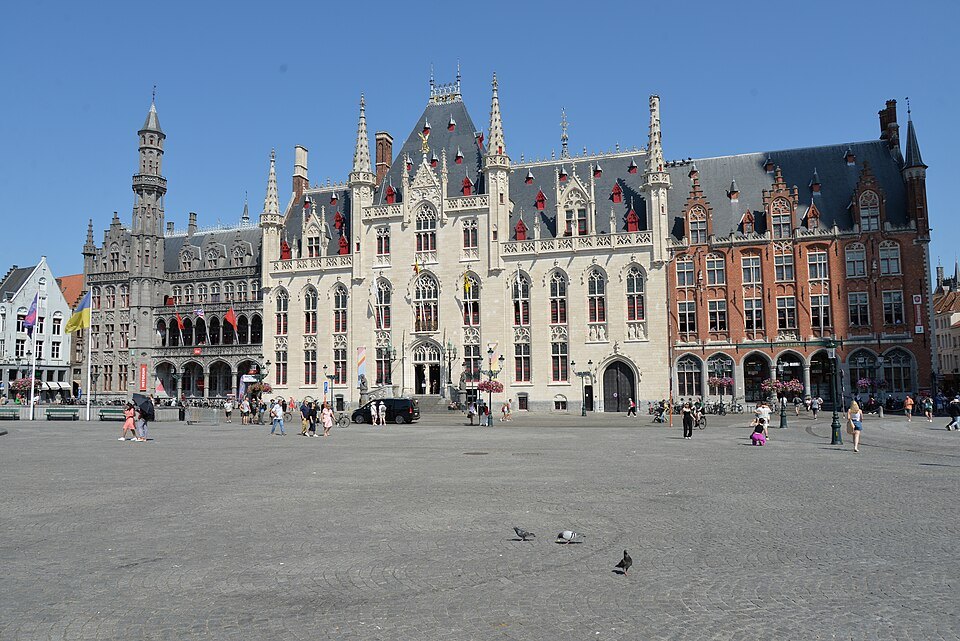
- Rail, air, coach and carGetting HereThe station outside the center, the trains from Brussels and Ghent, and where a car should stop.
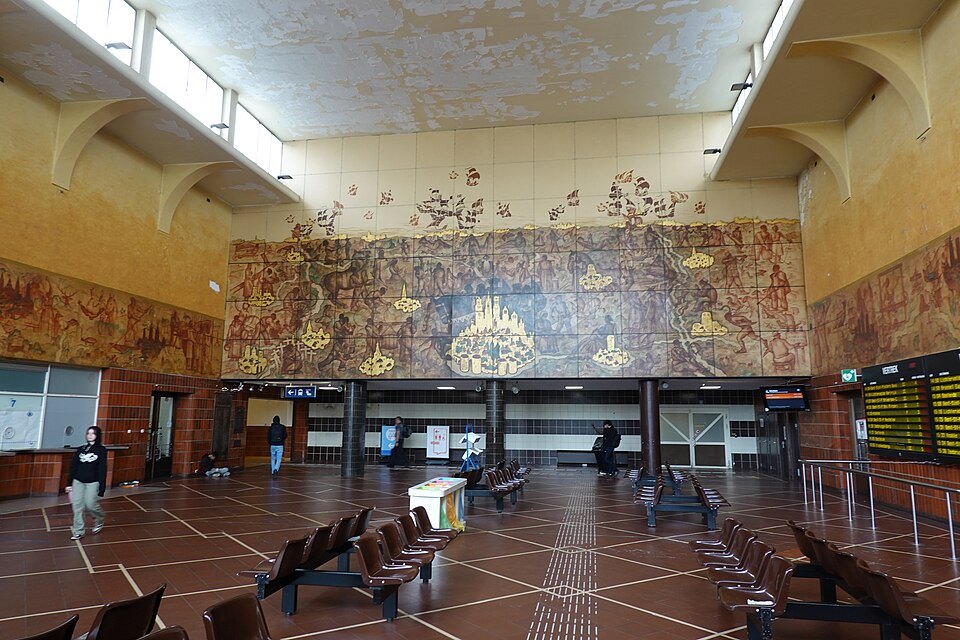
- A city for walkingGetting AroundAn old center you cross on foot, the buses from the station, and bikes on the ramparts.
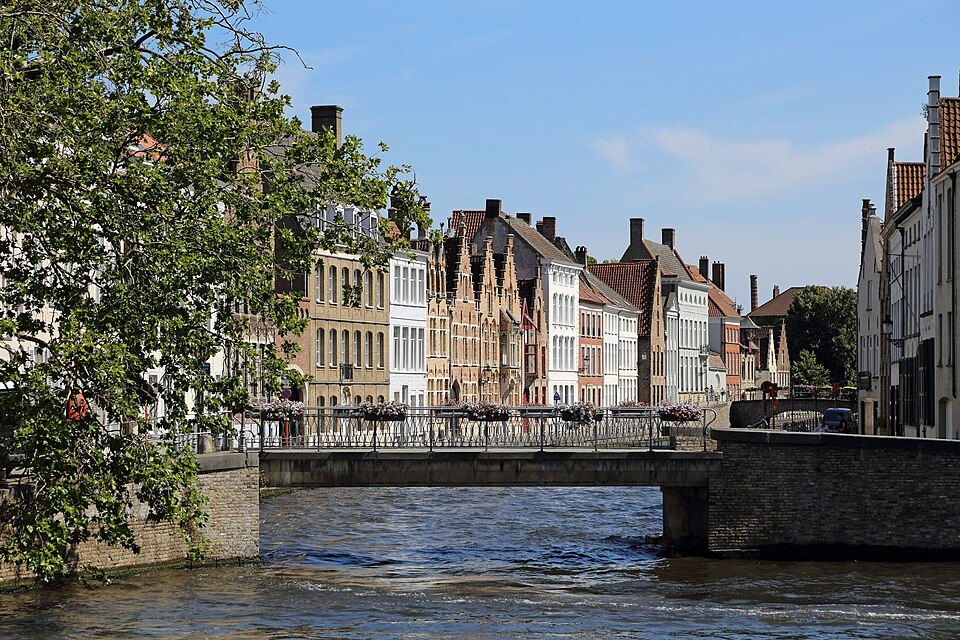
- The reien, from the waterThe CanalsHow the canals made the city rich, where the boats leave from, and the quays to walk instead.
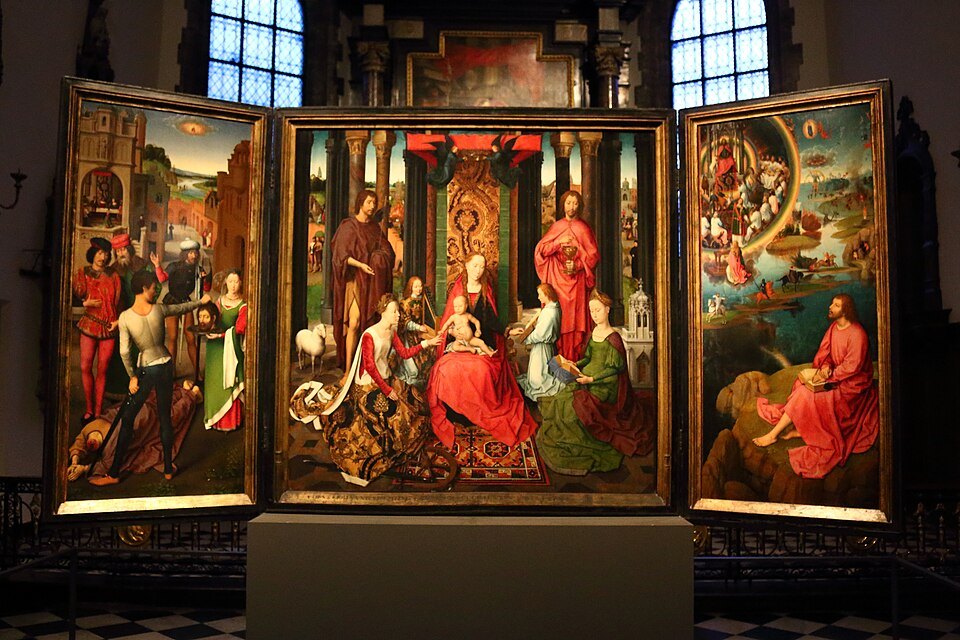
- Van Eyck, Memling and their cityThe Flemish MastersWhere the paintings made in 15th-century Bruges hang today, and the streets they were made in.
- What to arrange firstBooking AheadThe few things in Bruges worth fixing a time for, and the many that need nothing.
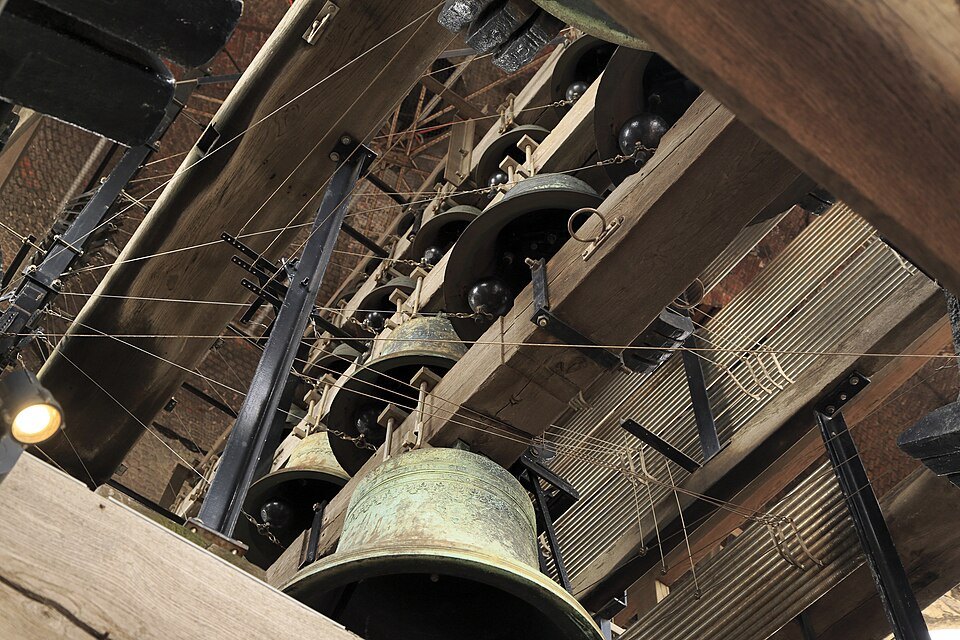
- The year in BrugesWhen to ComeDaffodils in the beguinage, the Holy Blood procession, and winter evenings, month by month.
- Stew, beer and chocolateEating & DrinkingFlemish dishes, the brewery in the center, and where the city eats.
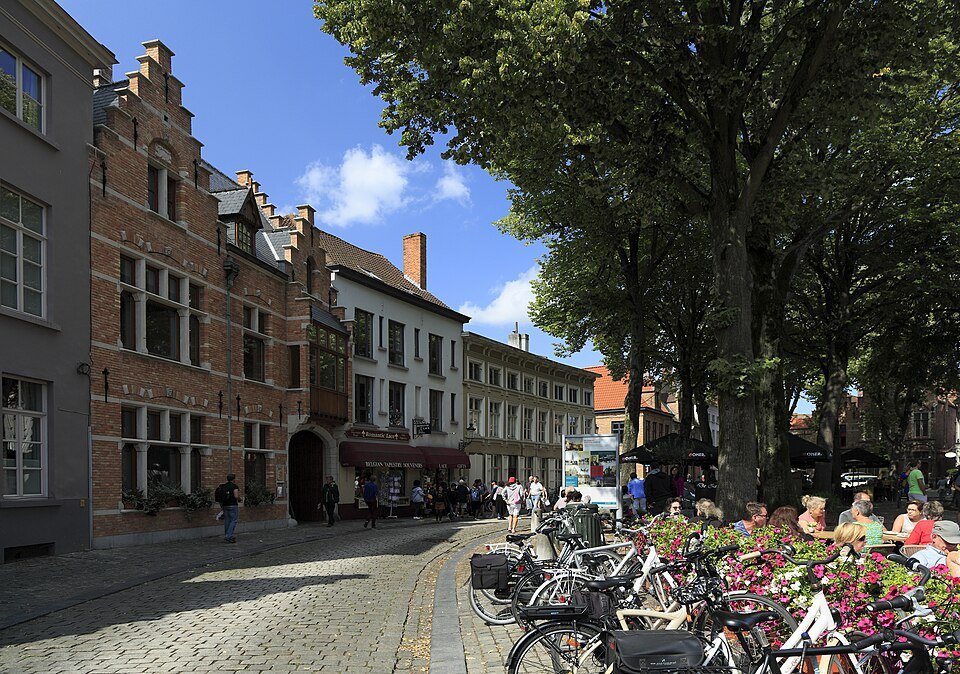
- Inside the ring, and just beyondWhere to StayEach part of the old town for a night or a week, drawn on a map.
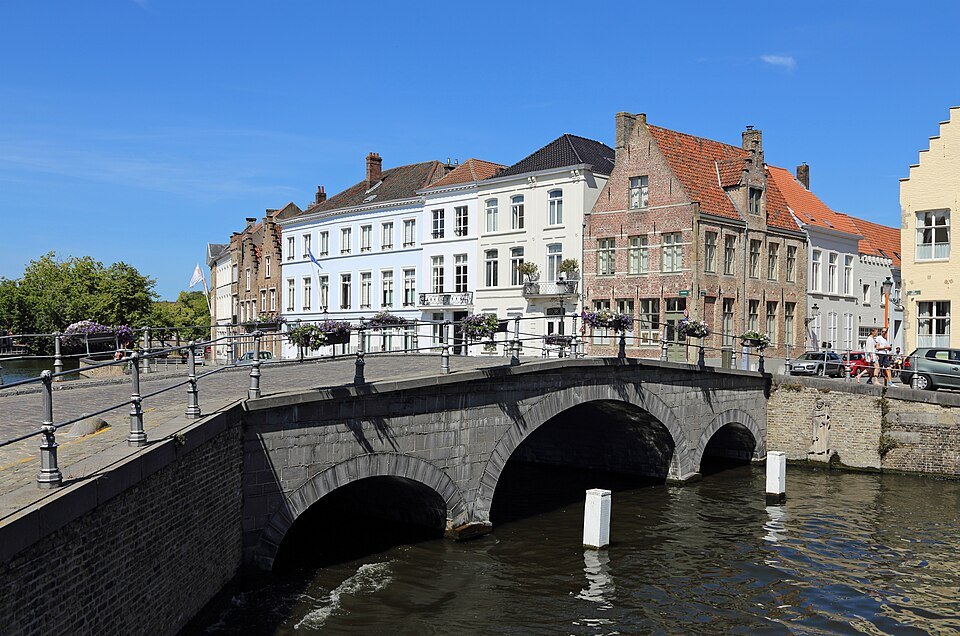
- One day, two days, threeItinerariesRoutes by the length of your stay, planned around what closes when.
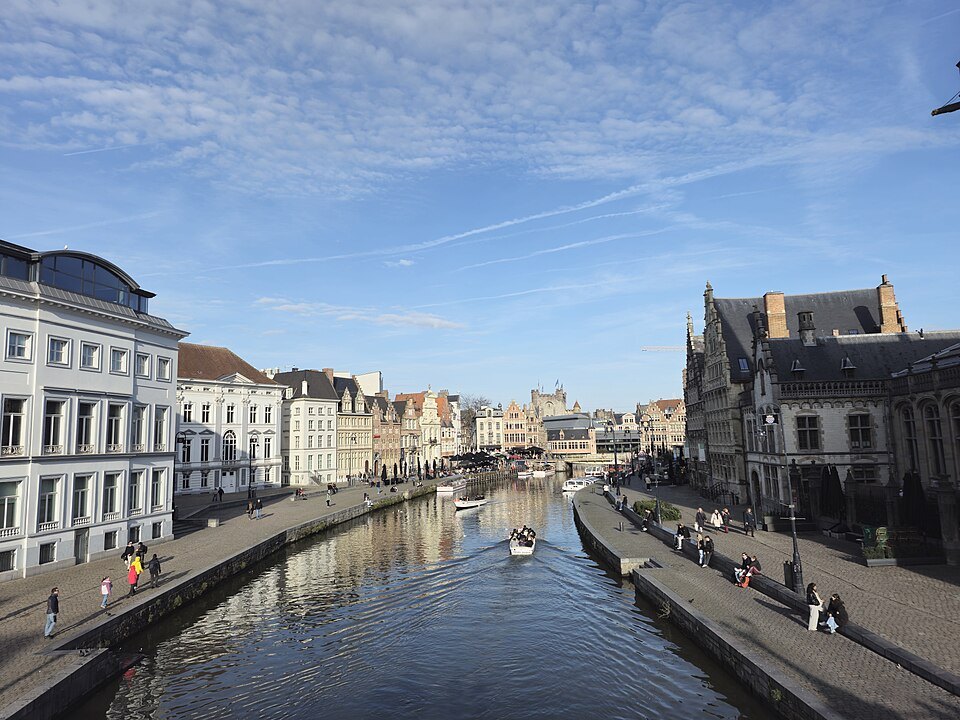
- Ghent, Damme, the coast, BrusselsDay TripsWhere the trains, bikes and roads out of Bruges lead in a day.
- Questions answered at lengthThe JournalVisitor questions about Bruges, answered in full, with new pieces as they are written.