Home · Sights · Gruuthuse Museum
The brick palace of the lords of Gruuthuse, who grew rich on a tax on beer herbs, now a museum of how wealthy Bruges lived, with a window looking straight into the Church of Our Lady.
The parts to look at
- GroundThe courtyardThe open court entered from Dijver, framed by the palace's brick wings and towers
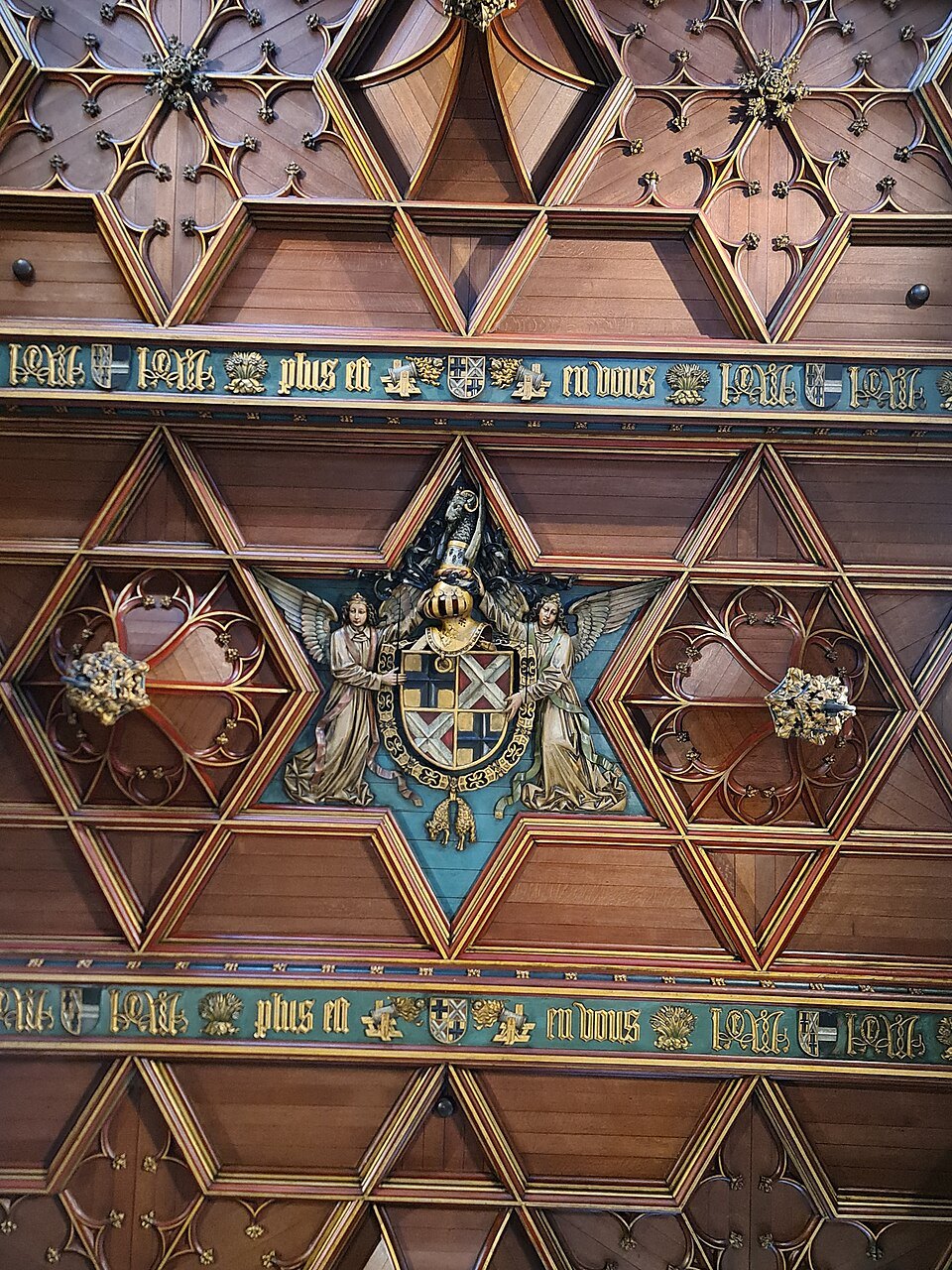
- Floor 1The entrance hallA vaulted hall with a painted and carved ceiling
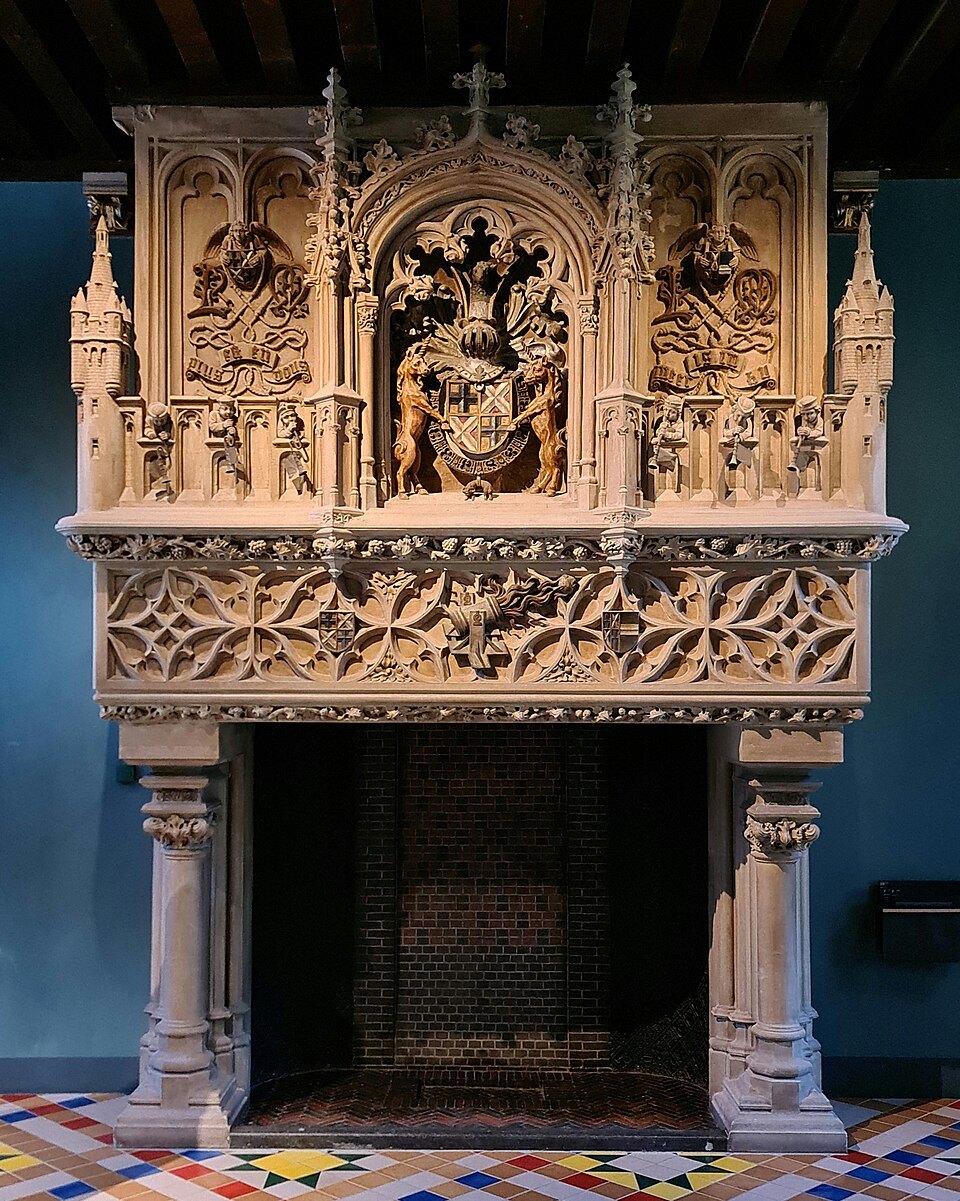
- Floor 2The fireplacesGreat carved chimneypieces in the principal rooms of the palace
- Floor 3The silver roomA salon of gold and silverwork made by Bruges craftsmen
- Floor 4The bust of Charles VA painted terracotta portrait of the young emperor, attributed to Conrat Meit
- Floor 5The oratoryThe private chapel of 1472 that opens into the choir of Our Lady
A palace built on beer
Beer made the Gruuthuse. Before hops became common, brewers in Flanders flavored their beer with gruit, a mixture of herbs, and the right to sell it and tax it was a valuable privilege. The building at the end of the Dijver began in the thirteenth century as a store for gruit, and the family who held that right took their name from it: the lords of Gruuthuse.
Over the next two centuries the store became one of the grandest private houses in Bruges. Today it is a museum of the city's applied arts, and its rooms give a better sense than anywhere else in town of how the rich lived when Bruges was at its height.
From storehouse to noble residence
In the early fifteenth century Jan IV van der Aa turned the building into a luxury residence. His successor Louis of Gruuthuse, a leading figure at the Burgundian court, enlarged it with a second wing and, in 1472, added a chapel that reached out to the neighboring Church of Our Lady, so that the family could follow Mass from their own house.
The palace changed hands many times. It was bought by King Philip II of Spain in 1596, and in 1623 it was given to Wenceslas Cobergher to house a mount of piety, a public pawn bank. The city of Bruges acquired the building in 1875, and the architect Louis Delacenserie restored it between 1883 and 1895, giving it much of the romantic character it has today.
The first museum inside showed the collection of the city's archaeological society. In 1955 the city bought those collections, and the Gruuthuse became part of what is now Musea Brugge.
What you actually see
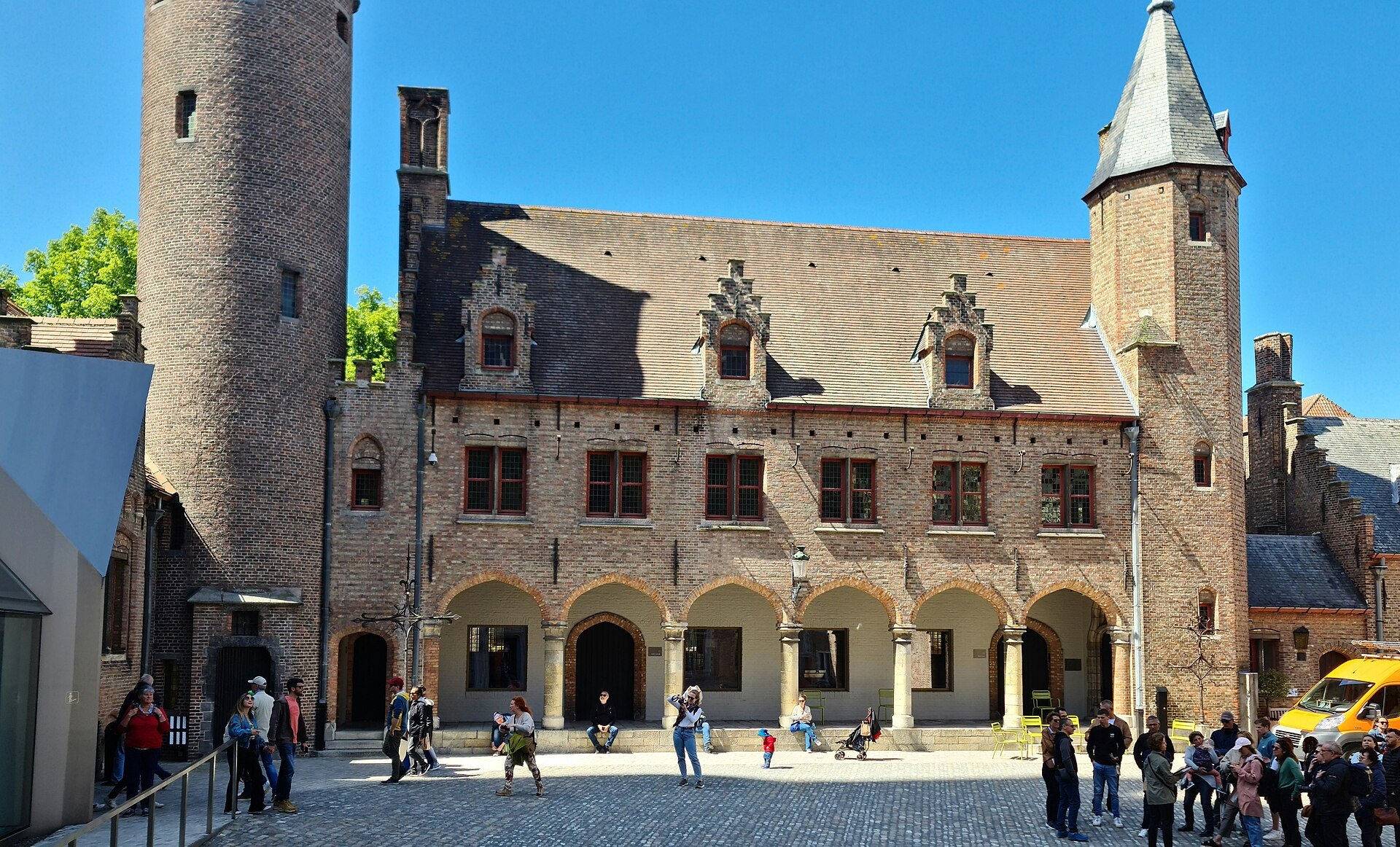
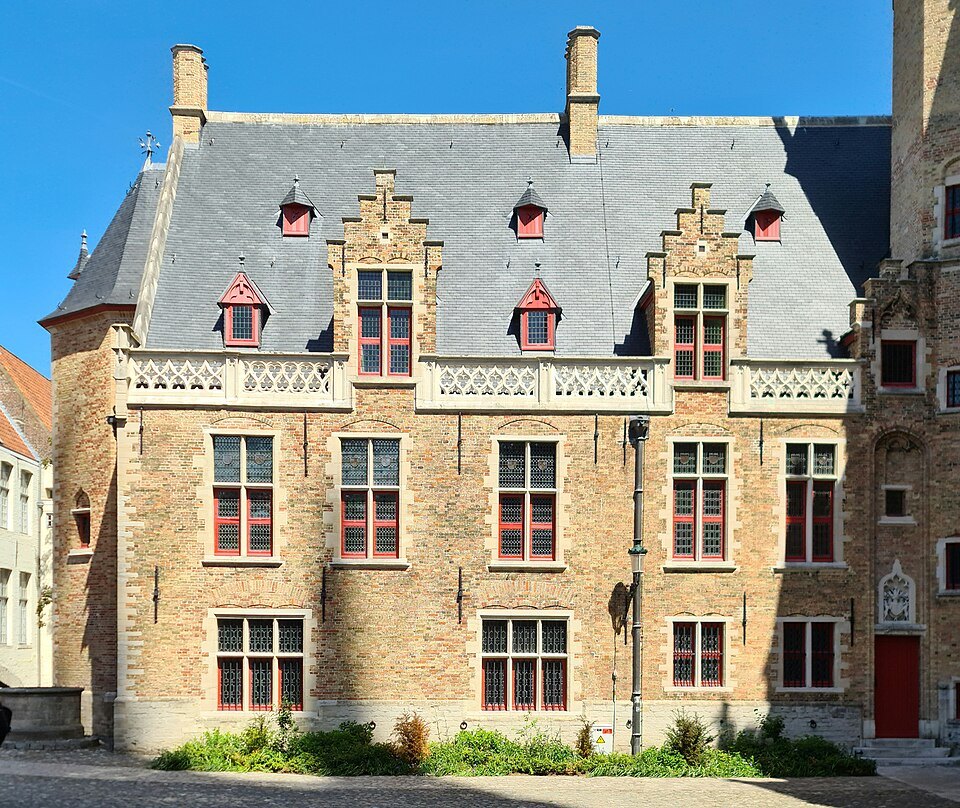
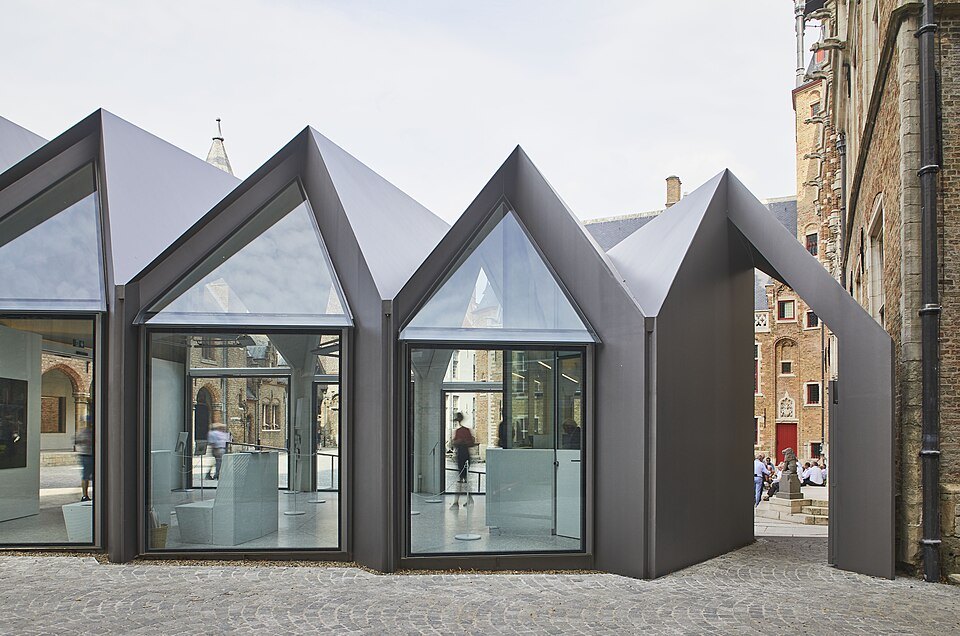
The approach is part of the experience. You enter a courtyard off the Dijver, with brick wings on three sides, stepped gables, turrets and tall windows, and the brick tower of Our Lady rising almost on top of you, over one hundred meters of it. Along one side runs a gallery of stone arches at ground level, and a slender round stair tower rises in the corner, so that the court feels less like a museum entrance than the yard of a great house.
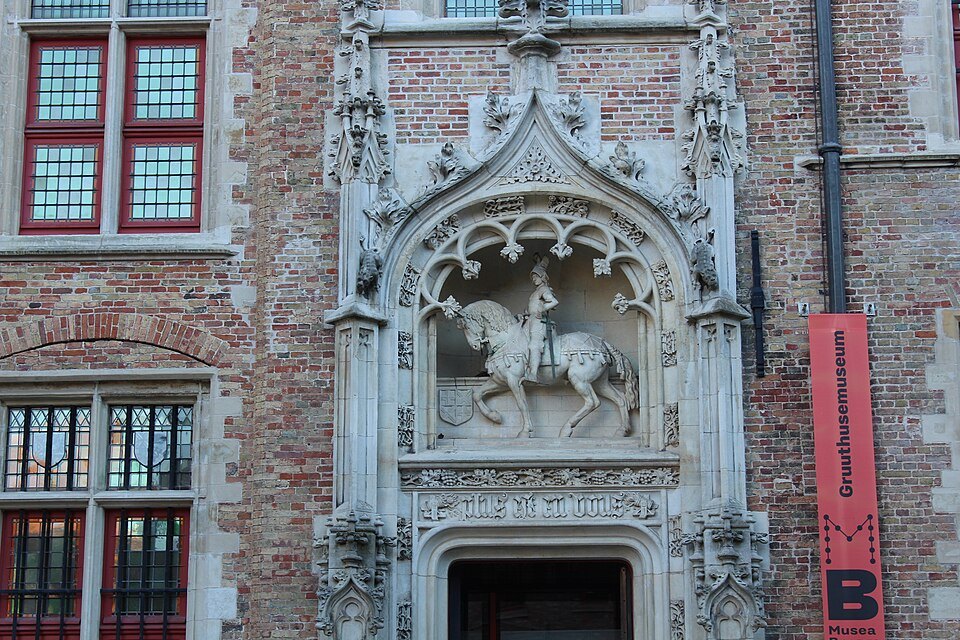
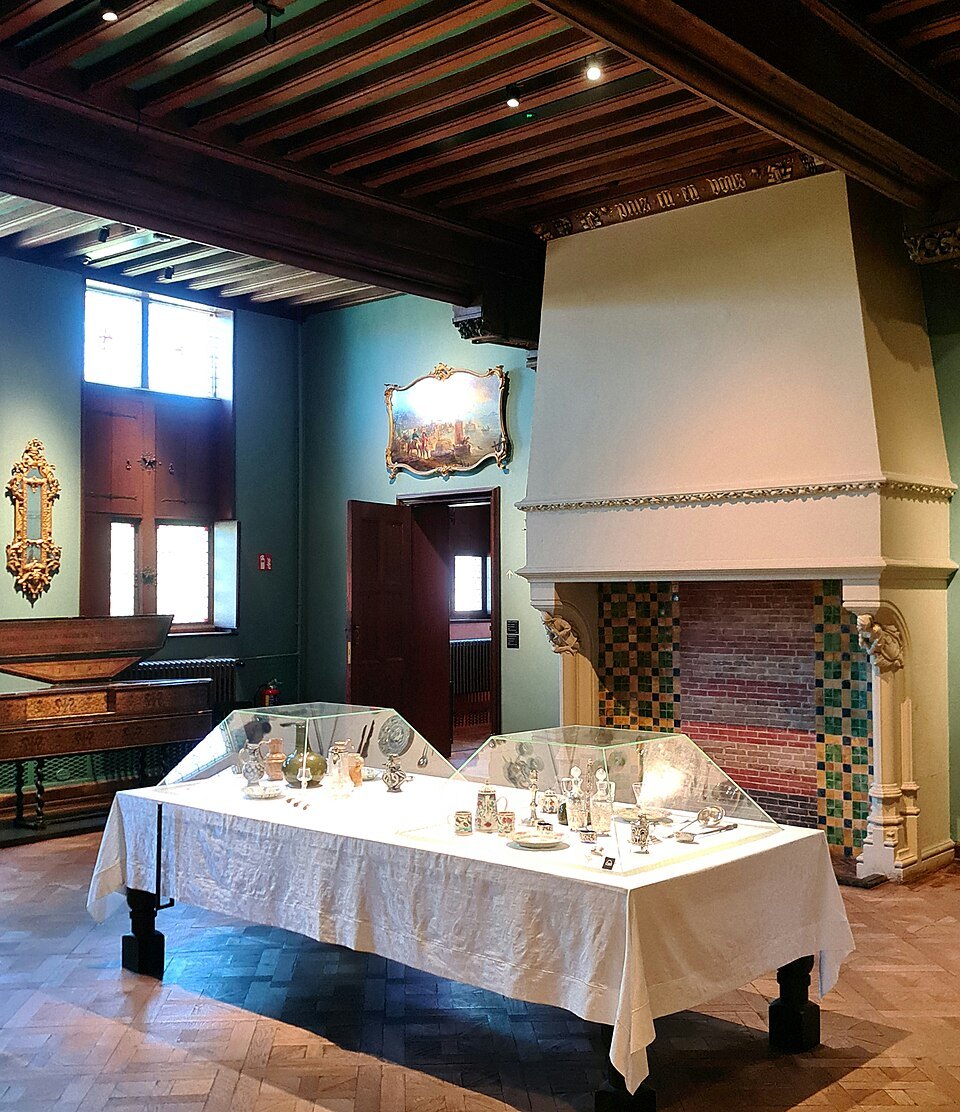
Inside, the rooms are arranged to show how the palace was lived in. Look up in the entrance hall at the painted and carved ceiling, and in the principal rooms at the great carved fireplaces. Displays of furniture, bobbin lace, weapons, musical instruments and ceramics fill the house, together with gold and silverwork made in Bruges.
Several objects stand out. A painted terracotta bust of the young Emperor Charles V, from around 1520 and attributed to Conrat Meit, is the museum's best-known piece, and it is worth seeking out before anything else. Flemish tapestries of the sixteenth and seventeenth centuries hang in the larger rooms, and a bronze bell from about 1245 is one of the oldest objects in the collection.
The window into the church
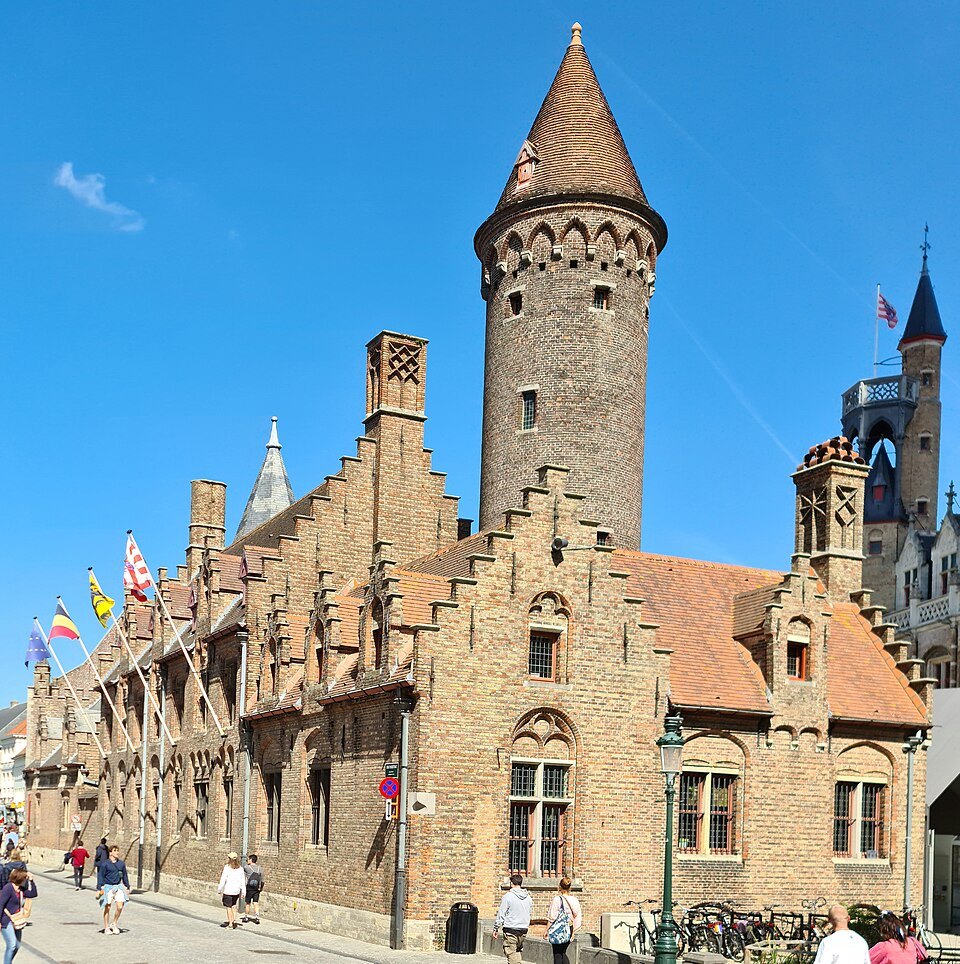
The most memorable room is the oratory, the private chapel of 1472. It is built out over the space between the palace and the church, and from its windows the lords of Gruuthuse could look directly down into the choir of Our Lady and follow services without leaving home.
Standing there gives a startling sense of scale and privilege. Below you is one of the great churches of Bruges; beside you, the small private room from which one family watched. You can see the link from inside the church too: when you visit Our Lady, look up beside the choir for the chapel that opens into it from the palace. Seeing it from both sides is the best way to understand how close the Burgundian nobility lived to the church.
How to visit
The Gruuthuse is a Musea Brugge location, and its ticket arrangements, including combined tickets and any time slots, are set by Musea Brugge. Check the Musea Brugge site for which rooms and exhibitions can be visited when you plan to go. Allow an hour to an hour and a half.
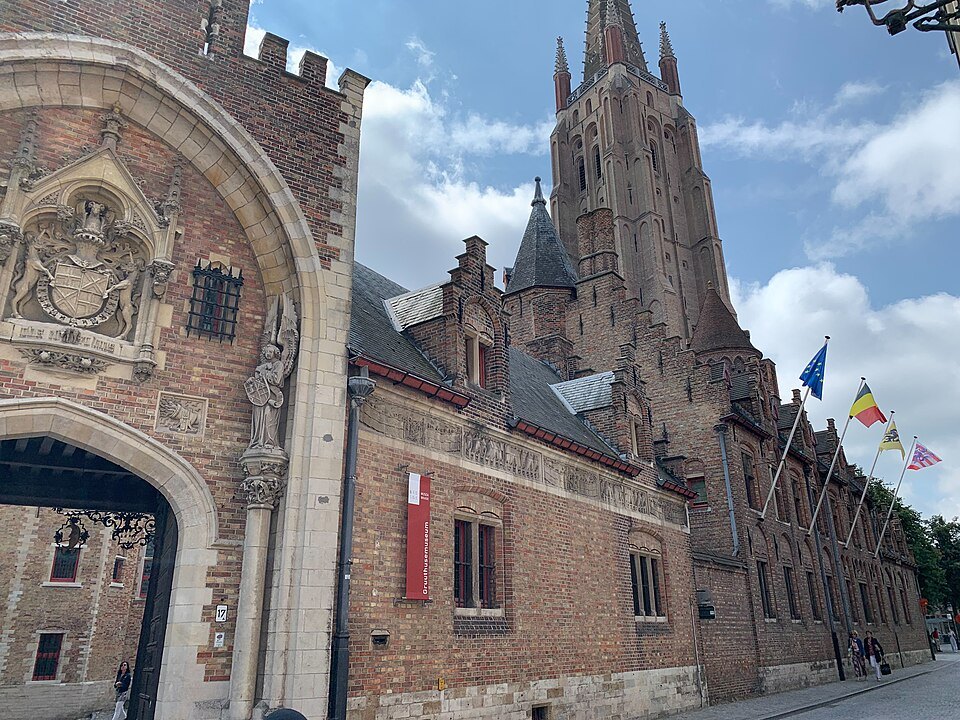
It is an old building on several levels, so if stairs are a concern, read the access information that Musea Brugge publishes for each location before you go. The courtyard, however, can be seen from the Dijver entrance, and it is worth a look even if you do not go in.
Visit it together with the Church of Our Lady next door, so that you see the oratory from both sides, and with the Groeningemuseum a few steps back along the quay. The Flemish masters page explains how these collections fit together.
Around the palace
Leave the courtyard and turn right, and the Dijver leads back towards the museums and the Rozenhoedkaai. Cross the small square beside the church and you reach Mariastraat and St. John's Hospital, with the Memling paintings. The narrow Bonifacius footbridge, one of the loveliest corners of the city, is just behind the palace garden.
Nearby
- Along the DijverChurch of Our LadyThe church whose brick tower rises over the south of Bruges, holding a marble Madonna by Michelangelo and the tombs of…Read the page
- Along the DijverThe DijverA tree-lined stretch of canal south of the Rozenhoedkaai, where the Groeningemuseum, the Gruuthuse and the College of…Read the page
- Along the DijverSt. John's HospitalOne of the oldest surviving hospital buildings in Europe, where Augustinian sisters cared for the sick for eight…Read the page