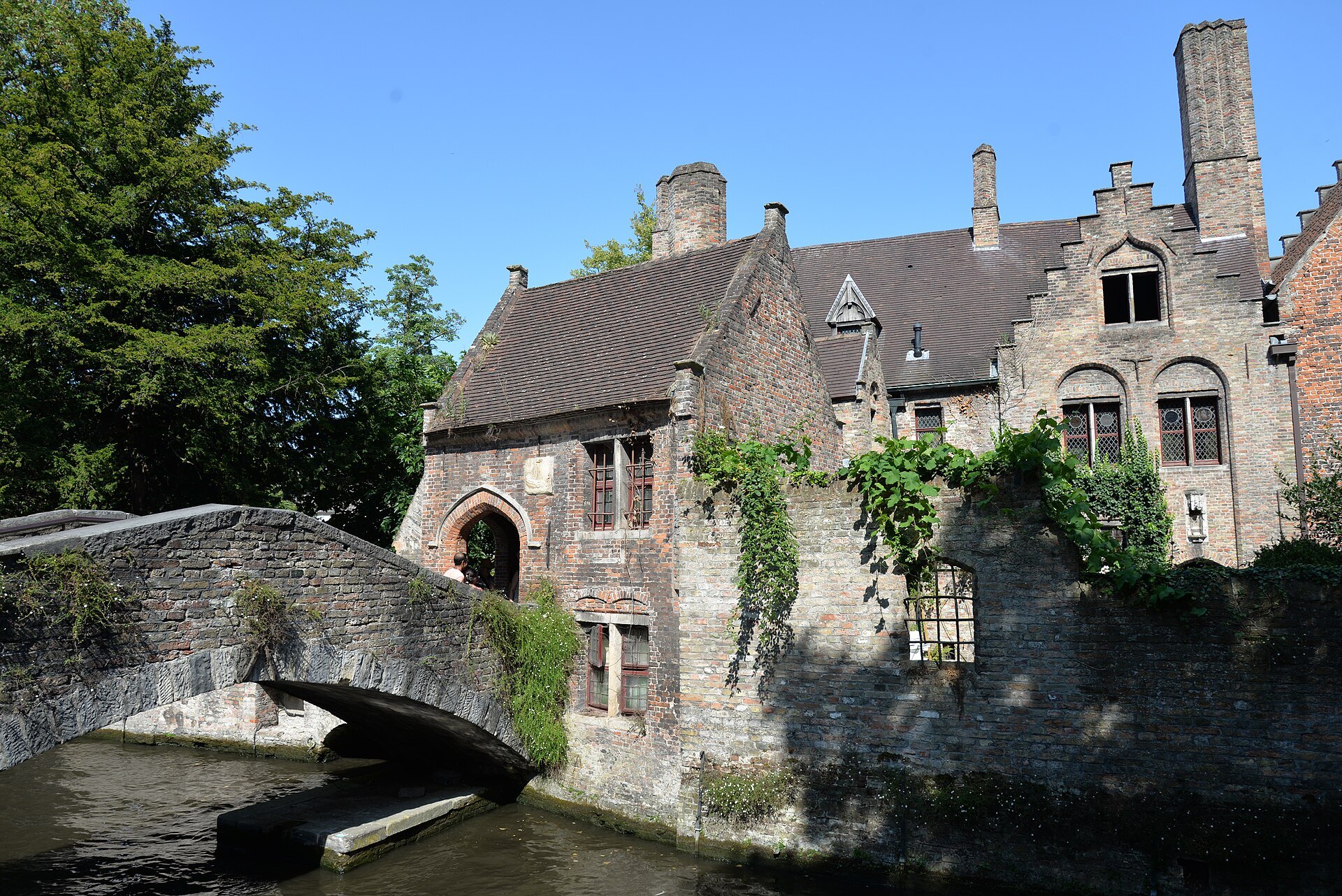
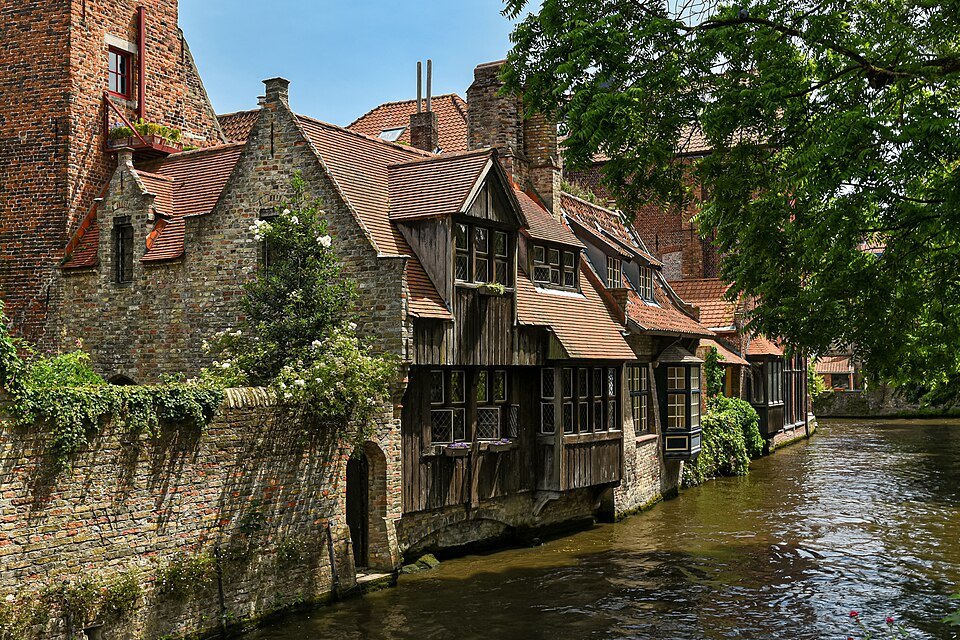
A tree-lined stretch of canal south of the Rozenhoedkaai, where the Groeningemuseum, the Gruuthuse and the College of Europe stand along the water and two small bridges cross it.
Along the quay
- 1Rozenhoedkaai endWhere the quay turns off the famous bend and runs south under trees
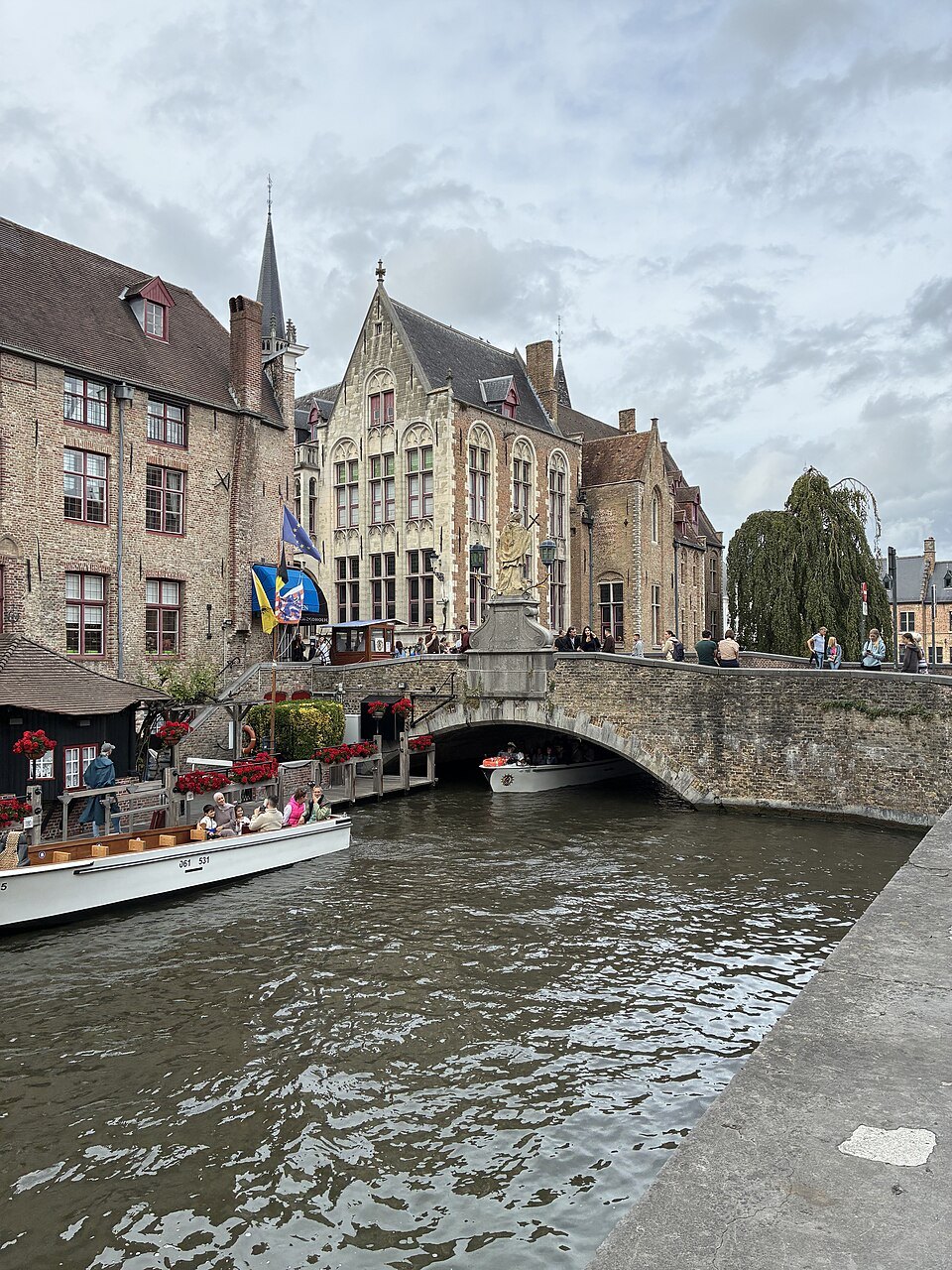
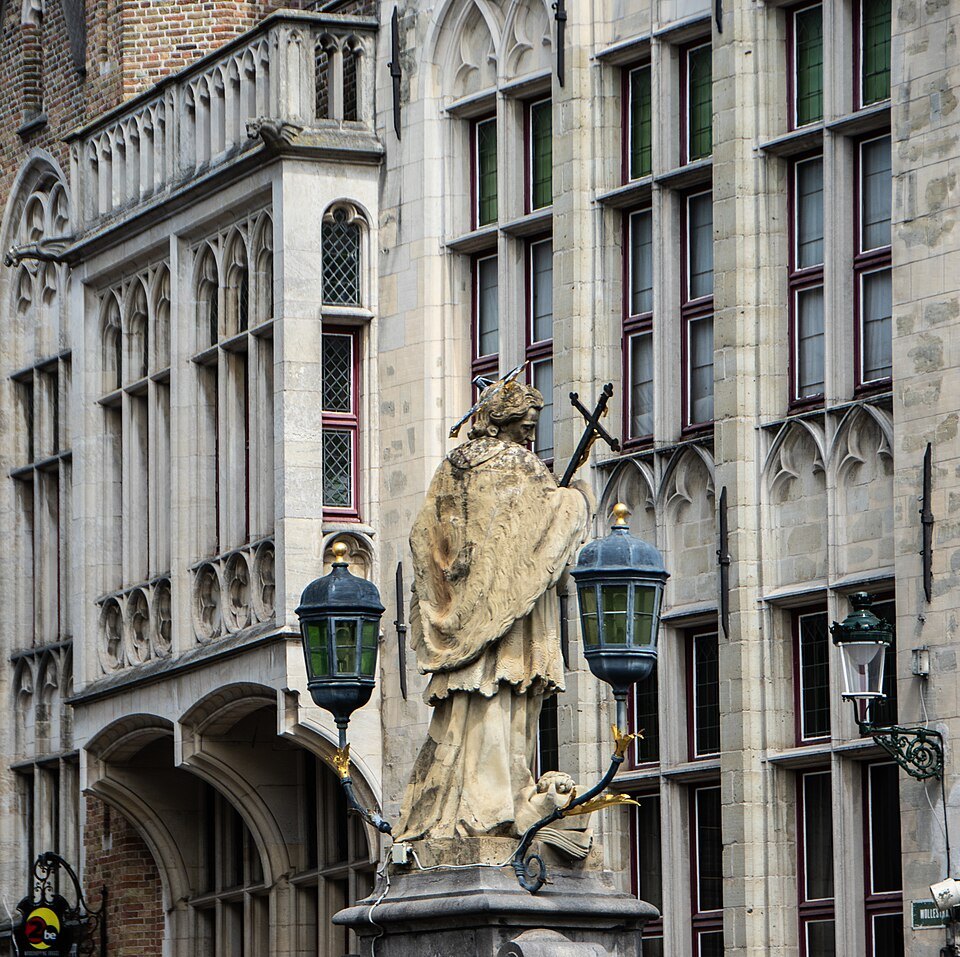
- 2Nepomucenus bridgeA small bridge with a statue of St. John of Nepomuk, patron saint of bridges
- 3The GroeningemuseumThe city's fine-arts museum, set back from the quay behind a gateway
- 4The ArentshofA small walled garden beside the museum, with sculptures on the lawn
- 5Bonifacius bridgeA narrow stone footbridge between old brick walls, the most photographed bridge in town
- 6The GruuthuseThe palace of the lords of Gruuthuse at the quay's far end
Along the water, in the order you meet them.
Why it matters
The Dijver is where Bruges puts its treasures. Walk south from the Rozenhoedkaai and the canal straightens into a quay shaded by trees, lined with grand houses and, a few steps back from the water, the city's great museum of Flemish painting. It is the calmest of the central quays, and the one where the medieval city, the Burgundian court and the modern university town sit side by side.
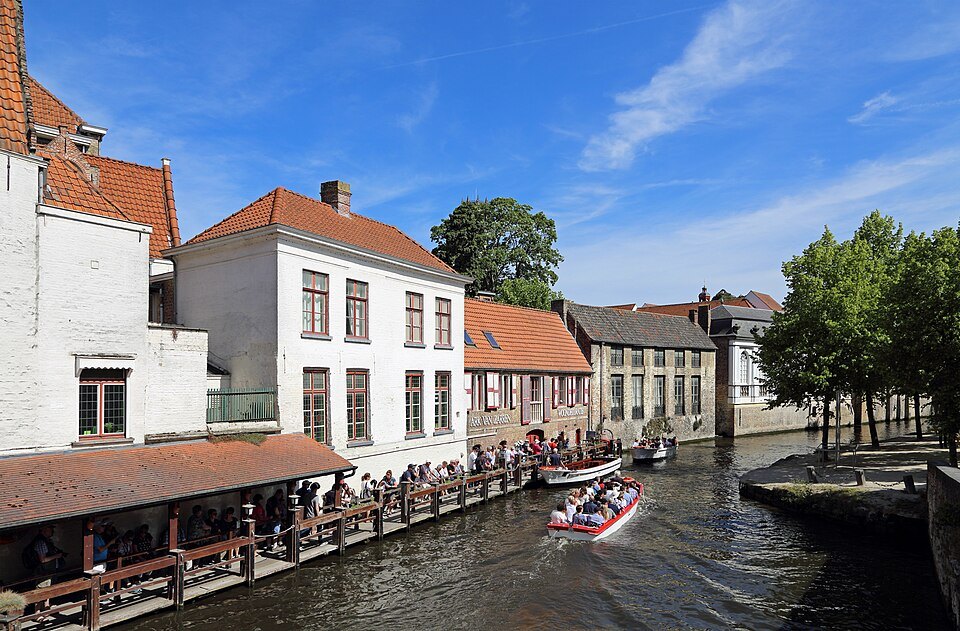
It is also the easiest stretch of canal to walk. The quay is broad and level, with benches under the trees, and it joins the busy Burg area to the quieter south of the old town around the Church of Our Lady and the Beguinage.
An old name for holy water
The Dijver is one of the oldest street names in Bruges. It appears in records as supra diveram in 1292, up die divere in 1302 and caye up den divere in 1369. The canal here follows the original course of the river Reie, and some scholars link the name to old words meaning divine or holy water, though that is an interpretation rather than a certainty.
The ground on the south side of the water has a long religious history. It was the site of the Eekhout Abbey, founded after a hermit settled on what was then an island of oak woods, and in 1127 the Dijver became part of the first city wall. The Groeningemuseum now stands on the site of that medieval abbey.
The Groeningemuseum
Set back from the quay behind a gateway, the Groeningemuseum is the municipal fine-arts museum of Bruges and one of the reasons many visitors come to the city at all. Its collection covers six centuries of Flemish and Belgian painting, from Jan van Eyck to the twentieth-century artist Marcel Broodthaers.
The highlights are the Early Netherlandish paintings made in and for Bruges. Jan van Eyck's Madonna with Canon van der Paele of 1436 and his portrait of his wife Margaret of 1439 hang here, together with Gerard David's two panels of the Judgment of Cambyses from 1498, a Last Judgement by Hieronymus Bosch from around 1486, and work by Hans Memling. Later rooms carry the story through Belgian symbolism and modernism.
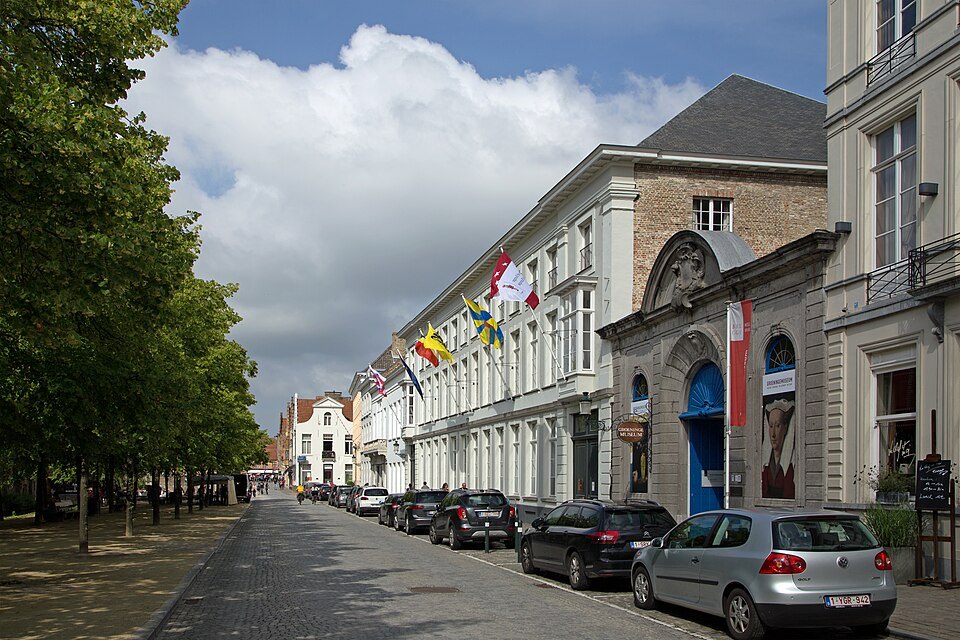
The museum is part of Musea Brugge. Allow at least an hour and a half; the early rooms reward slow looking, and the paintings are small enough that you need to stand close. For the painters and where else their work hangs in the city, see the Flemish masters.
What you actually see
From the Rozenhoedkaai end, the quay runs between the canal on one side and a line of large houses on the other. The College of Europe, the postgraduate institute for European affairs, has buildings along the quay, and its students give this part of town a younger feel than the rest of the center. A small bridge with a statue of St. John of Nepomuk crosses the water near the start.
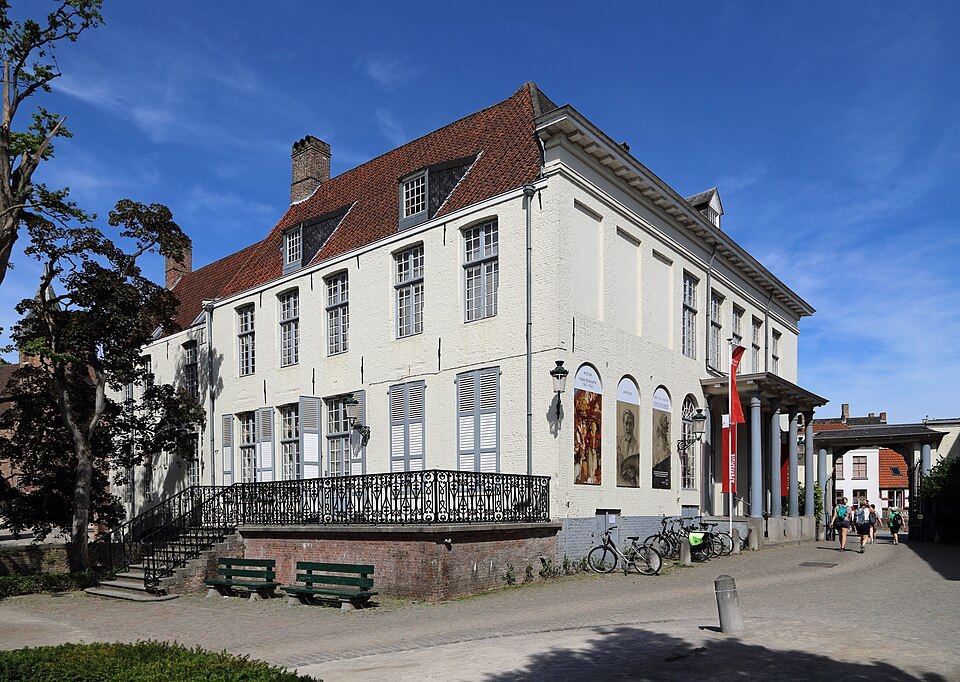
Past the museum gateway is the Arentshof, a small public garden behind a wall, with a group of bronze horsemen by the sculptor Rik Poot on the grass. The eighteenth-century Arentshuis beside it housed a museum until 2023. From the back of the garden a narrow stone footbridge, the Bonifacius bridge, crosses a quiet arm of the canal between old brick walls and overhanging greenery.
That footbridge, with the chapel-like houses behind it and the tower of Our Lady above, is one of the most photographed corners of Bruges, and the view from it back along the water is just as good. At the end of the quay rises the brick palace of the Gruuthuse.
Markets and boats
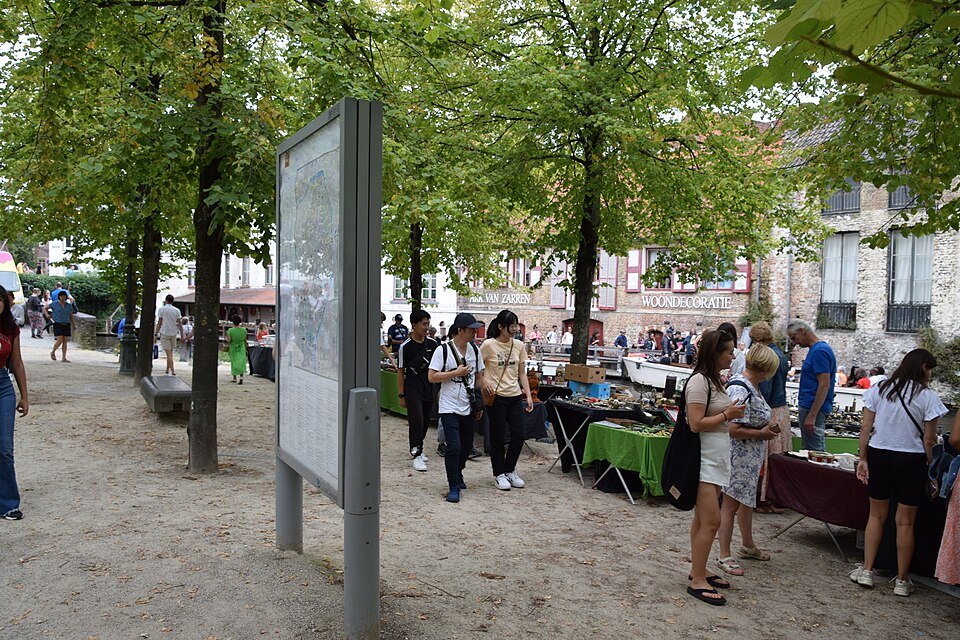
The Dijver has long hosted markets, and a flea market is regularly held under the trees along the quay; check the city's events calendar if you want to catch it. Folklore events and summer gatherings use the quay too, so its look changes from one weekend to the next.
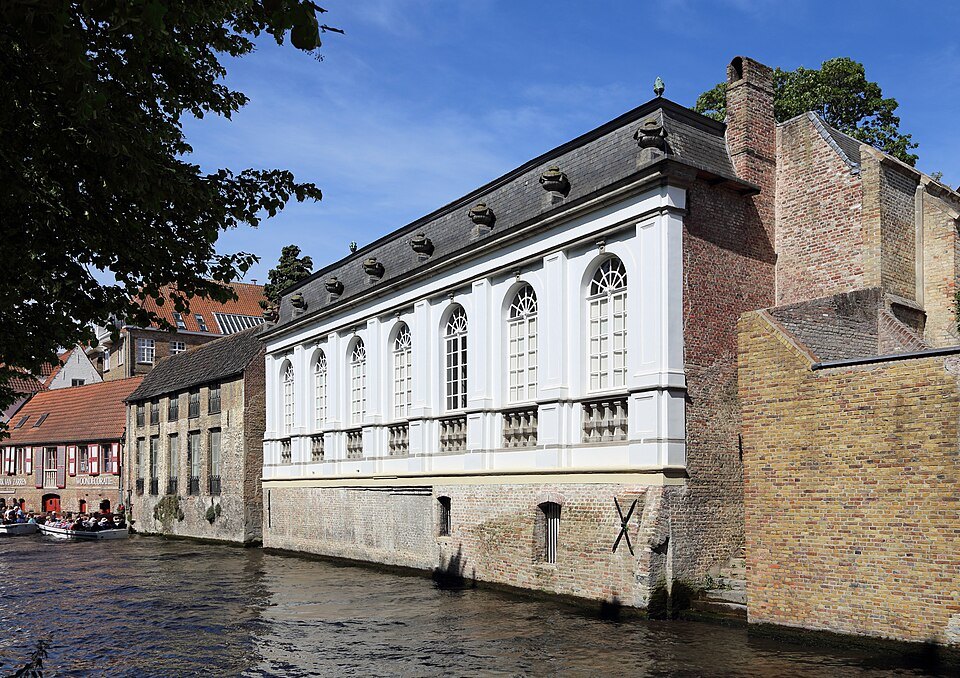
Canal boats pass constantly along this stretch, and the quay is one of the best places to watch them turn. For a trip of your own, the canal boats page explains where they leave from and how it works.
How to visit
The quay is a public street, free and open at all hours, and it is pleasant in any weather thanks to the trees. Walking its length without stopping takes ten minutes; with the Arentshof garden and the Bonifacius bridge, allow half an hour, and add the Groeningemuseum for a morning. The footbridge is narrow and becomes a queue for photographs in the middle of the day, so go early, when the light also falls more kindly on the water and the walls.
The Dijver fits naturally into a walk from the Burg to the south of the old town: along the Rozenhoedkaai, down the Dijver, over the Bonifacius bridge and on to the Church of Our Lady and the Beguinage. The itineraries build a day around it.
Nearby
- Along the DijverRozenhoedkaaiThe bend of quay where the canal turns under brick houses and the Belfry rises behind them, once the salt quay of…Read the page
- Along the DijverGruuthuse MuseumThe brick palace of the lords of Gruuthuse, who grew rich on a tax on beer herbs, now a museum of how wealthy Bruges…Read the page
- Along the DijverChurch of Our LadyThe church whose brick tower rises over the south of Bruges, holding a marble Madonna by Michelangelo and the tombs of…Read the page