Home · Sights · The Canal Boats
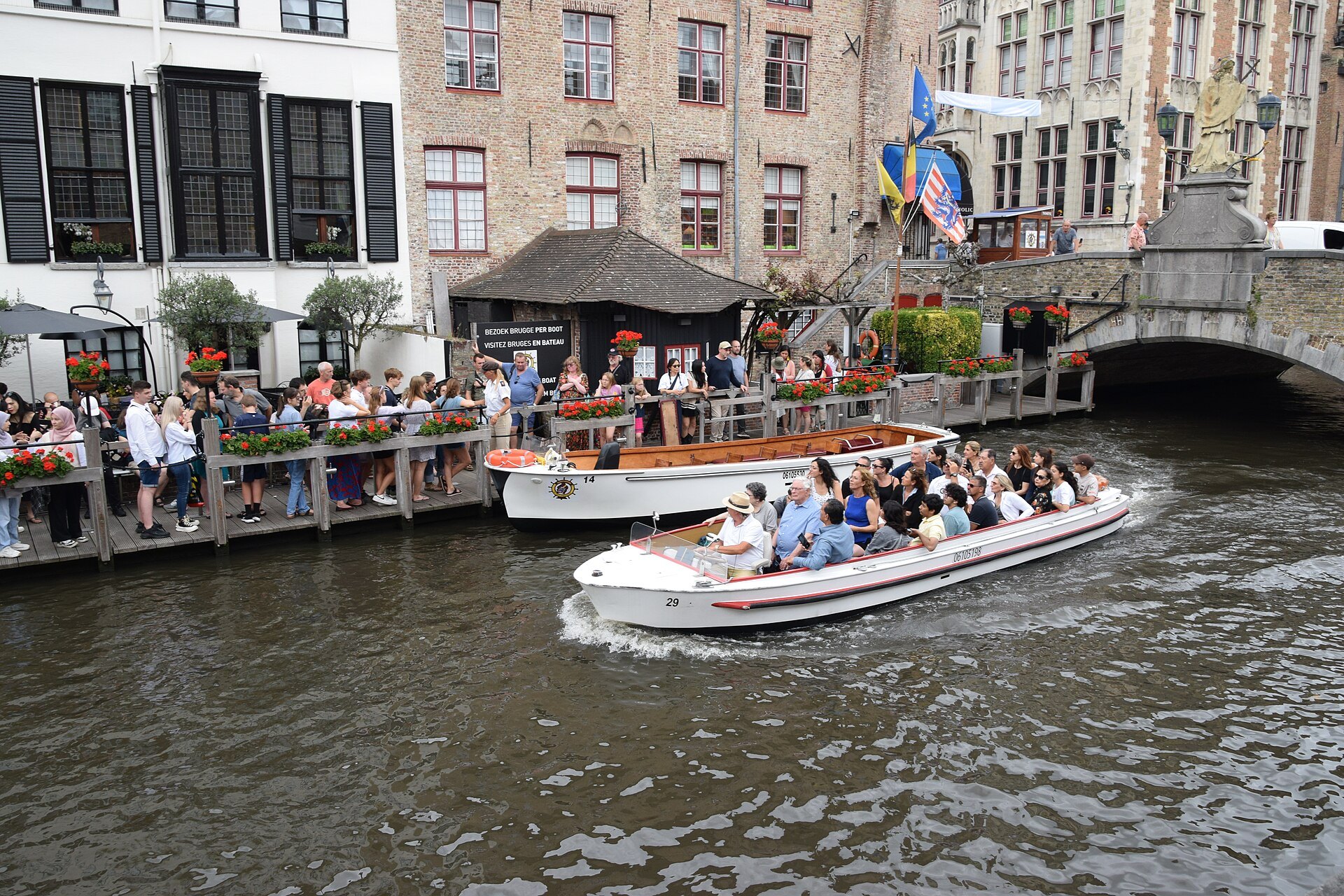
Open boats that carry visitors round the inner canals of Bruges in about half an hour, from five landing stages in the center, with a commentary from the captain.
Along the quay
- 1The landing stageSteps down from the quay to a floating jetty, tickets sold on the spot
- 2The DijverThe broad, tree-lined stretch past the museums
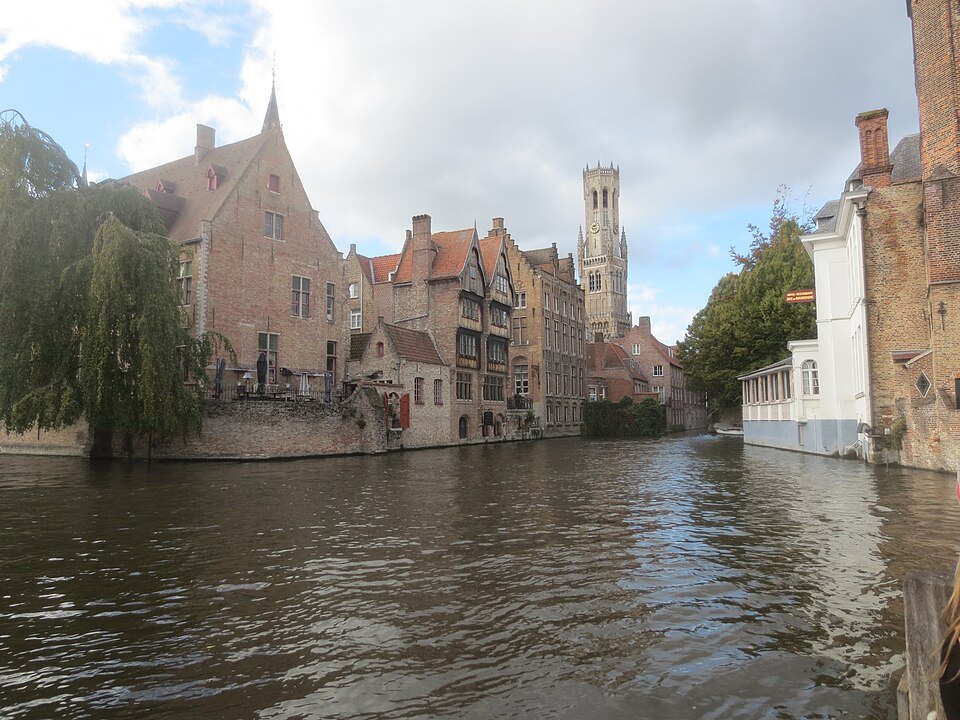
- 3The Rozenhoedkaai bendThe famous turn under the houses with the Belfry above
- 4Low bridgesArches so low that passengers are told to keep their heads down
- 5The northern quaysThe Spiegelrei and the old harbor quarter towards Jan van Eyckplein
- 6The southern reachTowards the Beguinage, past gardens that come down to the water
Along the water, in the order you meet them.
Why take a boat
Bruges is often called the Venice of the North, a name it shares with Amsterdam and Saint Petersburg, and the comparison makes most sense from the water. From a boat you see the backs of houses that face no street, gardens that run down to the canal, and the city's towers appearing and disappearing above the roofs. It is also the easiest way to rest your legs for half an hour without leaving the sights behind.
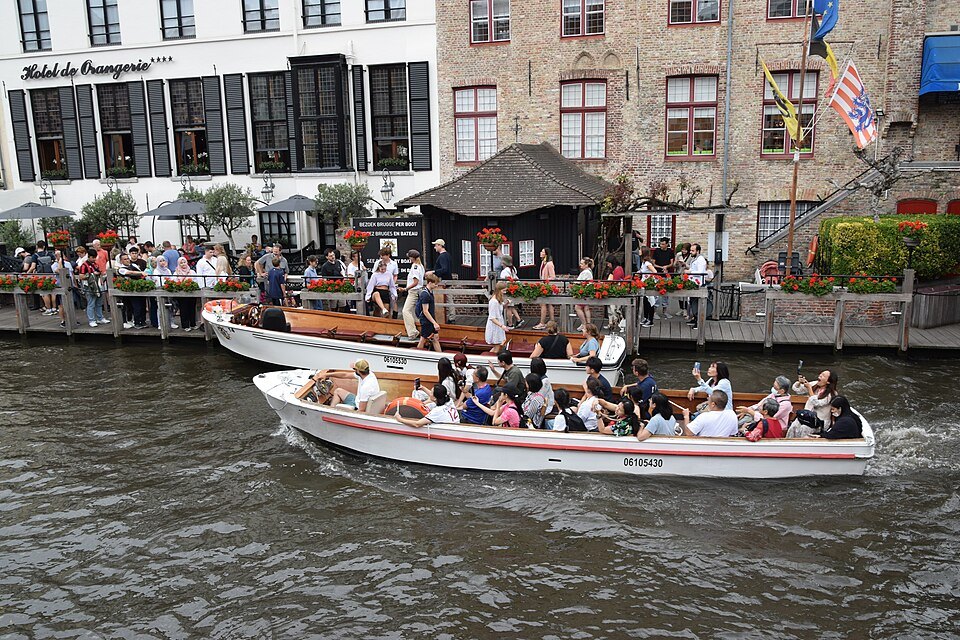
The trips are simple and hard to get wrong. Open boats leave from five landing stages in the center, the captain steers a loop through the inner canals and talks about what you pass, and you are back where you started about thirty minutes later.
Canals that made a city
The waterways of Bruges are not decoration. The inner canals, the reien, follow and extend the course of the river Reie, and some stretches, such as the Groenerei, are now understood to be sections of the natural river rather than dug channels. The city's first wall, built in 1127, followed the line of these inner canals.
Water gave Bruges its wealth. A storm in 1134 opened a channel to the sea at the Zwin, and for three centuries goods could reach the city by water, making it one of the great trading centers of northern Europe. After 1500 the Zwin silted up, trade moved away, and the canals became quiet. That long quiet is what preserved the waterfront you glide past today.
The water still has work to do. South of the Beguinage the canal widens into the Minnewater, a reservoir dug in the thirteenth century to steady the flow of the Reie into the city, and for centuries the barge from Ghent moored there. The boats do not go that far, but the water they float on is still regulated from that basin.
What you see from the water
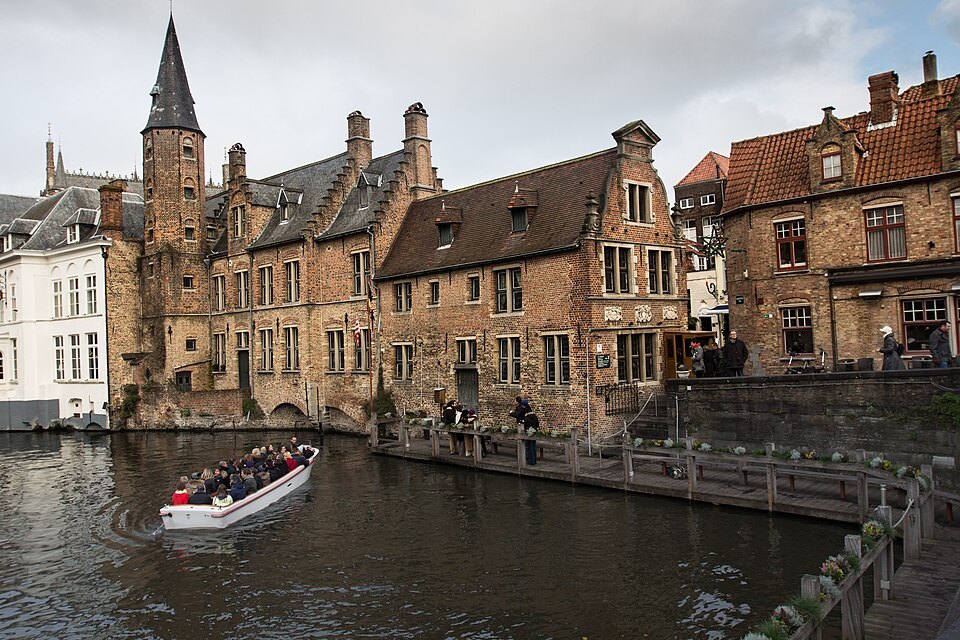
Routes vary slightly between operators, but a trip generally loops between the old harbor quarter near Jan van Eyckplein in the north and the Beguinage in the south. Along the way the boat passes the tree-lined Dijver and the museums, the bend of the Rozenhoedkaai with the Belfry above, and quieter stretches where the houses come right down to the water.
Look out for the bridges. Some are so low that everyone ducks, and the captains enjoy warning you. From the water you also get views that are impossible from the streets: the brick gables of St. John's Hospital rising from the canal, private gardens with steps to the water, and the back of the Gruuthuse palace beside the Church of Our Lady.
Where the boats leave from
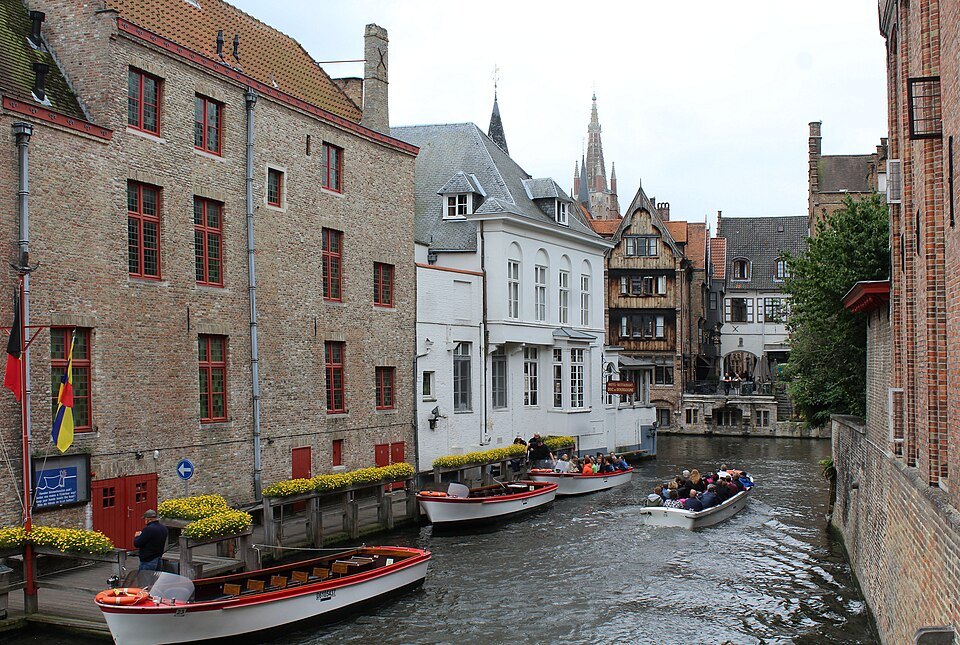
There are five landing stages, and they are the only places to board. Visit Bruges lists them at Huidenvettersplein 13, on the Rozenhoedkaai, at Wollestraat 32, at Nieuwstraat 11 and at Katelijnestraat 4. All of them are in the center, within a few minutes of the Markt or the Church of Our Lady.
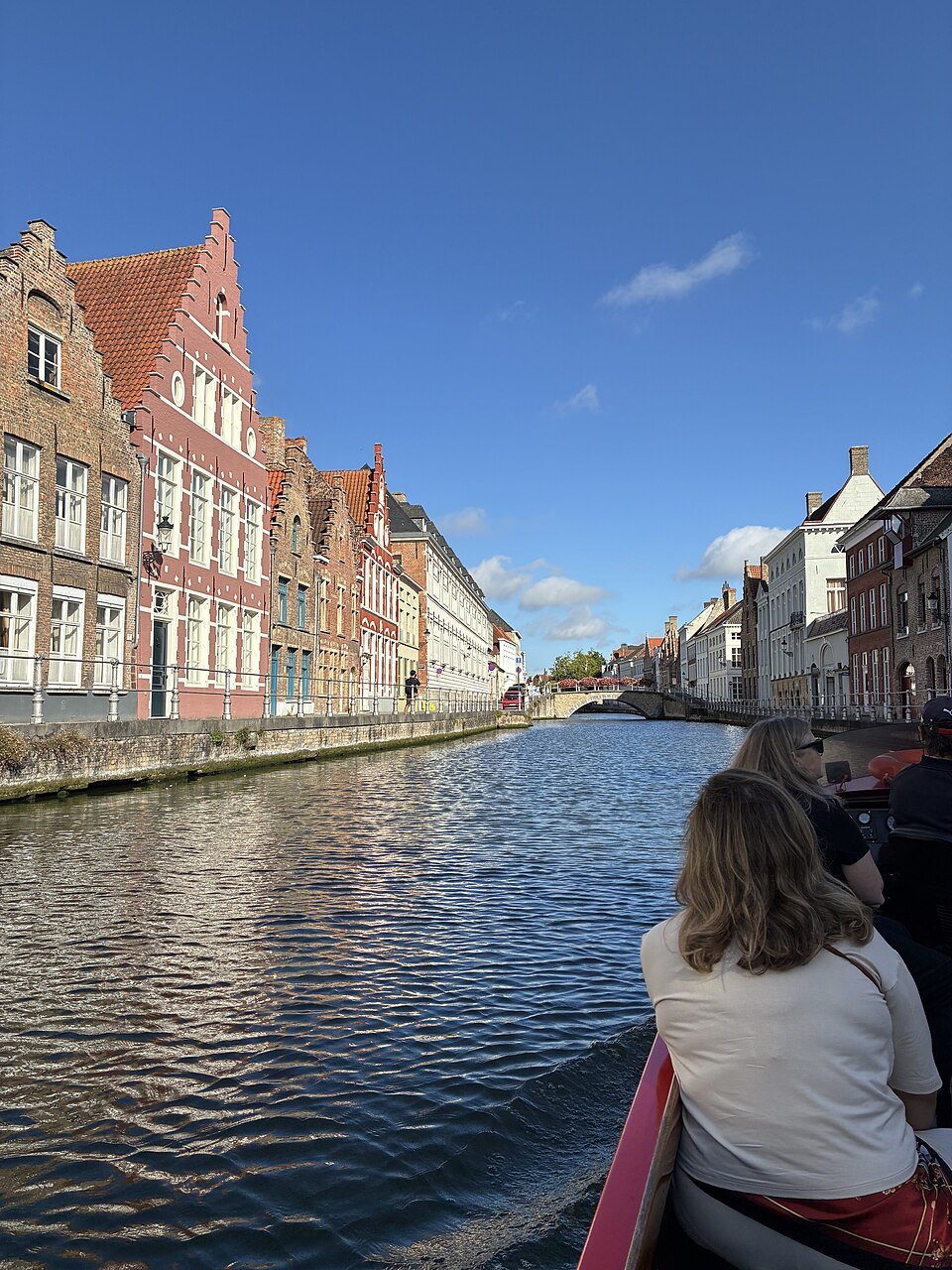
Each stage is run by a boat company, but the trip is essentially the same from all of them. Choose the one closest to where you are, or the one with the shortest line when you arrive.
How it works
A trip lasts about half an hour without stops. Tickets are bought at the landing stage; individual visitors cannot reserve ahead, although groups of twenty or more can. Boats run daily from March to October. From November to February, at least one jetty runs each day by rotation, and the others may open at the companies' discretion.
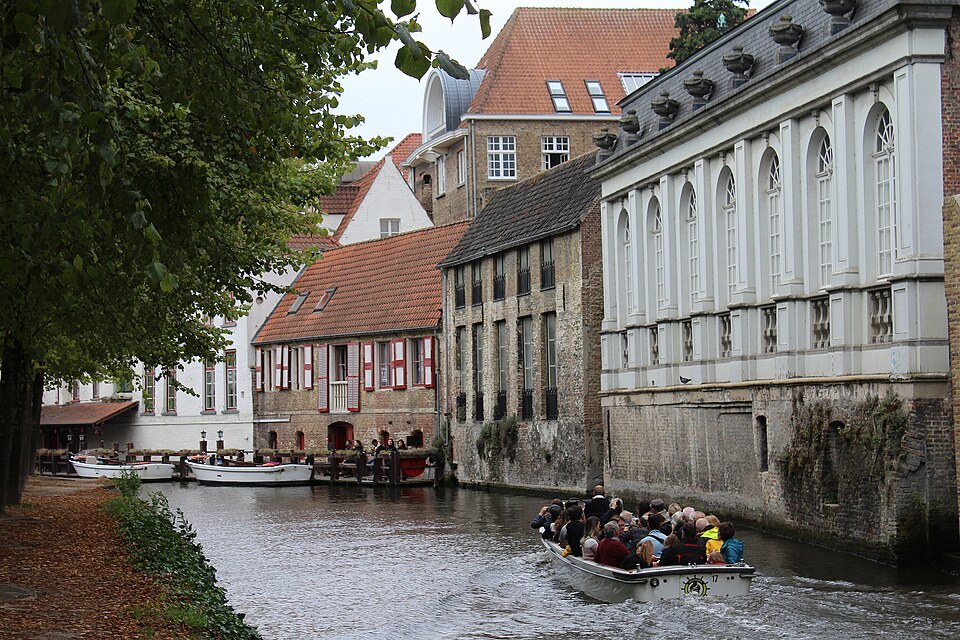
The boats have no roof. If rain starts, umbrellas are handed out, and in long spells of heavy rain the companies may stop sailing. Captains give their commentary according to who is on board; most speak Dutch, French and English, and some also speak some German or Spanish.
Access is the main limitation. Neither the boats nor the landing stages are wheelchair accessible, because you go down stairs to the water and there is no lift. Prams can sometimes be left with the boat company if you ask, and small dogs can travel on your lap; ask the company in advance about larger dogs.
Tips for a better trip
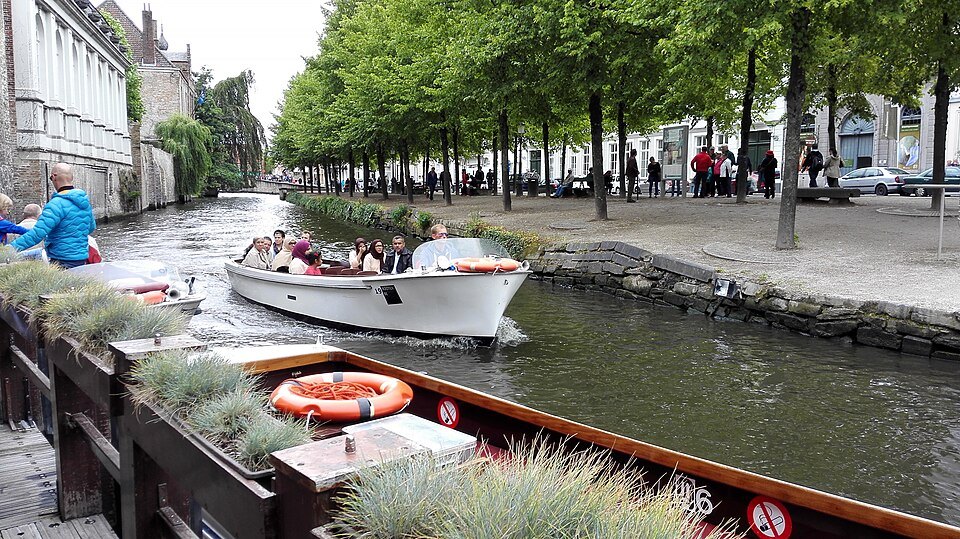
Lines at the busiest stages, especially on the Rozenhoedkaai, build up from late morning in summer. Go early, or pick a stage slightly off the main route. Sitting at the edge of the boat gives the best view but also the closest encounter with low bridges and spray.
For photographs, a wide lens helps, because the houses are close and the canals are narrow. The light is kindest in the morning and late afternoon; at midday the water can look flat and the shadows under the bridges very dark. Keep your camera strap round your wrist: the boats have no roof and sit low in the water.
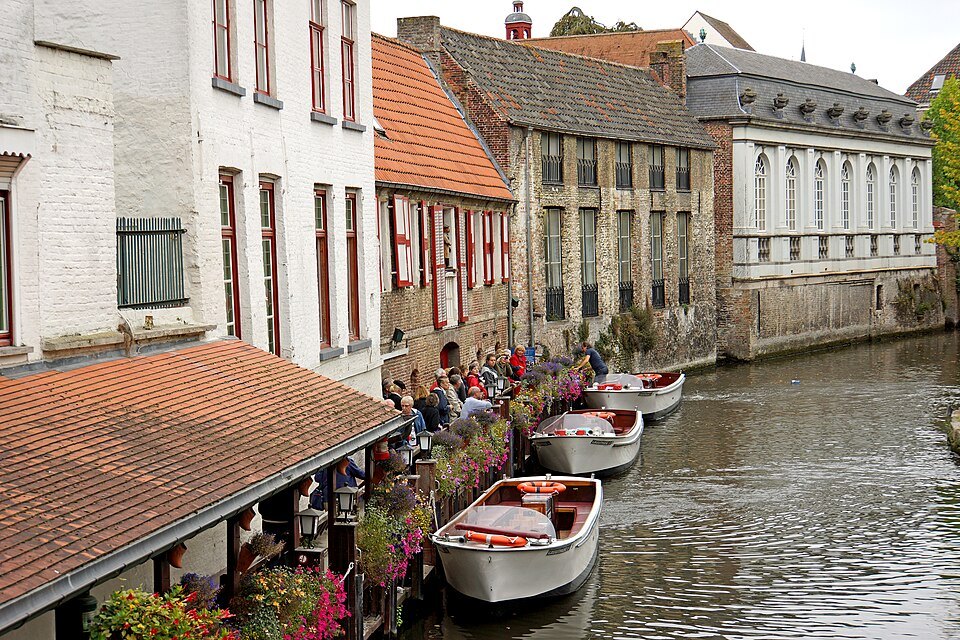
The boats are part of the scenery as well as a way to see it, so if you prefer to watch rather than ride, stand on the Rozenhoedkaai or the bridges along the Dijver. For a longer view of the waterways, including the quiet northern canals the boats reach less often, see the canals.
Nearby
- Along the DijverRozenhoedkaaiThe bend of quay where the canal turns under brick houses and the Belfry rises behind them, once the salt quay of…Read the page
- Along the DijverThe DijverA tree-lined stretch of canal south of the Rozenhoedkaai, where the Groeningemuseum, the Gruuthuse and the College of…Read the page
- The merchants' northGroenereiA curving stretch of canal and quay behind the Burg, lined with almshouses, the Renaissance back of the Liberty of…Read the page