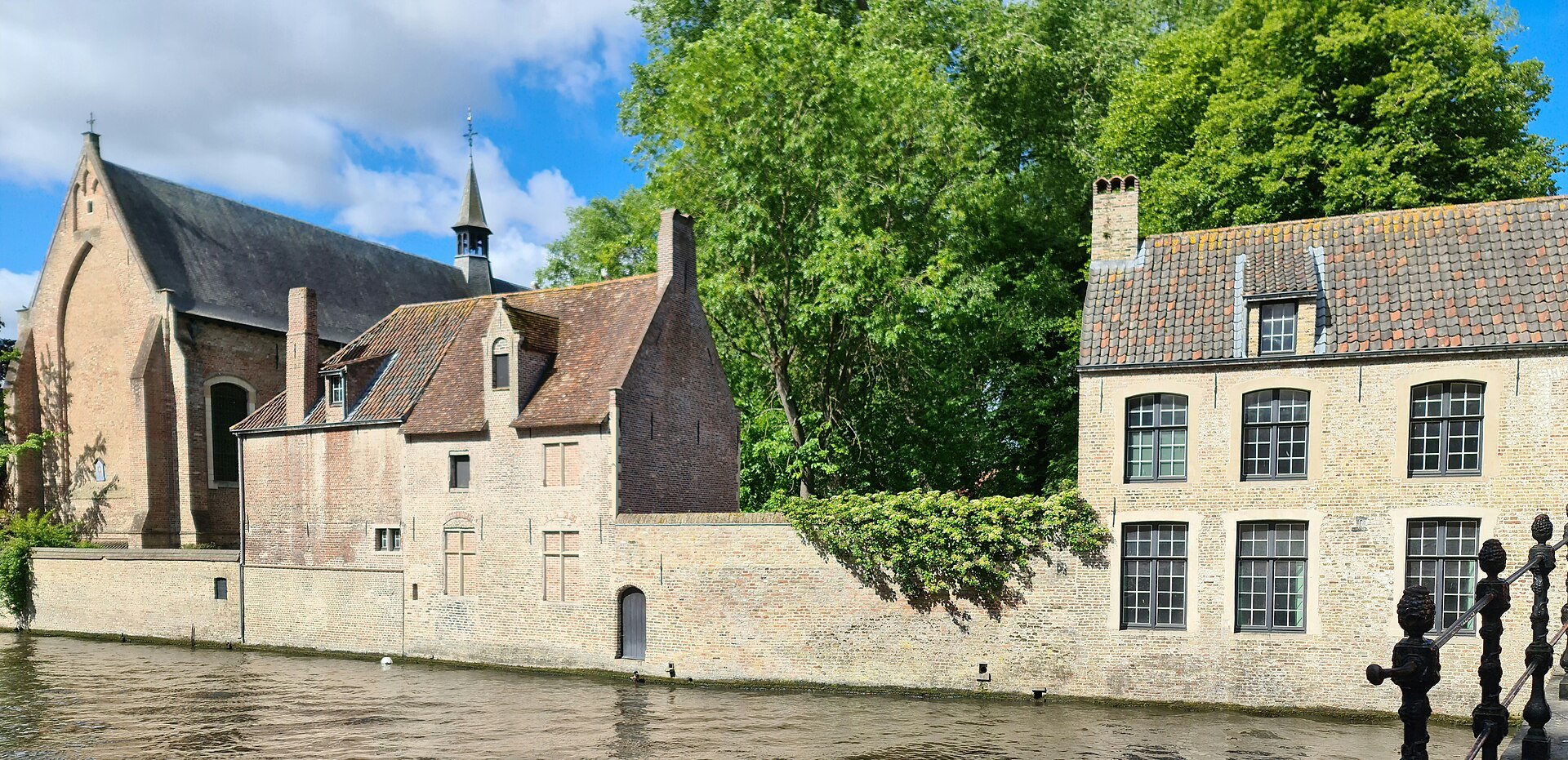
A walled enclosure of white houses round a lawn of tall trees, founded for beguines in the thirteenth century and home to Benedictine nuns since 1927.
The parts to look at
- IThe bridgeThe stone bridge over the canal that leads to the entrance
- IIThe gate of 1776The arched gateway with a figure of St. Elizabeth of Hungary above
- IIIThe courtyardA lawn under tall trees, carpeted with daffodils in spring
- IVThe white housesAbout thirty whitewashed houses, mostly of the sixteenth to eighteenth centuries
- VThe churchThe Gothic church of the beguinage on the courtyard's edge
- VIThe beguine's houseOne house kept as a small museum of how the women lived
Inside the walls, from the gate inwards.
Why it matters
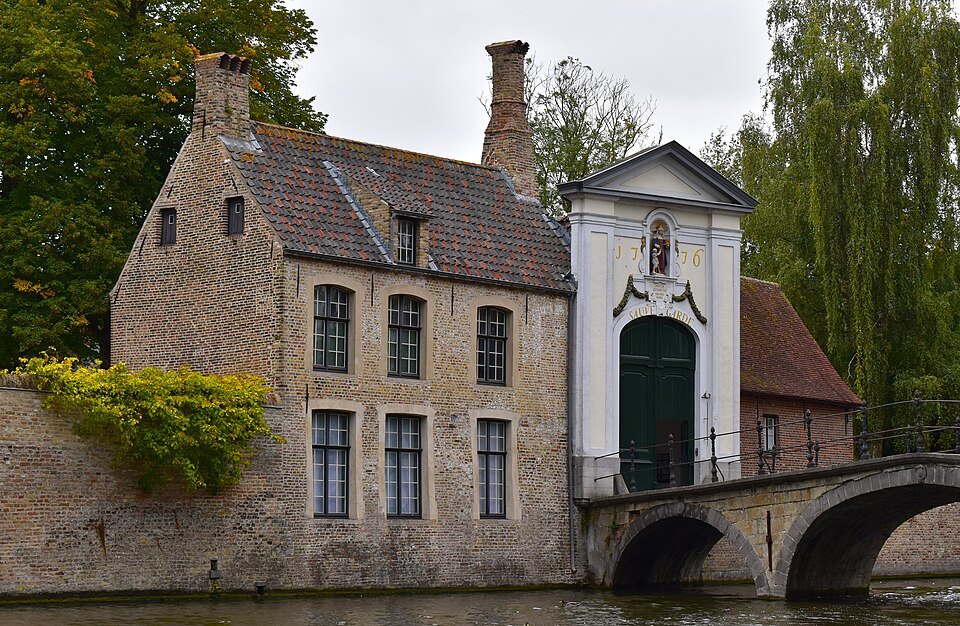
Cross a small bridge over the canal south of the Church of Our Lady, pass through an arched gate, and the noise of Bruges falls away. Inside is a lawn shaded by tall trees and ringed by white houses, with a church on one side. This is the Beguinage, Ten Wijngaerde, and it is the most peaceful place in the old town.
It is also a place where people still live a religious life. The women who first lived here have long gone, but a community of Benedictine nuns has made the Beguinage its home since 1927, and the enclosure keeps a stillness that visitors are asked to respect.
Who the beguines were
Beguines were laywomen who chose to live together in a community devoted to prayer and work without taking the permanent vows of nuns. Beguinages grew up across the Low Countries in the Middle Ages, walled enclaves of small houses where single women and widows could live independently and supporting themselves by their own work.
The Bruges beguinage was founded around 1244 by Margaret of Constantinople, Countess of Flanders, after she obtained permission from the Bishop of Tournai. In 1245 it was recognized as an independent parish. In 1299 it came under direct royal authority, which is why it carries the title Princely Beguinage.
The beguinages of Flanders are listed together by UNESCO as the Flemish Béguinages, inscribed in 1998, and Ten Wijngaerde is one of them. The protected site covers just over half a hectare.
The Benedictines
No beguines remain in Bruges. In 1927 Canon Hoornaert founded a community of Benedictine nuns in the Beguinage, and the houses on the west side were reshaped and enlarged into their convent, the Monasterium De Wijngaard. The sisters still live here, which is why the enclosure feels like a living place rather than a museum piece.
Their presence also explains the rules. The Beguinage is a place of silence, and visitors are expected to speak quietly, keep to the paths and leave the houses and the sisters undisturbed.
The founder, Margaret of Constantinople, ruled Flanders in the thirteenth century, and her support gave the Bruges beguines both land and protection. The name Ten Wijngaerde, the vineyard, is still used for the whole enclosure and for the bridge that leads into it.
What you actually see
The entrance is part of the experience: a stone bridge over the canal, then a gateway built in 1776, with a figure of St. Elizabeth of Hungary in a niche above it. Once inside, the courtyard opens out, a broad lawn under tall trees, crossed by paths and enclosed by the houses.
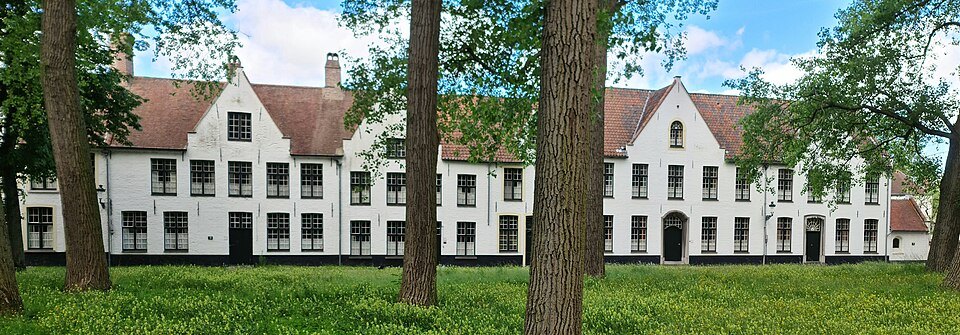
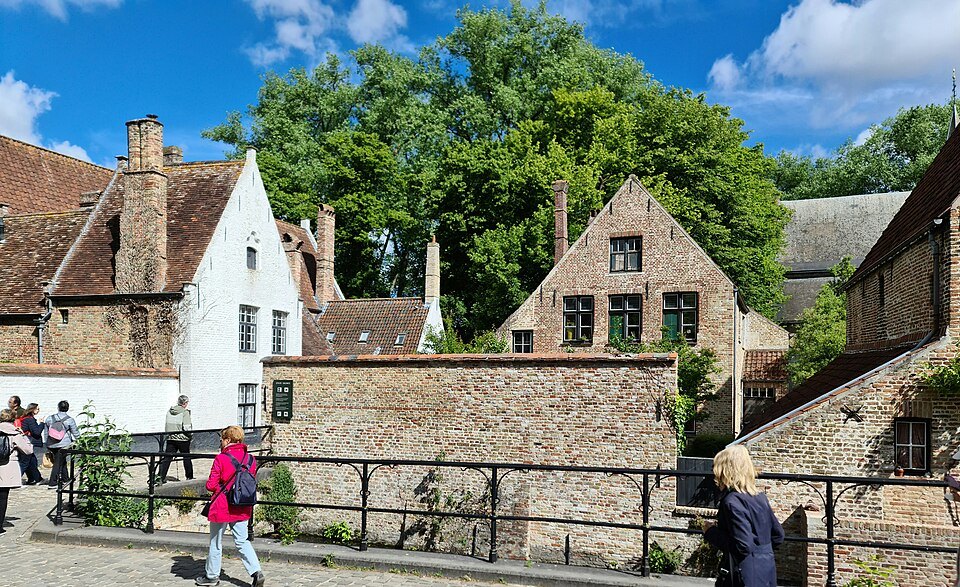
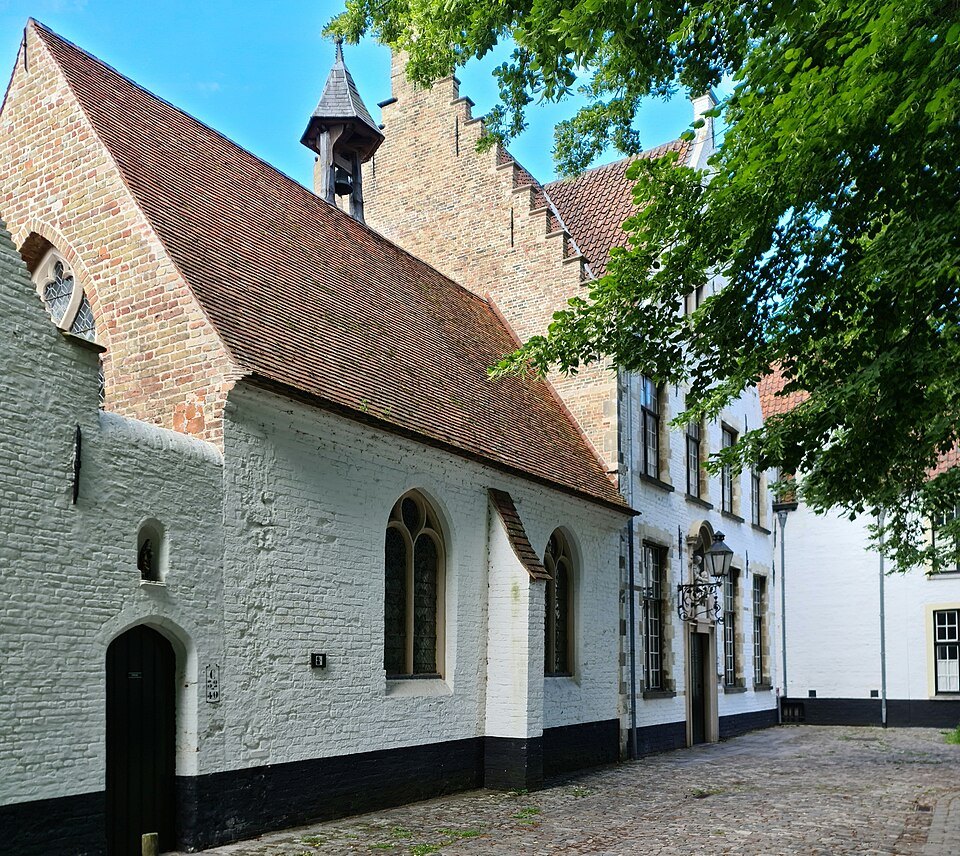
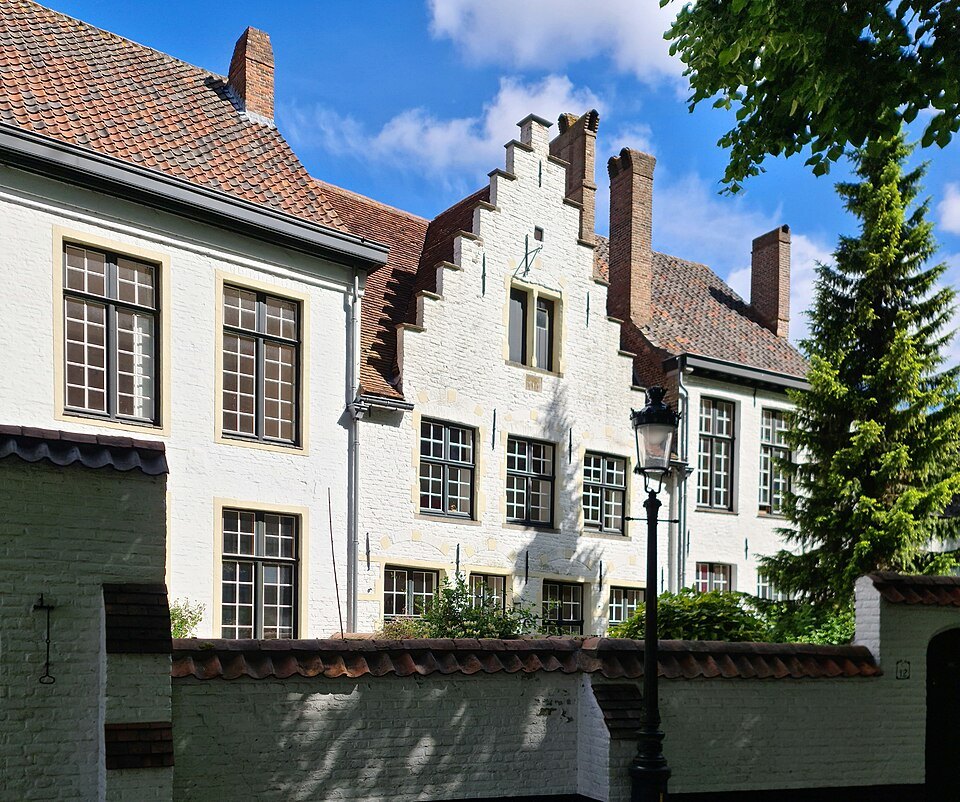
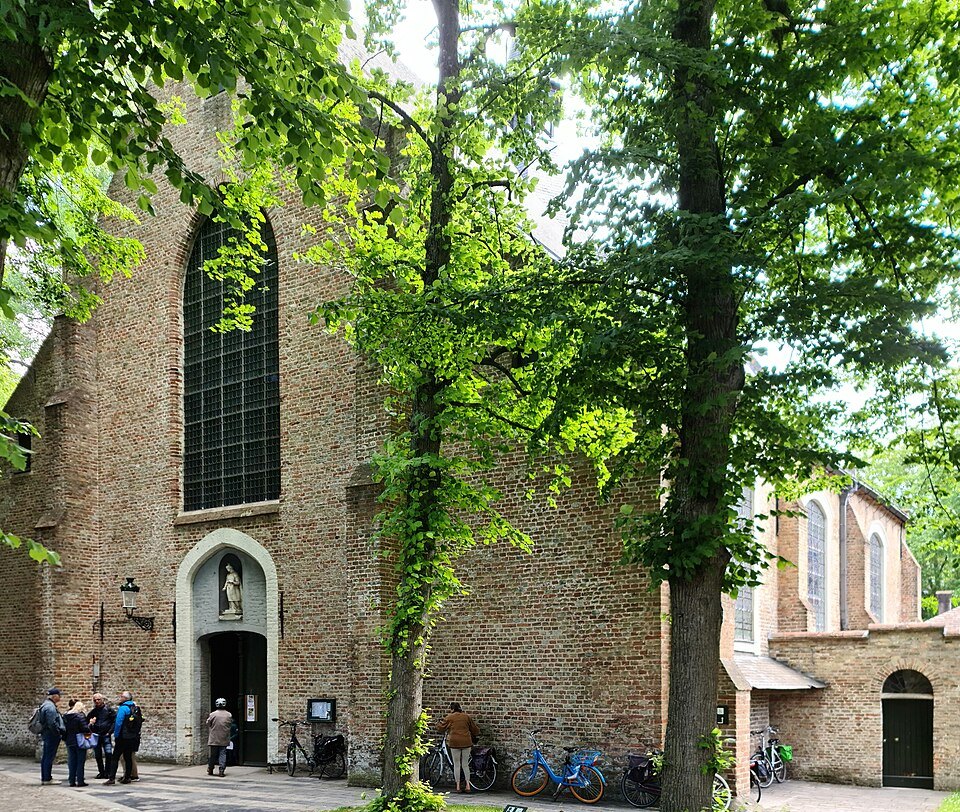
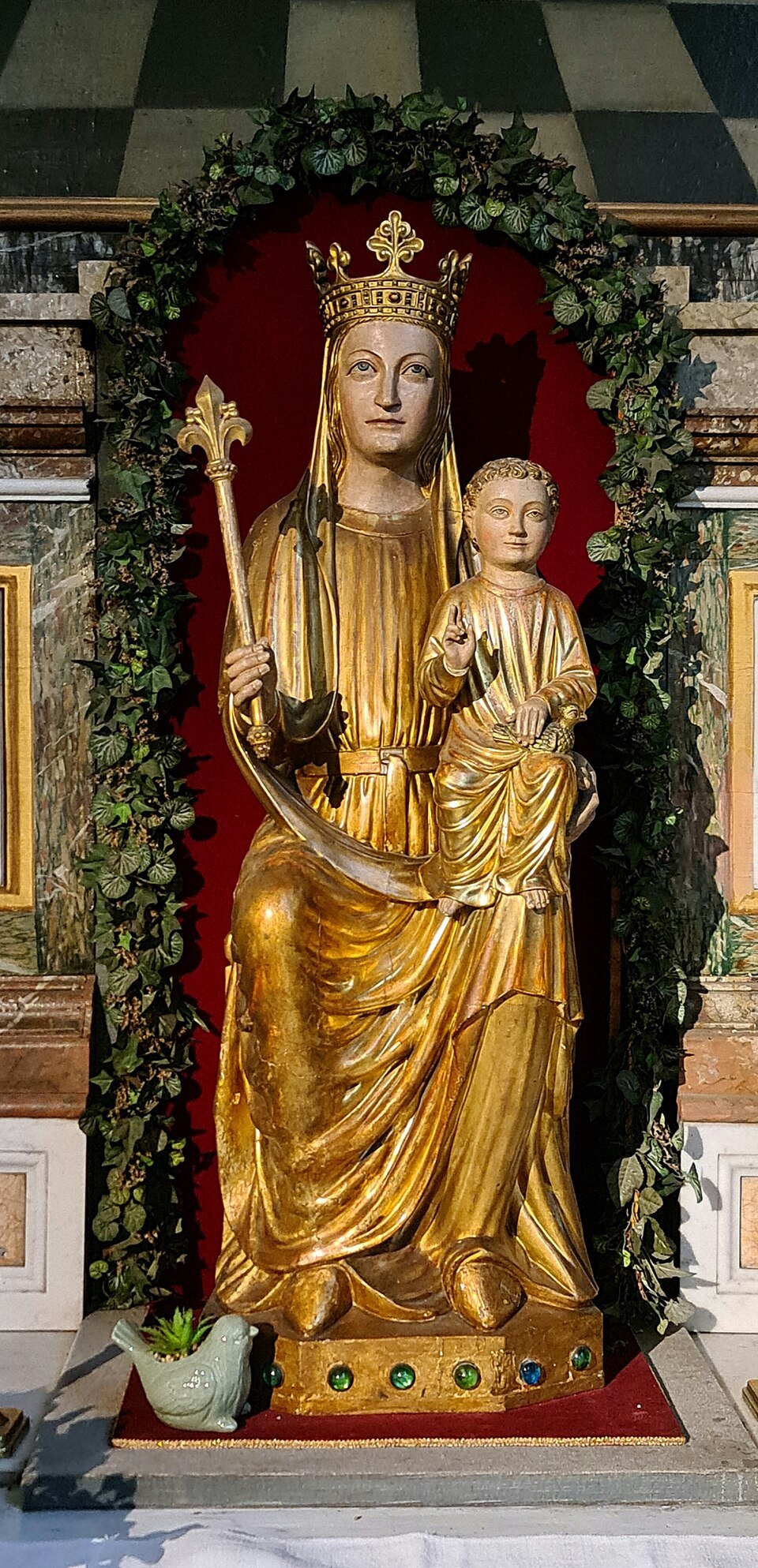
There are about thirty houses, most of them built between the sixteenth and eighteenth centuries, whitewashed and simple, with dark window frames and small front gardens. The Gothic church stands on the courtyard, and one house is kept as a museum, furnished as a beguine's home with period furniture and lacework.
In spring the lawn is covered with daffodils, and this is the most photographed moment of the Beguinage's year. A second gate leads out past the Sas House towards the Minnewater.
How to visit
The courtyard can be entered freely during the day; the gates have set opening times, posted at the entrance and on the Visit Bruges site. The beguine's house museum has its own arrangements. Allow half an hour, more if you visit the house and the church.
Silence matters here more than anywhere else in Bruges. It is best to visit early or late, when there are fewer people and the quiet is easier to feel. Keep to the paths and do not walk onto the lawn among the flowers.
The Beguinage is easy to reach on foot: five minutes south of Our Lady and St. John's Hospital, and a few minutes from the station along the canal. Canal boats pass along the water beside the bridge.
Seasons and light
The Beguinage changes more with the seasons than most sights in Bruges. In spring the lawn under the trees fills with daffodils, and for a few weeks the white houses stand above a sea of yellow; it is the busiest and most photographed time of the year. In summer the trees give deep shade, and the courtyard stays cool when the streets outside are hot.
Autumn brings falling leaves and lower sun that catches the whitewashed walls in the afternoon, and in winter, with the trees bare, you can see the whole shape of the enclosure and the church. At any time of year, the first hour after the gates open is the calmest.
Photographers should remember that the houses are homes. Photograph the courtyard, the trees and the fronts from the paths, but do not point cameras through windows or follow the sisters.
Around the Beguinage
Leaving by the southern gate, you come out by the lake of the Minnewater, with its park, the sluice house and the brick powder tower. It is the natural next stop and the start of the long walk round the city's ramparts.
Heading back north, the lanes between the Beguinage and the St. John's Hospital are among the quietest in the center, and the canal boats have a landing stage on Katelijnestraat nearby. For how the south of the town works as a place to stay, see where to stay.
Nearby
- The quiet southMinnewaterA broad sheet of water beside the Beguinage, dug in the thirteenth century to control the river flowing into Bruges,…Read the page
- Along the DijverChurch of Our LadyThe church whose brick tower rises over the south of Bruges, holding a marble Madonna by Michelangelo and the tombs of…Read the page
- Along the DijverSt. John's HospitalOne of the oldest surviving hospital buildings in Europe, where Augustinian sisters cared for the sick for eight…Read the page