Home · Sights · Church of Our Lady
The church whose brick tower rises over the south of Bruges, holding a marble Madonna by Michelangelo and the tombs of Mary of Burgundy and Charles the Bold.
The parts to look at
Why it matters
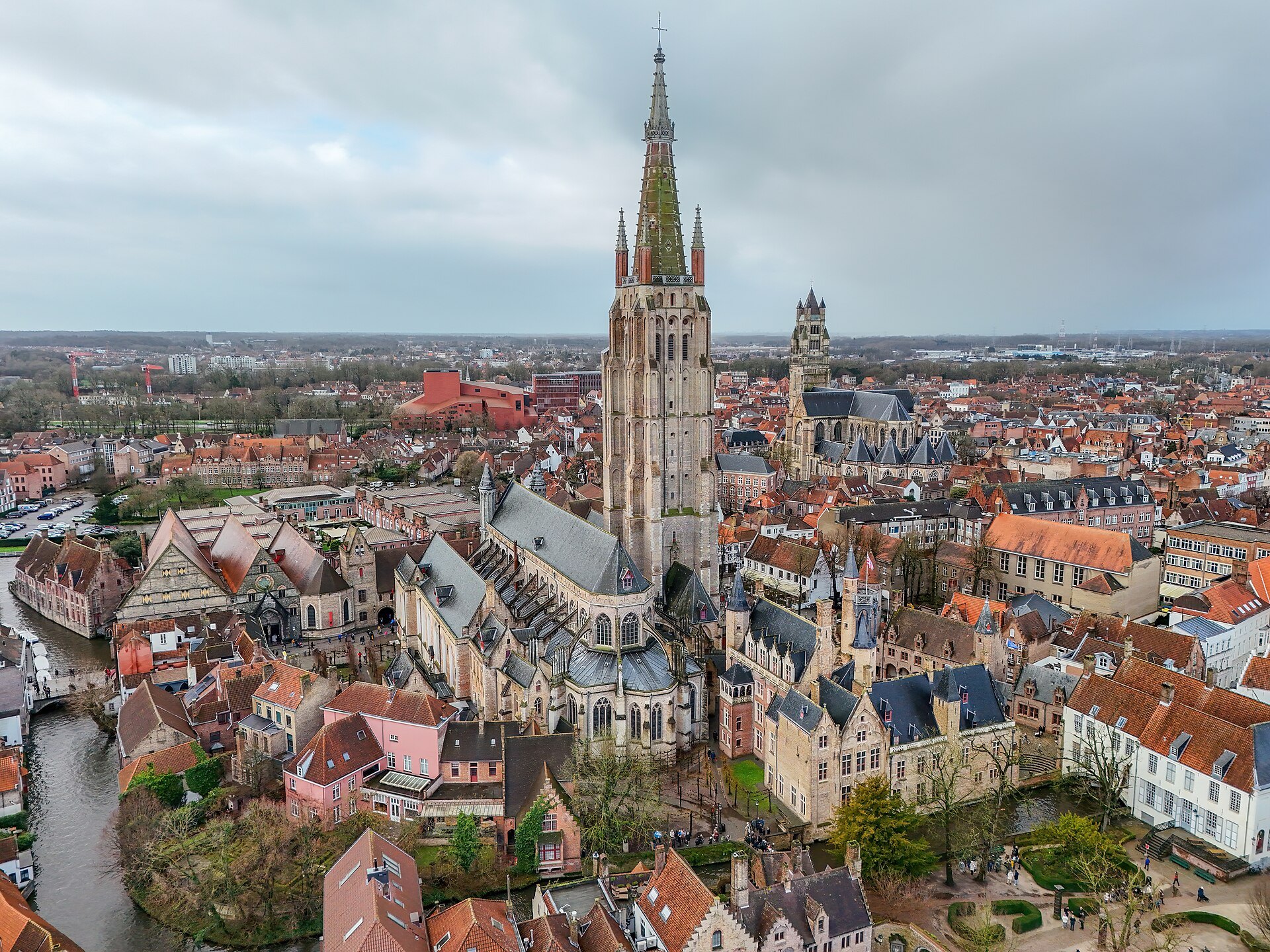
From almost anywhere in the south of Bruges you can see the tower of the Church of Our Lady, a great brick shaft rising far above the roofs. At just over 115 meters, it is the tallest structure in the city and one of the highest brick towers in the world. Beneath it is a church full of the things that made medieval Bruges rich and connected: Burgundian tombs, the arms of Europe's most exclusive order of knights, and a sculpture by Michelangelo.
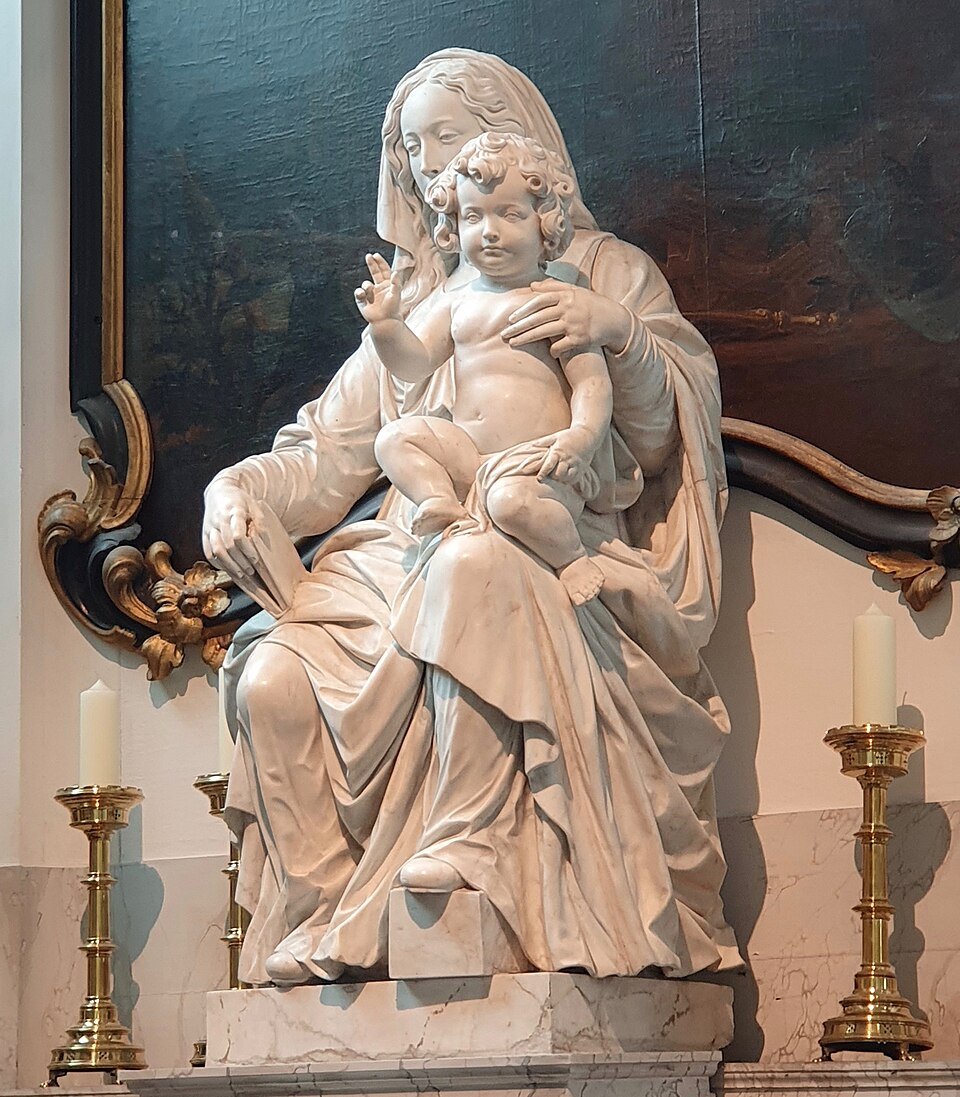
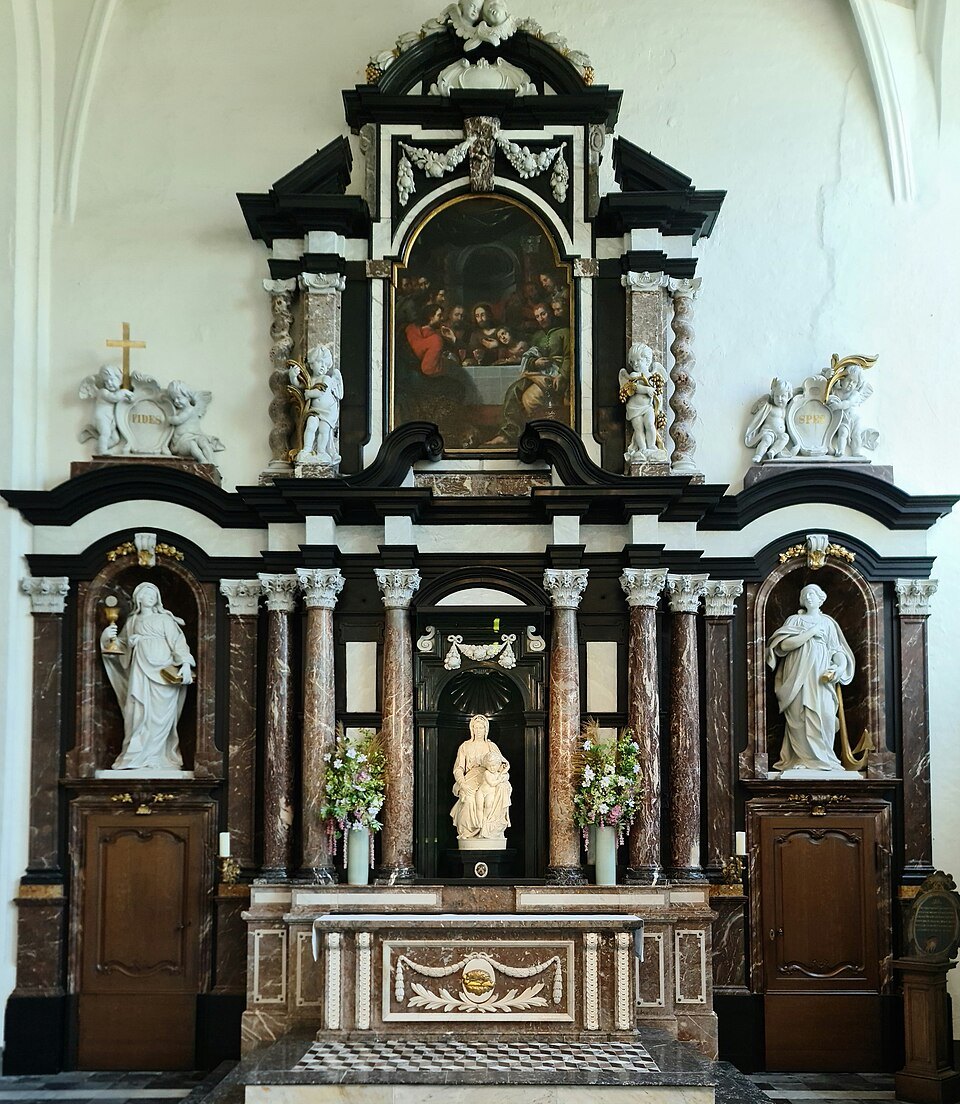
The Madonna is the reason most visitors come in. It is thought to be the only sculpture by Michelangelo that left Italy during his lifetime, and it is small, quiet and extraordinary.
Seven centuries of building
A chapel stood here in the ninth century, and the church became an independent parish in 1116. The present building was begun around 1230. Its central nave was built in Tournai stone in the Scheldt Gothic style; the choir and apse followed in brick between 1270 and 1280. Side aisles were added by 1370 and 1450, and the Paradise Porch, a richly carved entrance, dates from around 1465.
The tower was raised between about 1270 and 1340, after an earlier tower collapsed in 1163. It received its spire in the fifteenth century and was rebuilt in the nineteenth. The long building history shows in the fabric: grey stone in the old nave, brick everywhere else, and a church that grew outwards as the city prospered.
The Madonna of Bruges
Michelangelo carved the marble Madonna and Child between about 1504 and 1506. Two Bruges merchant brothers, Jan and Alexander Mouscron, who traded in Italy, acquired it there, and it was given to the church in 1514 as a family memorial.
Unlike most images of the Virgin with the child on her lap, Michelangelo's boy stands between his mother's knees, about to step down into the world, while she looks past him with a withdrawn, serious face. The group is less than life-size and set in a marble altar, so it rewards patience rather than a quick glance. Stand to the side as well as in front: the turn of the child's body and the weight of the mother's cloak change as you move.
It has been taken away twice. French revolutionaries removed it around 1794, and German forces took it in 1944; both times it was recovered and returned.
The Burgundian tombs
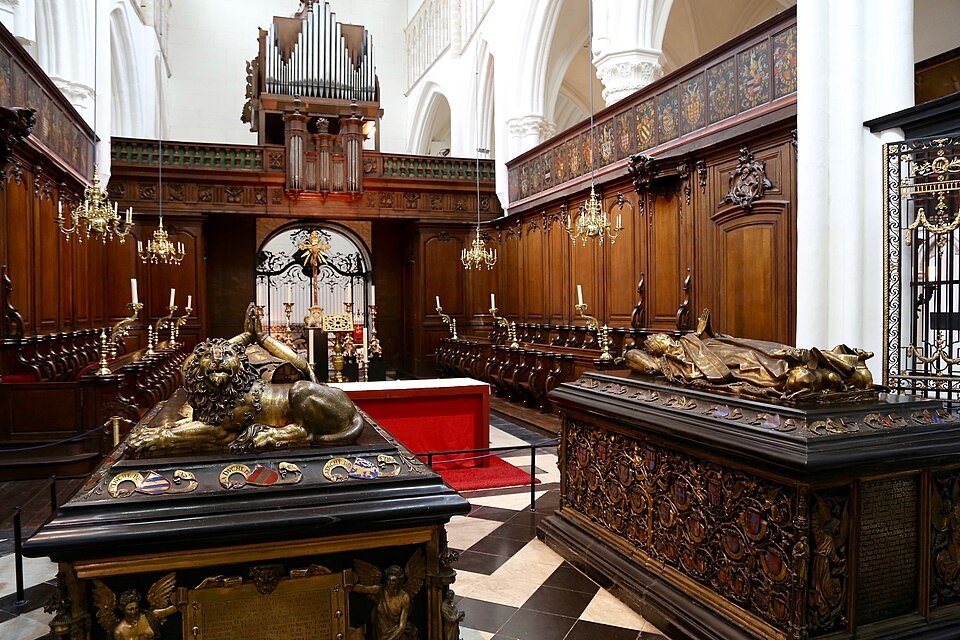
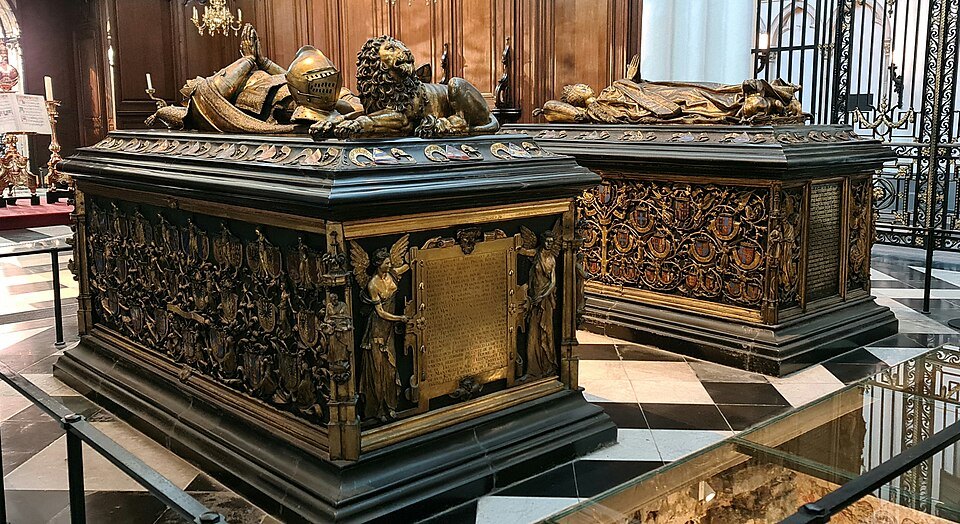
In the choir lie two of the most important figures in the city's history. Mary of Burgundy, duchess and heir to the Burgundian lands, died in 1482, and her remains were confirmed here by archaeologists in 1979. Her tomb, designed by Jan Borman and made between 1495 and 1502, is a showpiece of late Gothic craftsmanship, admired for the fine rendering of her face and the fall of her drapery.
Beside her is the tomb of her father, Charles the Bold, made between 1559 and 1562 in a style between Gothic and Renaissance. The heart of Philip the Handsome, Mary's son, is also buried in the church.
The excavations of 1979 also uncovered richly painted burial vaults beneath the monuments, a discovery that changed what was known about how the Burgundian elite were buried. Above the choir stalls hang thirty heraldic shields of the Knights of the Golden Fleece, a reminder that the order held its chapter here in 1468.
What you actually see
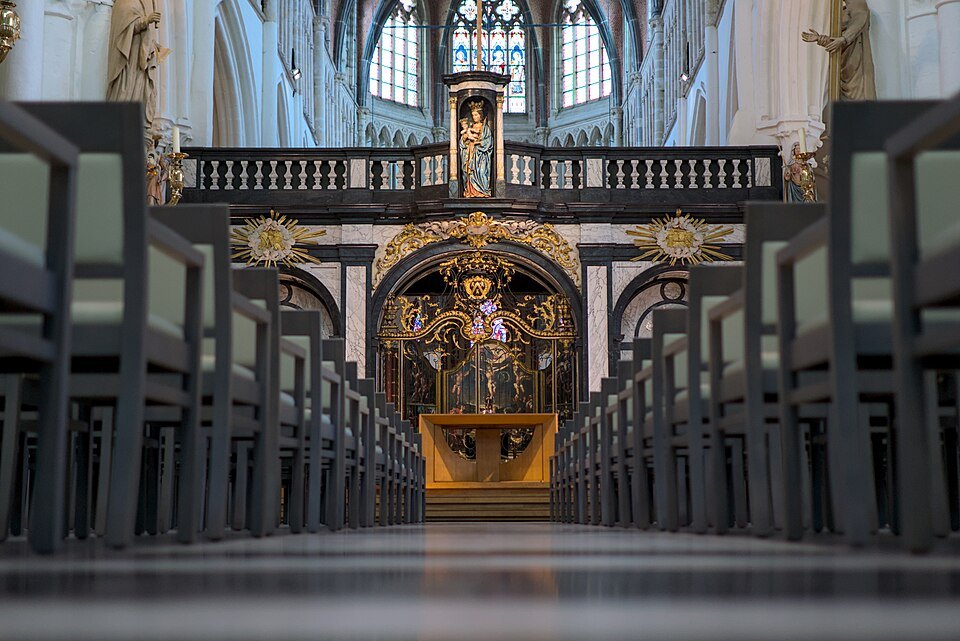
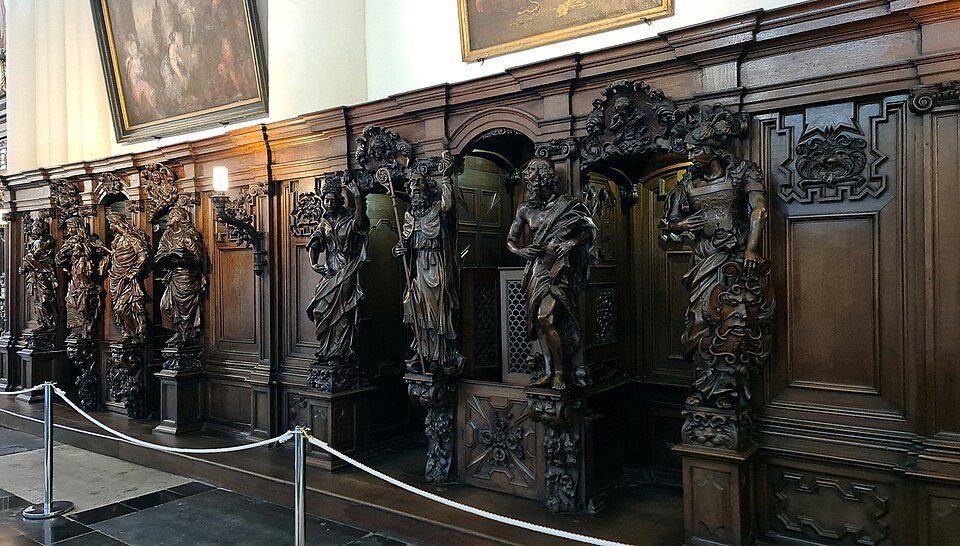
The church has two parts for visitors. The nave and aisles serve as a place of worship, divided by a three-part wooden rood screen and watched over by seventeenth-century statues of the apostles. The Madonna has its own marble altar, set apart from the busy central aisles of the church. The choir, with the tombs, the shields and the altarpiece by Bernard van Orley, forms the museum section.
High on the wall beside the choir, look for the private chapel of the Gruuthuse palace, built out towards the church in 1472 so that the lords of Gruuthuse could follow Mass from home. Outside, walk round to see the brick tower from the small square on Mariastraat and from the canal behind the church.
How to visit
Since 1980 the church has welcomed visitors, and since 2019 its museum part has belonged to Musea Brugge, which sets the arrangements for the choir, the tombs and the Madonna. Services continue in the parish, so parts of the church may be closed at times; check before you go.
Allow forty-five minutes to an hour. The church is busiest in the middle of the day, and the Madonna draws a small crowd, so come early or late if you want time in front of it. Photography rules are posted in the church; follow them, especially near the Madonna.
Combine it with the Gruuthuse next door and St. John's Hospital across Mariastraat, where the Memling paintings hang. The Beguinage and the Minnewater are a short walk south, and the Dijver quay leads back north towards the center.
Nearby
- Along the DijverGruuthuse MuseumThe brick palace of the lords of Gruuthuse, who grew rich on a tax on beer herbs, now a museum of how wealthy Bruges…Read the page
- Along the DijverSt. John's HospitalOne of the oldest surviving hospital buildings in Europe, where Augustinian sisters cared for the sick for eight…Read the page
- Along the DijverThe DijverA tree-lined stretch of canal south of the Rozenhoedkaai, where the Groeningemuseum, the Gruuthuse and the College of…Read the page