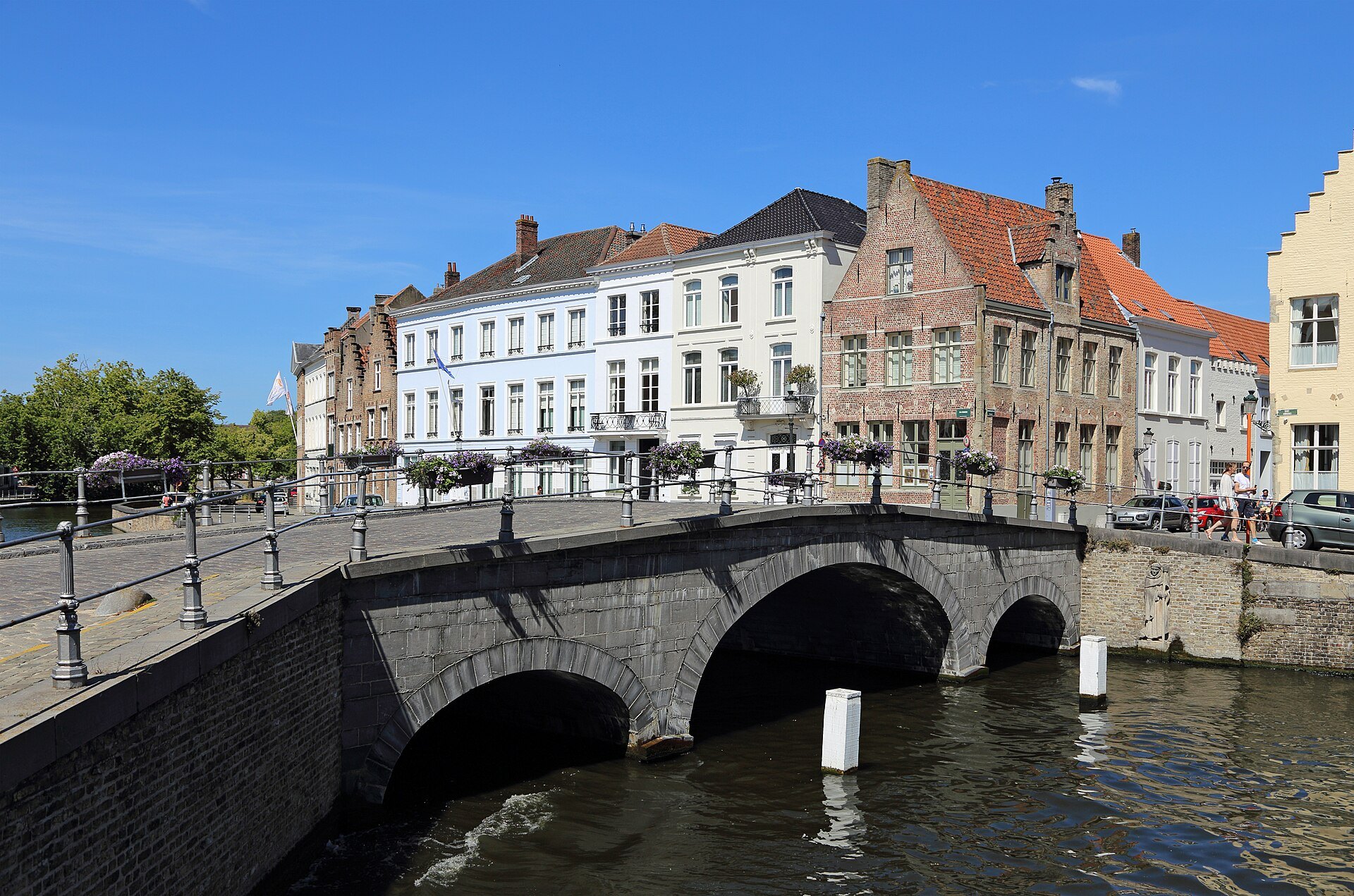
Home · Where to Stay
Almost everything in Bruges lies inside its oval ring of canals, so every part of the old town is walkable. How the center, the quiet north-east, the south around the Beguinage, the west around 't Zand and the station area compare as a base.
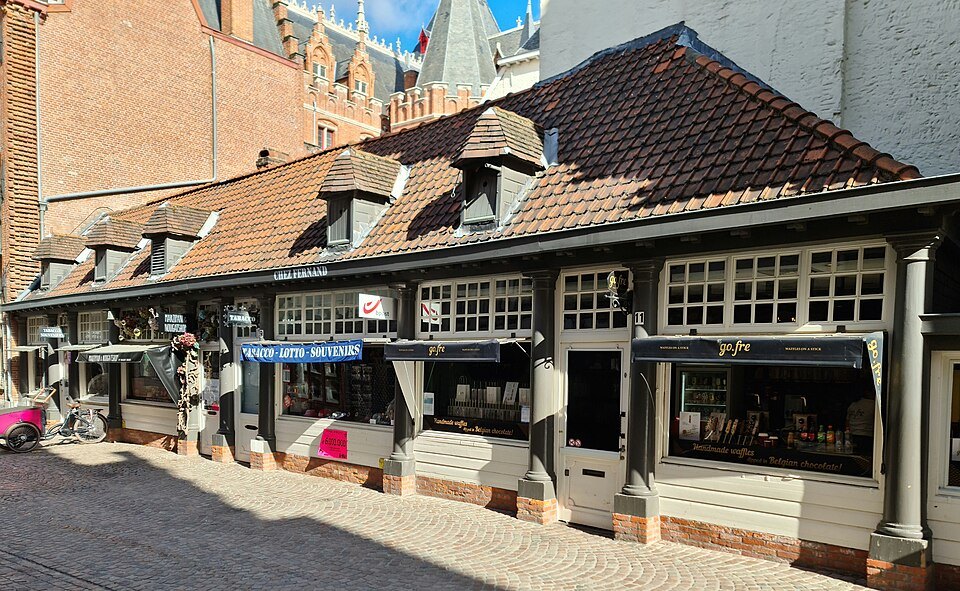
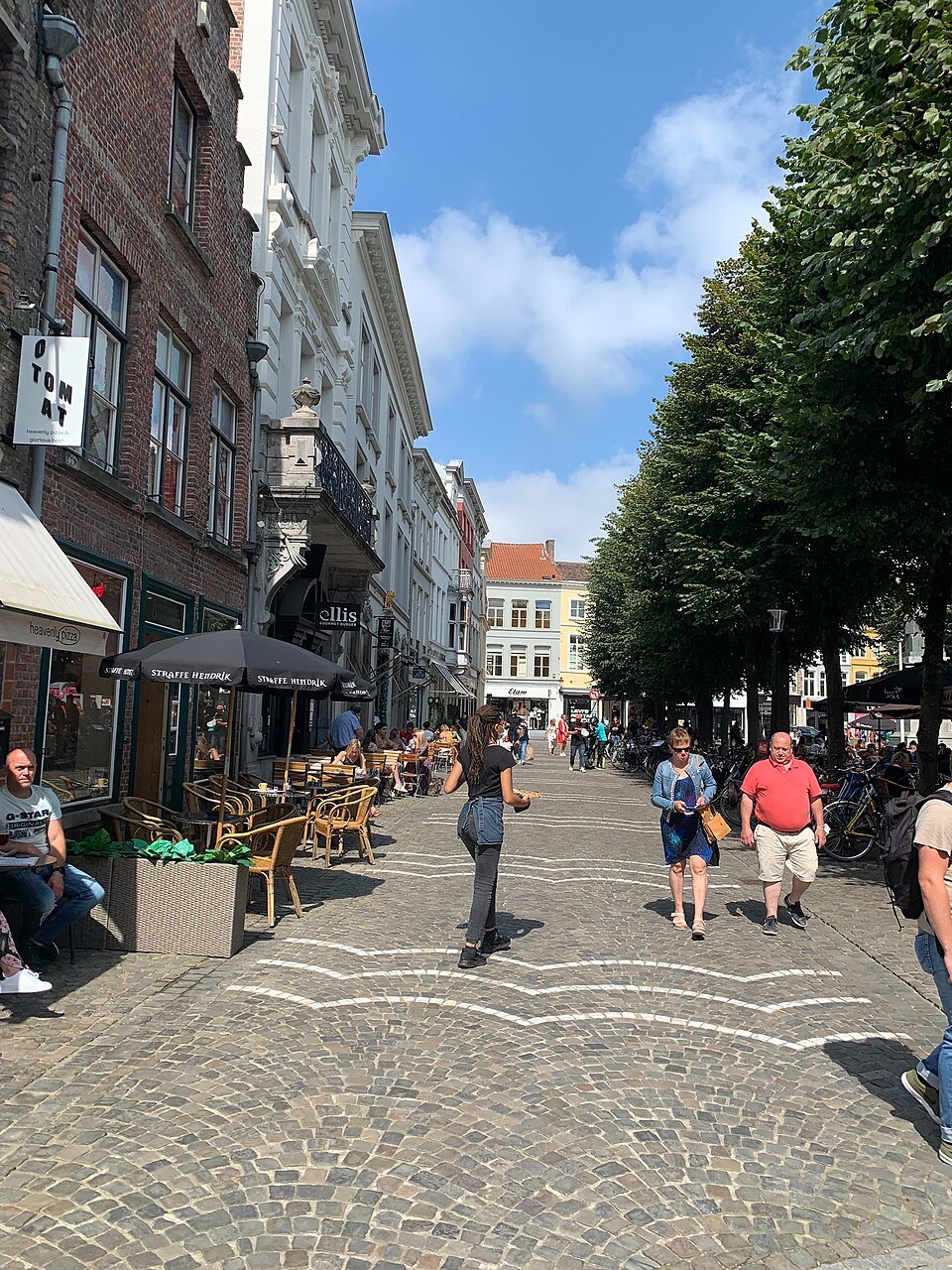
Low arcaded shops along BreidelstraatRicardalovesmonuments, Wikimedia Commons, CC BY-SA 4.0 1Around the Markt and the BurgFirst-time visitors on a short stay who want everything on the doorstepThe two main squares, the Belfry and the shopping streets are outside the door. It is the liveliest part of town and the busiest, with terraces, carriages and day visitors until the evening.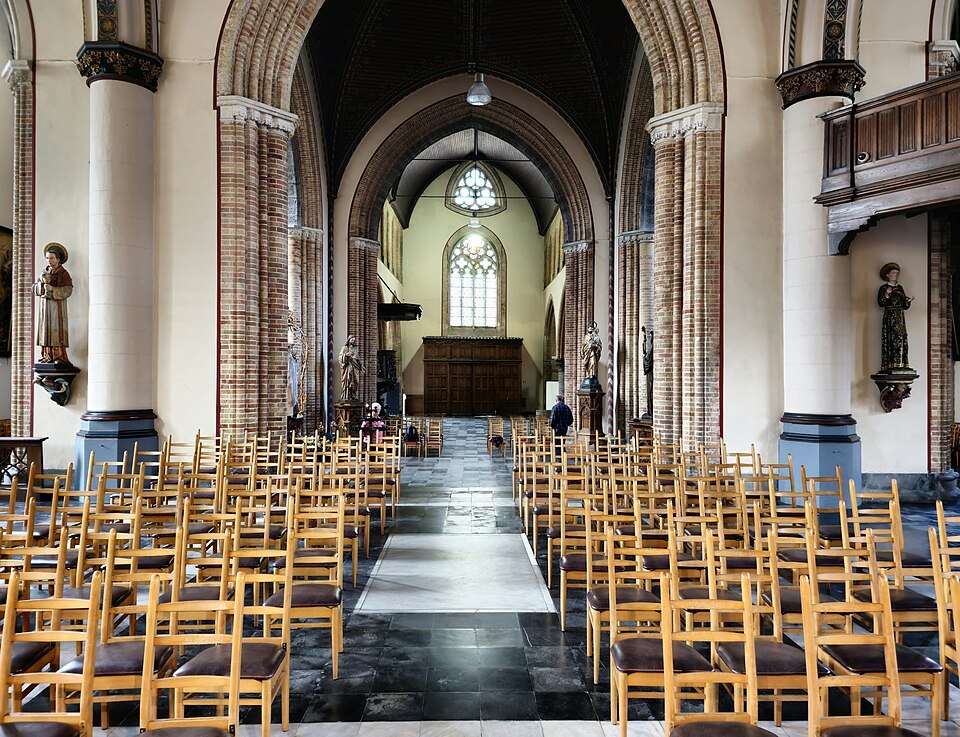
The nave of the church of Sint-GillisRicardalovesmonuments, Wikimedia Commons, CC BY-SA 4.0 2Sint-Anna, the Langerei and Jan van EyckpleinRepeat visitors and anyone who values quiet eveningsResidential streets and calm canals north and east of the center, ten to fifteen minutes' walk from the Markt. The Jerusalem Church, the windmills and the ramparts are close.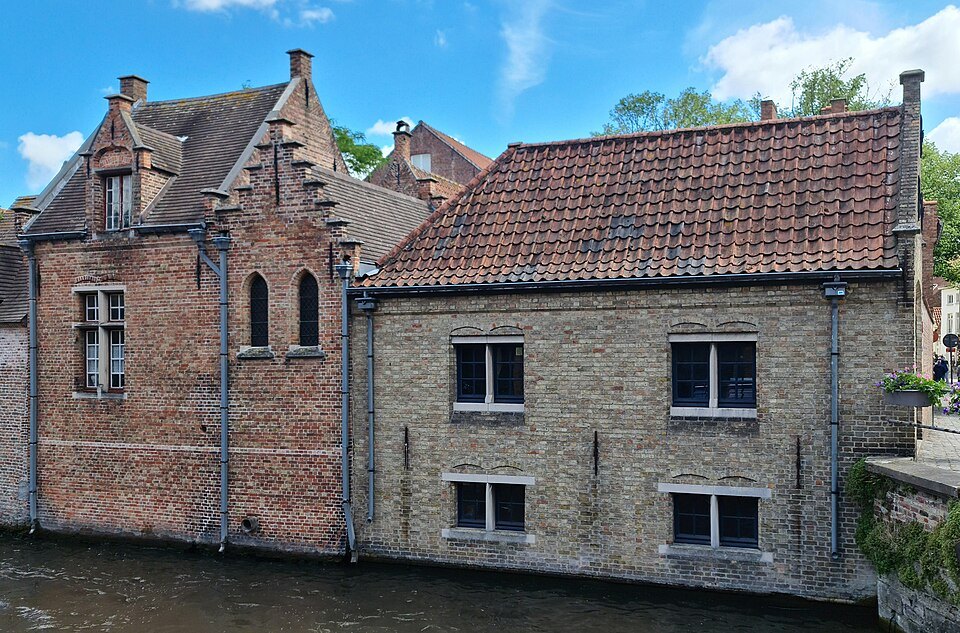
Brick houses rising from the water on the ZonnekemeersRicardalovesmonuments, Wikimedia Commons, CC BY-SA 4.0 3The Beguinage, the Walplein and Our LadyTravelers arriving by train who want charm without the crowds of the squaresThe south of the old town, between the Church of Our Lady and the Minnewater, with the brewery on the Walplein. It is close to the station on foot and quiet once the day visitors leave.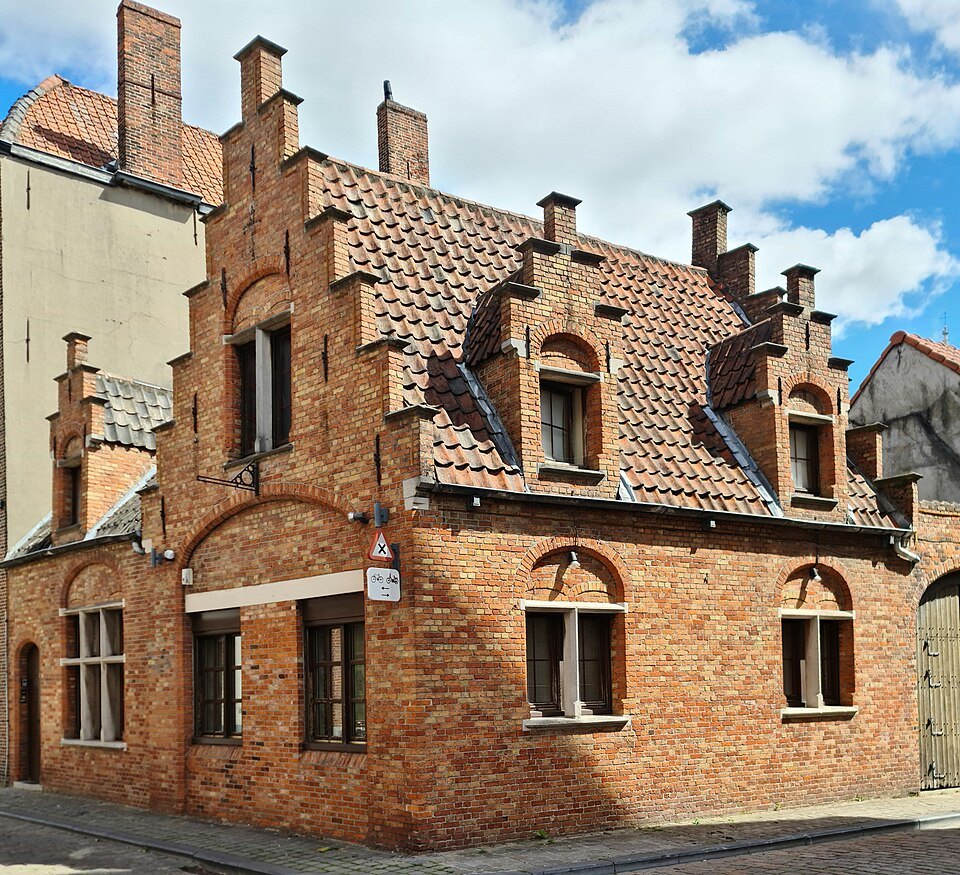
A brick building with stepped gables near 't ZandRicardalovesmonuments, Wikimedia Commons, CC BY-SA 4.0 4't Zand and the ConcertgebouwVisitors with a car, concert-goers and shoppersThe big square on the western edge of the center, with the concert hall, an underground car park and buses. The Markt is about ten minutes' walk along the shopping streets.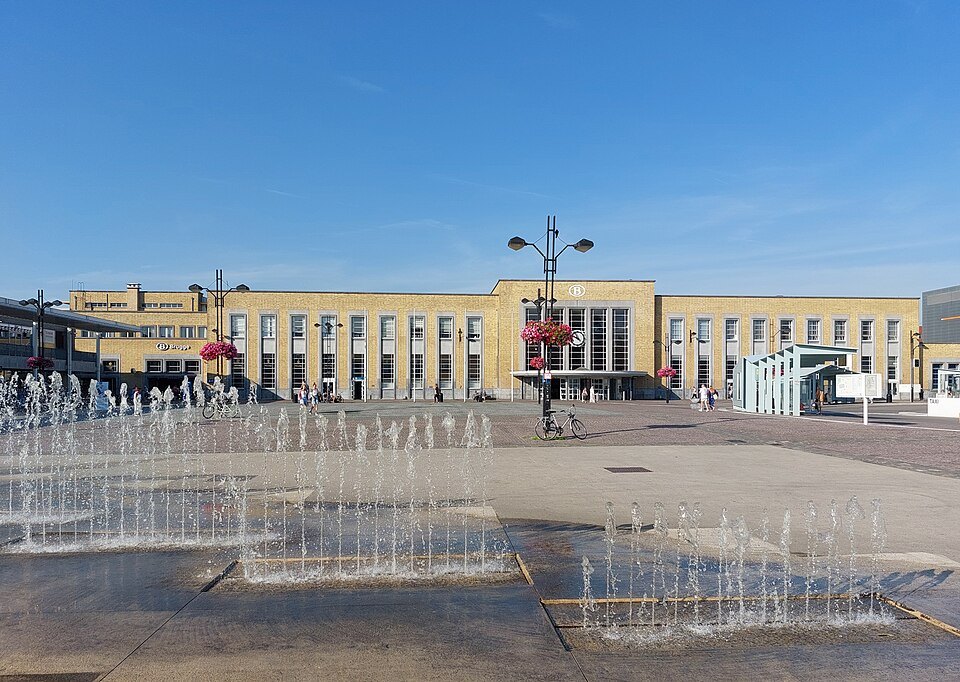
Fountains on the square in front of Brugge stationMarc Ryckaert, Wikimedia Commons, CC BY-SA 4.0 5Around the stationTravelers on early trains or making day trips by railJust outside the ring to the south-west, about twenty minutes' walk from the Markt, with frequent buses into town. Practical rather than picturesque.
A small city with no bad location
Choosing where to stay in Bruges is easier than in most cities, because the old town is small. It is an oval inside a ring of canals and ramparts, and nearly everything a visitor comes for lies within it. From almost any address inside the ring, the Markt is a walk of a quarter of an hour at most.
The real choice is between busy and quiet, and between convenience for arrival and charm on the doorstep. The center puts the squares outside your window; the north-east and south trade a few minutes' extra walk for peaceful evenings; the west suits drivers and concert-goers; and the station area suits travelers who plan to use the train a lot.
Around the Markt and the Burg
Staying in the center means waking up next to the Belfry and walking out onto the Markt before the day visitors arrive. For a first visit of one or two nights, especially without a car, it is hard to beat: every major sight is within ten minutes, and you can drop back to your room between visits.
The trade-off is noise and crowds. The squares and the streets between them are the busiest in Bruges from late morning to evening, terraces stay lively, and horse-drawn carriages clatter over the cobbles. Rooms facing a quiet courtyard or a side street are worth asking for.
Arriving by train, the center is about twenty minutes' walk from the station or a short bus ride, since lines 1 and 2 run from the station to the Markt.
The quiet north-east
North and east of the center, the canals of the Spiegelrei, the Langerei and the Sint-Annarei run through residential streets where people live and work. The Sint-Anna quarter, with its long, straight streets of low brick houses, is the calmest part of the old town, and Jan van Eyckplein, the old harbor square, is on its edge.
This is the best choice for a longer stay or a second visit. Evenings are quiet, the canals are almost empty of boats, and the Jerusalem Church, the windmills and the green ramparts are a few minutes away. The Markt is ten to fifteen minutes' walk.
It is further from the station than other areas, so plan a bus or taxi for arrival if you have heavy luggage.
The south, around the Beguinage
The south of the old town stretches from the Church of Our Lady and St. John's Hospital down to the Beguinage and the Minnewater. It has some of the most beautiful corners of Bruges, the Bonifacius footbridge, the white houses of the Beguinage, the lake, and the Walplein with its brewery.
By day the main lanes here are busy with visitors walking between Our Lady and the Beguinage, but after they leave in the late afternoon the area becomes very quiet. It is also the part of the old town closest on foot to the station: the walk through the Minnewater park and the Beguinage is one of the nicest arrivals in any city.
For travelers coming by train who want a peaceful base with character, this is often the best compromise.
't Zand and the west
On the western side of the center, 't Zand is a large square with the Concertgebouw, the city's modern concert hall, an underground car park and bus stops. The shopping streets of Zuidzandstraat and Steenstraat lead from it straight to the Markt, about ten minutes' walk away.
It is less picturesque than the canal quarters but practical. Drivers can park beneath the square, concert-goers are next door, and the buses to and from the station stop here. The area around Smedenstraat and the Smedenpoort, further west, is residential and quieter.
Near the station
The area just outside the ring around Brugge station is the most convenient for trains and least charming for staying. It suits travelers making several day trips by rail to Ghent, the coast or Brussels, or catching early trains, and it has the Centrum-Station car park for drivers.
The old town begins a few minutes away across the ring canal, and the Markt is about twenty minutes' walk or a short bus ride. For arriving by train, coach or car, see getting here; for moving around once you are settled, getting around.
Booking your stay
Accommodation inside the old town is limited by its size. Book early for summer weekends, the Christmas market season and the date of the Holy Blood procession, when the city fills. Ask about parking if you are driving, because streets in the center are not built for cars, and about stairs if mobility is a concern, since many buildings are old and narrow.
Wherever you stay, spending at least one night rather than visiting for the day is the best decision you can make: the early mornings and evenings, when the day visitors have gone, are when Bruges is at its most beautiful.
Matching the area to your trip
For a single night on a first visit, stay as close to the Markt and the Burg as you can: the aim is to be in the center at the beginning and end of the day, when it is calm. For two or three nights, the south around the Beguinage or the north-east around Sint-Anna gives you quieter evenings and a sense of the city beyond its postcard views, with the squares still a short walk away.
Traveling with a car, look first at 't Zand or at accommodation that offers parking, and leave the car there for the whole stay. Using Bruges as a base for trips by rail to Ghent, the coast or Brussels, the station area or the south of the old town keeps the walk to the platform short.
Families often prefer the south or the west, where the streets are less crowded and the Minnewater park and 't Zand give space to spread out. Light sleepers should avoid rooms directly on the Markt, the Burg or the main shopping streets.