Home · Sights · Jerusalem Church
A private chapel built by the Adornes family after a pilgrimage to Jerusalem, inspired by the Church of the Holy Sepulchre, with a crypt holding a copy of Christ's tomb.
The parts to look at
Why it matters
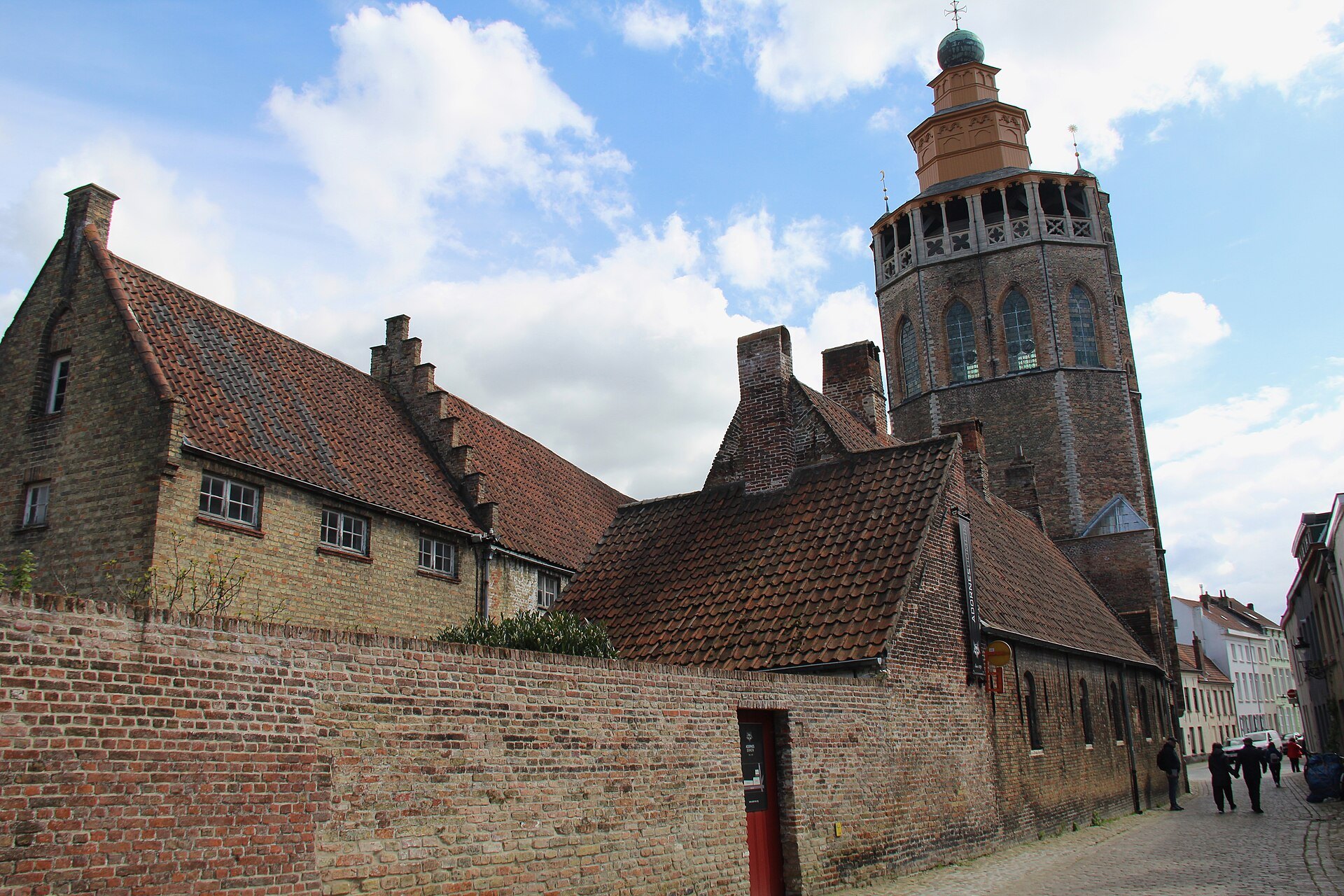
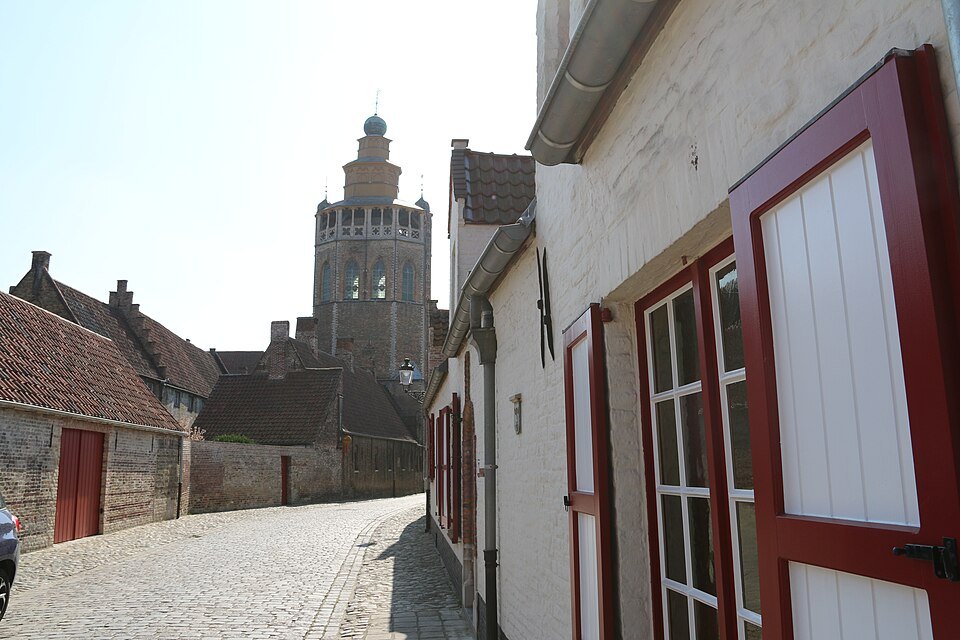
In the quiet lanes of the north-east of Bruges, a strange tower rises above the rooftops: octagonal, crowned with a cross, unlike any other in the city. It belongs to the Jerusalem Church, a private chapel built by one merchant family after a pilgrimage to the Holy Land, and still owned by their descendants.
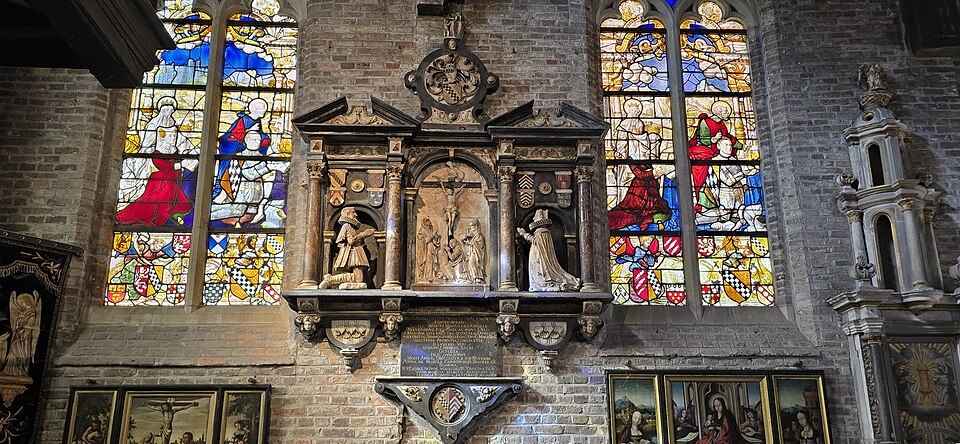
It is one of the most unusual buildings in Bruges, and one of the least crowded. Inside are family tombs, portraits in stained glass, and a crypt that holds a copy of the tomb of Christ, entered on bowed head, as pilgrims once entered the original in Jerusalem.
The Adornes family
The Adornes came from Genoa. Their ancestor Opicius Adornes settled in Flanders in the thirteenth century, and his descendants became wealthy Bruges merchants, officials and diplomats. In the first half of the fifteenth century, after members of the family, Jacob and Pieter II Adornes, had made the pilgrimage to Jerusalem, they built this chapel inspired by the plan of the Church of the Holy Sepulchre. Visit Bruges gives 1429 as the year it was consecrated.
The most famous member of the family was Anselm Adornes, knight, diplomat, pilgrim and businessman. He set out for the Holy Land on 19 February 1470 with other Flemings, on a journey that lasted more than a year; in Jerusalem the party was allowed to spend two nights and a day inside the Church of the Holy Sepulchre. His son Jan wrote an account of the journey in Latin.
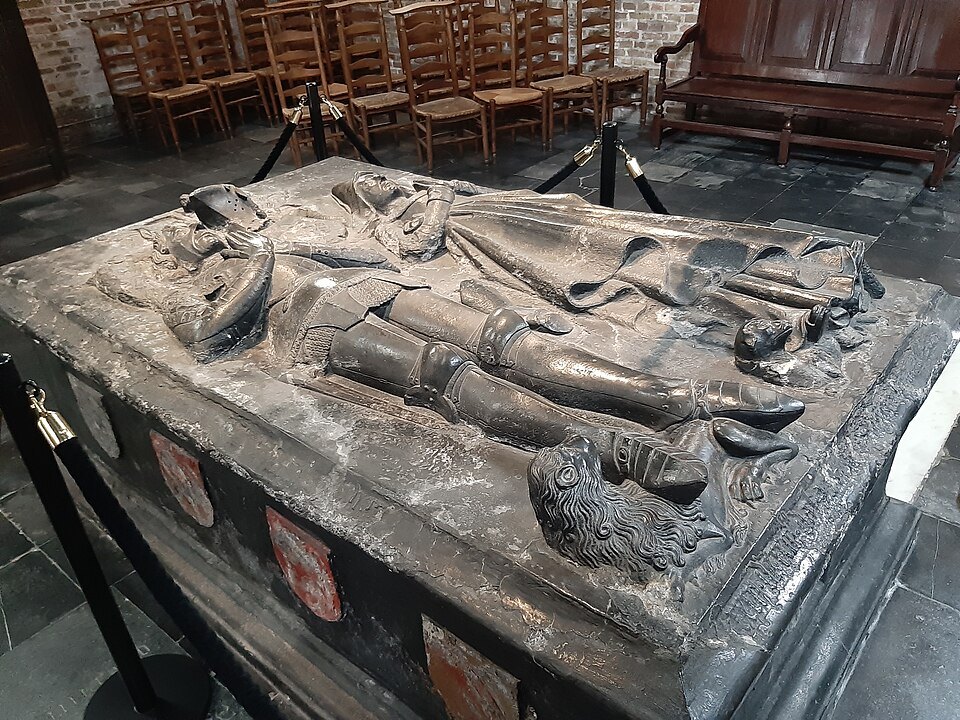
Anselm also served the Scottish king James III, and the family held lands in Scotland as a result. On a diplomatic mission he was murdered in Scotland in 1483. According to Visit Bruges, his heart was brought home and lies beneath the family tomb in the chapel.
What you actually see
The church is small and unusually shaped. The interior refers to the places of Christ's Passion, and the whole Gothic building has an eastern feel, emphasized outside by small side towers topped with a golden sun, star and moon, and by the lantern tower crowned with the Jerusalem cross.
In the nave stands the monumental tomb of Anselm Adornes and his wife, Margareta van der Banck, their effigies lying side by side. The stained-glass windows, from the fifteenth and sixteenth centuries, show family members, including Pieter II Adornes and his wife, together with coats of arms. A sixteenth-century painting of the Crucifixion is attributed to Ambrosius Benson.
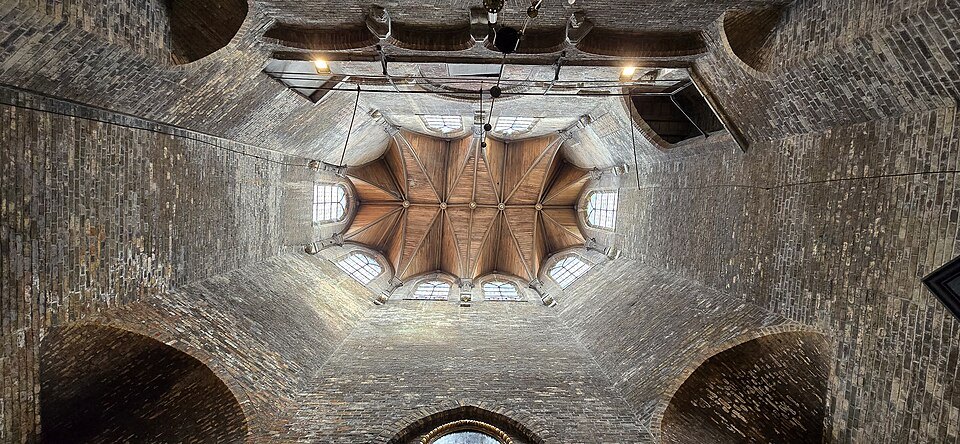
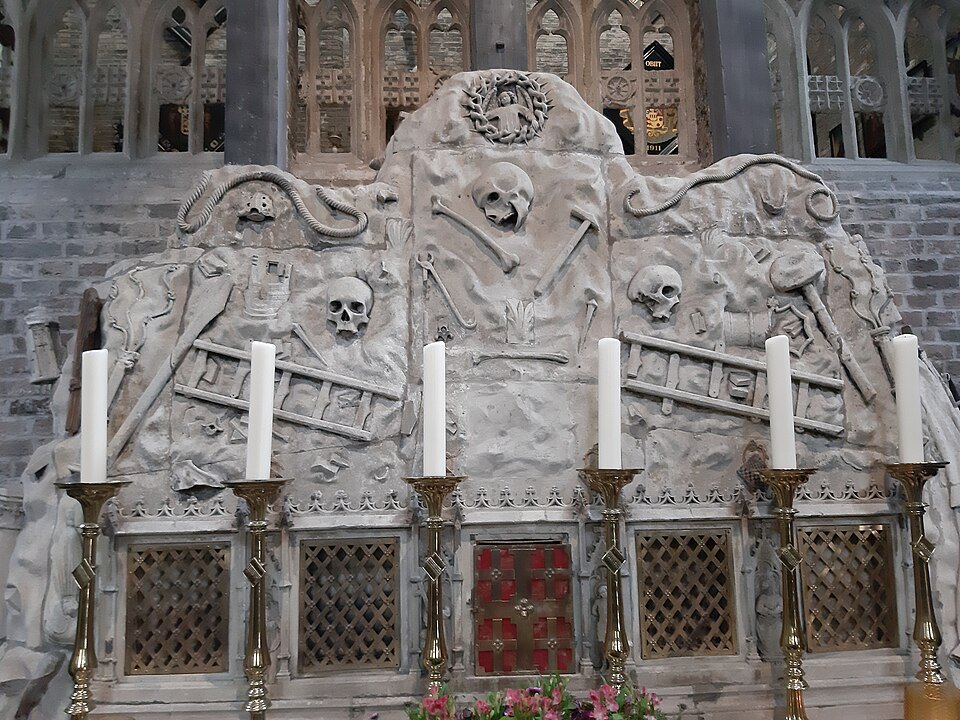
Behind the lower chapel is the crypt. A low opening leads into a tiny chamber that can only be entered with a bowed head or on your knees, and inside is an imitation of the Holy Sepulchre. It is a physical, slightly unnerving experience, and it is exactly what the builders intended: a pilgrimage to Jerusalem brought to a Bruges back street.
Take a moment in the church before going down. The building is a family memorial as much as a place of worship: generations of the Adornes are recorded in its glass, its tomb and its arms, and the chapel still belongs to the family that built it nearly six centuries ago, which is extremely rare for a church of this age.
The Adornes estate
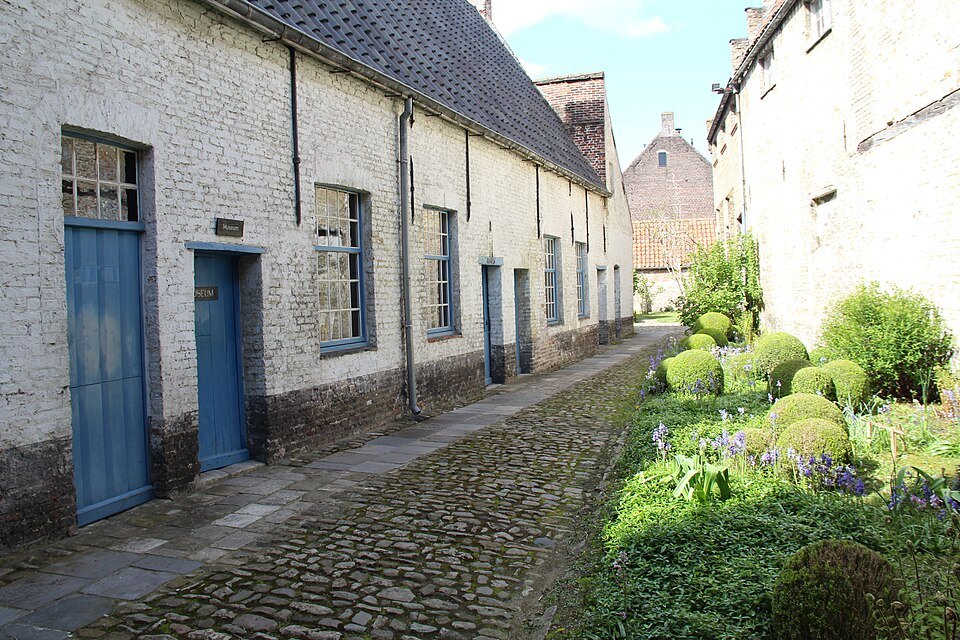
The church stands within the Adornes estate, which has been open to the public since 2014. The former almshouses, built for the poor under the family's patronage, now house a museum about Anselm Adornes and the family's history, with objects such as a reliquary of the Holy Cross from around 1500.
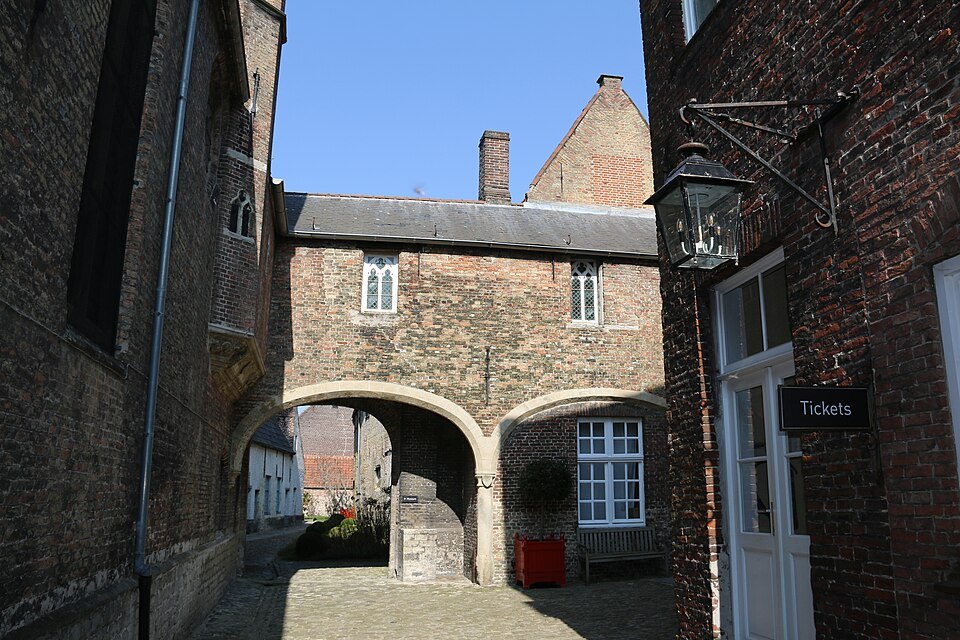
Converted coach houses, the Pieter Halls, host exhibitions of contemporary Belgian art, and a room called the Scottish Lounge recalls the family's links with Scotland. There is also a garden within the estate. The domain is run by the family: it is one of the few private churches in Belgium, presided over by a descendant, Count Henri de Limburg-Stirum.
How to visit
The church, the museum and the exhibitions are run by the Adornes estate, which sets its own tickets and opening arrangements; check its website before you go. Allow an hour for the church, the crypt and the museum, a little less if you skip the exhibitions.
The crypt is cramped and low, so it is not suitable for everyone, and the old building has steps and uneven floors. Visitors with limited mobility should ask the estate about access.
The estate is in Peperstraat, in the Sint-Anna quarter north-east of the center, about fifteen minutes' walk from the Markt. It fits naturally into a walk towards the windmills and the city gates on the eastern ramparts, a few minutes further on.
The quarter around it
The Sint-Anna quarter is residential, with long straight streets of low brick houses, and it is one of the best places in Bruges to see the town as its residents live in it. The canals of the Groenerei and the Sint-Annarei lead here from the center, and the walk out along the water is part of the pleasure of the visit. For staying in this part of town, see where to stay.
Nearby
- East to the rampartsThe Kruisvest WindmillsFour wooden post mills standing on grassy mounds along the eastern ramparts of Bruges, the survivors of the many that…Read the page
- East to the rampartsThe City GatesFour gates survive from the wall Bruges built from 1297, standing on the green ring of ramparts: the Kruispoort, the…Read the page
- The merchants' northGroenereiA curving stretch of canal and quay behind the Burg, lined with almshouses, the Renaissance back of the Liberty of…Read the page