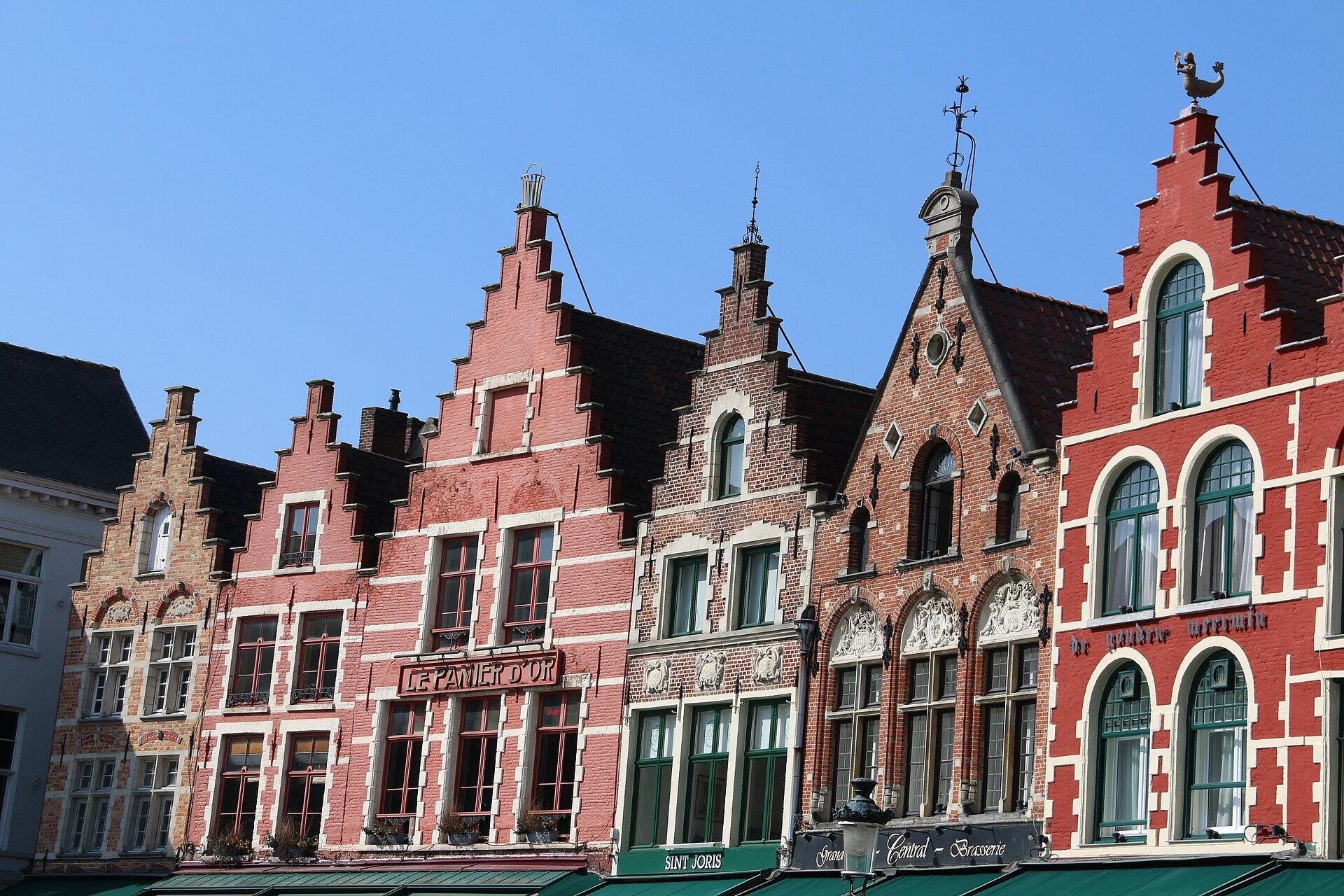
The great open square at the center of Bruges, framed by gabled guild-style houses, the neo-Gothic Provincial Court and the Belfry, and a market place for a thousand years.
Around the square
- 1The BelfryThe tower and market halls filling the south side of the square
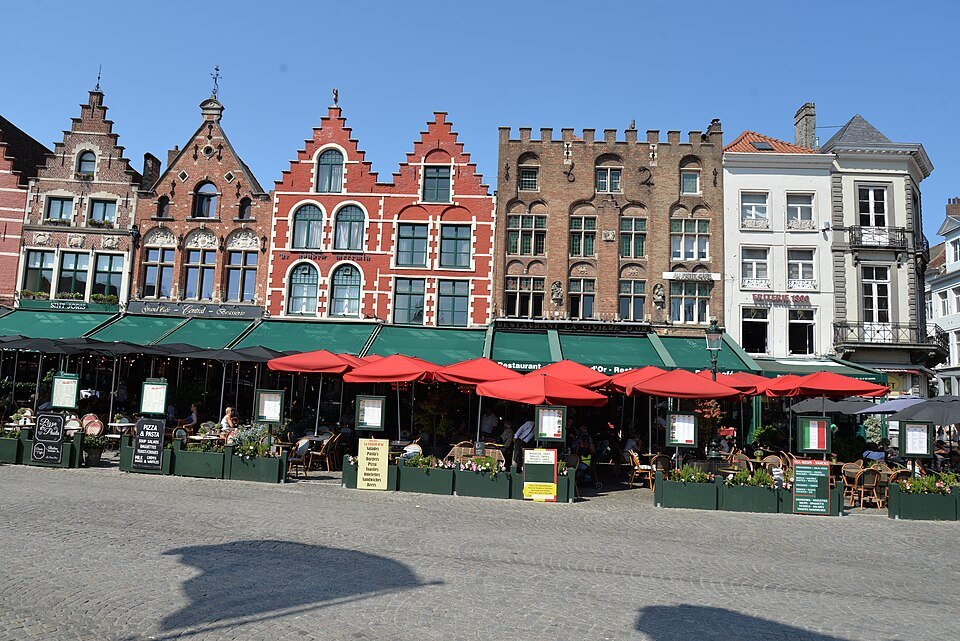
- 2The north sideA row of tall stepped and bell-shaped gables above café terraces
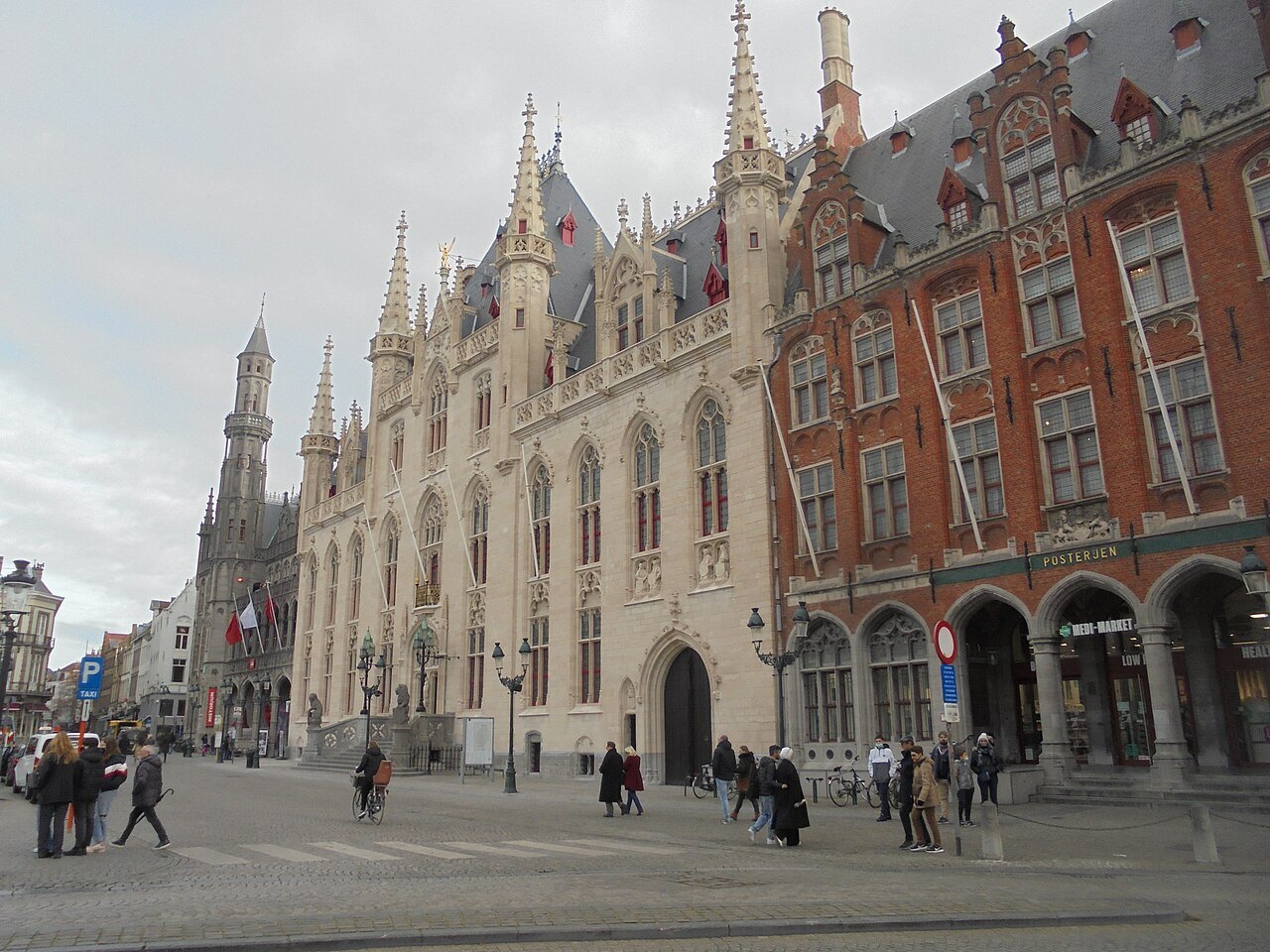
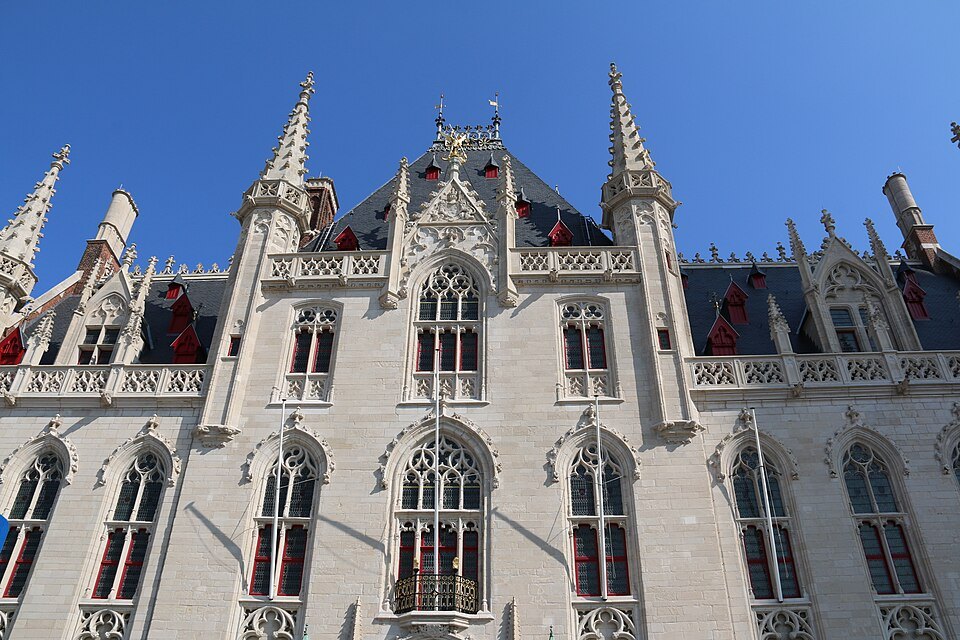
- 3The Provincial CourtThe neo-Gothic building on the east side, rebuilt after a fire in 1878
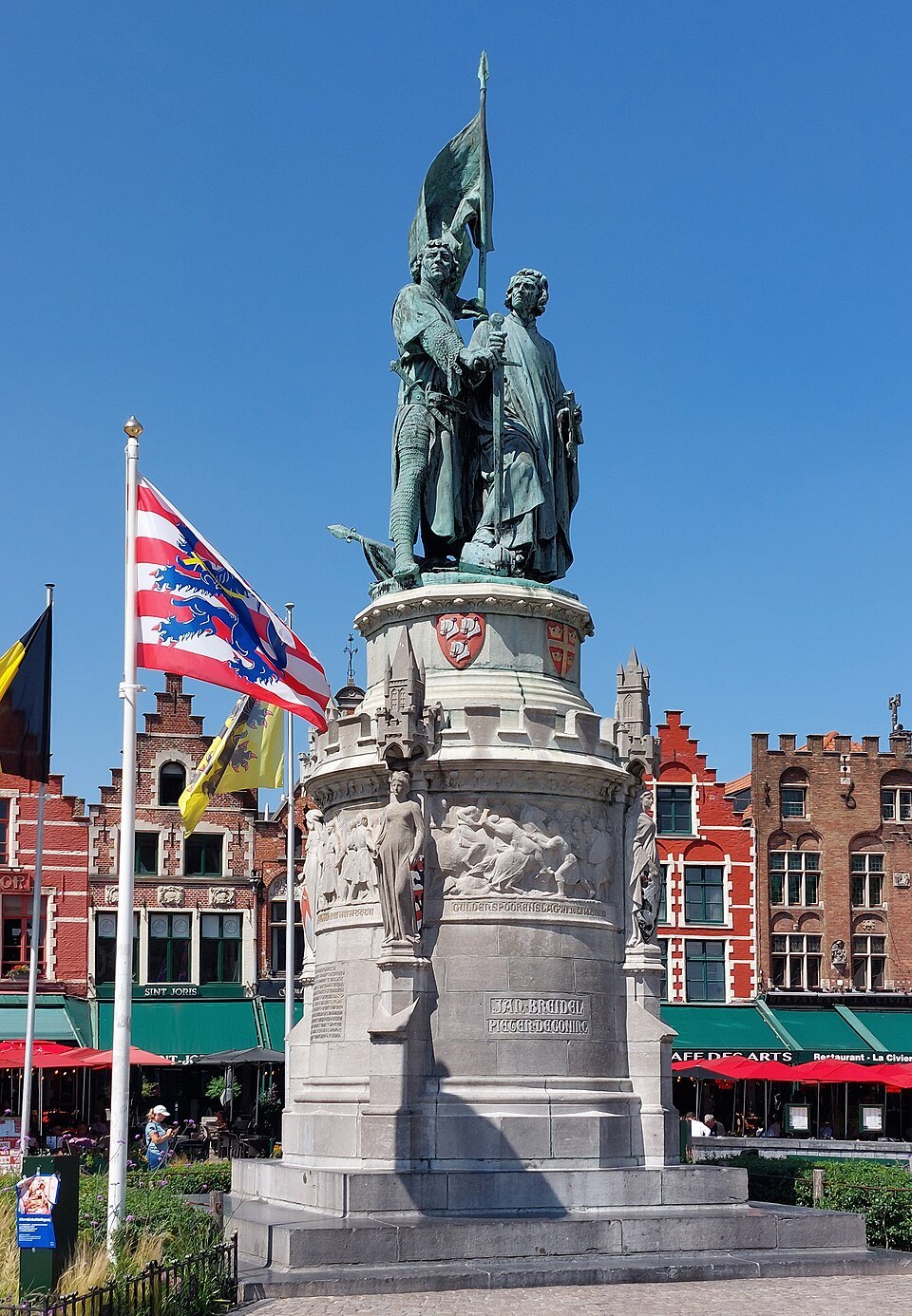
- 4The statueJan Breydel and Pieter de Coninck, the leaders of 1302, raised in 1887
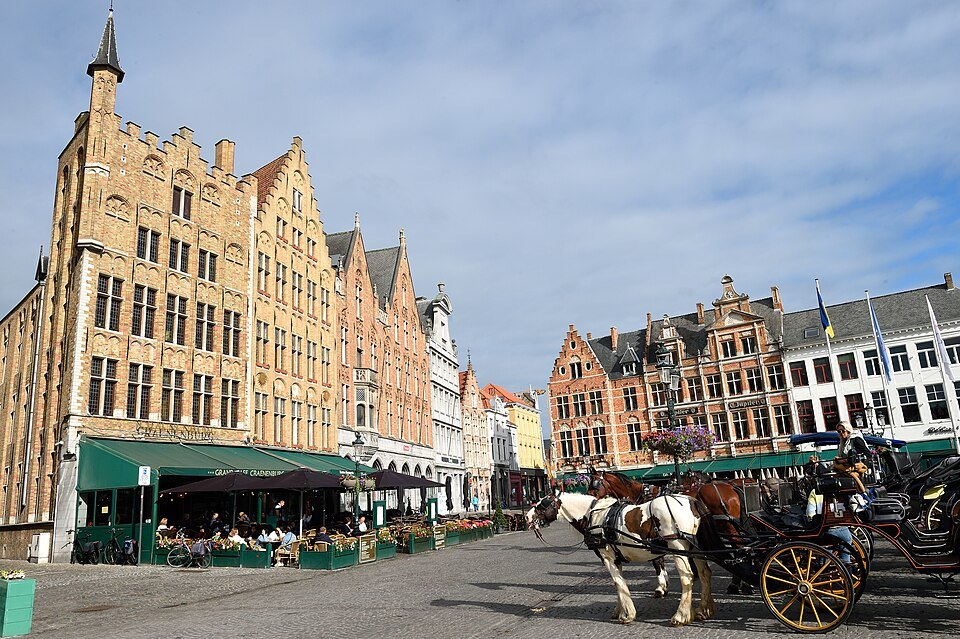
- 5Huis CraenenburgThe corner house where Archduke Maximilian was held prisoner in 1488
- 6The open pavingAbout a hectare of cobbles, traffic-free since the renovation of 1995 and 1996
The city's living room
The Markt is where almost every visit to Bruges begins. Streets from the station, the Burg and the shopping streets all run into it, and the square is big enough, about a hectare, to take the crowds without feeling small. On its south side the Belfry rises over the old market halls; on the other three sides stand rows of tall houses and the elaborate Provincial Court.
People have gathered on this square since the tenth century. It was the city's commercial heart when Bruges was one of the great trading towns of northern Europe, and it is still where the town meets: for markets, for events, and simply to sit on a terrace and look up at the gables.
A thousand years of trade
Around 1200 Bruges held its first international annual fair, and around 1220 the first hall was built on the square as a place to sell merchants' goods. A larger wooden hall with a tower followed around 1240; after a fire in 1280 it was rebuilt in stone between 1291 and 1296. That is the ancestor of the halls still standing at the foot of the Belfry.
The east side of the square was once dominated by the Waterhalle, a covered hall where boats could unload goods under cover. It was demolished in 1787 and replaced by a classicist building, which served as the provincial court from 1850. After a fire in 1878 it was rebuilt in the neo-Gothic style you see today, finished in 1887.
Fish was sold on the Markt from 1396, and in 1709 an iron fish market was put up on the square; in 1745 the fish trade moved to its own market by the canal. For a few years under French rule, between 1807 and 1810, the square was even called Place Napoléon.
The statue of Breydel and De Coninck
In the middle of the square stands a bronze pair: Jan Breydel and Pieter de Coninck, leaders of the Bruges rising against French rule in 1302 that ended with the Battle of the Golden Spurs. The statue was unveiled in July 1887 and formally opened by King Leopold II in August of the same year.
The two men are presented as heroes of Flemish independence, and the monument says as much about the nineteenth century that raised it as about the fourteenth. It makes a good meeting point, and from its base you can take in all four sides of the square at once.
What you actually see
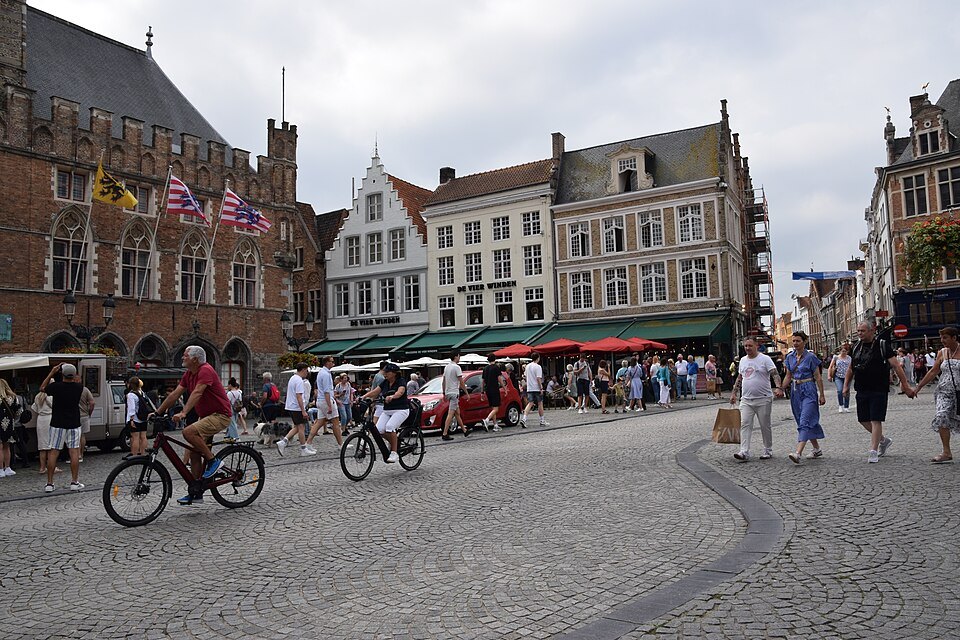
Start with the north side, the row of houses that appears on most postcards: tall stepped and bell-shaped gables in red and cream brick, with café terraces and awnings along the ground floor. Together they give the square the silhouette most people picture when they think of Bruges.
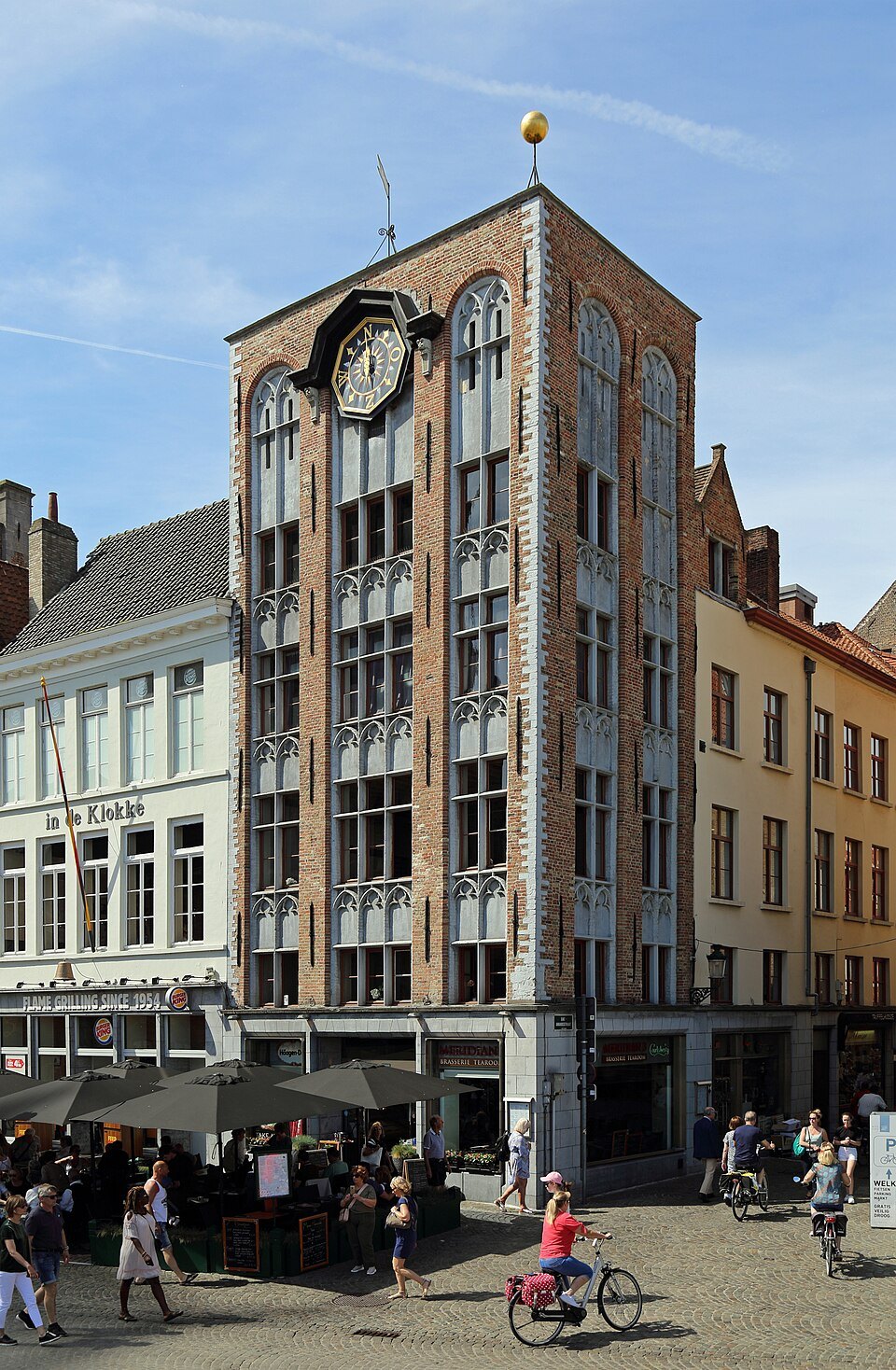
At the corner of Sint-Amandsstraat stands Huis Craenenburg. In 1488 the citizens of Bruges held Archduke Maximilian, heir to the Habsburg lands, prisoner here. On the east side the Provincial Court, with its pinnacles and arcades, shares the frontage with the old post office building.
The paving itself is part of the story. Until the renovation of 1995 and 1996 the Markt was a car park; the work removed the parking and made the square mostly traffic-free, and it reopened in 1996. Horse-drawn carriages still wait on the square for passengers, and their clatter is one of its familiar sounds.
How to visit
The Markt costs nothing and is always open. Seeing it properly takes as long as you want to give it: twenty minutes to walk round and read the fronts, longer if you sit on a terrace. It is busiest from late morning to late afternoon in the warmer months, when tour groups pass through on the way between the Belfry and the Burg.
For photographs, early morning is the best time, before the terraces fill and while the light falls on the north side. The square is also worth a second look after dark, when the Belfry and the gables are lit.
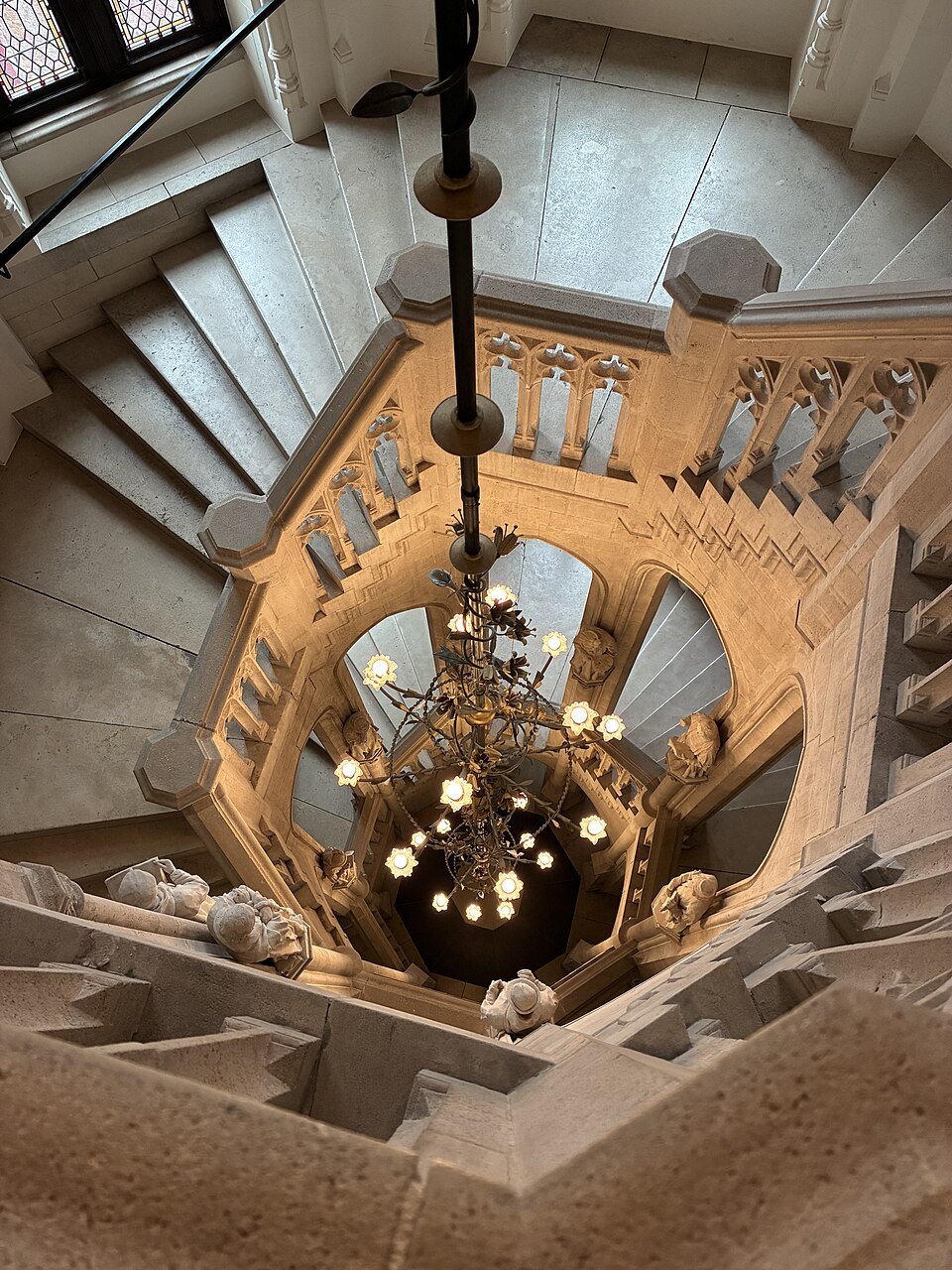
If you want to see the square from above, book a slot for the Belfry climb; the view straight down onto the Markt from the tower is one of the best in the city. The square hosts markets, a Christmas market and events through the year, so its look changes with the season; see when to come.
Where to go next
The Markt is the hub from which the rest of the center is walked. The Burg and the Basilica of the Holy Blood are two minutes east along Breidelstraat; the canals and the Rozenhoedkaai are five minutes south-east; and the merchants' quarter around Jan van Eyckplein lies a short walk north along Vlamingstraat.
Because every route crosses it, the Markt is also a useful reference point for finding your way. If you lose your bearings in the lanes, look for the Belfry above the roofs and walk towards it; within a few minutes you will be back on the square.
Nearby
- The two squaresThe BelfryThe brick and stone tower that has watched over the Markt since the thirteenth century, with a carillon of 47 bells and…Read the page
- The two squaresThe BurgThe square where Bruges began as a fortress of the counts of Flanders, now ringed by the Gothic City Hall, the Holy…Read the page
- The two squaresBasilica of the Holy BloodA double chapel in the corner of the Burg: a dark Romanesque chapel below, a richly painted Gothic Revival chapel…Read the page