Home · Sights · Basilica of the Holy Blood
A double chapel in the corner of the Burg: a dark Romanesque chapel below, a richly painted Gothic Revival chapel above, and the relic that has drawn pilgrims for centuries.
The parts to look at
Why it matters
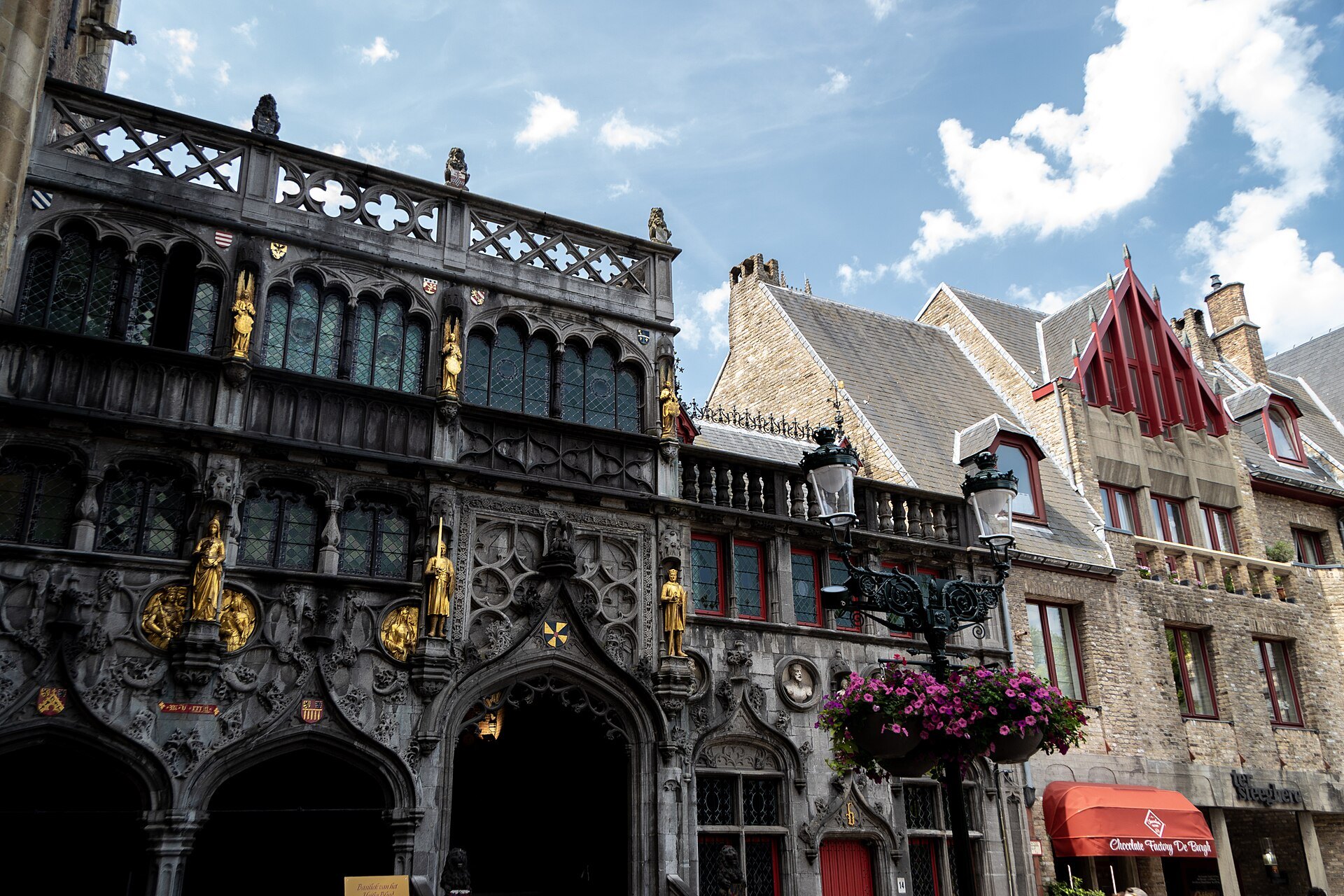
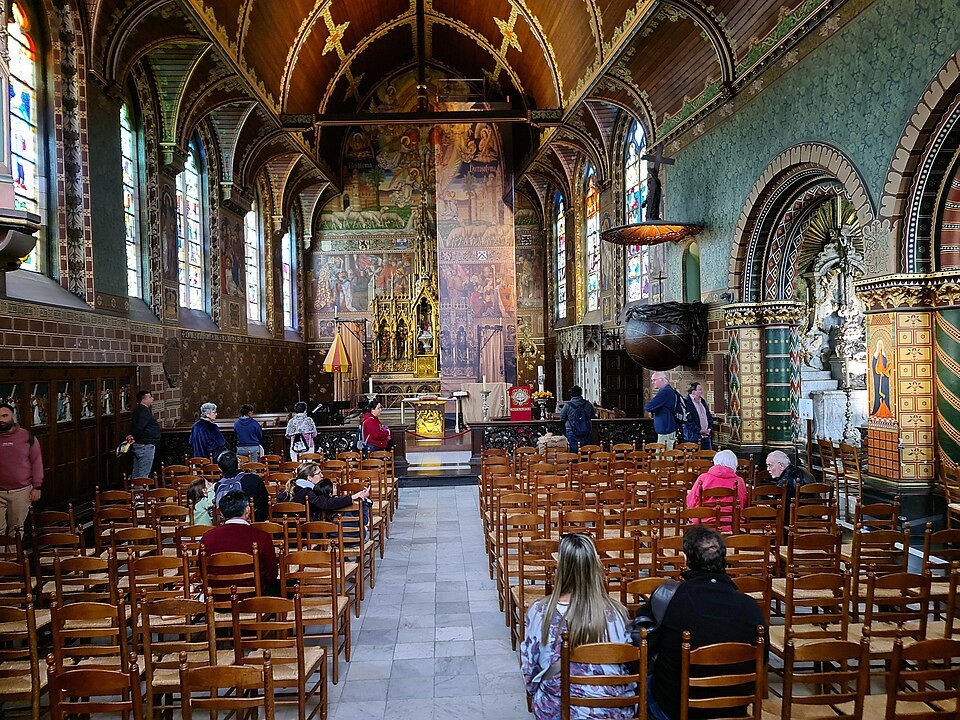
Tucked into the corner of the Burg, the Basilica of the Holy Blood is easy to walk past: a narrow front with gilded statues squeezed between larger buildings. Inside are two chapels stacked on top of each other, and the contrast between them is the reason to go in. Below is a heavy, dim Romanesque chapel; above, a chapel glowing with color from painted walls and stained glass.
The upper chapel keeps a relic venerated as a few drops of the blood of Christ. For centuries it has made Bruges a place of pilgrimage, and every year on Ascension Day it is carried through the streets in one of the best-known processions in Europe.
The chapel of the counts
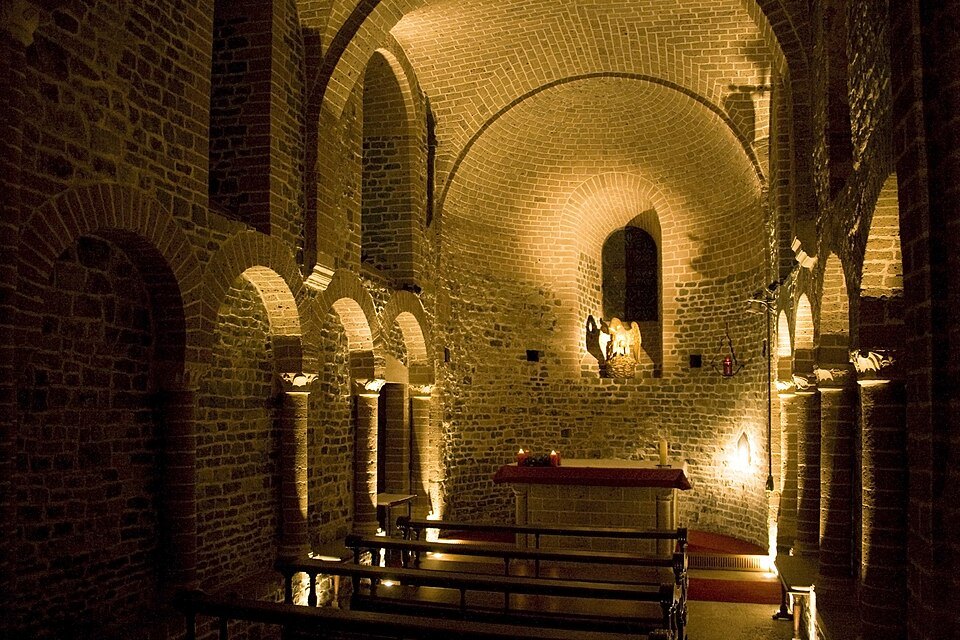
The lower chapel, dedicated to St. Basil, was built between 1134 and 1149 as the private chapel of the counts of Flanders, whose castle stood on the Burg. Dutch-language sources describe it as the only completely preserved Romanesque church in West Flanders. Its walls are thick, its pillars squat and its windows small, and it gives a rare sense of what a twelfth-century interior in Bruges felt like.
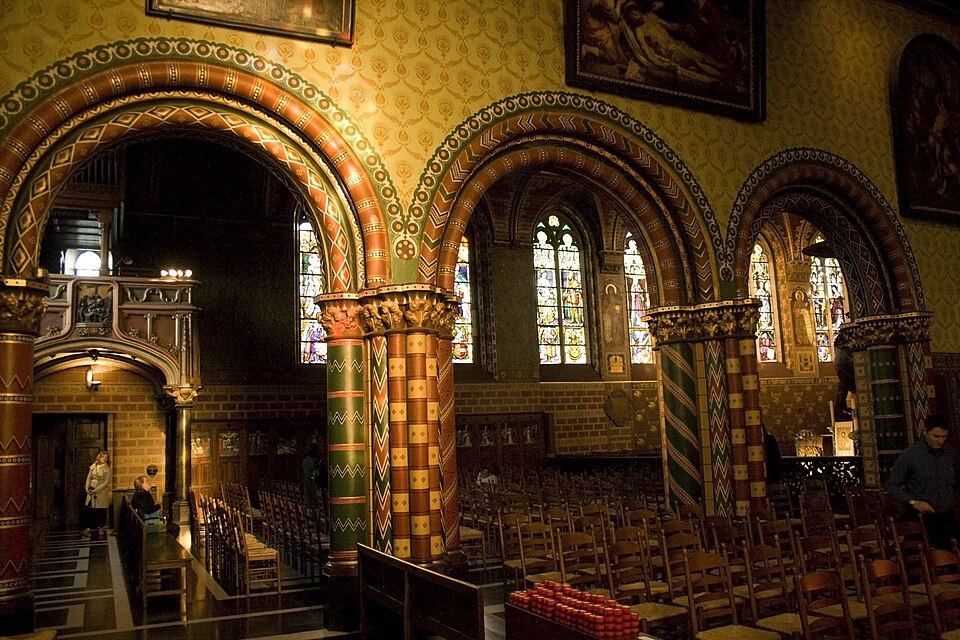
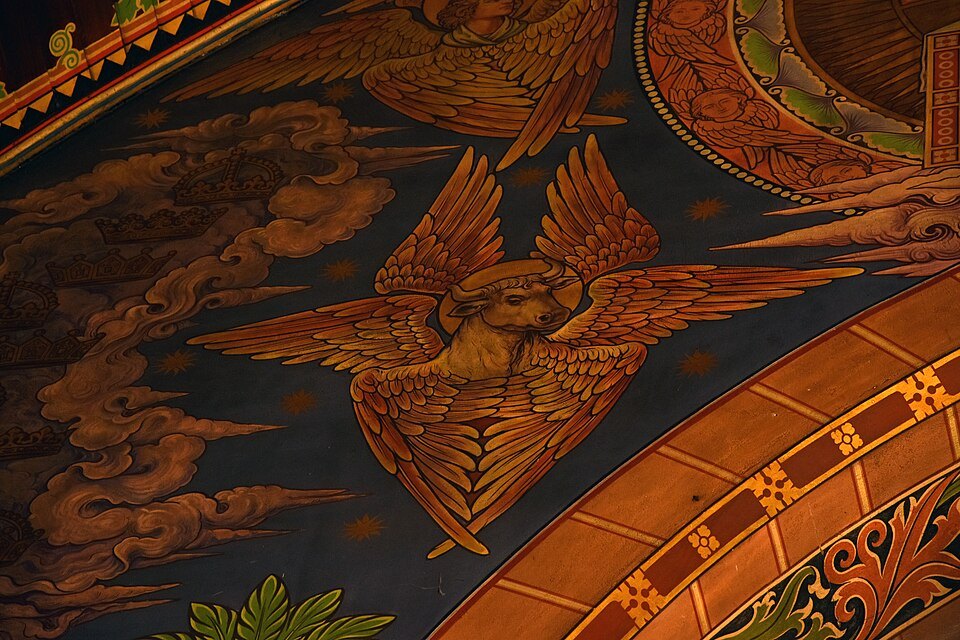
The upper chapel was Romanesque too at first. It was transformed into a Gothic chapel in the fifteenth century, wrecked during the French Revolution, and rebuilt between 1819 and 1839 in the Gothic Revival style. Almost everything you see upstairs, from the painted walls to the glass, belongs to that rebuilding and its later decoration.
The story of the relic
Tradition says that Count Thierry of Alsace returned to Bruges on 7 April 1150 from the Second Crusade, bringing the relic with him. It is a good story, and it is told in the chapel. Modern research, however, has found no evidence of the relic in Bruges before the 1250s, and scholars think it more likely came to the West after the sack of Constantinople in 1204, during the Fourth Crusade.
The phial itself is made of rock crystal and dates from the eleventh or twelfth century; it was probably a Byzantine perfume bottle to begin with. It is kept in a glass-fronted gold cylinder, and a religious brotherhood, the Noble Brotherhood of the Holy Blood, has guarded it since around 1405. The church was raised to the rank of basilica in 1923.
What you actually see
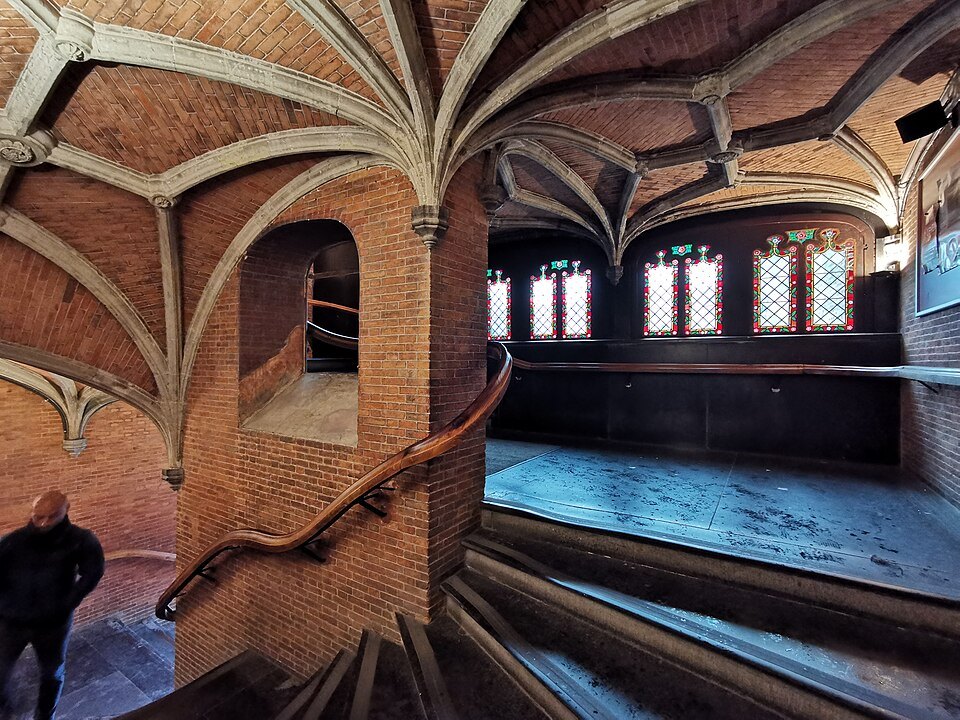
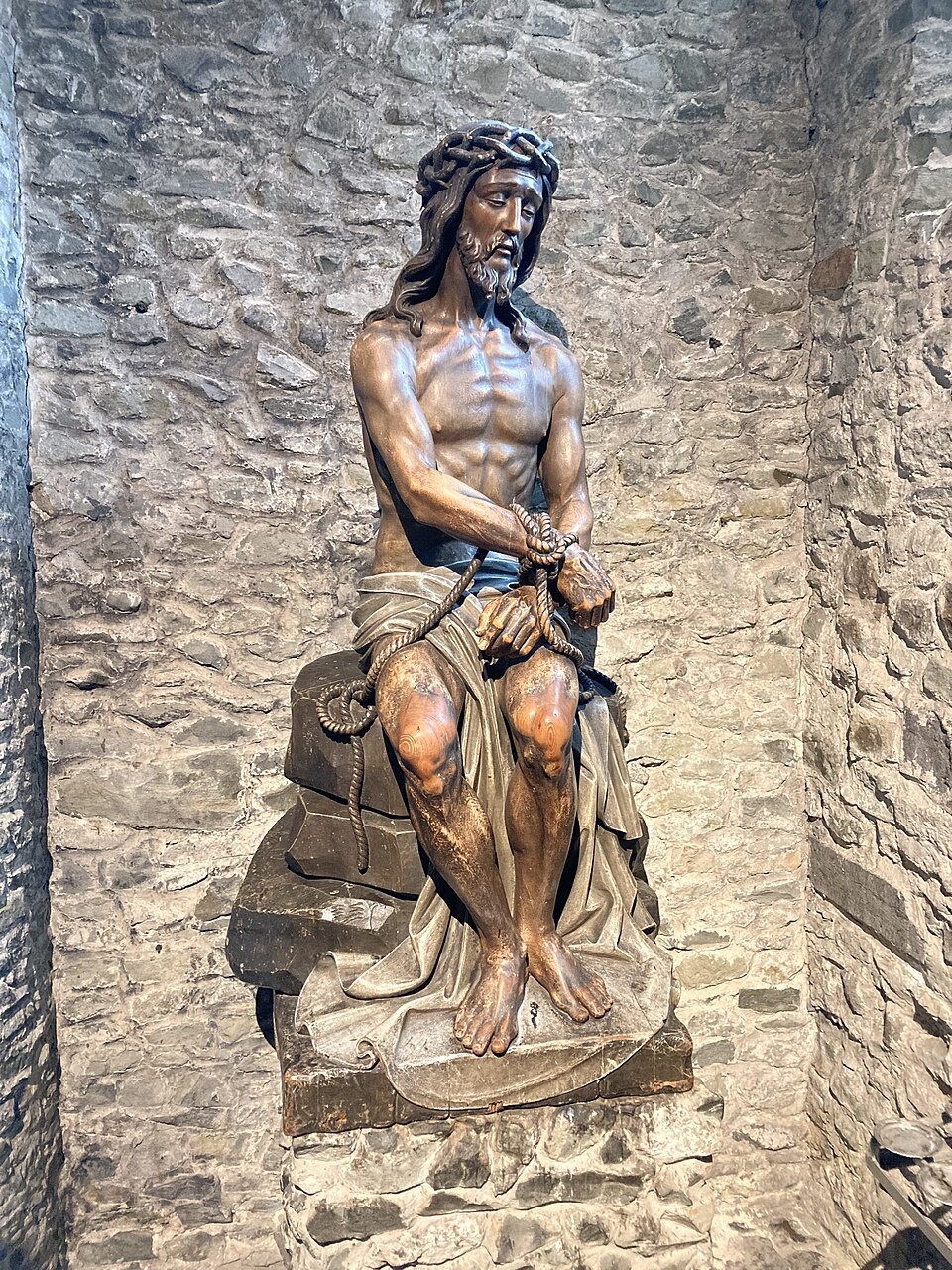
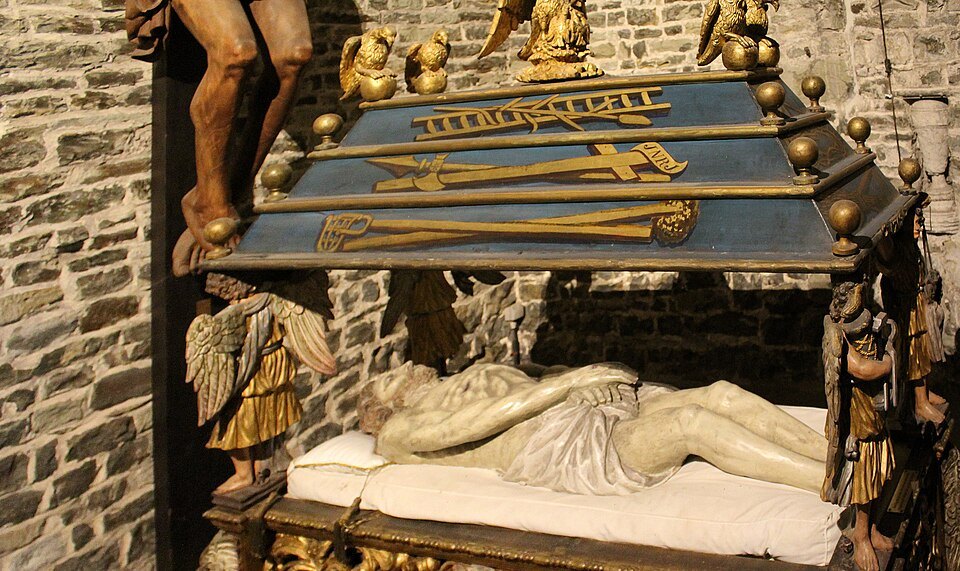
Start downstairs. The lower chapel is plain, cool and quiet, with rounded arches and heavy pillars, entered past carved stone lions. In a side chapel sits a statue of Christ seated on a cold stone, a subject that visitors often find unexpectedly moving. The light is low, so give your eyes a minute to adjust.
The way up is a spiral staircase built between 1528 and 1532, whose Renaissance front faces the square. At the top the upper chapel opens out: walls and vaults covered in painted patterns and figures, rich nineteenth-century stained glass, and at the side a chapel where the relic is shown. Outside, before you go in or after you leave, look up at the statues on the front, among them Count Thierry of Alsace and Mary of Burgundy.
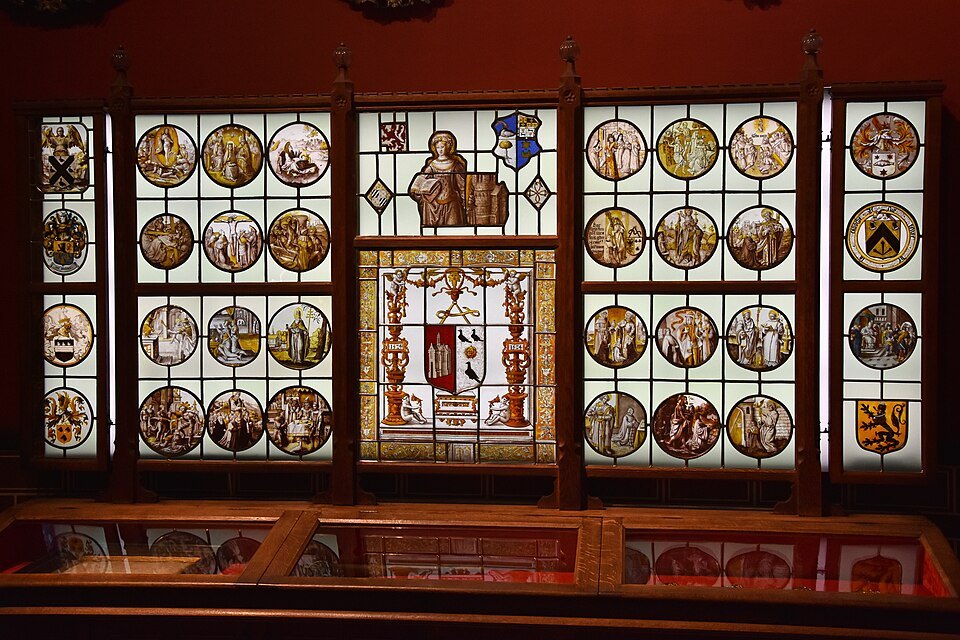
Off the upper chapel is a small treasury. Its star is the reliquary made in 1617 by the Bruges goldsmith Jan Crabbe, using some thirty kilograms of gold and silver and more than a hundred precious stones. It is this reliquary that carries the relic through the city on Ascension Day.
The procession
The Procession of the Holy Blood takes place every year on Ascension Day. It seems to have begun as a civic ceremony in the late thirteenth century, and by 1303 the relic was being carried round the city walls. In 2009 it was inscribed on UNESCO's list of the Intangible Cultural Heritage of Humanity.
More than three thousand residents of Bruges take part, in scenes from the Bible and the city's history, with choirs, horses, floats and animals, before the relic itself passes, carried by clergy and guarded by the brotherhood. Sixty to a hundred thousand spectators line the route, so plan ahead if you want to see it; when to come has more on the date.
How to visit
The basilica is a working place of worship first. Dress and behave as you would in any church, keep your voice low, and expect parts of the chapel to be closed during services. The relic is presented for veneration at set moments announced by the basilica; if you want to see that, check before you go rather than hoping to arrive at the right time.
Check the basilica's own information for access to the chapels and the treasury. A visit takes twenty to thirty minutes. The chapel is small and gets crowded in the middle of the day, when tour groups cross the Burg, so early or late in the day is calmer.
Combine it with the City Hall across the square, then walk through the Blinde Ezelstraat arch to the canals of the Groenerei. The Markt is two minutes away in the other direction.
Nearby
- The two squaresThe BurgThe square where Bruges began as a fortress of the counts of Flanders, now ringed by the Gothic City Hall, the Holy…Read the page
- The two squaresThe MarktThe great open square at the center of Bruges, framed by gabled guild-style houses, the neo-Gothic Provincial Court and…Read the page
- The merchants' northGroenereiA curving stretch of canal and quay behind the Burg, lined with almshouses, the Renaissance back of the Liberty of…Read the page