Home · Sights · The City Gates
Four gates survive from the wall Bruges built from 1297, standing on the green ring of ramparts: the Kruispoort, the Gentpoort, the Ezelpoort and the Smedenpoort, each with its own story.
The parts to look at
- IKruispoortThe eastern gate at the end of Langestraat, rebuilt between 1401 and 1406
- IIGentpoortThe road to Ghent, rebuilt in the moat around 1401 to 1407
- IIIEzelpoortA water-bound gate in the north-west, with a small bell tower of 1677
- IVSmedenpoortThe western gate, with a bronze skull recalling a plot of 1691
- VThe PoertorenA brick powder tower of 1398 to 1401 by the Minnewater
- VIThe rampartsThe landscaped ring of former walls that joins them all
Why they matter
Bruges was a walled city until the end of the eighteenth century, and the green ring of parkland that surrounds the old town today follows the line of those walls. Four of the old gates still stand on it. They are some of the largest medieval structures in the city, and they mark the points where travelers from Ghent, Kortrijk and the coast once arrived.
Visitors rarely seek them out, because they lie at the edge of the old town. That is exactly why they are worth the walk: reaching a gate means walking out through quiet residential streets to the ramparts, where the city suddenly gives way to water, trees and open sky.
Three rings of walls
The defenses of Bruges were built in three phases. In the early ninth century the Burg itself was fortified. In 1127 and 1128 a first city wall was built, following the line of what is now the inner ring of canals; its gates are mentioned in thirteenth-century texts, but no pictures of them survive.
In 1297 a second, much larger wall was begun, enclosing the oval that still defines the old town. It had seven gates, connecting Bruges to Ghent, Kortrijk, the towns to the north and the coast. Three of them, the Dampoort, the Boeveriepoort and the Katelijnepoort, have disappeared; the Kruispoort, the Gentpoort, the Ezelpoort and the Smedenpoort remain.
The gates were built, pulled down and rebuilt as the city's fortunes changed. A treaty after the conflict with France in the early fourteenth century required Bruges to dismantle its fortifications, and much of the stone you see now comes from rebuilding in the later fourteenth and early fifteenth centuries by the city's master masons.
The Kruispoort and the Gentpoort
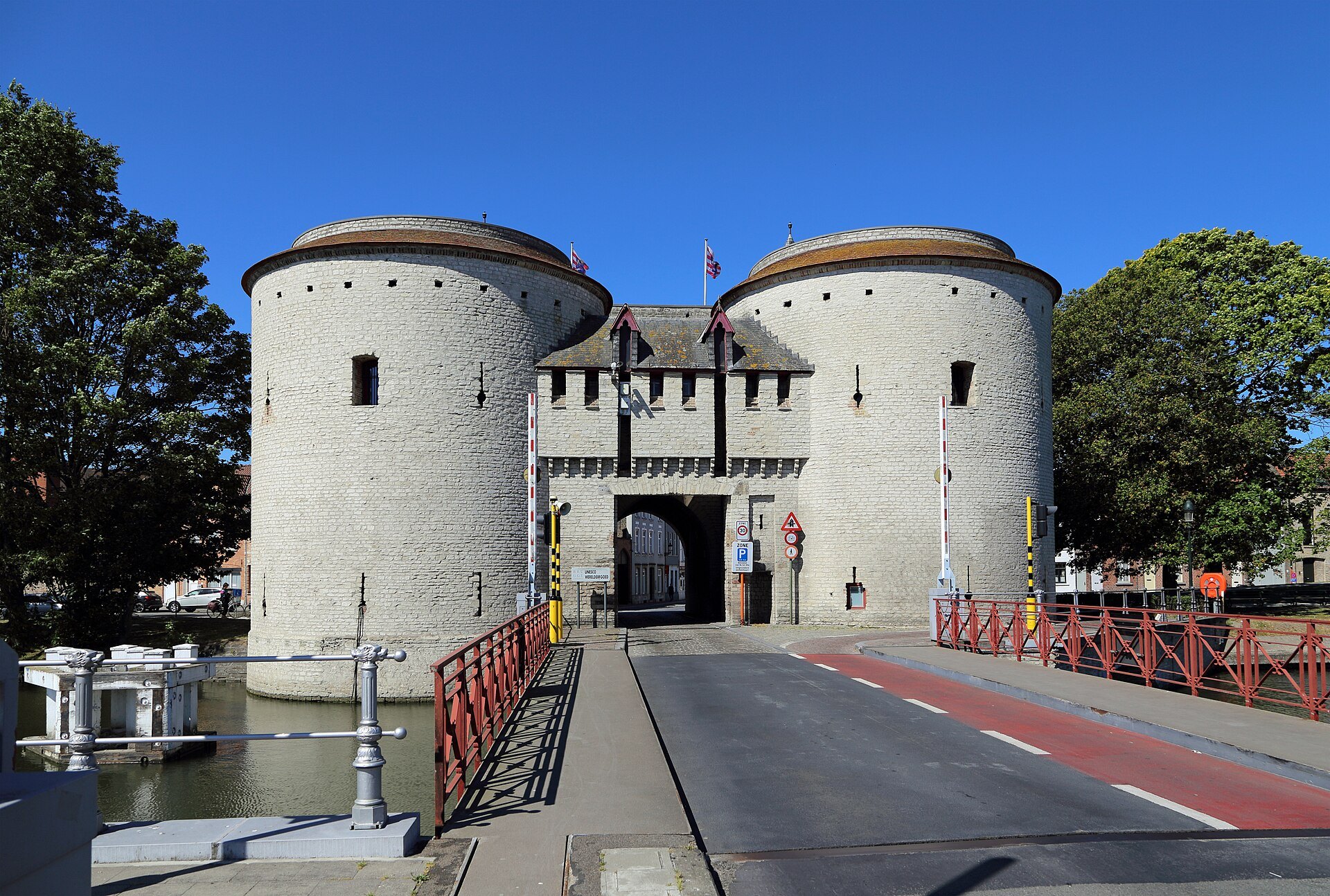
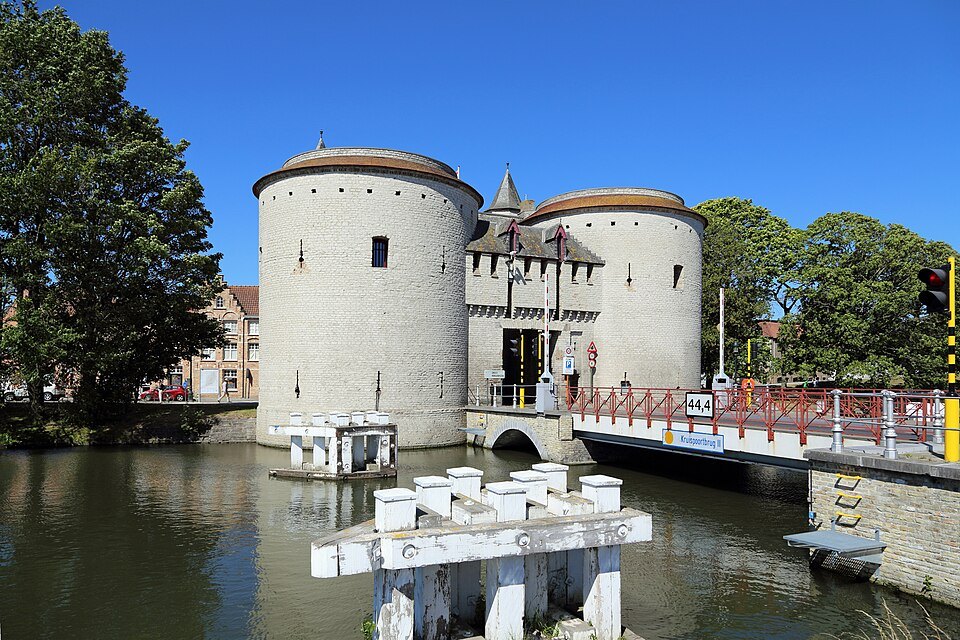
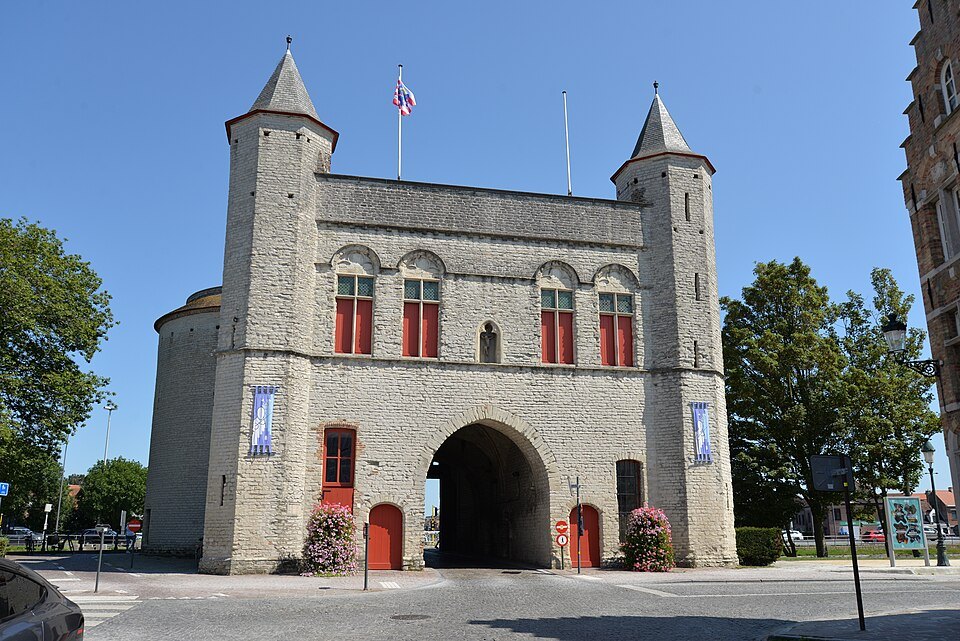
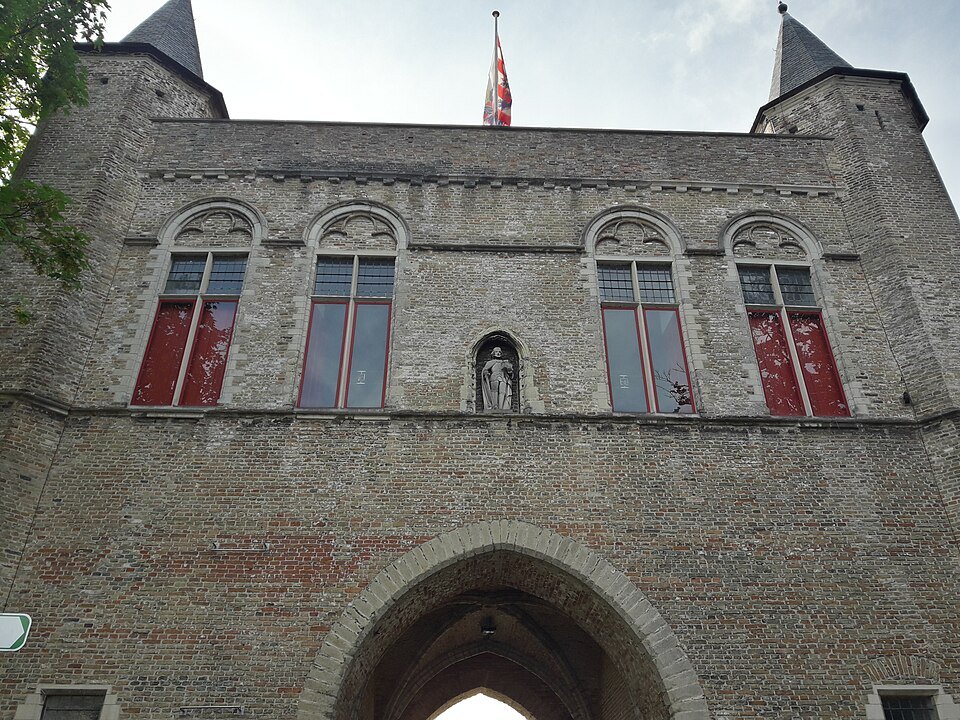
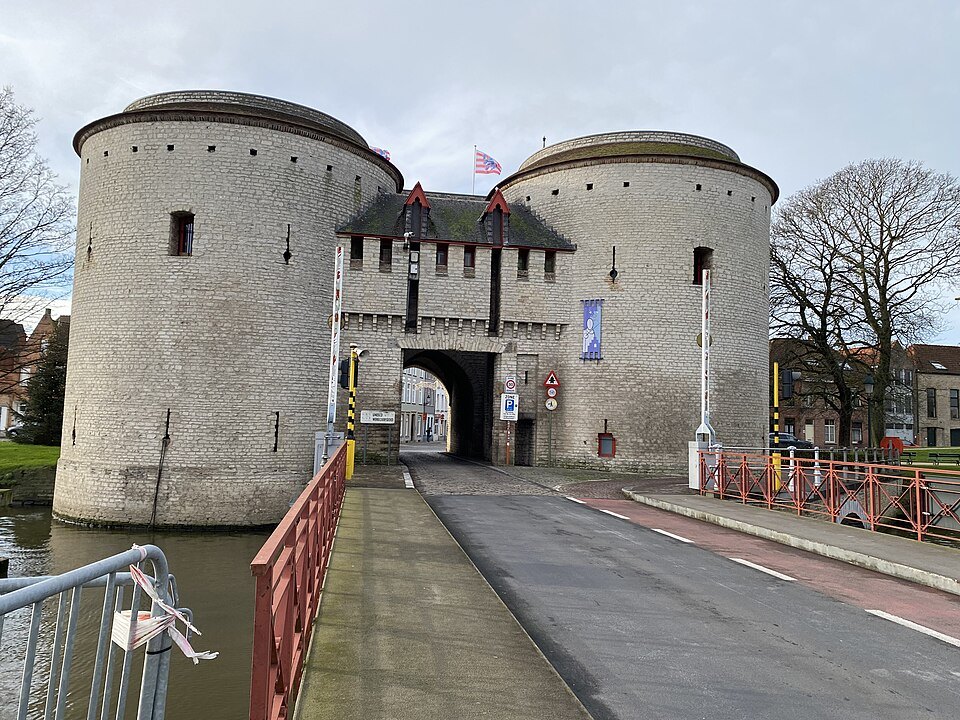
The Kruispoort, at the eastern end of Langestraat, is the most complete. After an earlier gate was destroyed, it was rebuilt from 1366, and between 1401 and 1406 it grew into a complex of a main building, two bridges, eight towers and a foregate. A contract of 16 August 1400 in the city archives names the builders, Jan van Oudenaarde and Master Martin. Today two round towers flank the gate passage, whose vaults rest on corbels carved with angels. The foregate was removed around 1760, and the building was restored in 1969 to 1972 and again in 2001 and 2002.
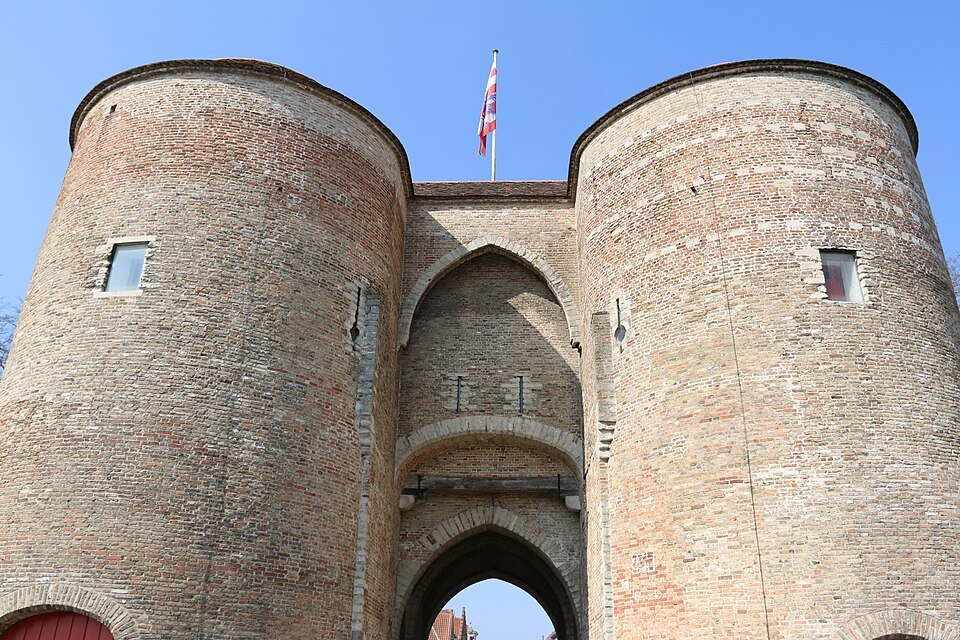
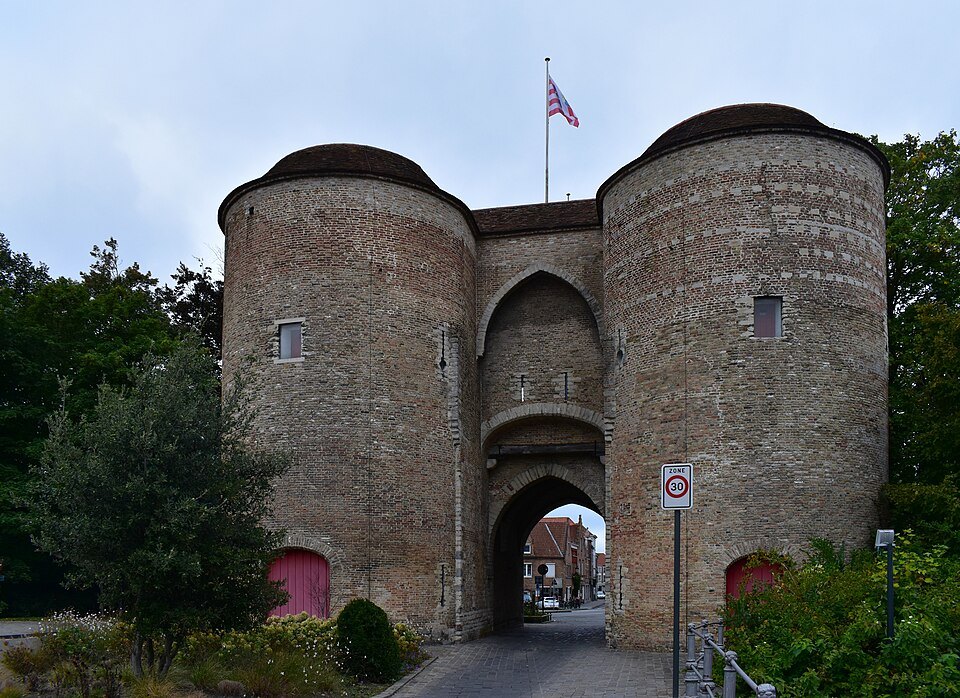
The Gentpoort guarded the road to Ghent. First built in 1297 and rebuilt between 1361 and 1363, it was badly damaged in 1382 when Ghent's citizens attacked the city. Around 1401 to 1407 Maarten van Leuven and Jan van Oudenaarde rebuilt it standing in the moat, reached through a gatehouse and two drawbridges.
The Ezelpoort and the Smedenpoort
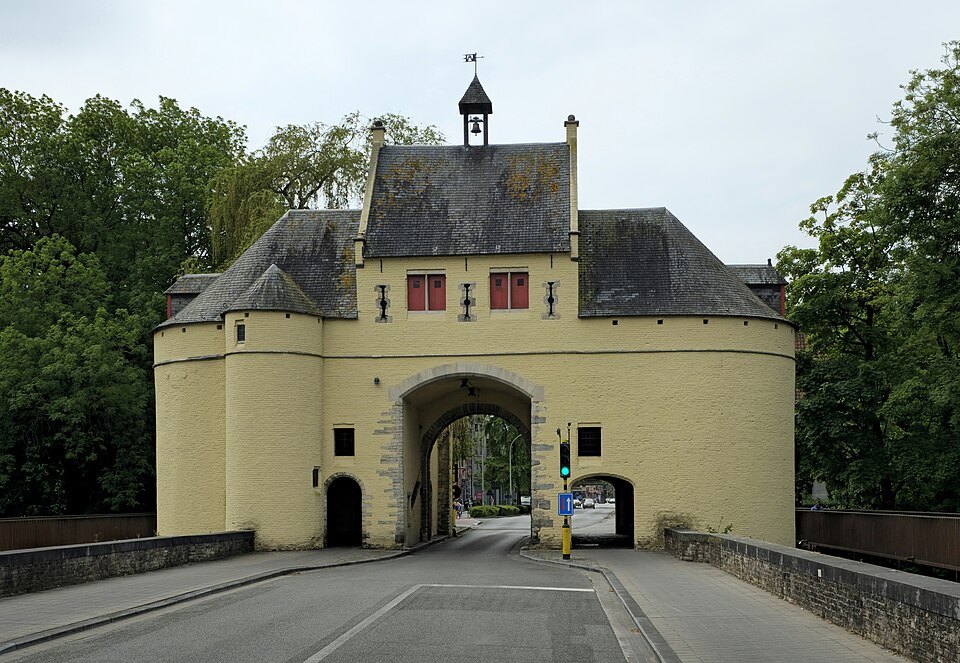
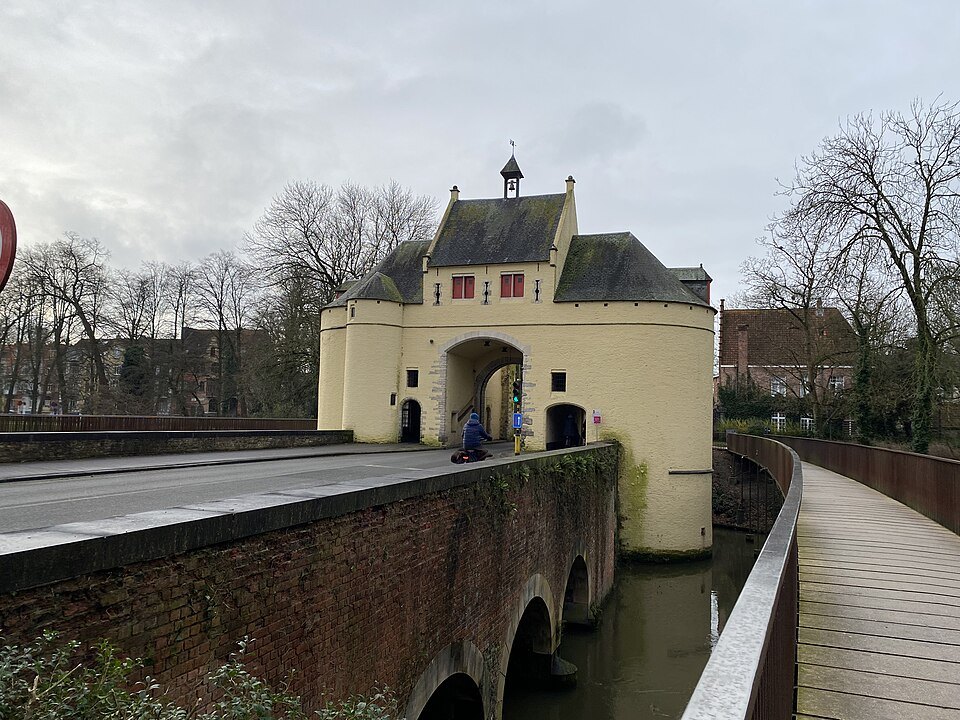
The Ezelpoort, in the north-west, was first built in 1297. A new gate with two monumental towers followed in 1369, and Jan van Oudenaarde rebuilt its bridge in 1385. In 1615 the foregate and the tops of the towers were demolished, and in 1677 a small bell tower was added. Like the Smedenpoort, it stands surrounded by water, and it was restored between 1991 and 1993.
The Smedenpoort, on the western side of the old town, dates from 1297 to 1299 and was rebuilt in 1367 and 1368. It carries the city's most macabre souvenir. In 1691 a plot to let French soldiers into Bruges by night through this gate was uncovered. The conspirator, François van der Straeten, was executed on 26 June 1691, and his head was set on an iron pin on the gate. The skull you see today is a bronze replica. In 2012 footbridges were added on both sides so walkers and cyclists can pass the gate apart from traffic.
What you actually see
Each gate is a solid block of brick and stone, with round towers, a vaulted passage and slate roofs, standing either astride a road or on an island in the outer canal. Stand in the gate passages of the Kruispoort and the Gentpoort and look up for the vaults and the grooves and fittings of the old closing mechanisms.
The ramparts around them are a landscaped park. The fortifications were dismantled after 1782 and turned into green walks between 1853 and 1915, and the whole ring has been protected since 2016. Near the Kruispoort the windmills stand on their mounds, and in the south the Poertoren, built between 1398 and 1401, overlooks the Minnewater.
How to visit
The gates are seen from outside, from the ramparts and the bridges, at any time and for free. The Kruispoort housed a war museum until around 1988, but the gates are best treated as monuments to walk round rather than places to go inside; check Visit Bruges if you hope to see an interior.
The easiest to reach from the center is the Kruispoort, fifteen minutes' walk east along Langestraat and combined with the windmills and the Jerusalem Church. The Gentpoort is a short walk south-east of the Beguinage area, and the Smedenpoort is the one you pass if you walk into town from the west. A full walk round the ramparts linking all four takes a couple of hours at a relaxed pace; getting around has advice on doing it by bike.
Nearby
- East to the rampartsThe Kruisvest WindmillsFour wooden post mills standing on grassy mounds along the eastern ramparts of Bruges, the survivors of the many that…Read the page
- East to the rampartsJerusalem ChurchA private chapel built by the Adornes family after a pilgrimage to Jerusalem, inspired by the Church of the Holy…Read the page
- The quiet southMinnewaterA broad sheet of water beside the Beguinage, dug in the thirteenth century to control the river flowing into Bruges,…Read the page