Home · Sights · Jan van Eyckplein
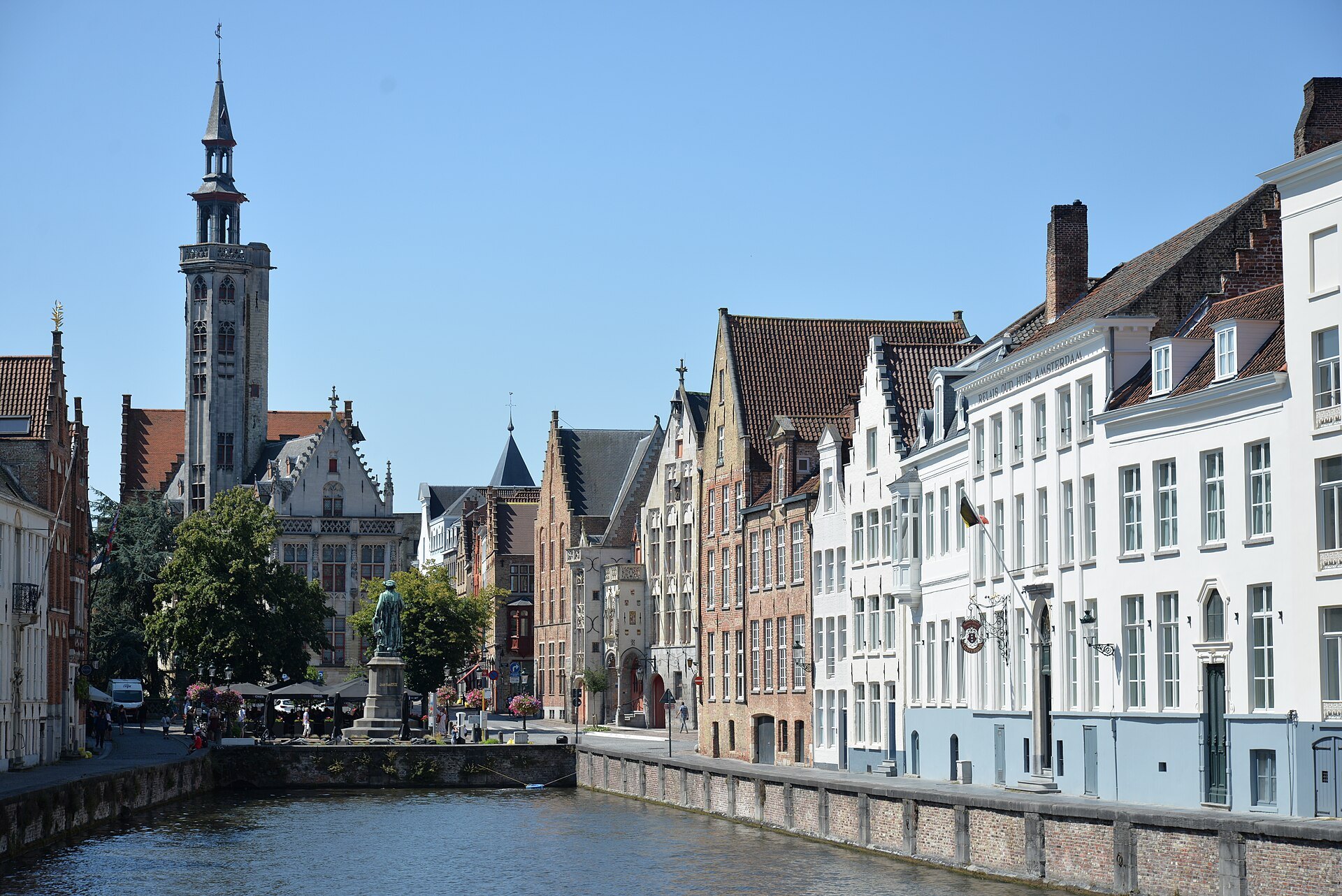
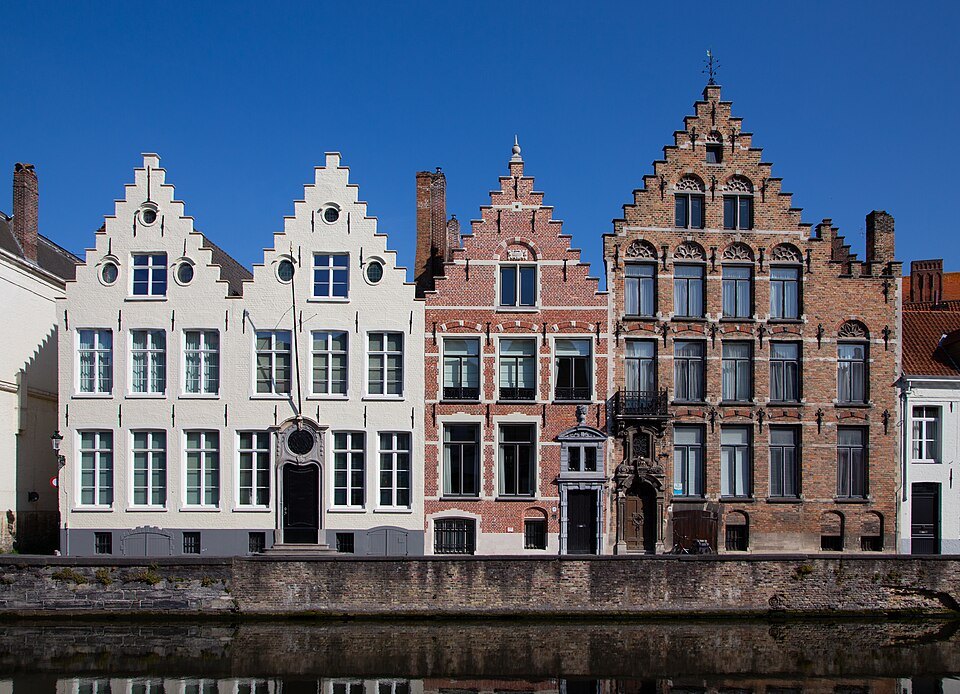
The small square at the head of the Spiegelrei canal, where the merchants of medieval Bruges met, watched over by a statue of Jan van Eyck and the slender tower of the Poortersloge.
Around the square
- 1The statue of Jan van EyckThe painter on a tall stone pedestal, raised in 1878
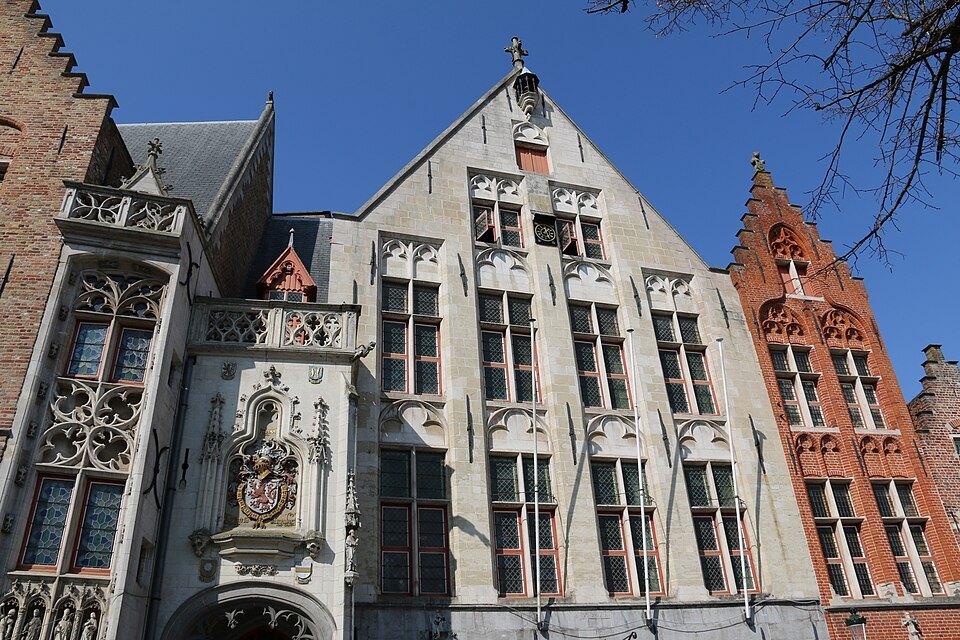
- 2The PoorterslogeThe burghers' lodge of about 1395 to 1417, with its slim tower
- 3The bear of the lodgeA little stone bear with a shield in a niche on the Poortersloge corner
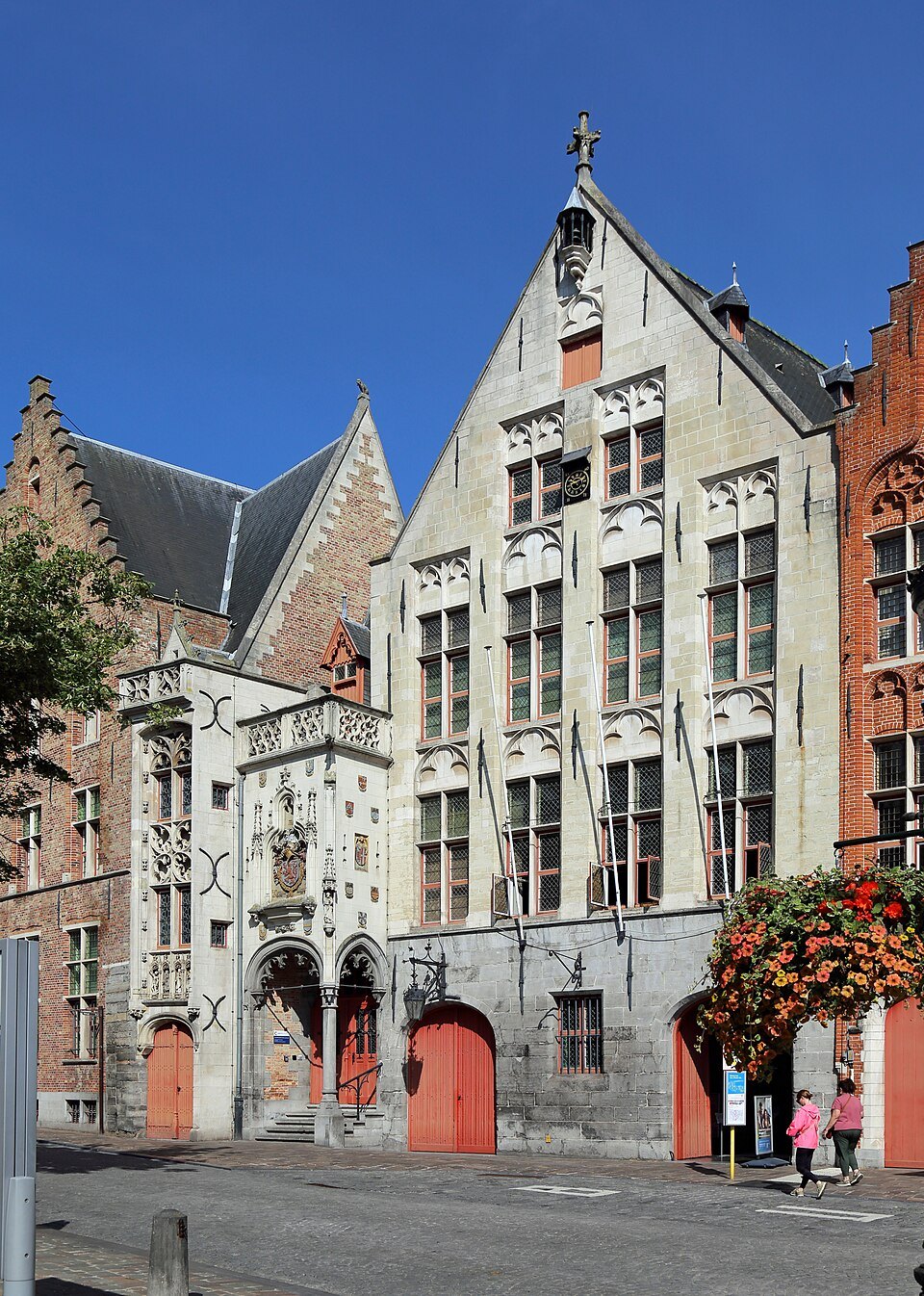
- 4The toll houseThe old toll house on the square's north side
- 5The merchants' housesTall fronts with broad doorways built for goods, not just people
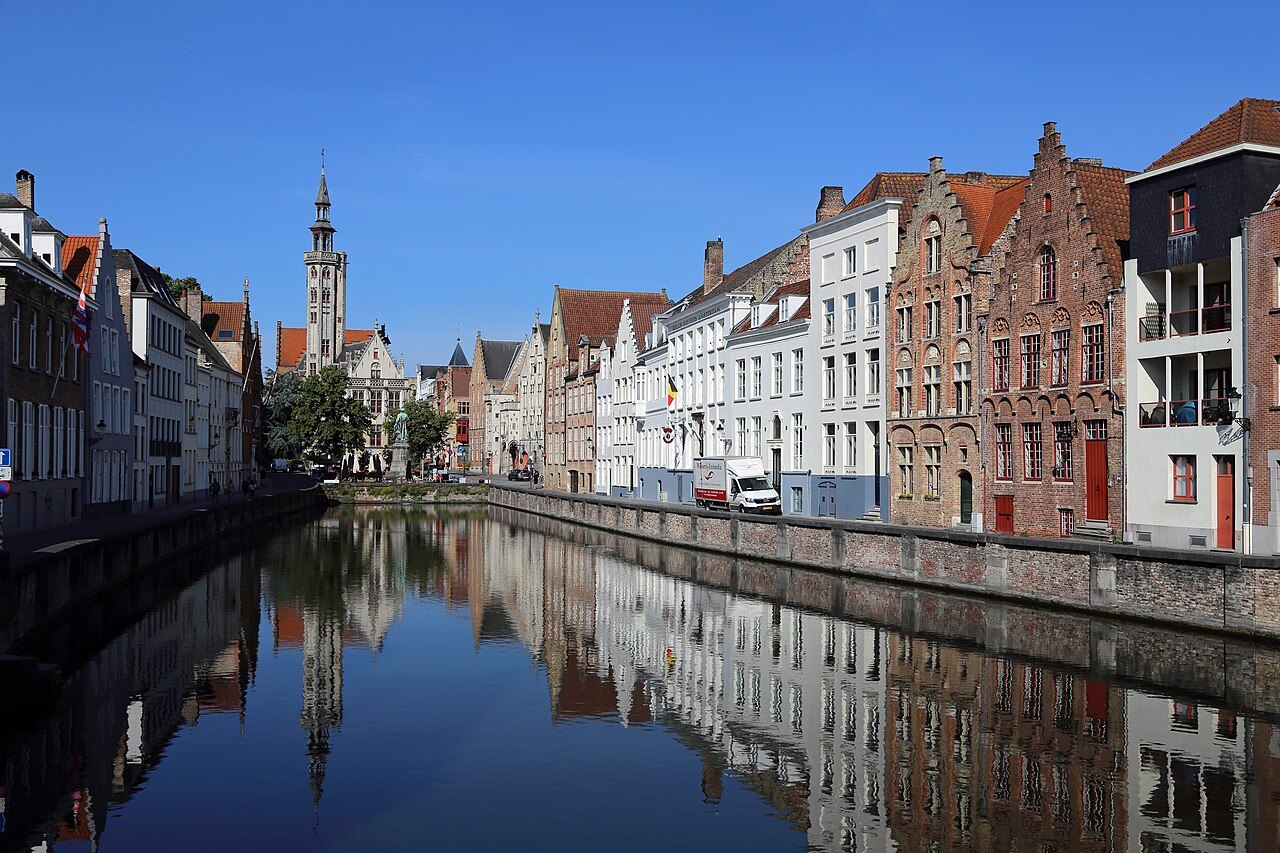
- 6The SpiegelreiThe canal running east from the square between rows of gabled houses
Why it matters
Five minutes north of the Markt, the streets open onto a small square at the end of a canal. Brick and white houses line the water, a slender tower rises on one corner, and in the middle a painter in stone looks out over it all. This is Jan van Eyckplein, and in the Middle Ages it was the business district of Bruges, the place where ships unloaded and merchants from across Europe met.
It is far quieter than the Markt, and many visitors never reach it. That is a pity: the square and the canal beside it, the Spiegelrei, give the clearest picture in the city of Bruges as a trading port rather than a museum town.
The harbor quarter
When Bruges was at its height, the waterways of this northern quarter brought goods into the heart of the city. Genoese and Hanseatic merchants traded in Bruges, and the Hanseatic League kept an office there; the streets around this square still carry the memory in names such as the Biskajersplein, the square of the merchants from Biscay, just to the south.
The square itself is younger than it looks. It was laid out shortly after 1787, when a bridge called the Sint-Jansbrug was demolished and part of the Kraanrei canal was vaulted over. Its name changed with the city's politics: it was first called after the bridge, during the French period it became the Academieplaetse because an art academy was housed on the square, and in 1844 the city renamed it after Jan van Eyck.
Before the twentieth century, people knew it by another name altogether, the Petattenmarkt, because a potato market was held here every week.
The statue and the painter
Jan van Eyck moved to Bruges around 1425 in the service of Philip the Good, Duke of Burgundy, bought a house in the city in 1432, and died here on 9 July 1441. He is the most famous painter ever to work in Bruges, and two of his masterpieces hang in the Groeningemuseum.
A first marble statue of him, by Jan-Robert Calloigne, was put up on the square in 1856 but removed in 1871. The present monument, on a tall bluestone pedestal, dates from 1878 and was designed by Hendrik Pickery. Its arrival had an unexpected effect: it prompted the restoration of the buildings around it, which is one reason the square looks so complete today. To follow Van Eyck's work through the city, see the Flemish masters.
The Poortersloge
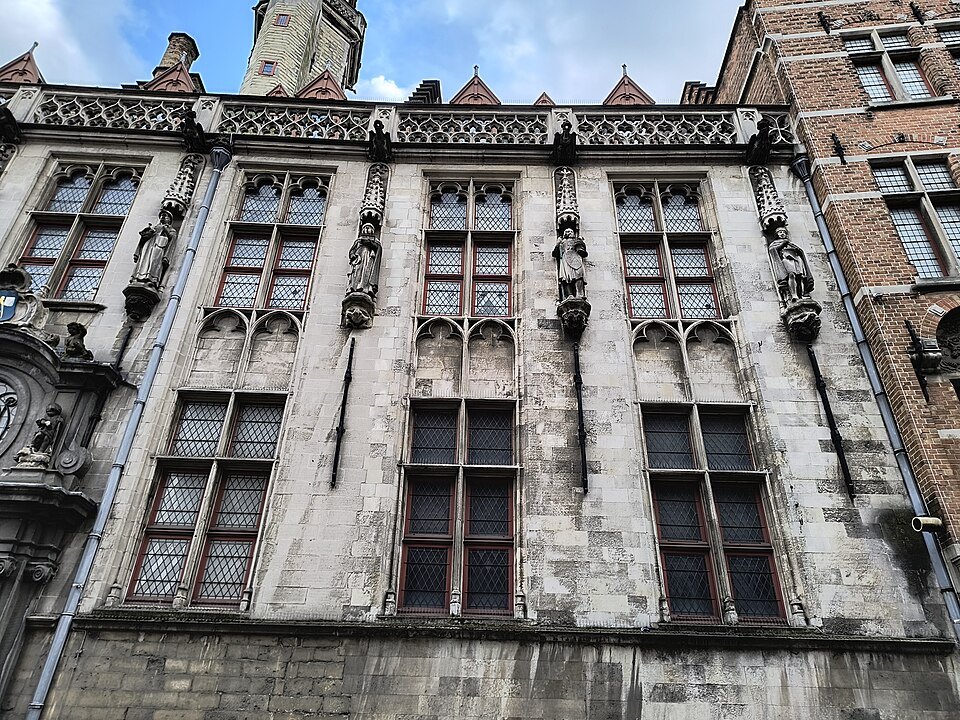
On the west side of the square stands the Poortersloge, the burghers' lodge, built between about 1395 and 1417 as a meeting place for the commercial elite of Bruges. Its tall, narrow tower is the landmark of the whole quarter and can be seen from far along the canal.
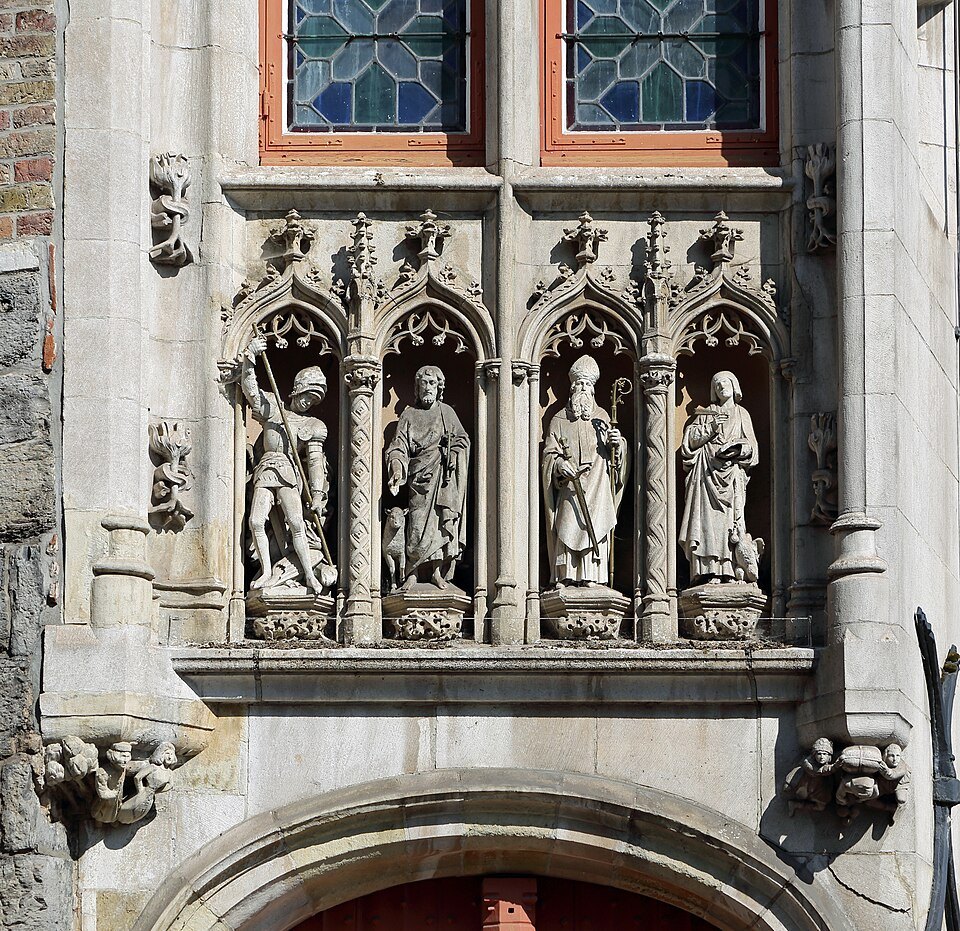
The lodge was probably built, and was certainly owned, by the Society of the White Bear, a jousting club founded around 1380. The society's mascot, a small bear holding a shield, stands in a niche on the corner of the building, and people in Bruges call it the Beertje van de Loge, the little bear of the lodge. Look for it before you move on.
The building has had many lives. In the sixteenth century a fencing guild practiced here. From 1720 to 1890 it housed the city's Free Academy of Arts, and from 1912 to 2012 the State Archives. A fire in 1755 required heavy rebuilding, and a nineteenth-century extension was taken down again in 1897 by the architect Louis Delacenserie to restore the late Gothic character. Since 2016 it has been used for exhibitions of contemporary art.
What you actually see
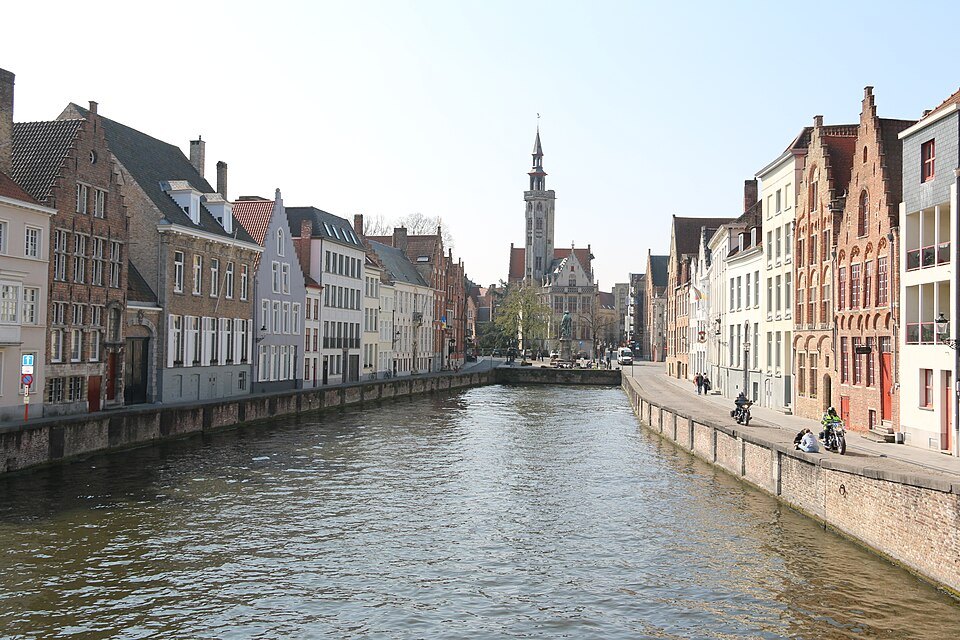
Stand by the statue and turn slowly. To the west is the Poortersloge with its tower and bear. On the north side are the old toll house and a row of merchants' houses whose broad doorways were made to take goods in and out. To the east the Spiegelrei runs away between rows of gabled fronts, reflected in the still water, with the tower of the lodge doubled in the canal.
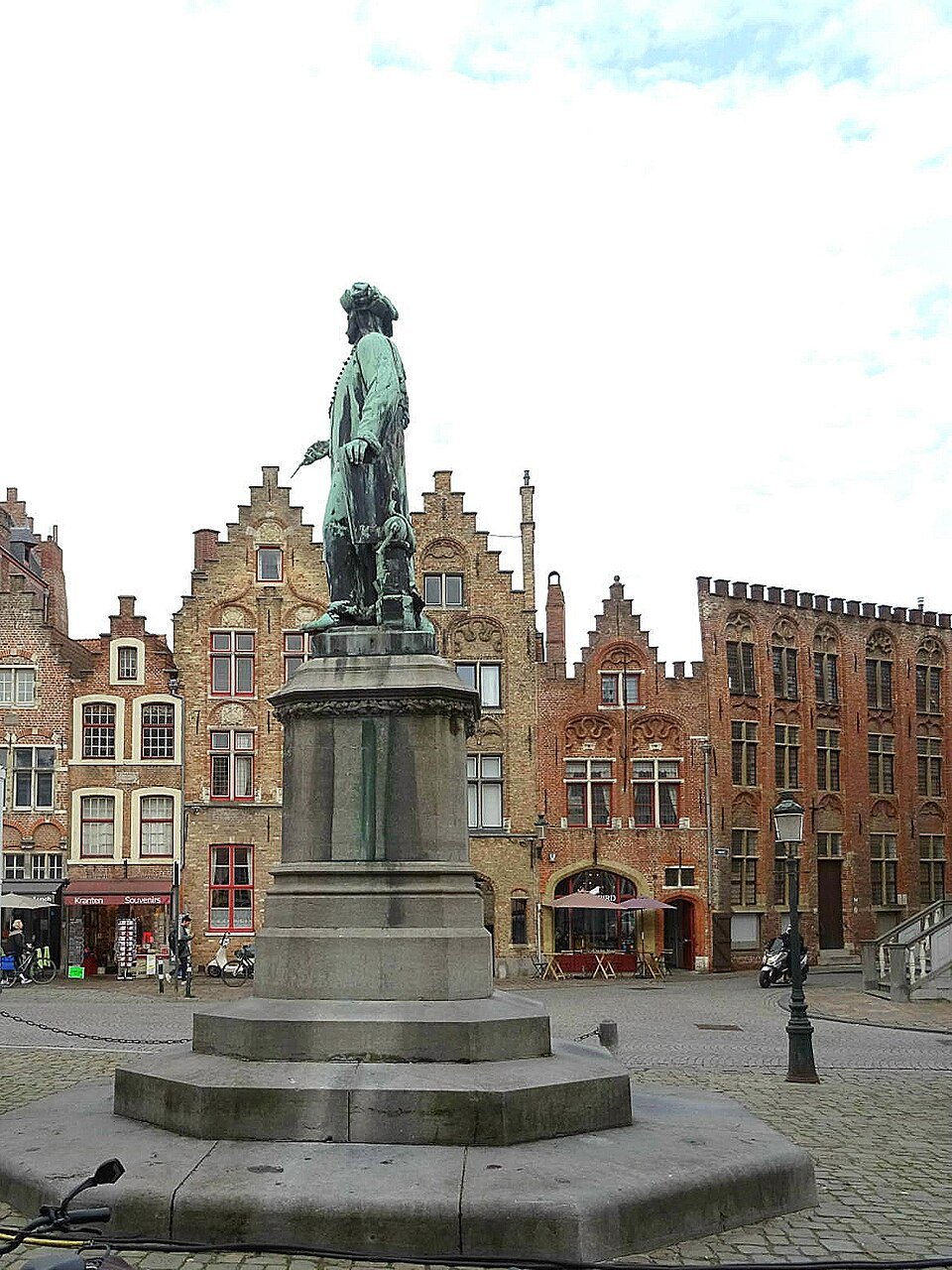
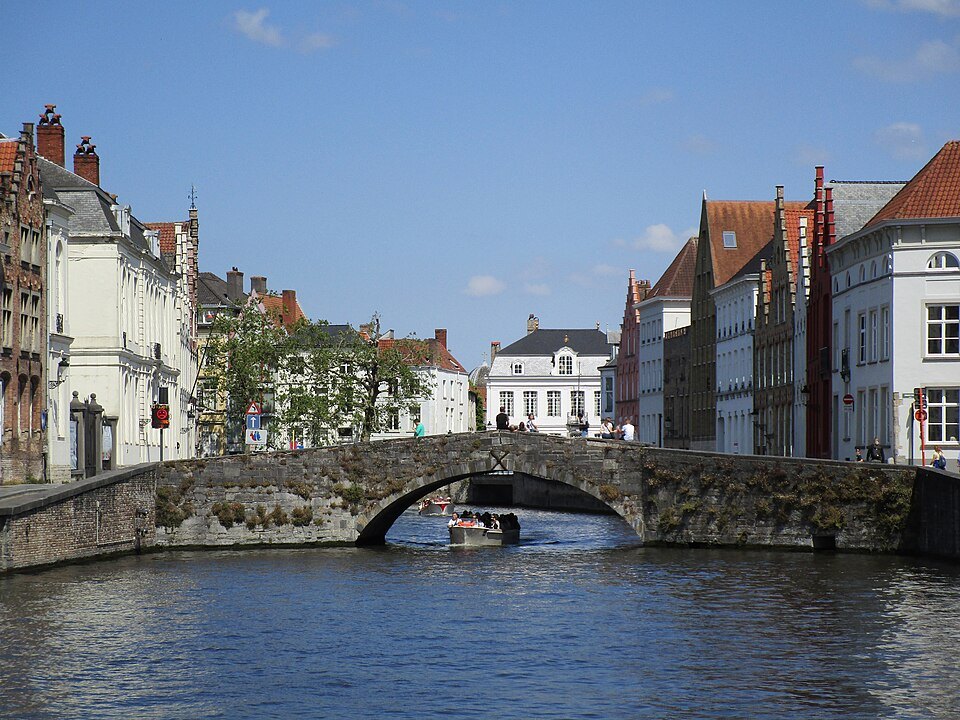
Walk a little way along the Spiegelrei and look back for the best view of the square, or cross the Koningsbrug for a view down the canal. The quays here are residential and calm, and the houses along the water are some of the most varied in Bruges, from medieval brick to later white-plastered fronts.
How to visit
The square is public and always accessible, and fifteen minutes is enough to see it; longer if you walk the Spiegelrei. Exhibitions in the Poortersloge have their own arrangements. The square is quiet for most of the day, and it is lovely in morning light, when the sun reaches the fronts along the canal.
Canal boats turn near here, so you will see them passing. From the square, walk east along the Spiegelrei and the Langerei to explore the quiet northern canals, or head south along Academiestraat and Vlamingstraat to the Markt. The Groenerei and the Burg are ten minutes away, and the canals page maps the northern waterways.
Nearby
- The two squaresThe MarktThe great open square at the center of Bruges, framed by gabled guild-style houses, the neo-Gothic Provincial Court and…Read the page
- The merchants' northGroenereiA curving stretch of canal and quay behind the Burg, lined with almshouses, the Renaissance back of the Liberty of…Read the page
- The two squaresThe BurgThe square where Bruges began as a fortress of the counts of Flanders, now ringed by the Gothic City Hall, the Holy…Read the page