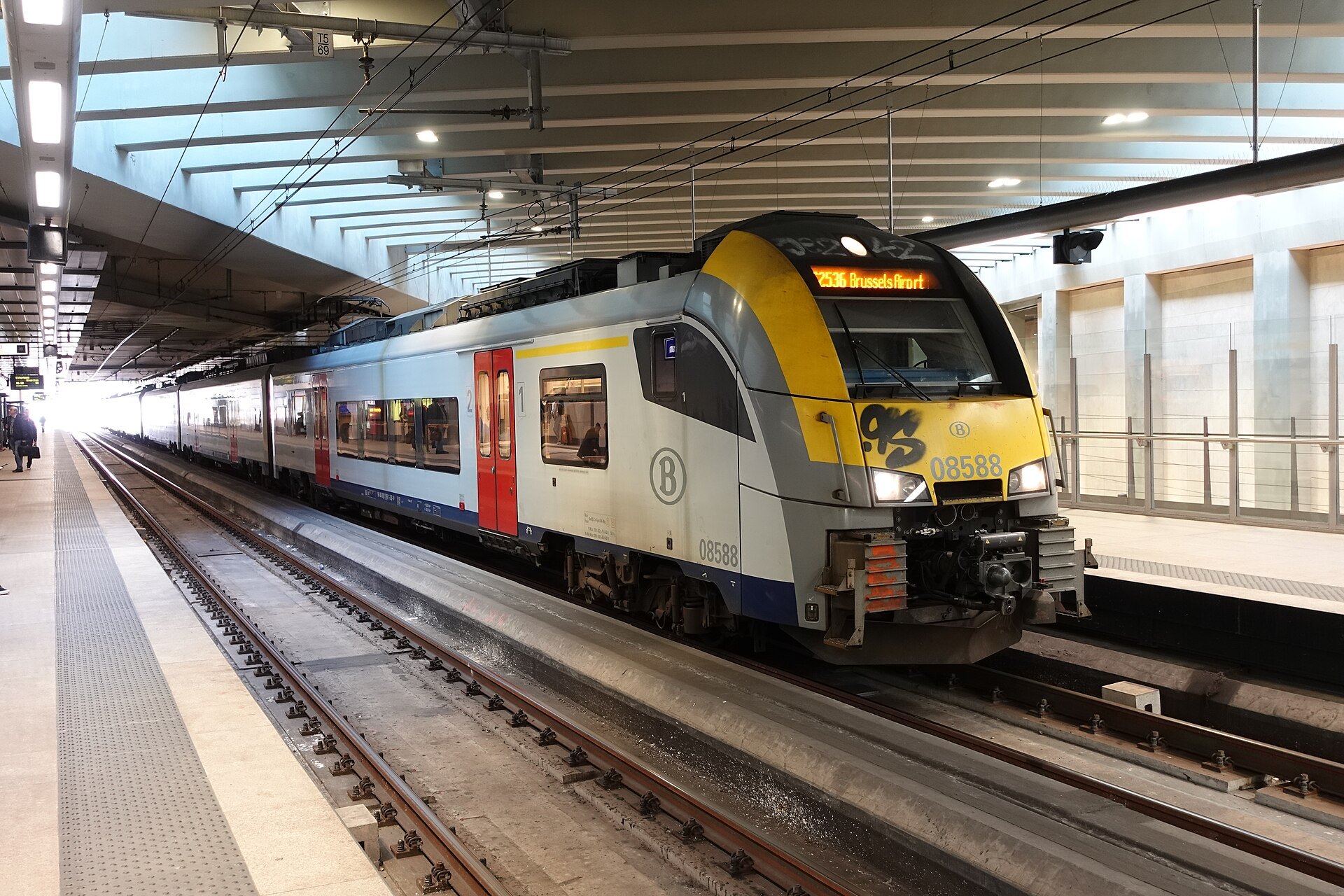
Bruges has no big airport of its own
Most visitors to Bruges who fly land at Brussels Airport, near Zaventem, on the far side of Brussels. Bruges has a small airport shared with Ostend, but it has few passenger flights, so for almost everyone the journey from the plane to the canals is a train ride across Flanders.
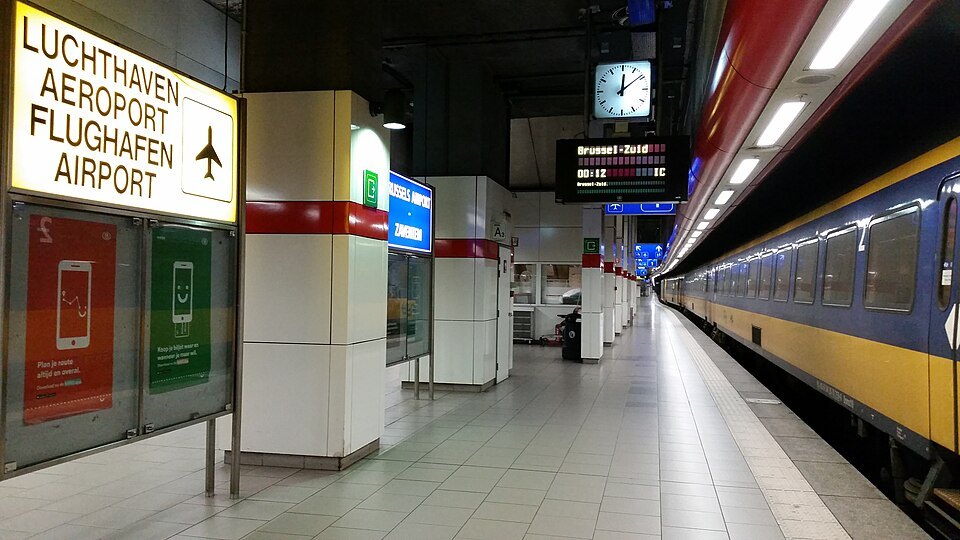
The good news is that it is simple. The airport has its own railway station, the trains are frequent, and they end at Brugge station, a short walk or bus ride from the old town. This article walks through the journey step by step, and then deals with the practical question every arriving visitor has: what to do with the bags before check-in or after check-out.
Some links on this page are affiliate links. If you book through one we may earn a commission, at no extra cost to you. It does not affect what is recommended here, and no sight page on this site carries one.
A transfer booked ahead, somewhere to leave bags, and mobile data from landing.
Finding the train
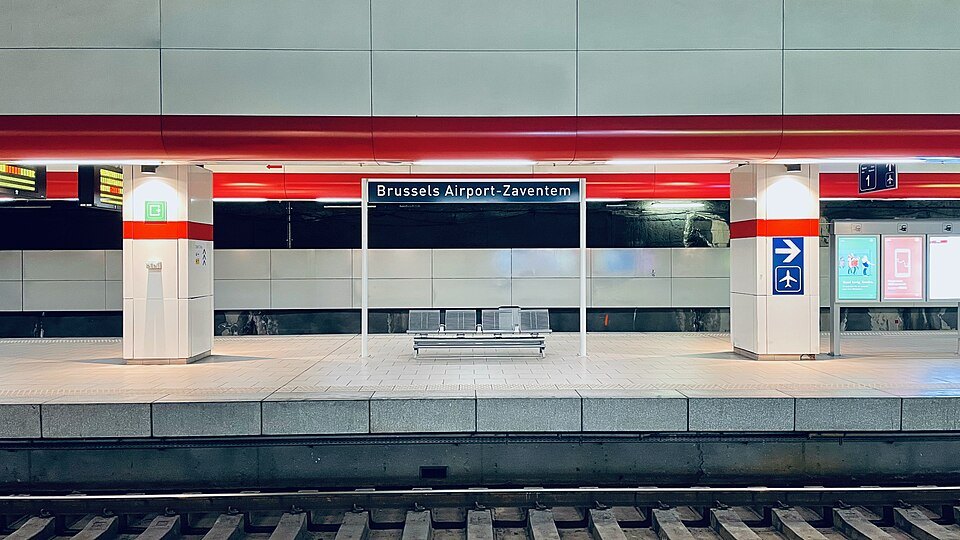
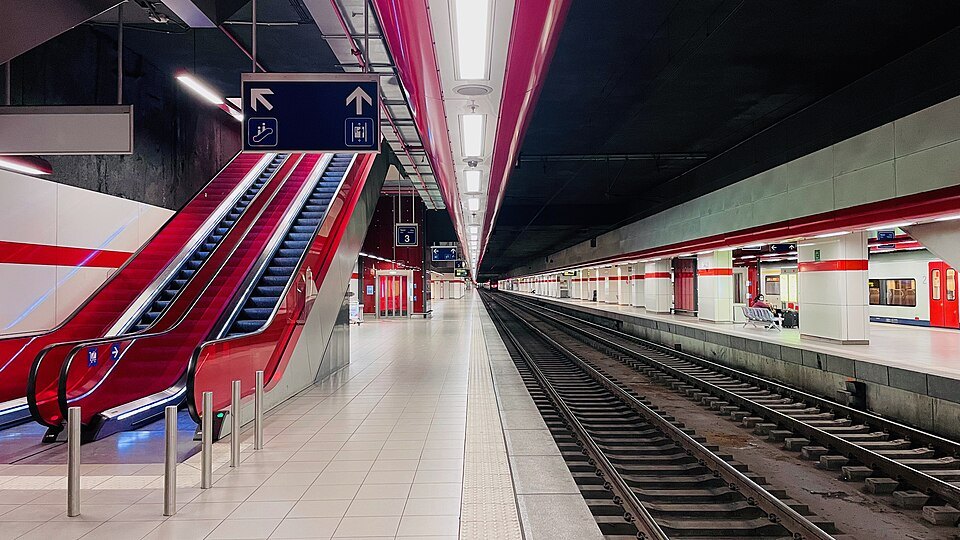
The railway station at Brussels Airport lies directly below the arrival and departure halls, so there is no shuttle to catch: follow the train signs down from arrivals. Visit Bruges notes that there is a direct hourly train from the airport to Bruges every day.
Buy a ticket before you board, from a ticket machine or office at the station or through the Belgian railway operator's app. Tickets for trains within Belgium are not tied to a particular train, so if you miss one, you simply take the next.
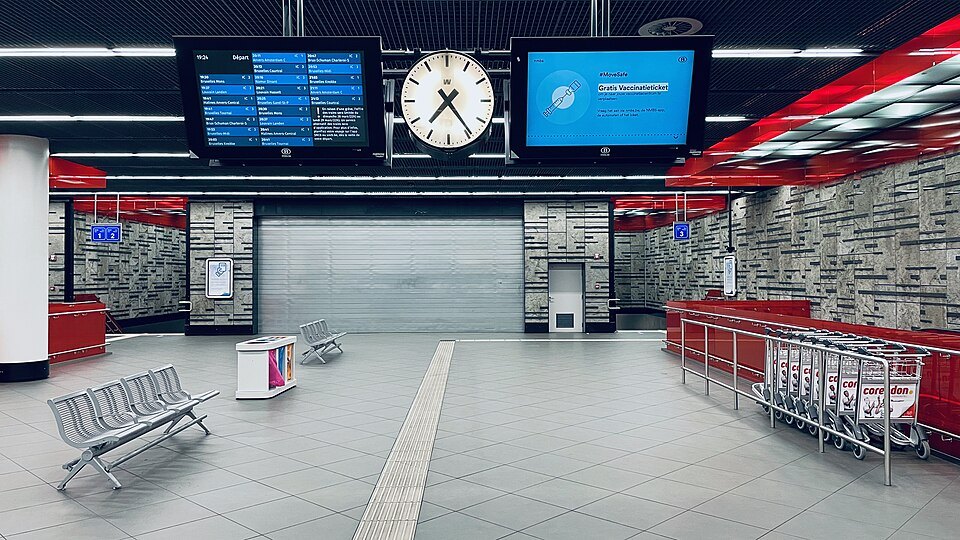
Check the departure boards for trains towards Bruges or the coast. If there is no direct train soon, the alternative is to ride into central Brussels and change there to a train heading for Bruges, Ostend or Knokke.
How long it takes
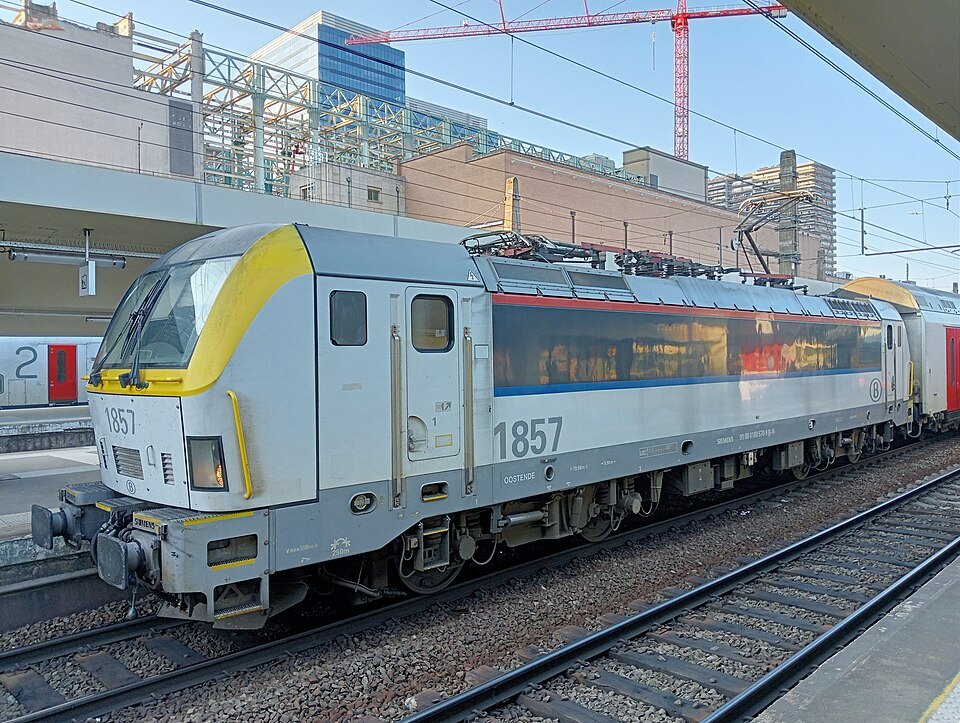
Seat61, the rail travel specialist, gives the journey from Brussels Airport to Bruges as about an hour and a half, including a connection in central Brussels when there is no direct train. The direct service takes roughly the same, because it passes through the Brussels stations on the way.
The line crosses the whole of Flanders, through Brussels and Ghent, and the last half hour runs through flat fields and farmland before the train slows into Bruges. Sit on either side; there is no special view, but it is a relaxed way to shake off a flight.
Allow extra time for the walk from arrivals to the platform and for buying a ticket, and add the last stretch from Brugge station into the center, which is covered below.
Other airports
If you fly into Brussels South Charleroi Airport, used by budget airlines, there is no direct train. A shuttle coach service, Flibco, runs to Bruges station with a timetable matched to the flights. From Ostend-Bruges Airport, a bus runs to Ostend station in about a quarter of an hour, and trains from Ostend reach Bruges in about the same time again.
Taxis run from all three airports on flat fares, but the distances are long, and for most travelers the train or shuttle is far better value. For every way of arriving, including coaches and cars, see getting here.
Arriving at Brugge station
Brugge station stands just outside the southern edge of the ring of canals. The main station for visitors is called simply Brugge; do not get off at Brugge-Sint-Pieters, a small suburban stop. The building dates from 1938 and was modernized between 2004 and 2009, with escalators and lifts to every platform.
From the square in front of the station, De Lijn buses run to the center every few minutes, and lines 1 and 2 stop at the Markt. The walk takes about twenty minutes. With light luggage, the walk through the Minnewater park and the Beguinage is a lovely first view of the city; with heavy bags, take the bus or a taxi from the stand outside.
International coaches and airport shuttles stop at the rear of the station, at the roundabout on Spoorwegstraat, so if you arrive by shuttle, walk round to the front for the buses into town.
What to do with your bags
The awkward hours of any city break are the ones between arriving and check-in, and between check-out and the train home. In Bruges they matter more than usual, because the streets are cobbled, many hotels and guesthouses are in narrow old buildings, and dragging a suitcase over the stones of the Markt is nobody's idea of a first impression.
The simplest answer is to ask your accommodation whether it will hold bags before check-in or after check-out; many places will. If that is not possible, luggage storage services operate in the city and can be booked ahead, so that you arrive knowing where the bags will go.
Travel light if you can. A small case on wheels copes with the cobbles far better than a large one, and a backpack is easiest of all. If you are staying in the north-east or far from the station, the bus or a taxi for the first and last journeys is money well spent.
Staying connected
Belgian train tickets, museum time slots such as the Belfry, and bus tickets can all be bought and stored on a phone, and maps make the lanes of the old town easier to navigate. Arriving with mobile data working from the moment you land makes the whole journey smoother, especially if you need to check train departures or a change in Brussels.
Once you are in Bruges, you will hardly need transport at all: the old town is walked. See getting around for buses, bikes and taxis, and the journal article on cycling to Damme for the best short trip out of town.
A simple checklist
Land at Brussels Airport and follow the train signs down to the station. Buy a ticket to Brugge. Take the direct train, or change in central Brussels for a train towards Bruges or the coast. Get off at Brugge, not Brugge-Sint-Pieters. Take bus 1 or 2 to the Markt, or walk twenty minutes into town.
Before you travel, arrange where your bags will wait, save your accommodation's address offline, and book a Belfry slot if you plan to climb it on your first morning; the journal article on the Belfry climb explains why.
Read next
- Day TripsCycling to Damme along the canal is the best half day out from BrugesHow to ride from Bruges to Damme along the Damse Vaart, what to see in the small town that was once Bruges's port, and how to come back by paddle steamer.Read
- The BelfryThe Belfry climb is worth booking, and here is how to time it with the bellsWhat climbing the Belfry of Bruges involves, why a time slot matters, how to be near the carillon when it plays, and who should skip the stairs.Read
- Getting HereDriving to Bruges means parking at the edge and walking inWhy Bruges discourages cars in its old town, which car parks and park-and-ride sites to use, the free bus from the station car park, and rules for driving inside.Read