Why climb it
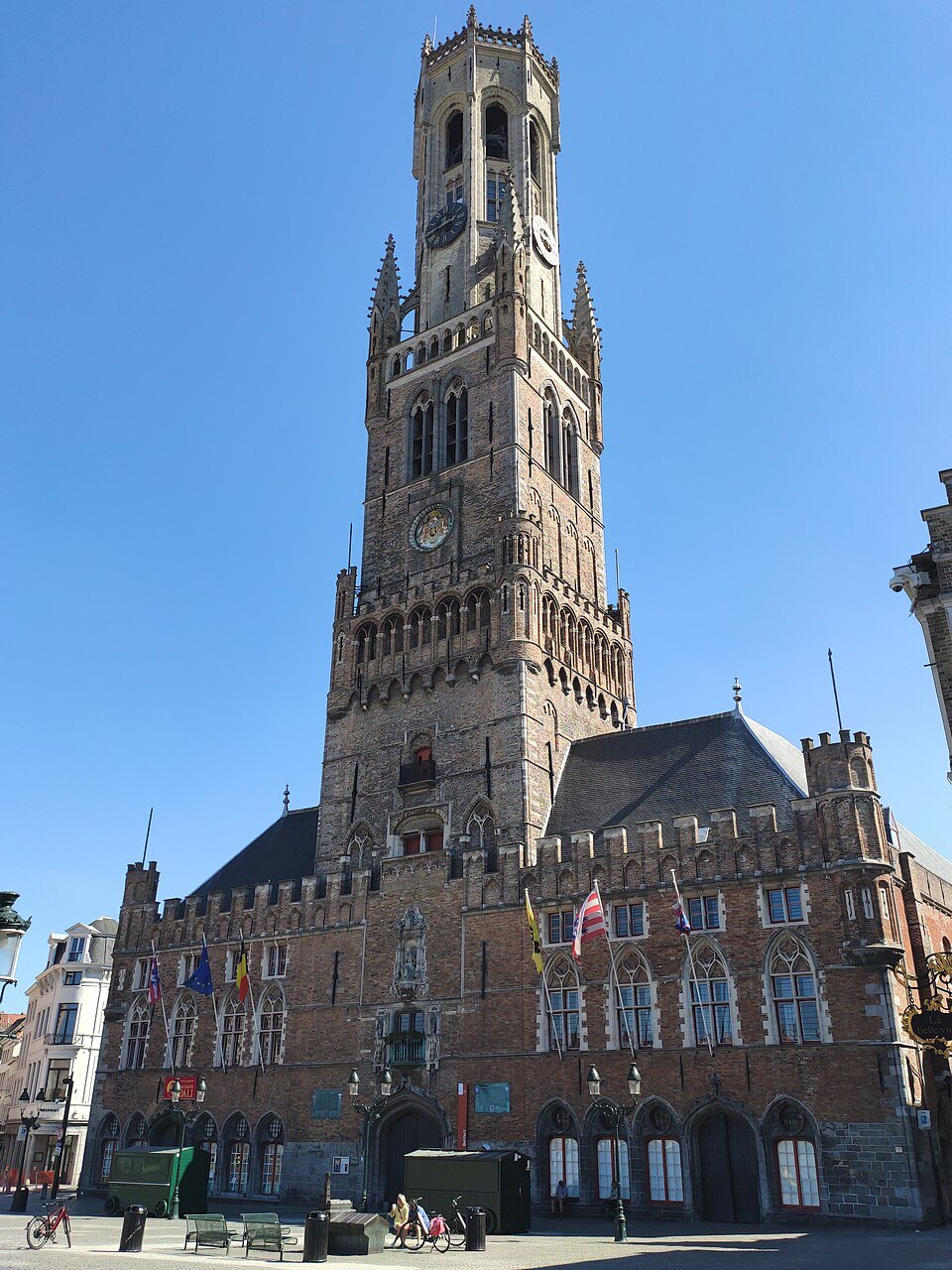
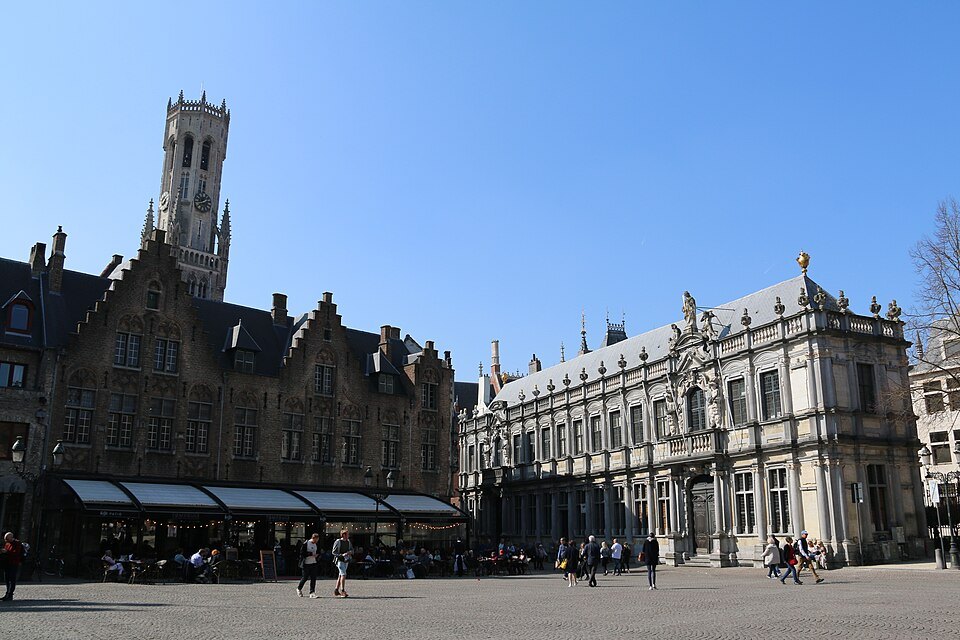
The Belfry is the tower on every photograph of Bruges, rising 83 meters over the south side of the Markt. Climbing it is the most physical thing most visitors do in the city, and one of the most rewarding: from the top you see the whole oval of the old town laid out inside its ring of canals, with the spires of the Burg, Our Lady and St. Salvator around you and the flat land running away towards the coast.
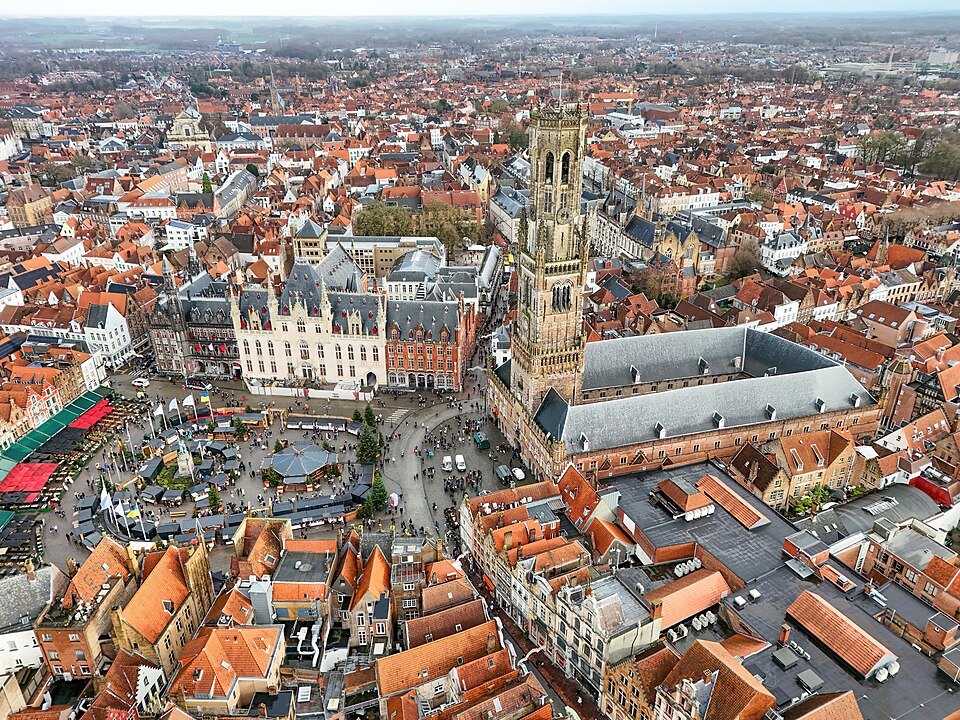
It is also a climb through the history of the city. The tower was begun around 1240, lost its upper half to a fire in 1280, gained its octagonal top between 1483 and 1487, and has leaned 87 centimeters to the east for centuries. On the way up you pass the rooms where medieval Bruges kept its treasures and the machine that still plays its bells.
The Belfry is part of two UNESCO listings, as one of the Belfries of Belgium and France, listed in 1999, and as part of the historic center of Bruges, listed in 2000. Few climbs anywhere combine a monument, a working instrument and a view as well as this one does.
Why the time slot matters
The Belfry is one of the busiest sights in Bruges, and Musea Brugge, which runs it, strongly recommends booking a time slot online before you go. The system shows how many tickets are left for each slot, and in quieter periods you do not need to book far ahead, but on summer days and weekends slots fill up.
Tickets are for a fixed entry time and expire if you are late, so leave a margin, especially if you are coming from the station or from the far side of the old town. If you hold a Musea Brugge Card, which covers all Musea Brugge locations for seventy-two hours, it is still sensible to reserve a Belfry slot.
Booking also shapes your day. An early slot gets the climb done before the Markt fills, and the view in morning light is usually clearer than in the haze of the afternoon.
What the climb is like
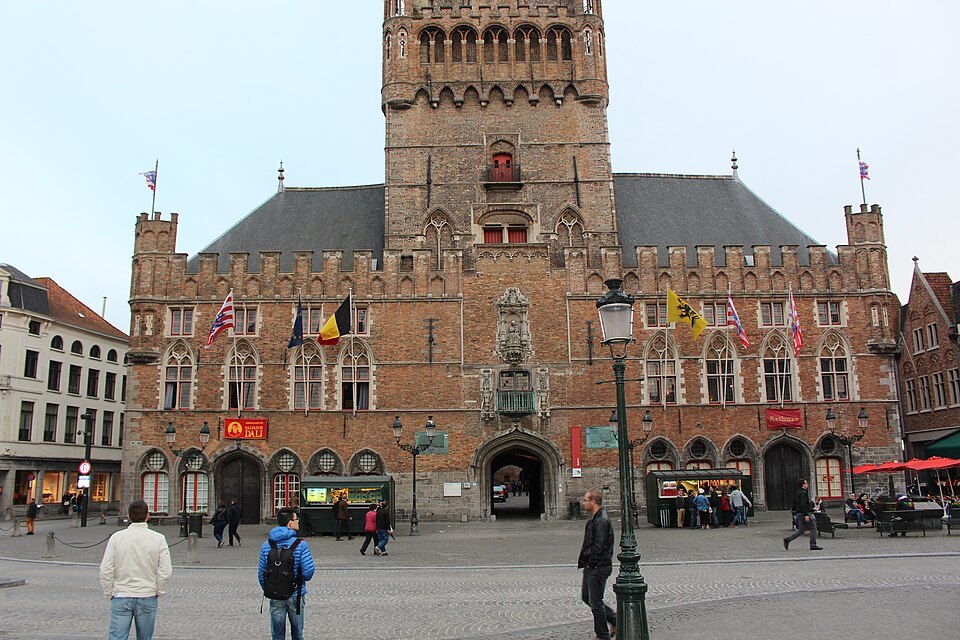
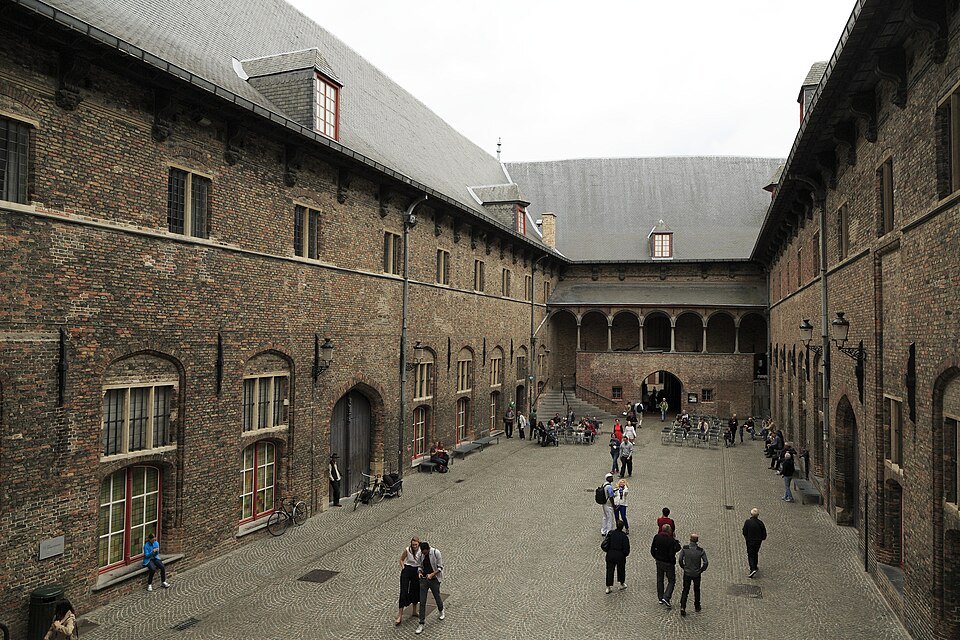
The visit begins in the courtyard of the market halls at the foot of the tower, a quiet arcaded space most people on the square never see. Then come the stairs: 366 of them, growing narrower and steeper as you rise, with rooms along the way where you can stop and catch your breath.
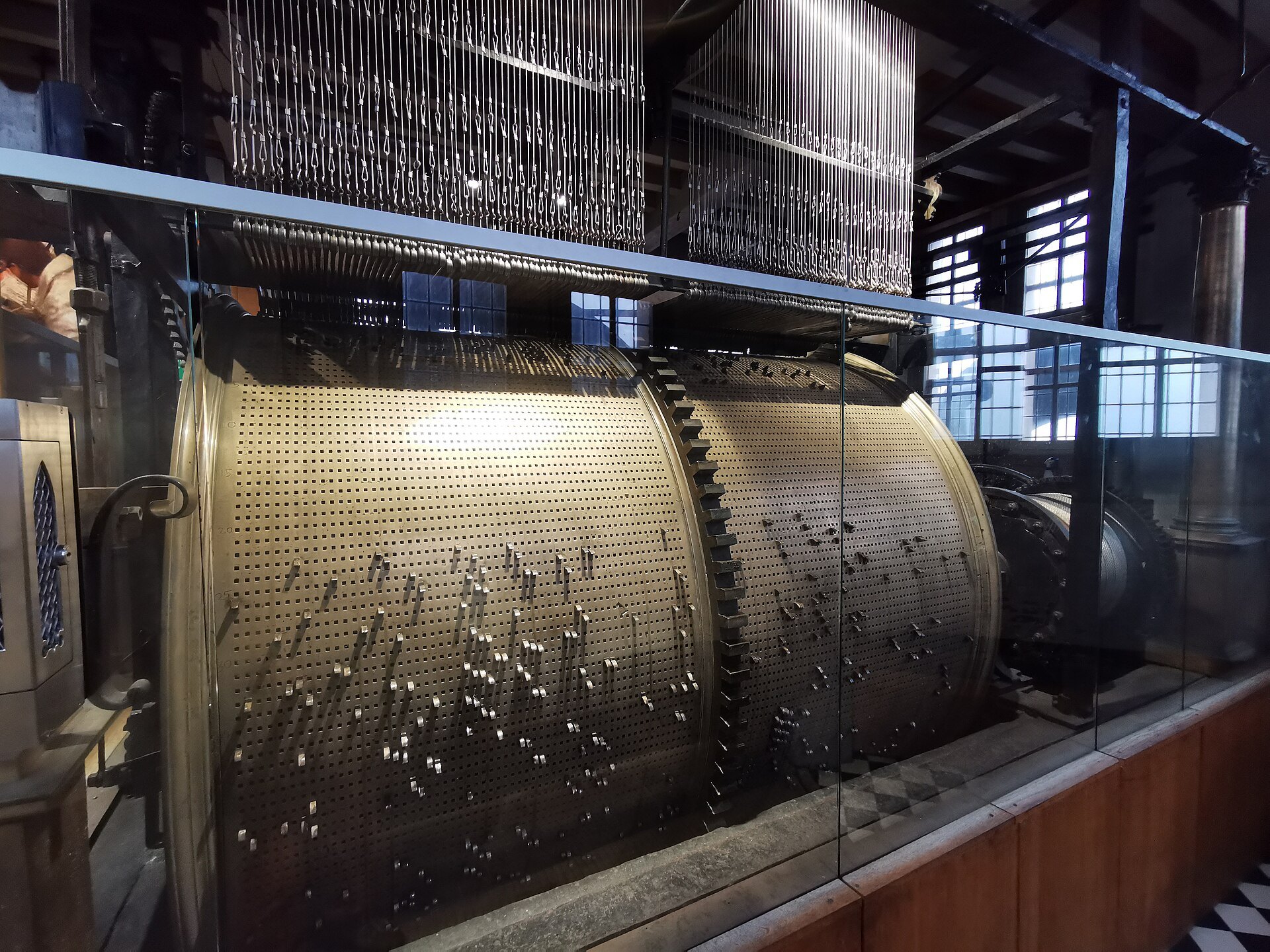
On the way up you pass the treasury, where the medieval city kept its stamps, seals and funds. Higher up is the room with the carillon mechanism and its keyboard, and then the bells themselves, before the stairs reach the open view at the top.
There is no lift. Musea Brugge advises that visitors should be in good condition for the climb, the entrance itself is reached by stairs, and the steep steps are not suitable for visitors with a visual impairment. A tactile model of the tower is available instead.
Timing the bells
The Belfry holds a carillon of 47 bells with a combined weight of about twenty-seven and a half tonnes. Twenty-six of them were cast by Joris Dumery after a fire in 1741 destroyed the tower's earlier bells, and they are still in use.
Most of the time the carillon is played automatically by a great drum studded with pins, which turns and lifts hammers against the bells. Watching it work is one of the highlights of the visit, and Musea Brugge suggests choosing a time slot just before the hour, so that you reach the mechanism as it plays. The bells are loud at close range, and free hearing protection is handed out in adult and child sizes.
The city carillonneur also plays live concerts from the keyboard on certain days each week. Check the Musea Brugge site if you would like your visit to coincide with one, or listen from the Markt below, where the music carries across the square.
How long to allow
Allow about an hour for the climb, the rooms on the way and time at the top, more if you linger over the view or wait for the bells. Most of that time is spent on the stairs, and on busy days you will share the narrow flights with other visitors, so go at a steady pace and let faster climbers pass.
Wear flat shoes with grip, keep bags small, and carry water on warm days. The top can be windy even when the square below is calm, so bring a layer.
Who should skip it
The climb is not for everyone. Anyone with heart, breathing or knee problems, a fear of heights or narrow spaces, or limited mobility should think twice, and the tower is not accessible for wheelchair users. Musea Brugge describes the Belfry as suitable for a family visit, but small children will need a hand on the steep upper flights.
If you skip the climb, you do not miss the Belfry. Its best views from below are from the Markt itself, from the Rozenhoedkaai, where it rises above the houses on the canal, and from the quays along the Dijver. In the evening, when the tower is lit, the square is at its most beautiful.
Fitting it into a day
The Belfry is the natural start of a walk through the center. After the climb, cross to the Burg for the City Hall and the Basilica of the Holy Blood, then walk down to the canals. The journal article on seeing Bruges in a single day builds a full route around an early Belfry slot, and booking ahead lists the few other things worth reserving.
For the full history of the tower and its bells, see the Belfry page.
Read next
- ItinerariesSeeing Bruges in a single day without spending it in queuesA walking plan for one day in Bruges that puts the famous squares early and late, the museums in the middle, and keeps lines and crowds to a minimum.Read
- Getting HereGetting from Brussels Airport to Bruges by train, and what to do with your bagsHow the train from Brussels Airport to Bruges works, how long it takes, the one change you may need, and how to handle luggage on arrival.Read