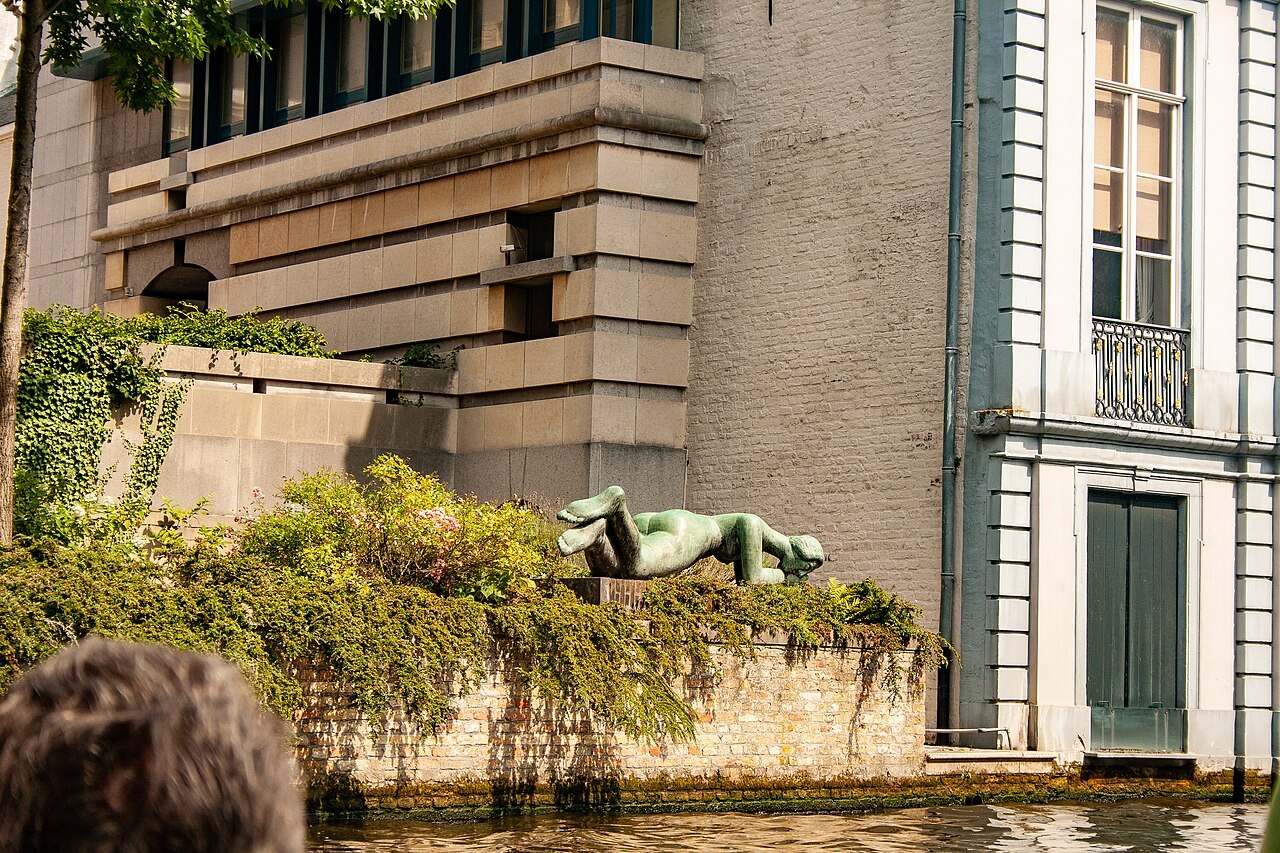
A simple half hour on the water
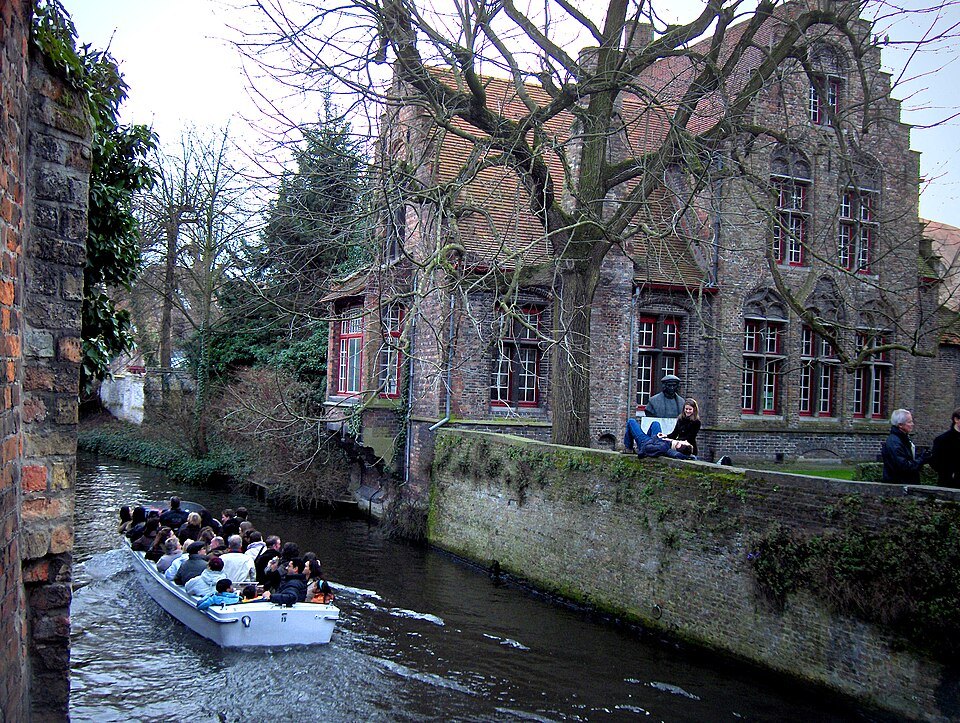
Bruges is often called the Venice of the North, a name it shares with Amsterdam and Saint Petersburg, and the comparison makes most sense from a boat. From the water, the backs of houses that face no street come into view, along with private gardens running down to the canal and towers that rise and drop again behind the rooftops. It is also the easiest way to rest the legs for half an hour without leaving the sights behind.
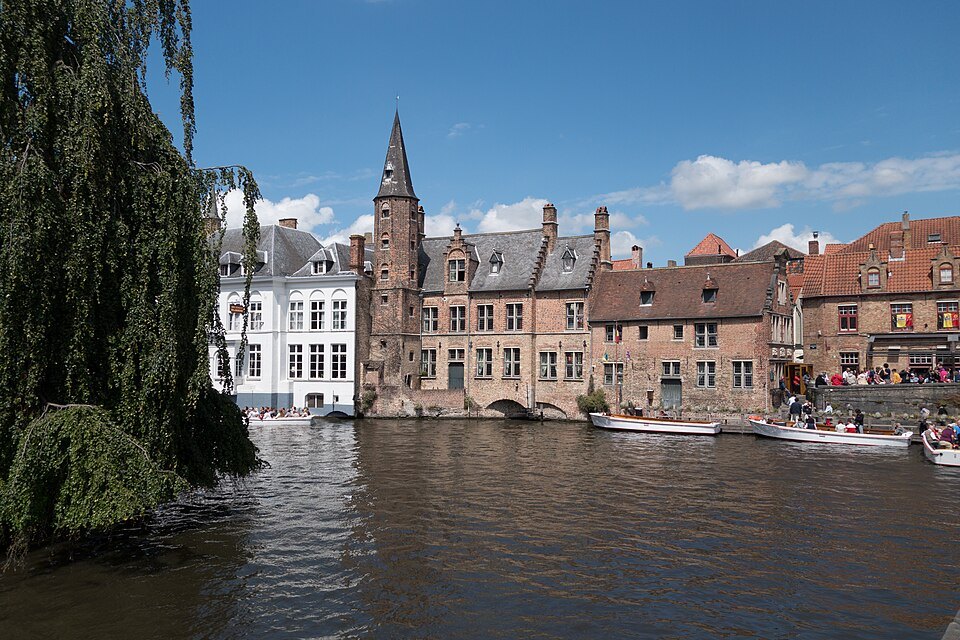
The format is simple and hard to get wrong. Open boats leave from five landing stages in the center, a captain steers a loop through the inner canals while narrating what passes, and the boat returns roughly thirty minutes later. No advance knowledge of the city is needed, and the experience does not vary much depending on which stage a visitor chooses.
The canals a boat follows are not simply scenic; they trace the line of the river Reie, the waterway that once carried the trade on which the city was built. The inner canals, known as the reien, follow and extend that original course. For a longer look at the waterways, including stretches the boats reach less often, see /the-canals/.
Where the five landing stages are
There are five landing stages in the center of Bruges, and they are the only places from which a boat can be boarded. They sit at Huidenvettersplein, on the Rozenhoedkaai, at Wollestraat, at Nieuwstraat and at Katelijnestraat, all within a short walk of the Markt or the Church of Our Lady. Each stage is run by a separate boat company, but the route and the length of the trip are much the same from any of them.
There is little reason to favor one stage for the sake of the view alone, since the loop covers similar ground regardless of the starting point. The practical question is which stage is closest to wherever a visitor already stands, or which has the shortest line at that moment.
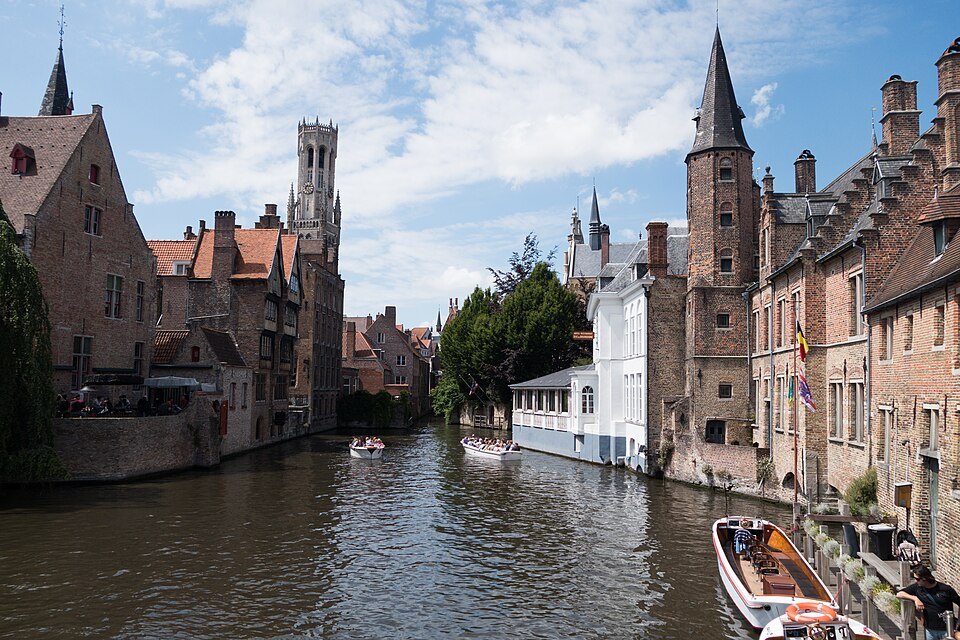
The Rozenhoedkaai stage sits at one of the busiest, most photographed corners of the city, with the Belfry rising above the bend in the canal, and it draws the longest queues in summer. Anyone short on time may do better starting from a quieter stage nearby. For more on that corner, see /rozenhoedkaai/.
Tickets, the season, and the rain
Tickets are bought directly at the landing stage, not in advance. Individual visitors cannot reserve a place ahead of time, though groups of twenty or more can arrange this with the boat company beforehand. There is no need to plan a boarding time; a visitor joins the line at whichever stage suits, buys a ticket there, and waits for the next boat.
The boats run daily from March to October, which covers most of the year a visitor is likely to be in the city. From November to February, at least one landing stage operates each day on a rotating basis, while others may open at the discretion of the company that runs them, so nothing should be assumed about a given winter day without checking directly.
The boats have no roof. If rain starts mid-trip, umbrellas are generally handed out rather than the boat turning back, and a short shower is treated as routine. In longer spells of heavy rain, companies may stop sailing altogether, a decision made on the day at each stage rather than a fixed rule, so it is worth asking at the stage itself.
What you see along the loop
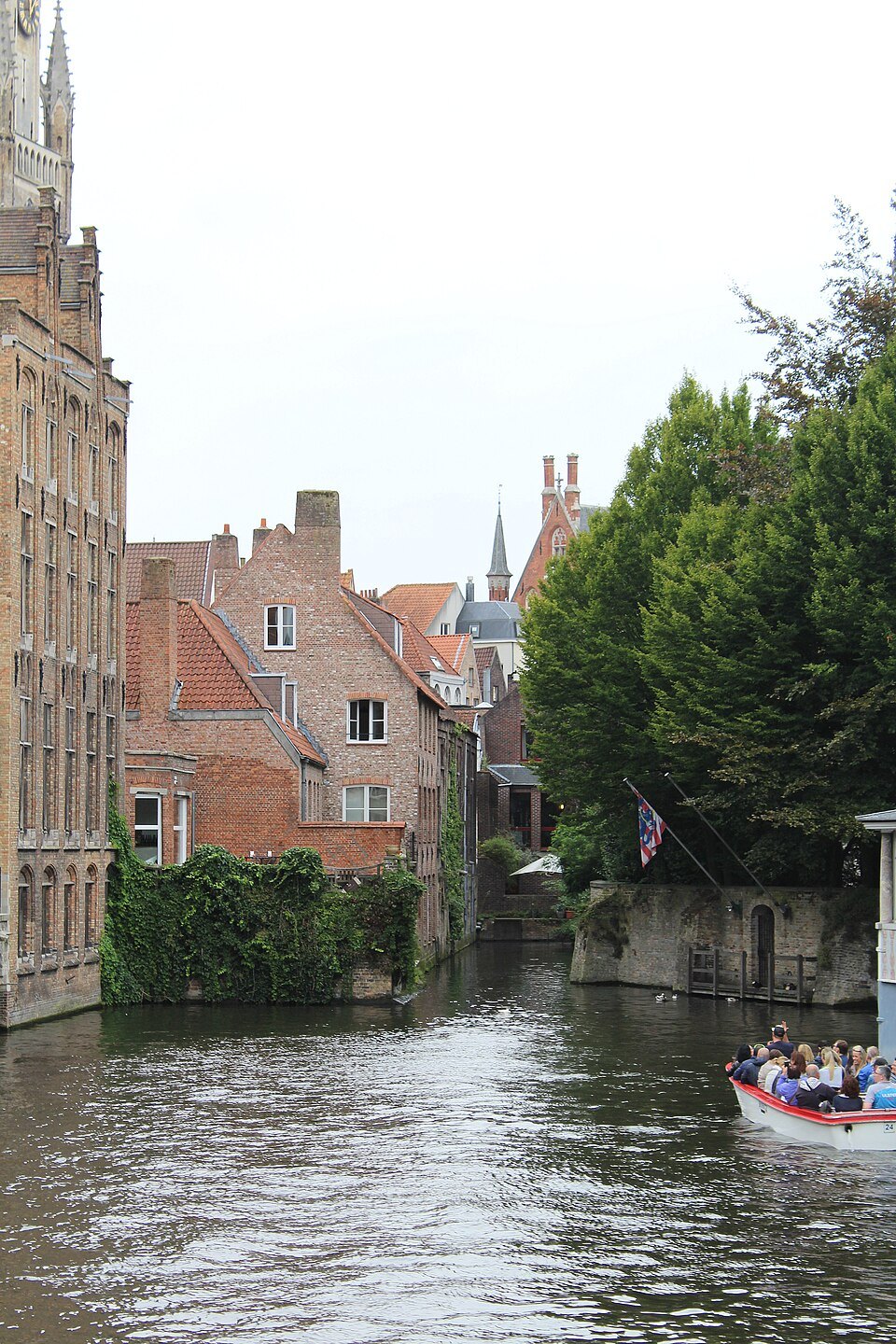
Routes vary slightly between operators, but a trip generally loops between the old harbor quarter near Jan van Eyckplein in the north and the Beguinage in the south. Along the way the boat passes the tree-lined Dijver and its museums, the tight bend of the Rozenhoedkaai with the Belfry above the rooftops, and quieter stretches where the houses come right down to the water's edge.
Low bridges are part of the entertainment. Some are so low that every passenger has to duck, and captains make a point of warning riders just in time, often with some enjoyment at their expense. Sitting near the front gives the clearest sense of how close these arches come to the water and the boat itself.
The water also gives views impossible from the streets: the brick gables of /sint-janshospitaal/ rising straight from the canal, private gardens with steps down to the water, and the rear of the Gruuthuse palace beside the Church of Our Lady. These are angles built for a boat, not a pavement, and much of the reason for taking the trip at all.
Access, prams and dogs
Access is the main limitation, and it is worth knowing before joining a line. Neither the boats nor the landing stages are wheelchair accessible, because boarding means going down stairs to reach the water, and no stage has a lift. Anyone traveling with a wheelchair should plan to see the canals from the bridges and quaysides instead of from a boat itself.
Prams present a smaller problem. They can sometimes be left with the boat company while the trip runs, but this depends on the stage and on asking in person rather than assuming it will be offered. It is worth raising the question at the ticket window before buying, especially with a large pram or a long queue behind.
Small dogs are generally allowed to travel on a passenger's lap without difficulty. Larger dogs are a different matter, and anyone planning to bring one should ask the boat company in advance rather than arrive with an animal that cannot, in the end, be accommodated on a low, open boat with limited space.
Making the most of the ride
Lines at the busiest stages, particularly the Rozenhoedkaai, build up from late morning through summer. Arriving early, or choosing a stage slightly off the main route, usually means a shorter wait. Sitting at the edge of the boat gives the best view of the canal and the buildings, though also the closest encounter with low bridges and any spray off the water.
For photographs, a wide-angle lens helps, since the houses crowd close to the water and the canals themselves are narrow. Morning and late afternoon light tends to suit the canals best; at midday the water can look flat and the shade under the bridges very dark, making for a less forgiving picture than earlier or later in the day.
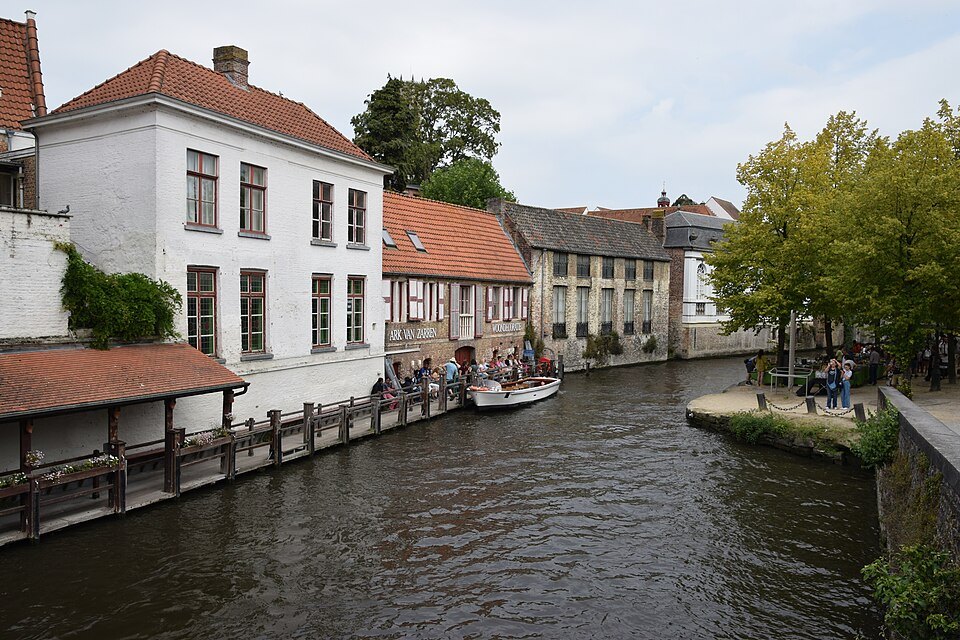
A camera strap kept around the wrist is worth the small inconvenience, since the boats sit low in the water and have no roof to catch anything dropped. Anyone who prefers to watch rather than ride can do so from the Rozenhoedkaai or the bridges along the Dijver, which give a view of the loop without the queue.
Read next
- RozenhoedkaaiPhotographing the Rozenhoedkaai before the crowds and after the lights come onHow to catch Bruges's most photographed canal corner in quiet morning light and again after dark.Read
- Gruuthuse MuseumWhy the Gruuthuse has a private window into the Church of Our LadyHow a fifteenth-century chapel lets the Gruuthuse look straight down into the Church of Our Lady next door.Read
- ItinerariesSeeing Bruges in a single day without spending it in queuesA walking plan for one day in Bruges that puts the famous squares early and late, the museums in the middle, and keeps lines and crowds to a minimum.Read