A small sculpture worth the detour
Most people who walk through the doors of the Church of Our Lady are heading for one thing: a marble group of the Virgin and Child carved by Michelangelo. It is thought to be the only sculpture by him that left Italy during his lifetime, which already sets it apart from almost everything else on display in Bruges. It is also, physically, modest. The group is less than life-size, set into a marble altar, and easy to walk past if a visitor is expecting something monumental.
That modesty is part of the point. The sculpture rewards a visitor who stops rather than one who glances and moves on toward the tower or the tombs. It sits in its own setting, away from the busiest aisles, which gives it a kind of hush that larger, more theatrical church furnishings do not have.
How it came to Bruges
Michelangelo carved the Madonna and Child in marble in the early fifteen-hundreds, around 1504 to 1506. It was bought in Italy by two Bruges merchant brothers, Jan and Alexander Mouscron, who traded there and had the connections and the money to acquire such a piece. They gave it to the church in 1514 as a memorial for their family, and it has remained associated with that donation ever since.
This origin is worth knowing before standing in front of it, because it explains why a work by one of the Italian Renaissance's defining sculptors ended up in a parish church in Flanders rather than in a cathedral or palace in Florence or Rome. It was a private gift, made for private remembrance, long before anyone thought of it as an attraction.
What to look at
The composition breaks from the usual image of the Virgin with the child seated on her lap. Here the boy stands between his mother's knees, caught in the moment of stepping down and out into the world on his own. Mary does not look at him. Her face is turned slightly away, serious and withdrawn, as though she already knows what lies ahead for the child she is letting go.
Because the group is carved fully in the round and set in an altar that allows some movement around it, it is worth viewing from more than one angle. The turn of the child's body reads differently from the side than from straight on, and the weight and fall of the mother's cloak changes as the angle shifts. A few extra minutes spent moving slightly left and right, rather than standing fixed in one spot, changes what the sculpture shows.
Taken and returned twice
The Madonna has left the church against its will on two occasions, and both times it came back. French revolutionary forces removed it around 1794, during the period when occupying armies took art from churches and palaces across the region. It was recovered and returned to the church afterward.
The second removal came in 1944, when German forces took it during the closing stages of the Second World War. It was again recovered and restored to its place. Both episodes are part of why the sculpture carries a weight beyond its size: it has survived two deliberate attempts to take it away from Bruges for good.
Finding it inside the church
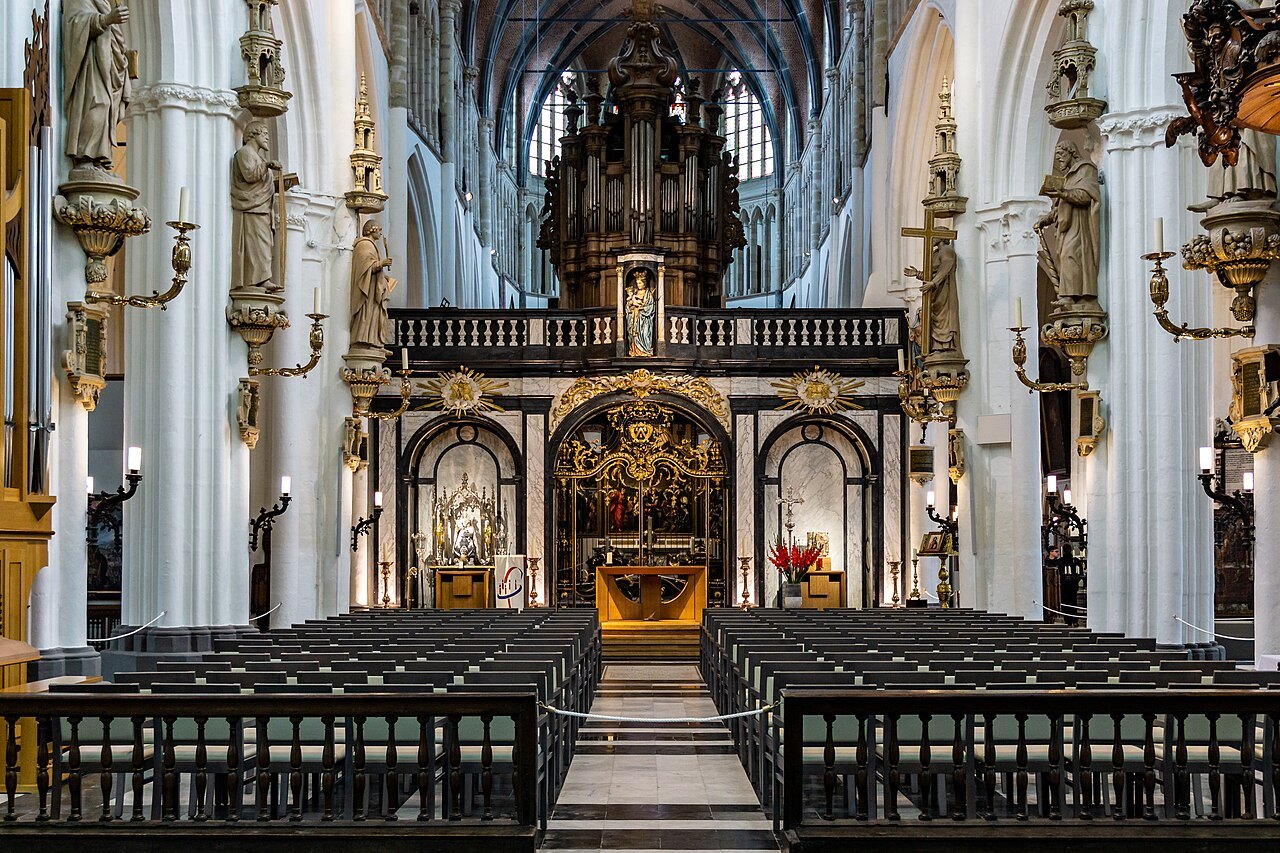
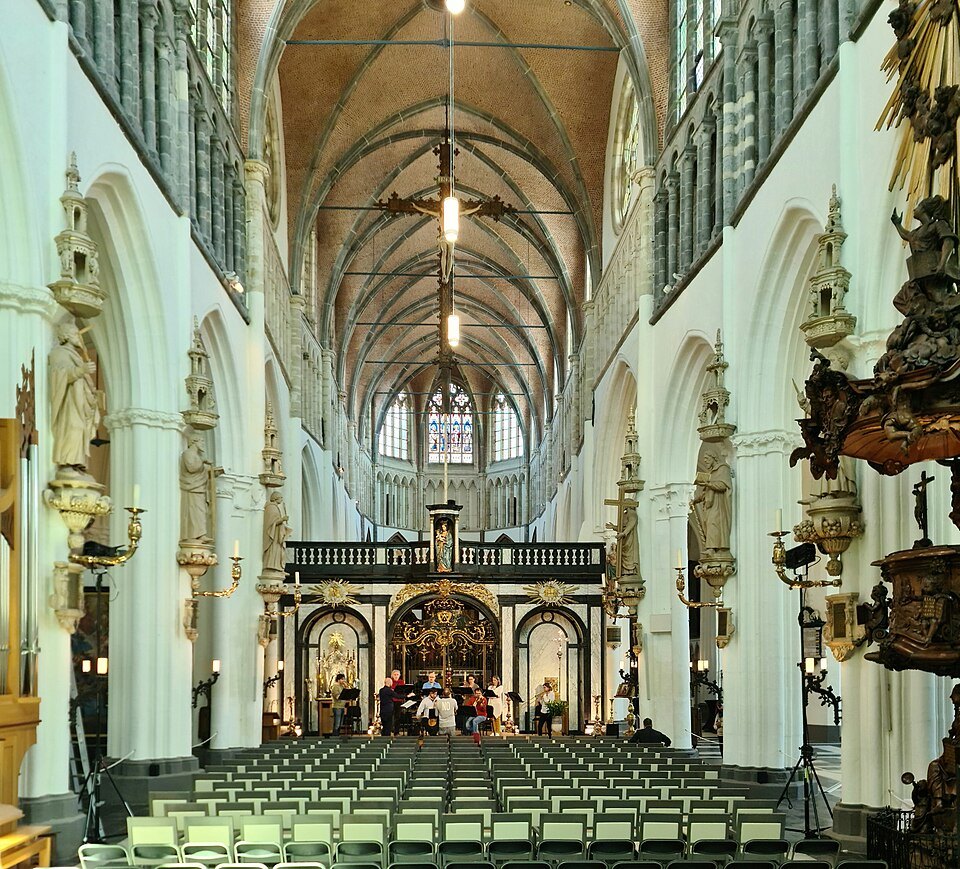
The Church of Our Lady is organized into two parts for visitors. The nave and aisles function as an active place of worship, divided from the choir by a three-part wooden rood screen and watched over by seventeenth-century statues of the apostles. The Madonna has its own marble altar within this space, set apart from the main through-routes of the church, which is one reason it rewards a deliberate stop rather than appearing on the way to somewhere else.
The choir beyond the rood screen is the museum section, run by Musea Brugge, and holds the Burgundian tombs, the heraldic shields of the Knights of the Golden Fleece, and an altarpiece by Bernard van Orley. A visitor focused only on the Madonna does not need to enter this section, but it sits only a short walk away and adds context on the wealth and connections that brought such art into the city in the first place.
Timing the visit
The church is busiest in the middle of the day, and the Madonna in particular draws a small, steady crowd through those hours. Visitors who want a few quiet minutes in front of it do better coming early or late rather than at midday. Because services continue in the parish, parts of the church may be closed to visitors at times, so it is worth checking current arrangements before setting out, particularly for anyone planning around booking ahead for other Bruges sights the same day.
Photography rules are posted inside the church and apply with particular care near the Madonna; following them is a simple courtesy toward other visitors and the artwork itself. Allow somewhere between forty-five minutes and an hour for the whole church, more if the choir and tombs are also part of the visit.
Nearby and practical notes
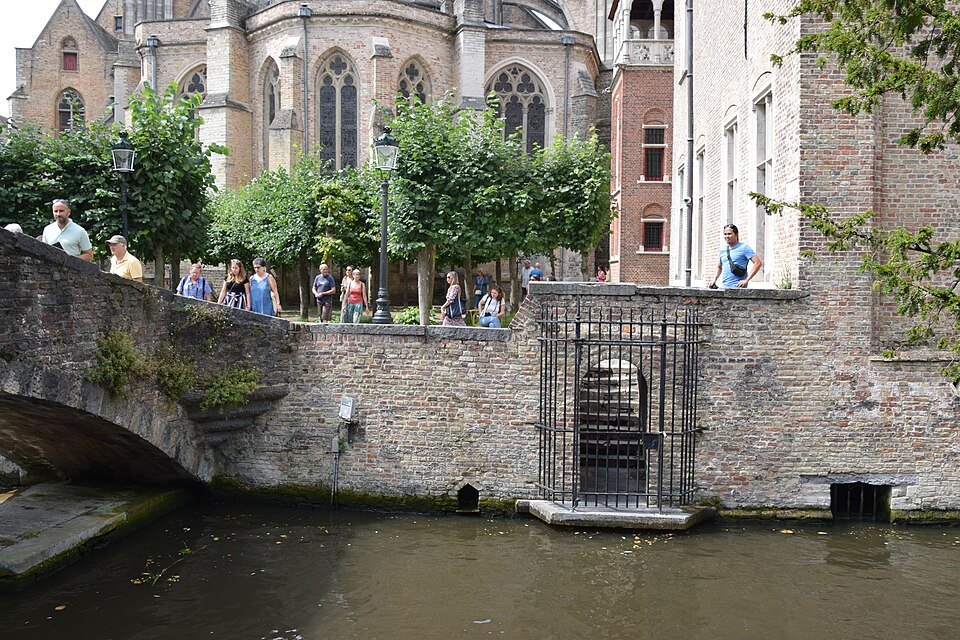
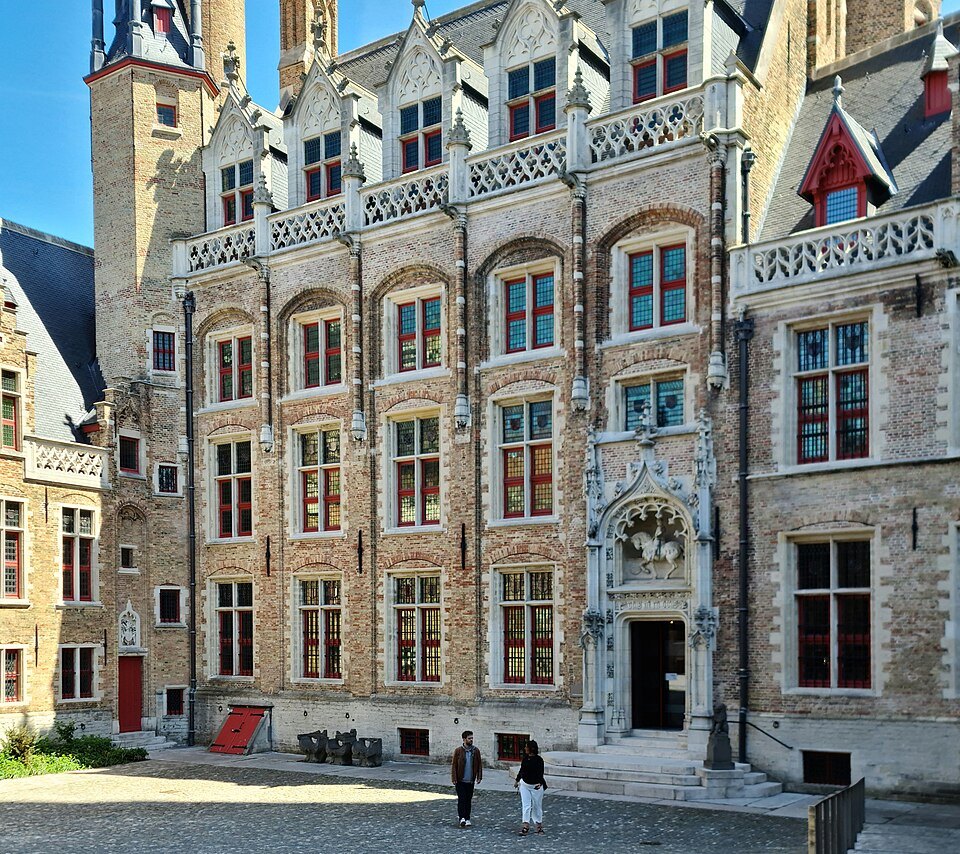
The Church of Our Lady stands next to the Gruuthuse museum, whose private chapel was built out toward the church in 1472 specifically so the lords of Gruuthuse could follow Mass without leaving their own palace, a detail visible high on the wall beside the choir. Across Mariastraat is Sint-Janshospitaal, where the Memling paintings hang, making the three sites an easy cluster to see in sequence.
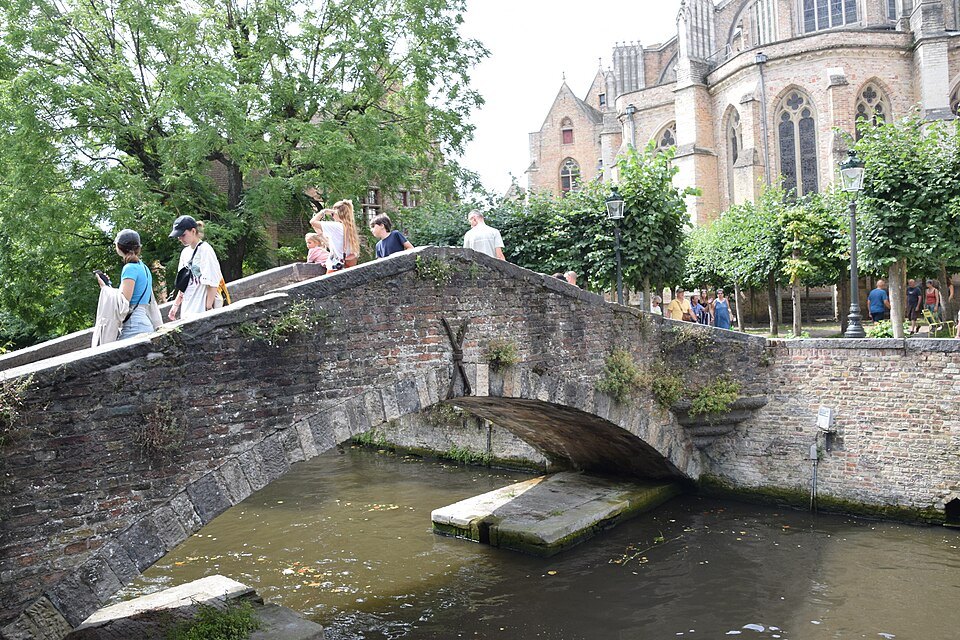
From here it is a short walk south to the Beguinage and the Minnewater, or back north along the Dijver quay toward the center of the city. Outside the church, it is worth walking round to Mariastraat and to the canal behind the building for two very different views of the brick tower that rises above this part of Bruges.
Read next
- Gruuthuse MuseumWhy the Gruuthuse has a private window into the Church of Our LadyHow a fifteenth-century chapel lets the Gruuthuse look straight down into the Church of Our Lady next door.Read
- The Flemish MastersWhere to see Van Eyck and Memling in Bruges in one unhurried dayA route through the Groeningemuseum, the Church of Our Lady and St. John's Hospital to see the paintings made in fifteenth-century Bruges, and what to look for.Read
- ItinerariesSeeing Bruges in a single day without spending it in queuesA walking plan for one day in Bruges that puts the famous squares early and late, the museums in the middle, and keeps lines and crowds to a minimum.Read