Why Bruges, why these painters
In the fifteenth century Bruges was one of the richest cities in northern Europe. The dukes of Burgundy held court here, Italian and Hanseatic merchants traded here, and the wealth paid for paintings of extraordinary detail. Two of the greatest painters of the age, Jan van Eyck and Hans Memling, lived and died in the city, and many of their works never left it.
That makes Bruges one of the few places where you can see these paintings close to where they were made, and in a few cases in the very buildings they were made for. This article plans a single unhurried day around them, with three stops a few minutes' walk apart.
The day works in any season, and it is especially good when the weather is poor, because almost all of it is spent indoors. Wear comfortable shoes all the same: the museum floors and the medieval wards add up to a surprising amount of walking.
Morning: the Groeningemuseum
Start at the Groeningemuseum on the Dijver, the city's museum of fine arts, built on the site of the medieval Eekhout Abbey. Its collection covers six centuries of Flemish and Belgian painting, but the reason to come early is the rooms of Early Netherlandish art, before they fill.
Look first for Jan van Eyck. His Madonna with Canon van der Paele of 1436 shows the Virgin and Child with saints and the kneeling canon who paid for it, painted with an almost unbelievable precision in the textures of carpet, armor, cloth and skin. Nearby hangs his portrait of his wife Margaret, from 1439, one of the most direct and human portraits of the century.
Then find Gerard David's Judgment of Cambyses of 1498, two panels telling the story of a corrupt judge punished by the king, and a Last Judgement by Hieronymus Bosch from around 1486. Memling is represented here too, by the Moreel Triptych. Allow about an hour and a half.
Who Van Eyck was
Jan van Eyck was born around 1380 to 1390 in Maaseik. He moved to Bruges around 1425 to serve Philip the Good, Duke of Burgundy, as court painter, and the duke even sent him to Lisbon in 1428 and 1429 to paint Isabella of Portugal. In 1432 he finished the Ghent Altarpiece and bought a house in Bruges.
Only about twenty surviving paintings are confidently attributed to him, and some carry his motto, Als ich can, as I can. He died in Bruges on 9 July 1441 and was buried in St. Donatian's church on the Burg, which was demolished in 1799. His statue stands on Jan van Eyckplein, worth a detour at the end of the day.
Midday: the Church of Our Lady
Walk a few minutes south to the Church of Our Lady. Its most famous work is not Flemish at all: a marble Madonna and Child by Michelangelo, carved around 1504 to 1506 and given to the church in 1514 by the Mouscron family, Bruges merchants who had bought it in Italy.
It is worth seeing on this route because it shows the other side of the story: Bruges merchants were buyers of art from across Europe as well as patrons of local painters. In the choir, the tombs of Mary of Burgundy and Charles the Bold, and an altarpiece by Bernard van Orley, add the court's own taste. Allow forty-five minutes, and have lunch nearby before the afternoon.
Afternoon: St. John's Hospital
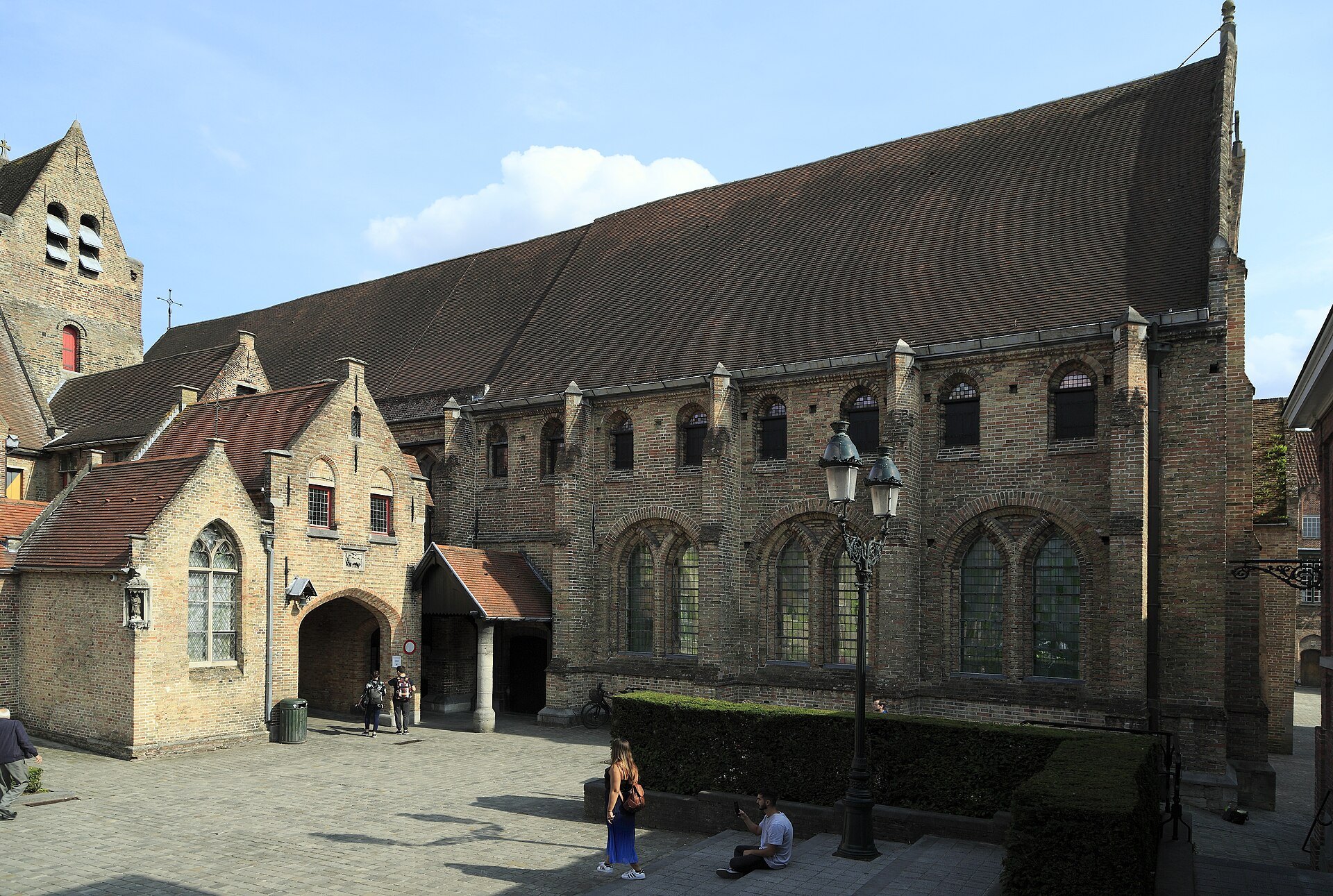
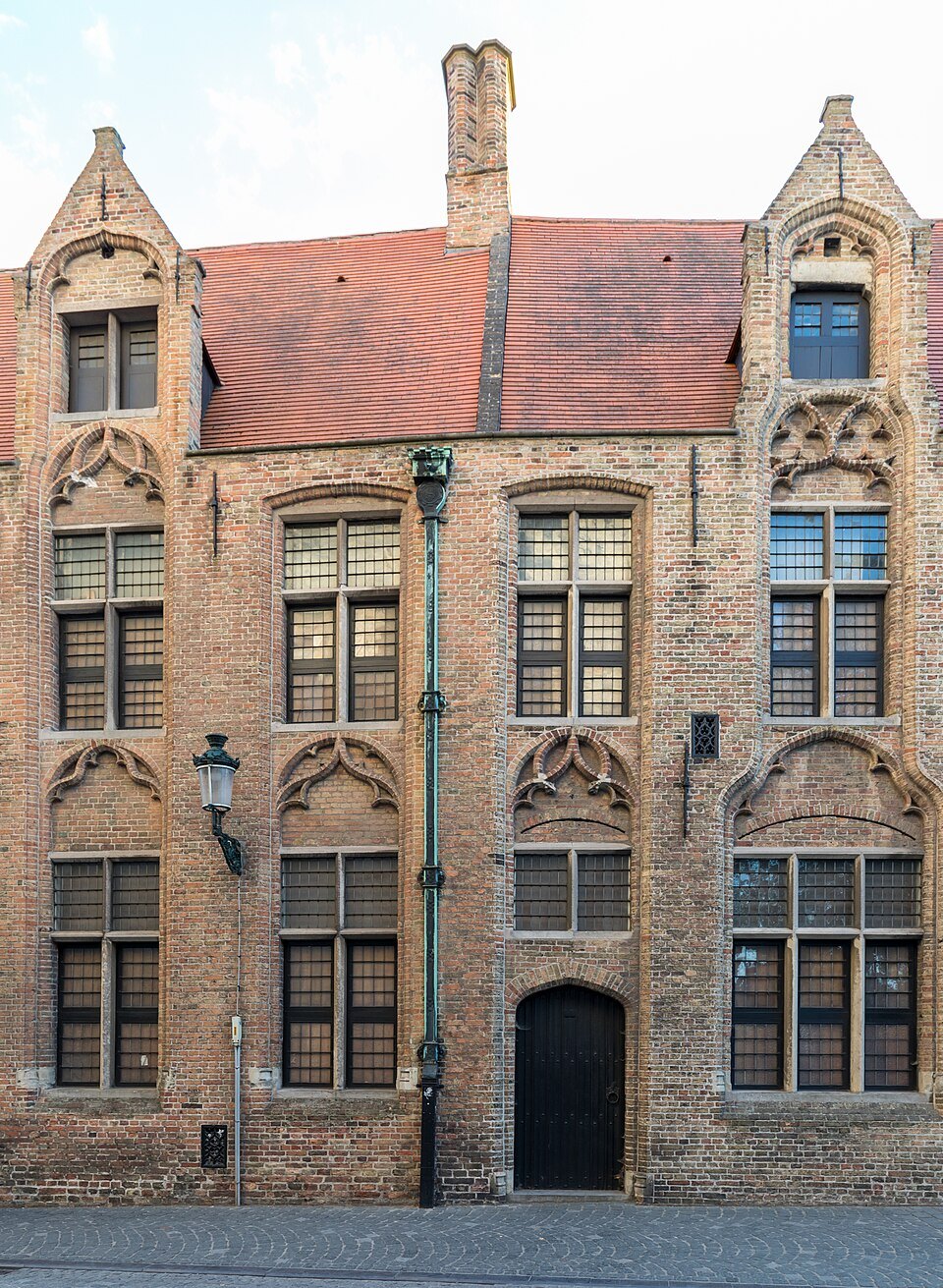
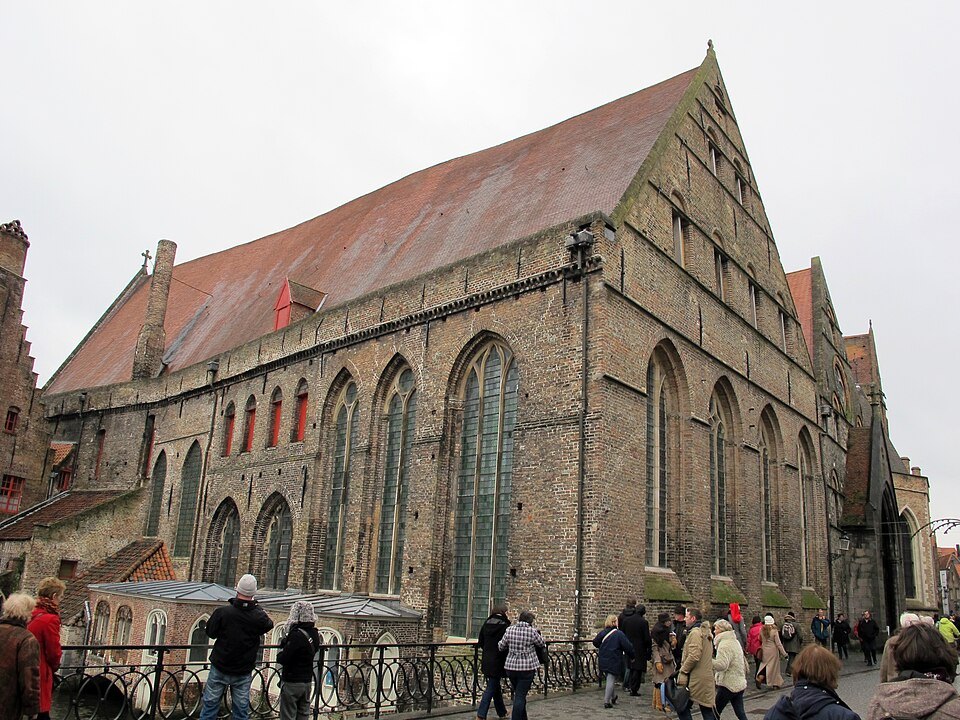
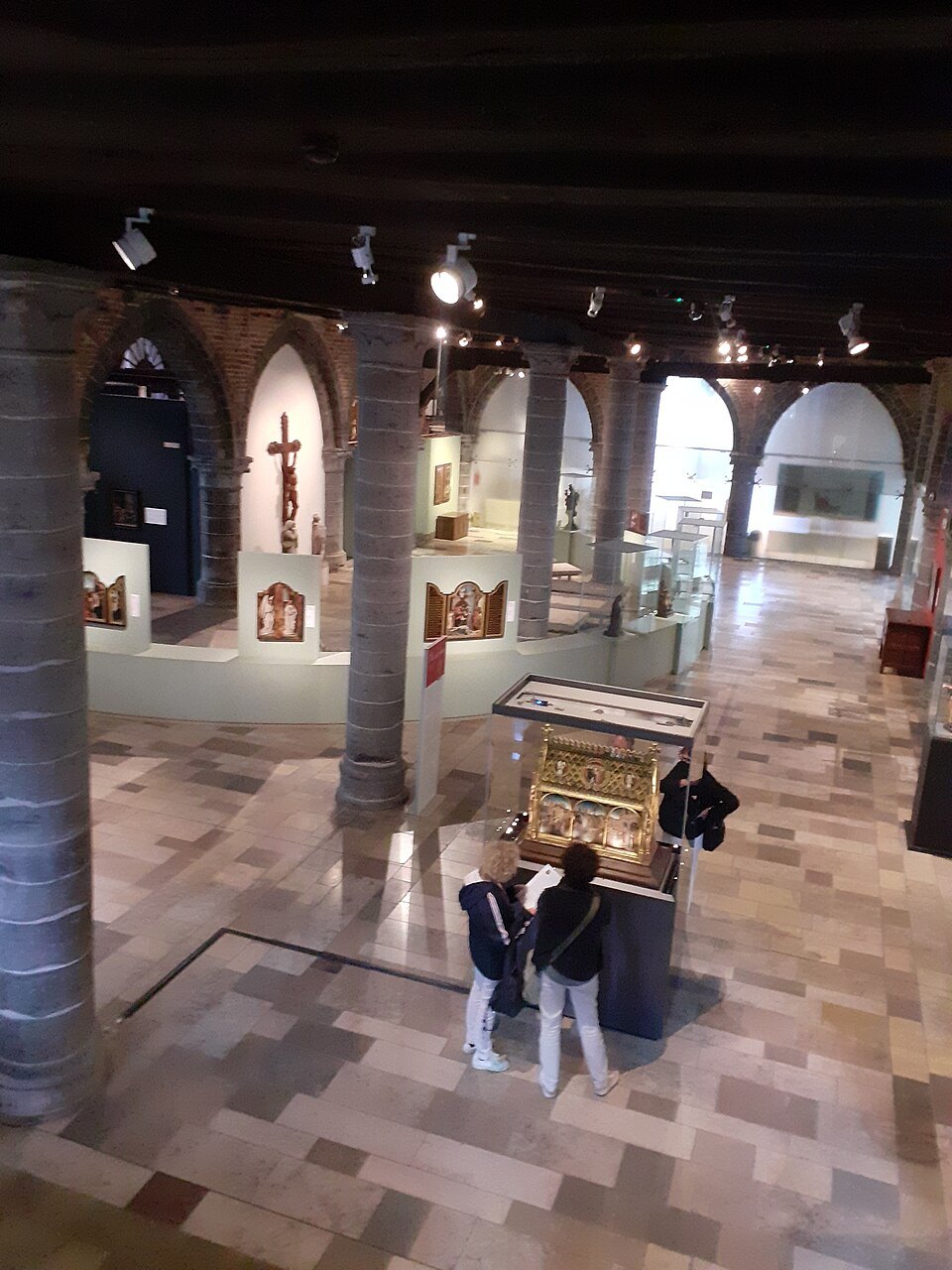
Cross Mariastraat to St. John's Hospital. Its medieval wards, where Augustinian sisters cared for the sick from the twelfth century until 1977, now hold six paintings by Hans Memling.
Memling was born around 1430 near Frankfurt, trained in Brussels with Rogier van der Weyden, and became a citizen of Bruges in 1465. He ran a large workshop, counted Italian merchant families such as the Portinari and the Medici among his clients, and by 1480 was among the wealthiest citizens of the city. He died in Bruges on 11 August 1494.
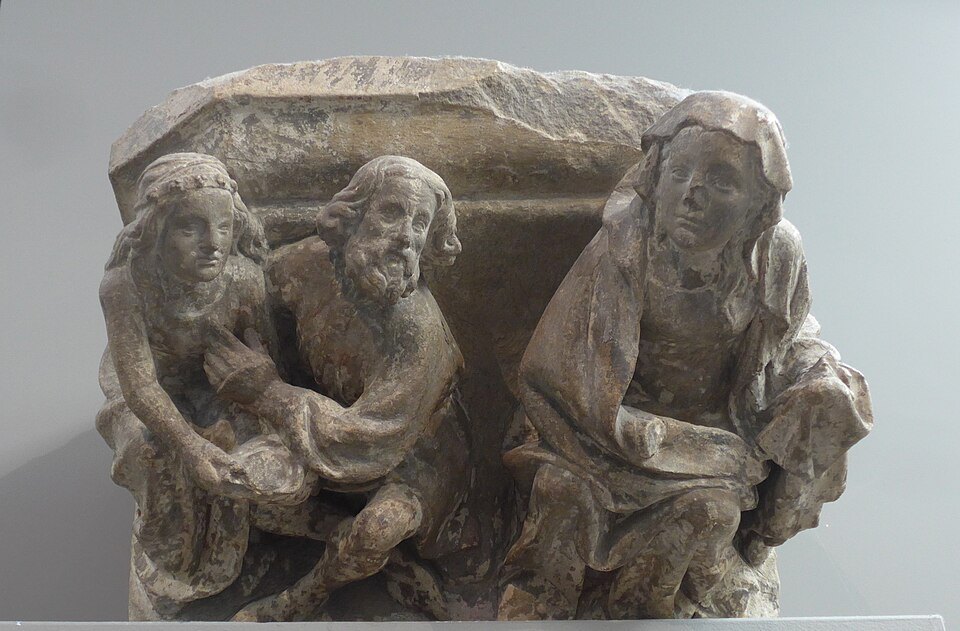
The star of the hospital is the Shrine of St. Ursula of 1489, a small gilded reliquary shaped like a Gothic chapel, commissioned by the hospital's own sisters and painted with scenes of the saint's journey. Look closely: each panel is tiny. Then find the St. John Altarpiece and the Diptych of Maarten van Nieuwenhove of 1487. Allow at least an hour; the wards themselves are worth the time.
How to look at these paintings
These are small works made to be seen close, often in candlelit chapels. Stand near, then step back, then come close again. Look at the edges and backgrounds, where the painters put windows, landscapes and tiny figures, and at the hands and fabrics, where their skill shows most.
Do not try to see everything. Choosing five or six paintings and giving each several minutes is far more rewarding than walking past a hundred. The museum rooms are quietest early and late, so an unhurried pace also means fewer people between you and the panels.
Tickets and timing
The Groeningemuseum, St. John's Hospital and the museum part of the Church of Our Lady are all Musea Brugge locations, and the Musea Brugge Card gives seventy-two hours of access to all of them with one ticket, activated at your first visit. Museums in Bruges usually close one day a week, so check before you choose your date.
For the full story of the painters and where else their work hangs, including St. Salvator's Cathedral and the Jerusalem Church, see the Flemish masters. If you have another day, the Ghent Altarpiece is half an hour away by train; see day trips.
Read next
- ItinerariesSeeing Bruges in a single day without spending it in queuesA walking plan for one day in Bruges that puts the famous squares early and late, the museums in the middle, and keeps lines and crowds to a minimum.Read
- The BelfryThe Belfry climb is worth booking, and here is how to time it with the bellsWhat climbing the Belfry of Bruges involves, why a time slot matters, how to be near the carillon when it plays, and who should skip the stairs.Read