A procession, not a festival
Every year on Ascension Day, the relic kept in the Basilica of the Holy Blood leaves the building it normally rests in and is carried through the streets of Bruges. The custom seems to have begun as a civic ceremony in the late thirteenth century, and by 1303 the relic was already being taken around the city walls. In 2009 UNESCO added it to the list of the Intangible Cultural Heritage of Humanity.
What distinguishes the Procession of the Holy Blood from a parade staged for visitors is that it is run by residents, for a religious and civic purpose that predates tourism by centuries. More than three thousand people from Bruges take part, dressed for scenes from the Bible and from the city's own history, with choirs, horses, floats and animals passing before the relic itself, carried by clergy and guarded by the Noble Brotherhood of the Holy Blood.
Treat it as a living tradition to watch respectfully rather than a spectacle staged on demand. The atmosphere along the route is part solemn, part festive, and changes as the procession moves from quiet residential streets toward the main squares.
Numbers, route and timing
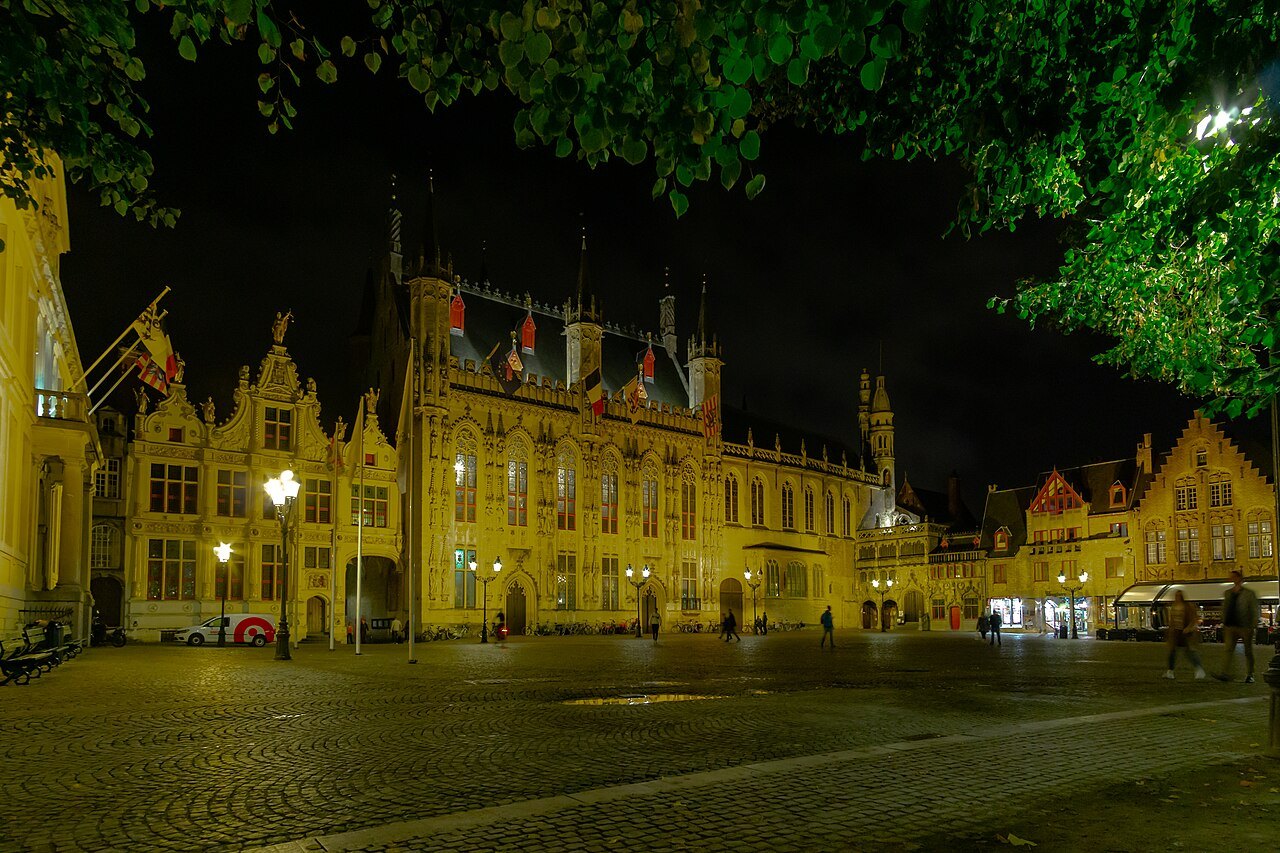
Sixty to a hundred thousand spectators typically line the route, a crowd far larger than Bruges' own population, so the center of the city on Ascension Day is unusually full. The procession follows a set course through the historic core, beginning and ending near the Burg, where the basilica stands.
Exact timings, the precise route for a given year and any changes to it are set and published by the organizers and the city, not by this guide. Check the basilica's own information or the city's event pages well before the date, and see when to come for how Ascension Day fits into the wider calendar of Bruges events.
Because the date depends on the religious calendar rather than a fixed day of the month, confirm it for the year of the visit rather than assuming it falls on the same date as before.
Watching from the pavement
Most spectators simply find a spot along the route and stand or sit on the curb. This is free and flexible, but position matters: a spot near the Burg or the Markt gives a sense of the procession arriving into and leaving a major square, while a stretch of narrower street brings the floats and performers closer.
Arrive well ahead of the expected passage time. Prime spots near the Burg and the Markt fill hours in advance, and barriers go up along parts of the route, so latecomers often end up several rows back with a view only of passing banners and hats. Bring something to stand on if watching with children.
Standing for an open-air event of this length means exposure to whatever the weather does; Ascension Day falls in late spring, when Bruges can produce sun, wind and rain within the same afternoon. A hat, water and a layer against wind are more useful than arriving early without them.
Watching from a seat
Along parts of the route, stands with numbered seating are set up for the day, run by the organizers rather than by this guide. Seats are a paid, bookable option and tend to be arranged in blocks facing the main squares and wider stretches of street, giving an unobstructed view at a fixed point rather than a shifting view from the crowd.
Demand for seats is highest for blocks overlooking the Burg, where the procession assembles and disperses and where the relic itself passes closest to the basilica. Booking in advance is strongly advised; see booking ahead for the general principle of reserving things in Bruges before arrival, which applies as much to procession seating as to museum tickets.
For exact seat prices, booking channels, and which blocks are available in a given year, check the official procession or city information directly rather than relying on secondhand listings.
The basilica itself on the day
On Ascension Day, the basilica is not simply standing still waiting for visitors the way it does on an ordinary afternoon. The relic is removed for the procession and returned afterward, services run around the event, and the flow of people through the small building is reorganized to cope with crowds far beyond a normal day's numbers.
This means the usual rhythm described on the Basilica of the Holy Blood page, of a calm visit taking perhaps twenty to thirty minutes, does not apply. Expect restricted or altered access to the chapels while the procession is being prepared, is underway, or has just returned, and expect any queue to view the relic itself to be entirely different from a normal day.
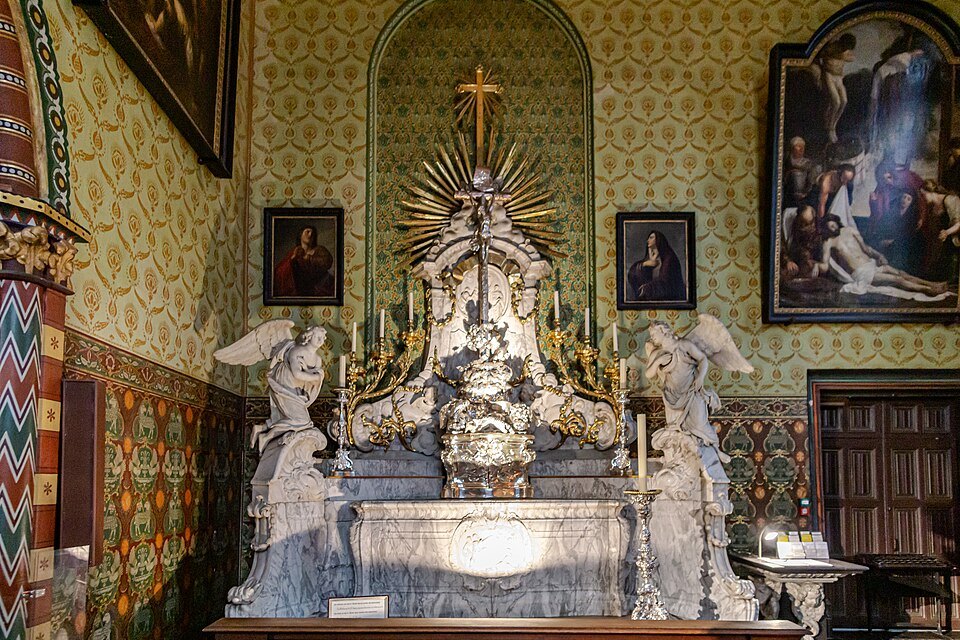
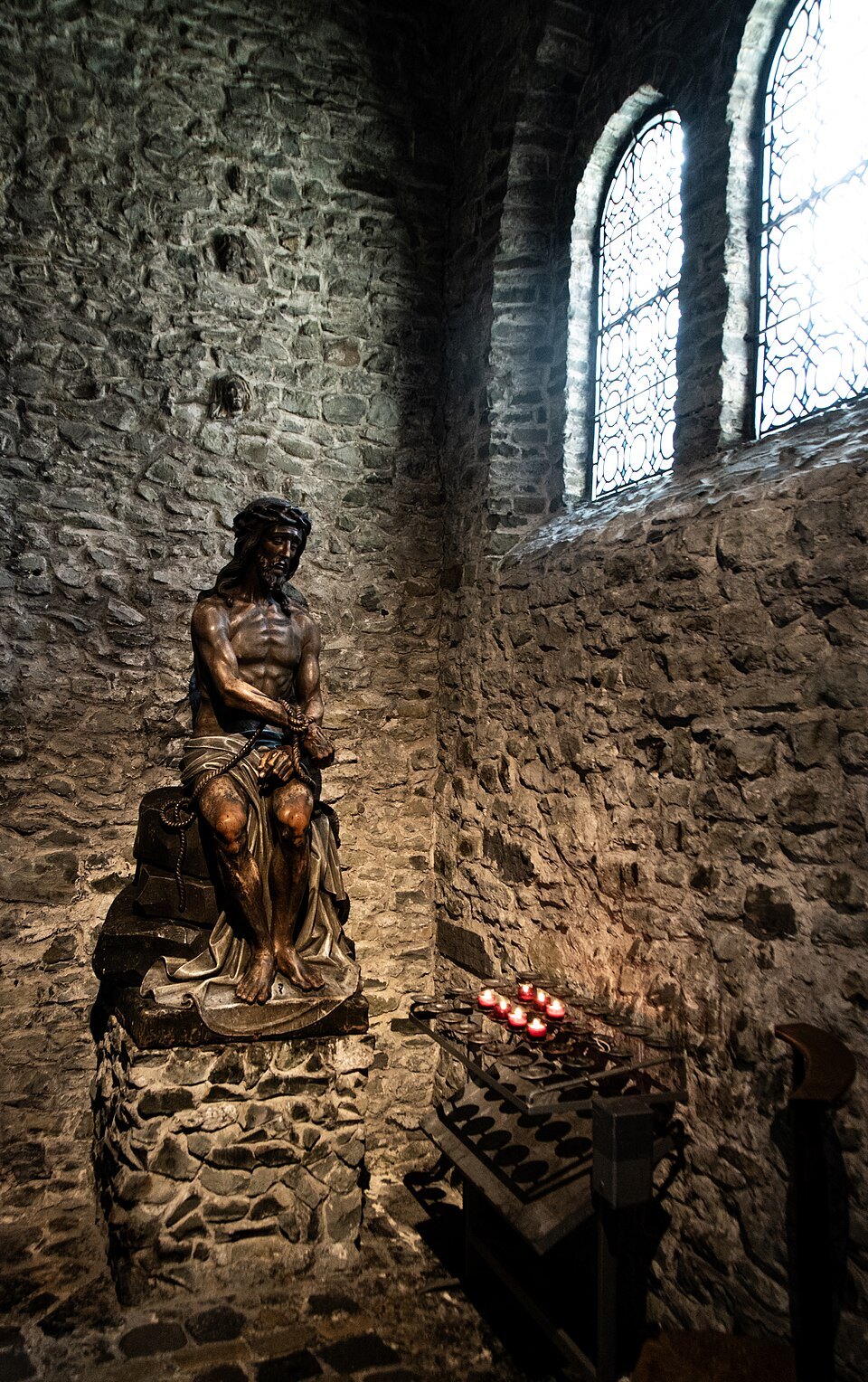
If the point of the visit is to see the interior quietly, to study the Romanesque lower chapel or the Gothic Revival decoration upstairs, Ascension Day is the wrong day for that and a quieter day either side of it is better. If the point is the procession and the relic in motion, check the basilica's own notices for how access works on that specific date rather than assuming anything from a routine visit.
Planning the rest of the day
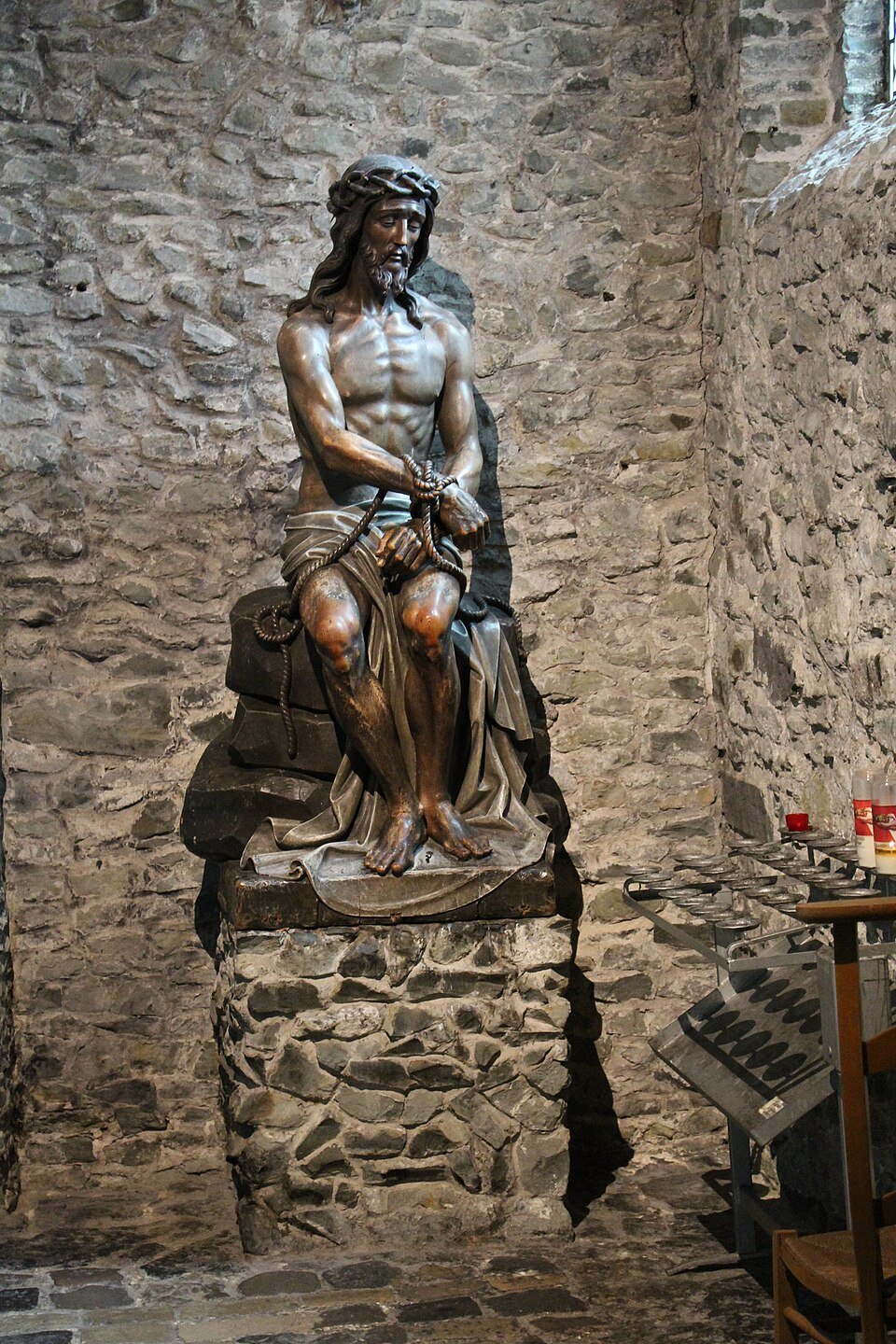
Ascension Day brings crowds to the whole historic center, not only the procession route. Streets around the Markt and the Burg fill early, and nearby attractions are busier than usual for most of the day. Building in slack time, rather than a tight schedule of sights before or after the procession, makes for a calmer visit.
Getting into Bruges on the day itself needs more thought than usual. Road access and parking near the center can be affected by road closures along the route; see getting here and getting around for general guidance on arriving and moving through the city, and check current notices for the date in question.
Once the crowds thin in the later afternoon, the rest of Bruges is still there: the Groenerei canal and the walk through the Blinde Ezelstraat arch, two minutes from the Burg, offer a quieter contrast to the crush around the main squares.
Making the most of a short window
Anyone combining the procession with a short stay in Bruges should decide in advance whether the day is built around the event or around the city's regular sights, since trying to do both without planning usually means missing part of each. A single pass along the route, watched properly, is worth more than a rushed glimpse squeezed between museum visits.
Those staying only for the day should also note that transport and accommodation in Bruges are busier than usual around Ascension Day, given the numbers the procession draws from outside the city as well as within it. Booking travel and any overnight stay well ahead, through the same channels used for any other peak date, avoids last-minute surprises.
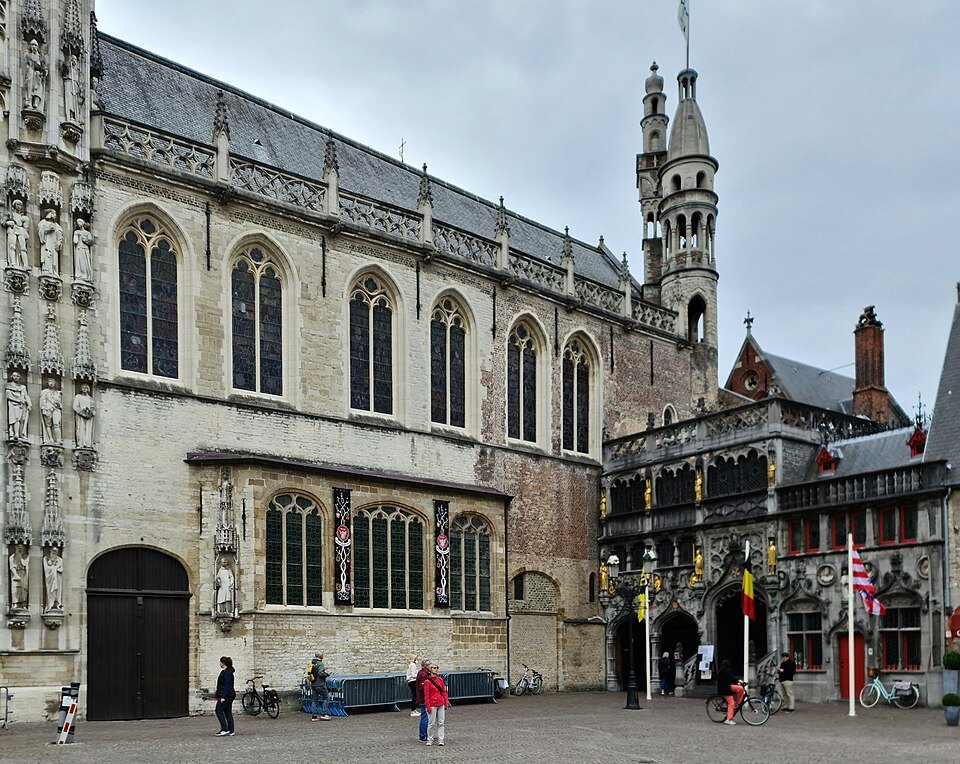
Whether watching from the pavement or from a booked seat, the point of the day remains the same: a relic venerated for centuries, carried by the city that has guarded it, past residents who still turn out to watch their own history performed in the streets.
Read next
- Basilica of the Holy BloodWhat happens when the relic of the Holy Blood is shown, and how to visit respectfullyWhat the Holy Blood relic is, when it is shown, and how to visit the basilica without disrupting worship.Read
- The BurgWalking round the Burg, from the gilded Old Civil Registry to the lost cathedral under the hotelA walking guide to the Burg, from the gilded Old Civil Registry to the vanished cathedral beneath the hotel.Read
- ItinerariesSeeing Bruges in a single day without spending it in queuesA walking plan for one day in Bruges that puts the famous squares early and late, the museums in the middle, and keeps lines and crowds to a minimum.Read