Why it matters
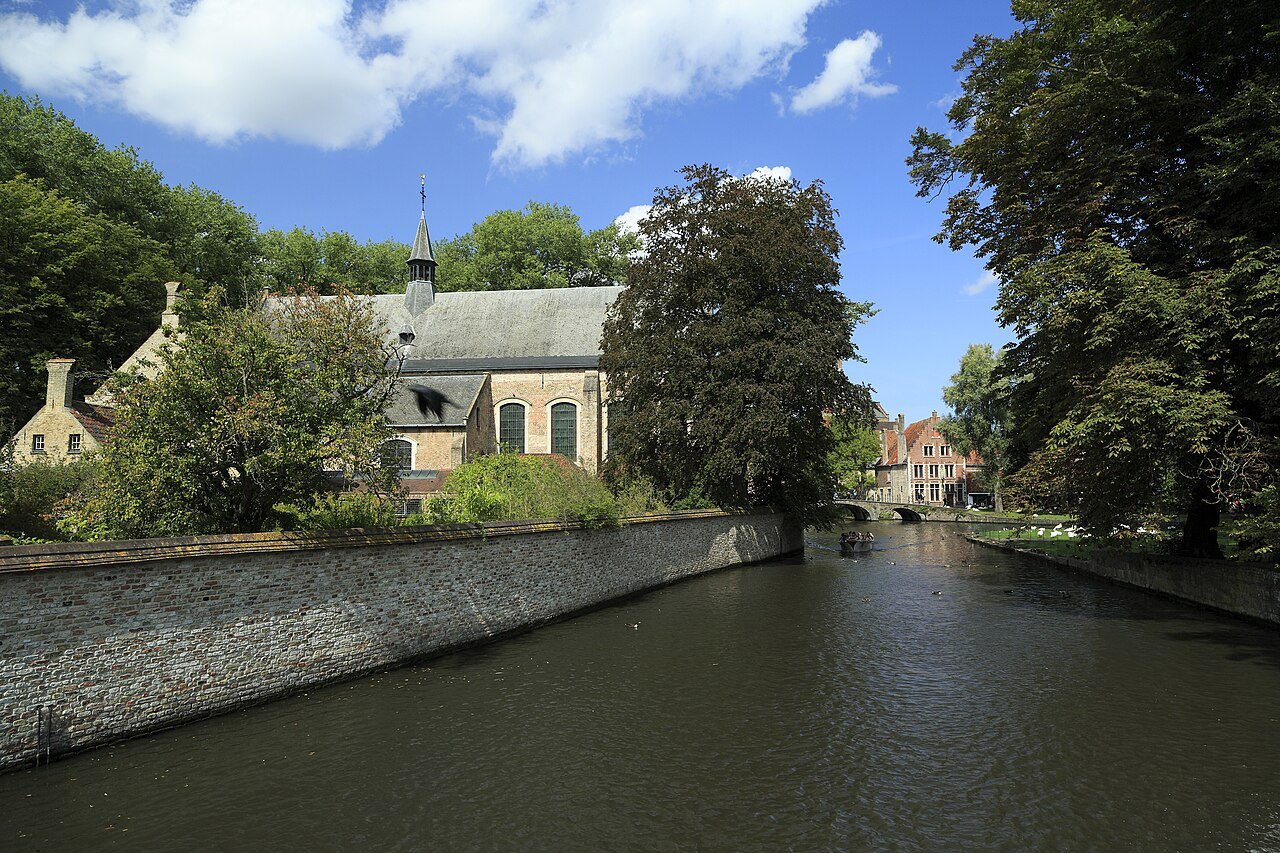
Cross the small bridge over the canal south of the Church of Our Lady, pass through the arched gate, and the noise of Bruges falls away almost at once. Inside is a broad lawn shaded by tall trees and ringed by white houses, with a church standing on one side. This is the Beguinage, known as Ten Wijngaerde, and it is the most peaceful enclosed space in the old town.
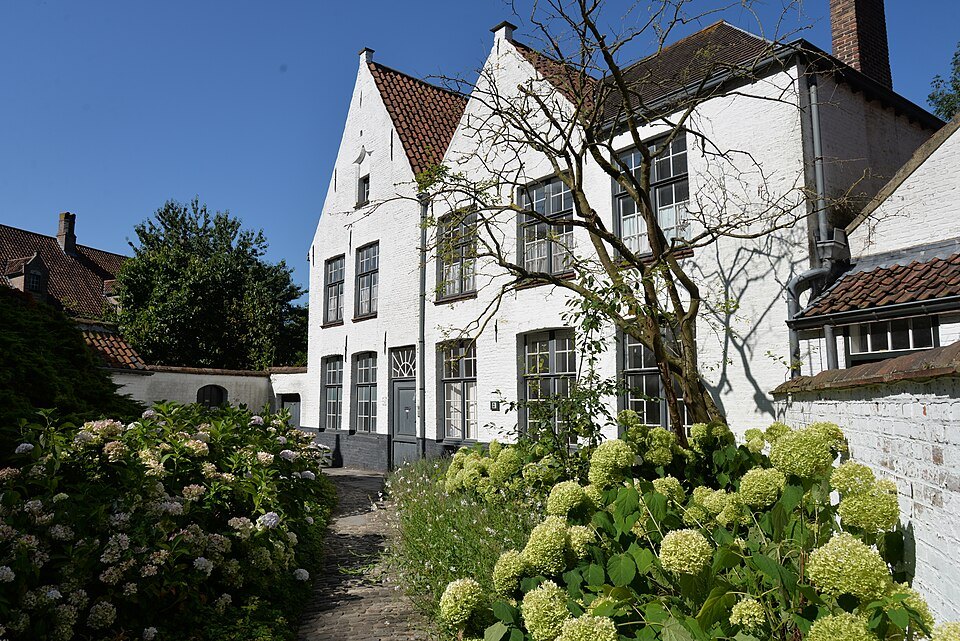
It is not kept quiet for the sake of visitors. A community of Benedictine nuns has lived here since 1927, and the stillness that makes the Beguinage feel different from every other sight in Bruges exists because people are actually praying and working behind those whitewashed walls. Visitors are welcome, but the silence asked of them is not decoration; it belongs to the place first.
Who the beguines were
Beguines were laywomen who chose to live together in community, devoted to prayer and work, without taking the permanent vows of nuns. Such communities spread across the Low Countries in the Middle Ages, forming walled enclaves of small houses where single women and widows could live independently, supporting themselves by their own labor rather than by a dowry or a husband's estate.
The Bruges beguinage was founded around 1244 by Margaret of Constantinople, Countess of Flanders, after she obtained permission from the Bishop of Tournai. It was recognized as an independent parish the following year, and from 1299 it came under direct royal authority, which is why it still carries the title Princely Beguinage today.
The beguinages of Flanders are listed together by UNESCO as the Flemish Béguinages, inscribed in 1998, and Ten Wijngaerde is one of them. The protected site covers just over half a hectare, a small footprint that makes its sense of enclosure feel even stronger once the gate has closed behind you.
The Benedictines and the rules of silence
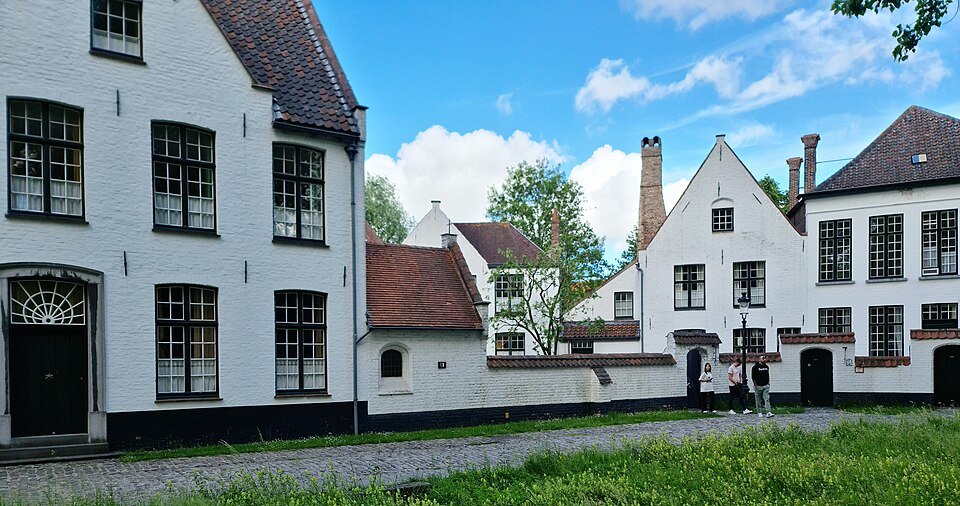
No beguines remain in Bruges. In 1927 Canon Hoornaert founded a community of Benedictine nuns here, and the houses on the west side of the courtyard were reshaped and enlarged into their convent, the Monasterium De Wijngaard. The sisters still live there, which is why the enclosure feels like a living place rather than a museum piece preserved behind glass.
Their presence is the reason the rules exist at all. Visitors are expected to speak quietly, keep to the paths rather than cross the lawn, and leave the houses and the sisters undisturbed, since what looks like a park is in fact the ground floor of someone's daily religious life.
The founder, Margaret of Constantinople, ruled Flanders through much of the thirteenth century, and her protection gave the first beguines both land and legal standing. Her chosen name for the place, Ten Wijngaerde, the vineyard, is still used today for the whole enclosure and for the bridge that leads into it.
What you actually see
The entrance is part of the experience: a stone bridge over the canal, then a gateway built in 1776, with a carved figure of St. Elizabeth of Hungary set in a niche above it. Once through, the courtyard opens out suddenly, a wide lawn under tall trees, crossed by gravel paths and enclosed on every side by low white houses.
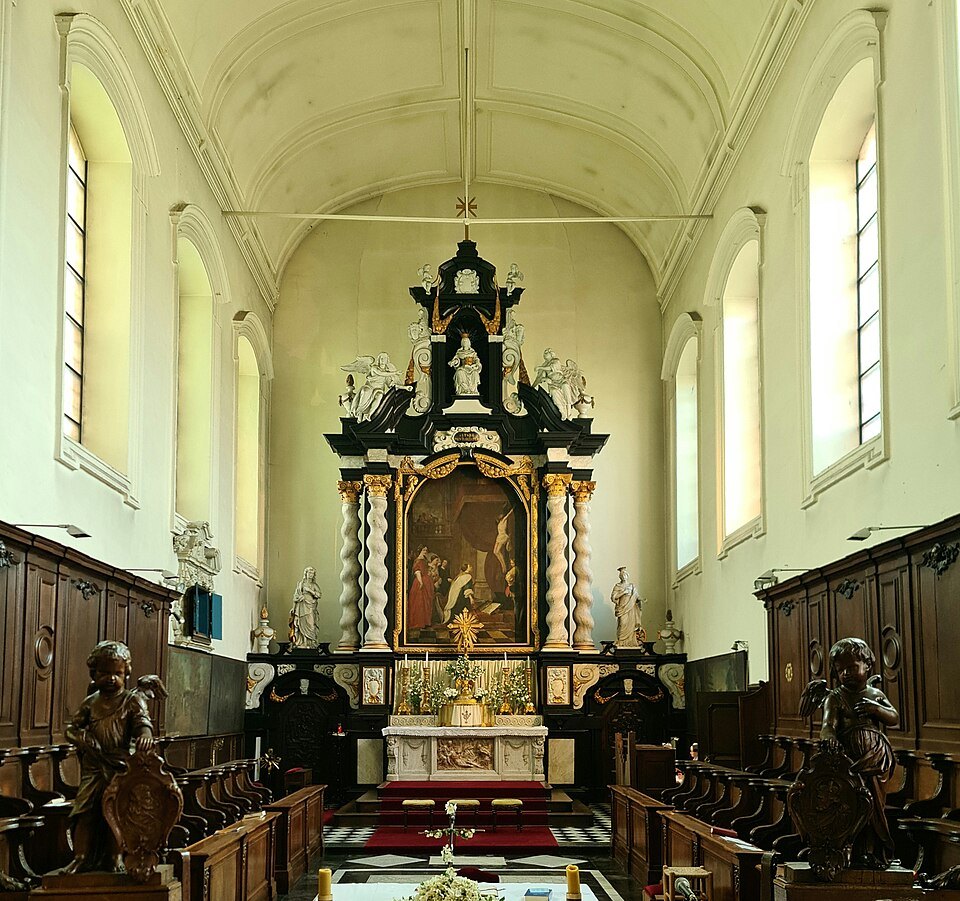
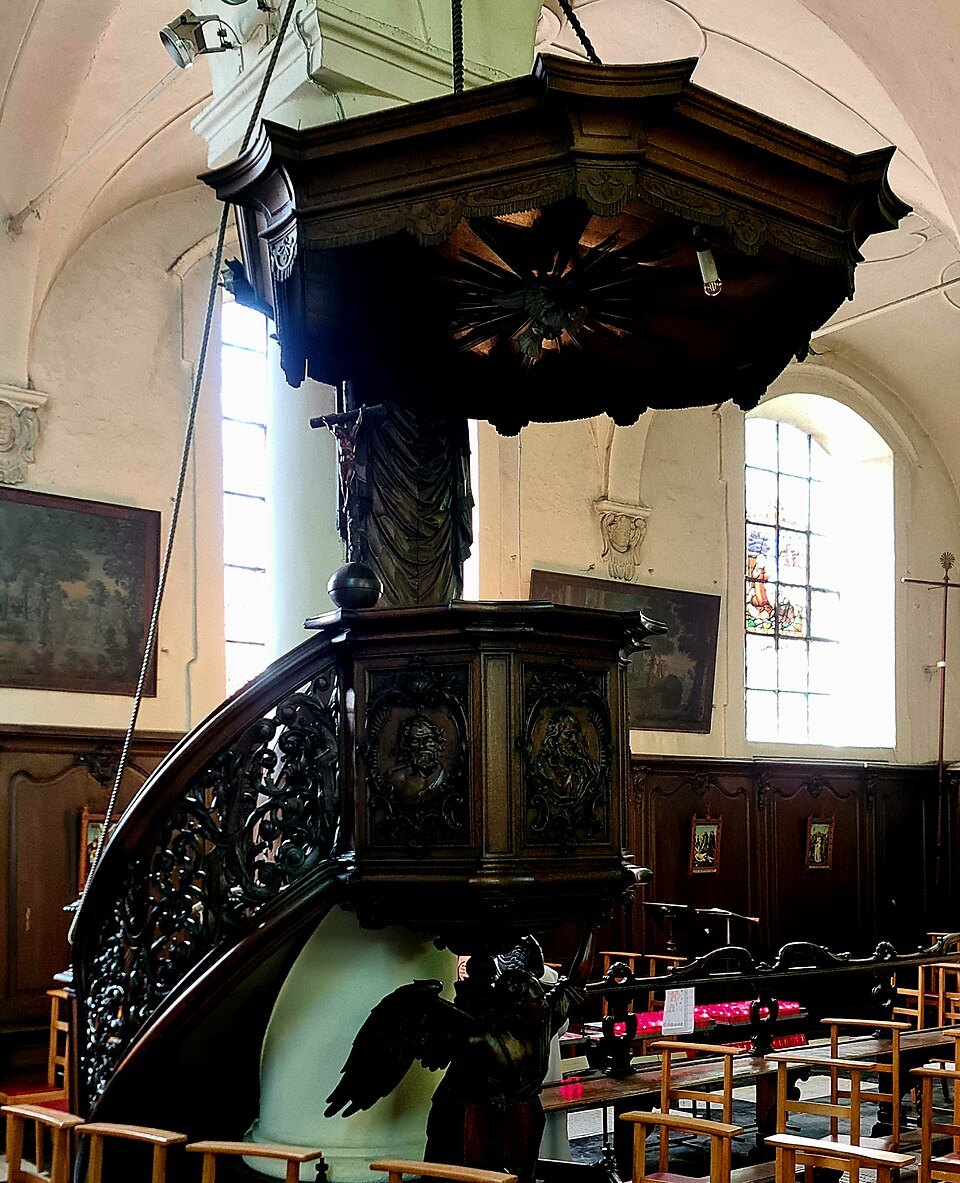
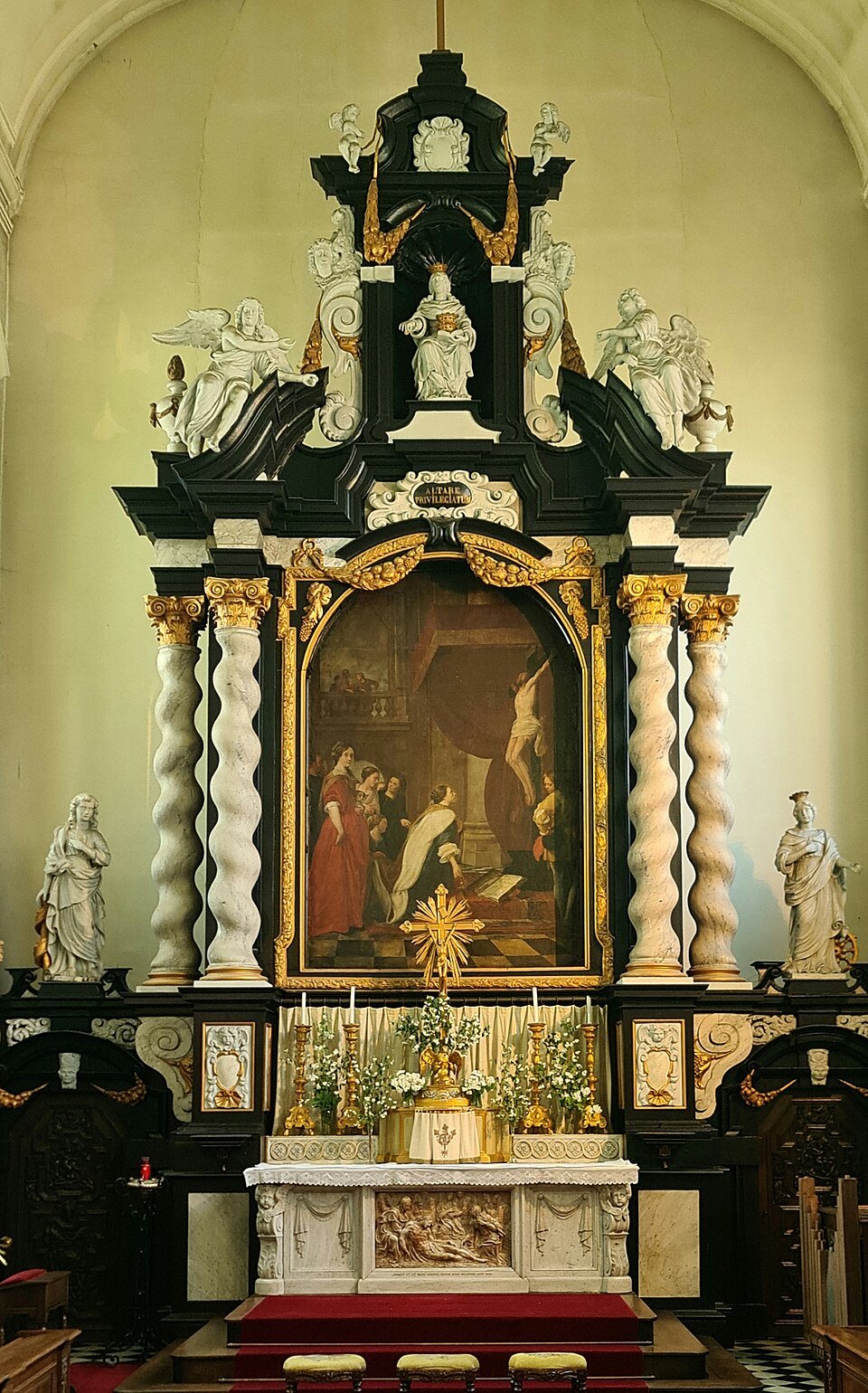
About thirty houses stand around the lawn, most built between the sixteenth and eighteenth centuries, whitewashed and plain, with dark window frames and small front gardens. The Gothic church occupies one side of the courtyard, and a single house is kept as a museum, furnished as a beguine's home would have been, with period furniture and lacework on display.
In spring the lawn fills with daffodils under the bare branches, and this is the most photographed moment of the Beguinage's year, when the white houses seem to float above a sea of yellow. A second gate on the far side leads out past the Sas House toward the Minnewater.
How to visit well
The courtyard can be entered freely during the day, but the gates keep set opening times, posted at the entrance and on the Visit Bruges site, so check those before planning a route around them. The beguine's house museum has its own separate arrangements, and allowing roughly half an hour for the courtyard is reasonable, more if the house and church are part of the visit.
Silence matters here more than anywhere else in the old town, and the easiest way to feel it is to arrive early or late, when fewer people are moving through and the gravel paths are close to empty. Keep off the lawn itself, even when the daffodils make it tempting, and let the quiet set the pace rather than a checklist.
The Beguinage sits within easy walking distance of the center: about five minutes south of Our Lady and St. John's Hospital, and a short walk from the station along the canal. Canal boats pass on the water beside the bridge, part of the same network described at canal boats.
Seasons and light
The Beguinage changes with the seasons more than most sights in Bruges. In spring the lawn under the trees fills with daffodils for a few weeks, drawing the largest crowds of the year. In summer the same trees give deep shade, and the courtyard stays noticeably cooler than the streets just beyond the gate.
Autumn brings falling leaves and a lower afternoon sun that catches the whitewashed walls at an angle photographs rarely manage elsewhere in the city. In winter, with branches bare, the whole shape of the enclosure and the church becomes visible at once, stripped of the greenery that usually softens it.
Photographers should remember that the houses are homes, not exhibits. The courtyard, the trees, and the house fronts can be photographed from the paths, but cameras should not be pointed through windows or follow the sisters as they move between buildings.
Around the Beguinage
Leaving through the southern gate brings you out by the lake of the Minnewater, with its park, sluice house, and brick powder tower, the natural next stop and the starting point for a longer walk around the city's ramparts.
Heading back north instead, the lanes between the Beguinage and St. John's Hospital are among the quietest in the center, and the canal boats have a nearby landing stage on Katelijnestraat for those continuing by water rather than on foot.
For how this whole southern quarter works as a base for a stay, rather than just a stop on a walk, see neighborhoods and the broader guidance at when to come.
Read next
- Church of Our LadySeeing Michelangelo's Madonna and Child in the Church of Our LadyHow to find and look at Michelangelo's Madonna and Child inside the Church of Our Lady in Bruges.Read
- St. John's HospitalWhy a medieval hospital is where Memling's greatest paintings hangInside the medieval wards of St. John's Hospital, where six Memling paintings hang where they were meant to be seen.Read
- ItinerariesSeeing Bruges in a single day without spending it in queuesA walking plan for one day in Bruges that puts the famous squares early and late, the museums in the middle, and keeps lines and crowds to a minimum.Read