Why it matters
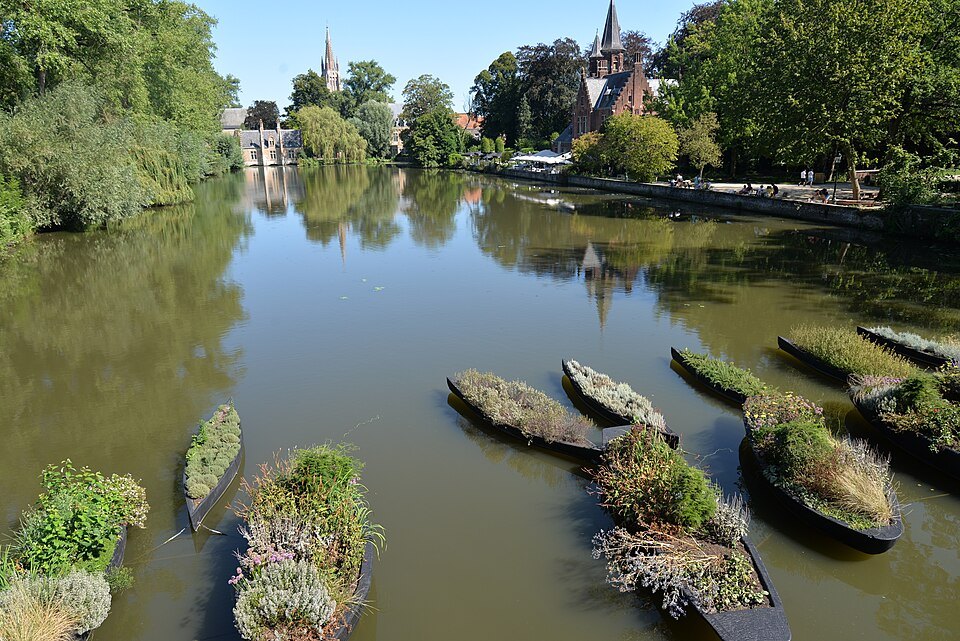
At the southern edge of the old town the canal suddenly widens into a lake. Willows hang over the water, and to the north the spire of the Church of Our Lady rises above the trees. The Minnewater is the gentlest landscape in Bruges, a welcome stretch of open sky after the tight streets of the center, and the first calm thing many visitors see.
It is also a working piece of water engineering, older than almost anything standing around it, and the setting for one of the city's favorite stories. The story is a legend rather than history, but it explains why so many visitors arrive expecting a tale of doomed love rather than a flood-control basin.
Both things are worth knowing before the first look from the bridge: the practical reason the water is here, and the romantic name that has attached itself to it over the centuries. Neither cancels the other out.
A reservoir, not a lake
The Minnewater is not a natural lake. It was created around the thirteenth century as a buffer basin to control the water of the Reie, whose unpredictable flow could flood the city. By holding and releasing water here, Bruges kept the level of its canals steady through wet seasons and dry ones alike.
It also served as a harbor of sorts. Until 1784 the Minnewater was the mooring place of the barge that linked Bruges with Ghent, so this quiet spot was once a point of arrival and departure for travelers and goods moving between the two cities.
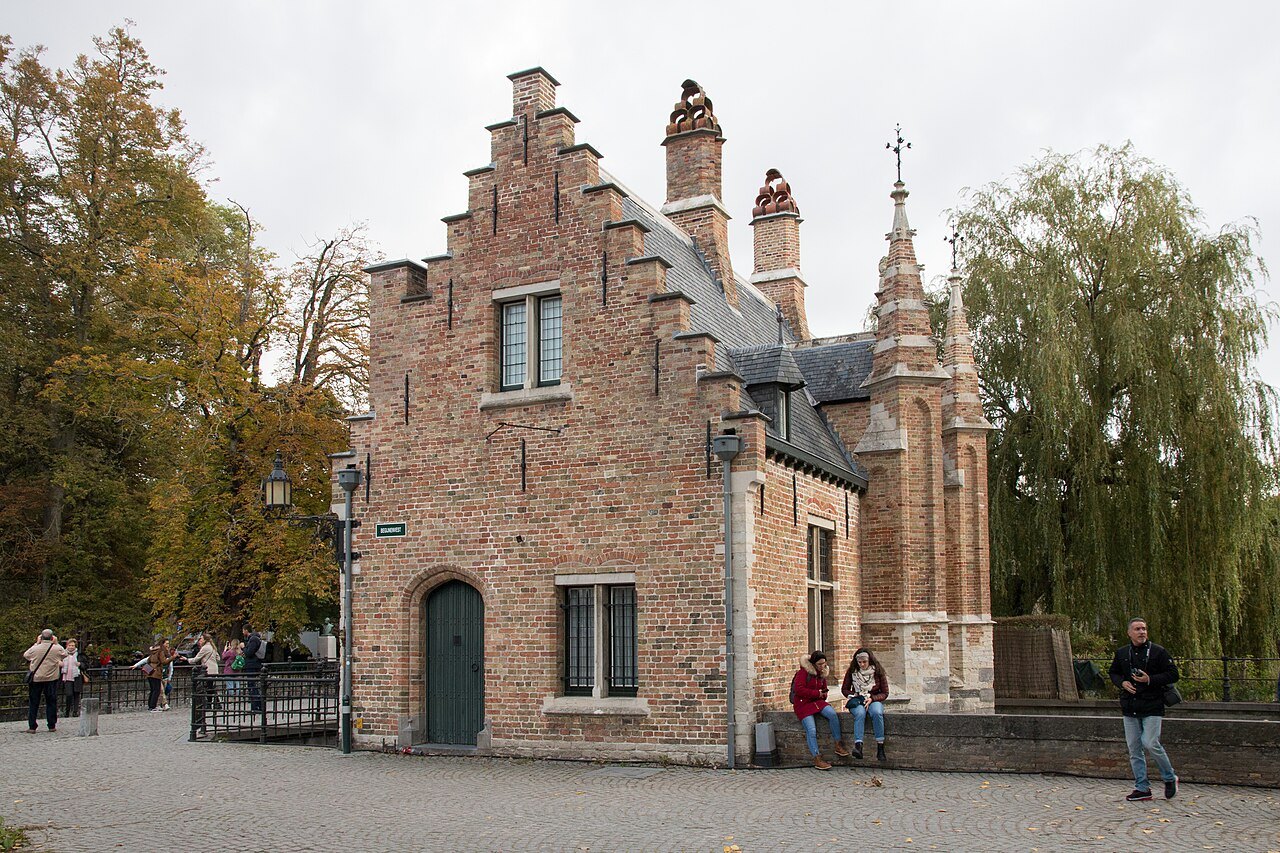
The old sluice house, the Sas House, still stands at the northern end beside the Beguinage. It is a plain, functional building, and a reminder that the water here has always been managed rather than simply admired, long before anyone thought to call it the Lake of Love.
The Lake of Love
Guides and signs often call the Minnewater the Lake of Love, because minne is an old Dutch word for love. A romantic legend tells of a young woman named Minna who died for love, and of her grieving lover Stromberg, who dammed a stream to make a lake in her memory and carved her name on a stone.
It is a lovely story, and it is only a legend. Scholars disagree about where the name really comes from. Some suggest middenwater, a basin in the middle of the waterway system; others connect it with an old word for controlling water, with a word meaning municipal, or with the nearby Minnebrug bridge.
Medieval folklore also placed water spirits near bridges, which may be part of the confusion. None of these explanations has settled the question, and the city is content to let the romantic version stand on the signs while the real origin stays unresolved.
What you actually see
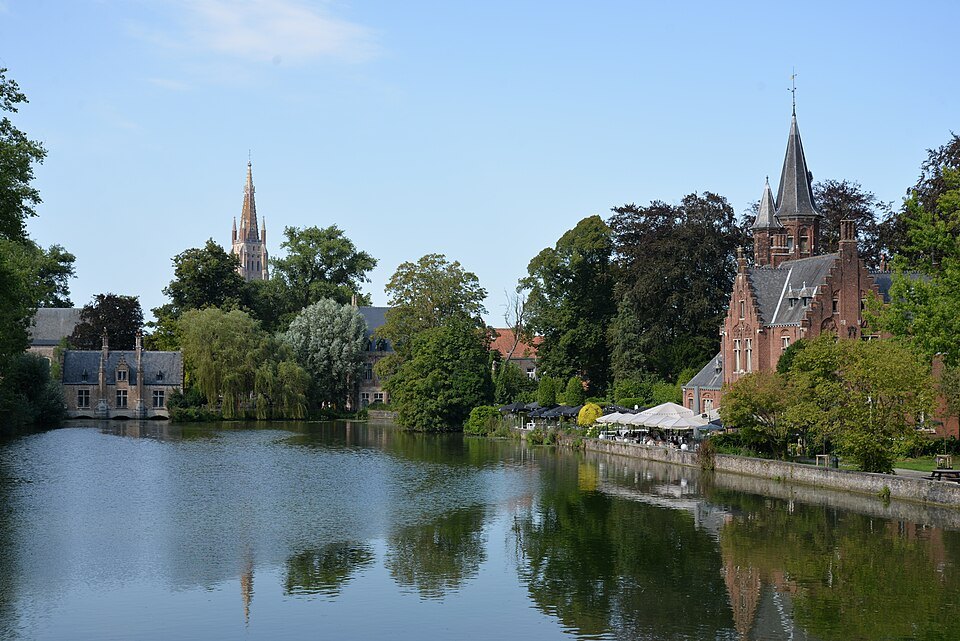
Enter from the Beguinage end, past the Sas House, and walk onto the Minnewater bridge for the classic view: the lake stretching south, and, looking back north, the tower of Our Lady above the trees and rooftops. On still mornings the reflection is close to perfect, which is why early light draws photographers here before the paths fill up.
At the southern end stands the Poertoren, a brick tower built between 1398 and 1401 by the master mason Jan van Oudenaerde as part of the city's defenses. Over the centuries it stored first gunpowder and later ice, a quiet shift from military use to municipal cold storage.
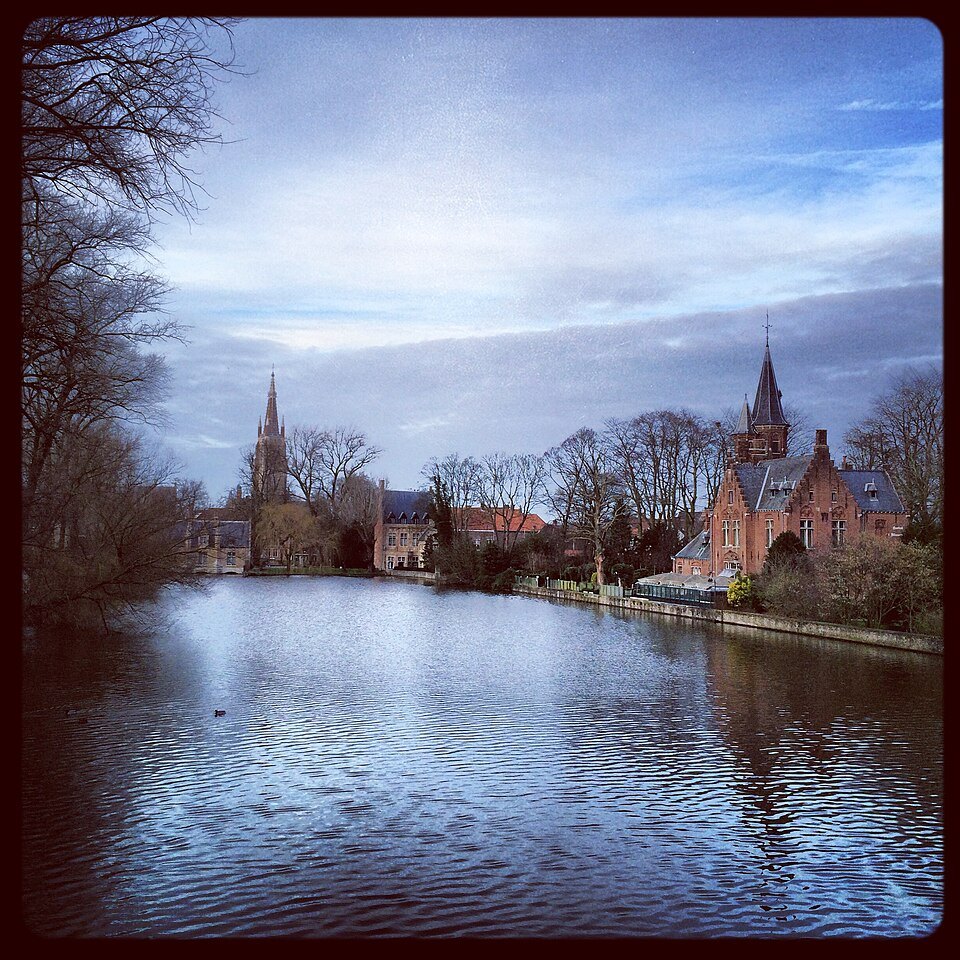
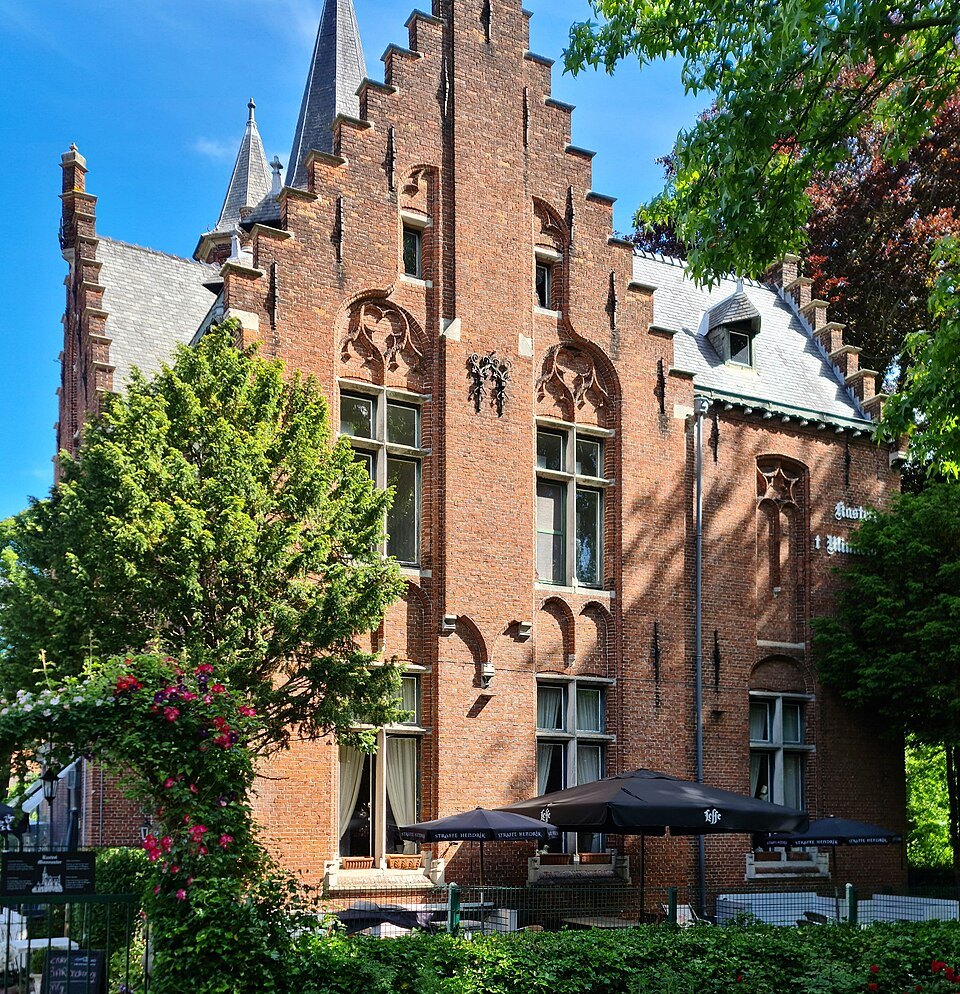
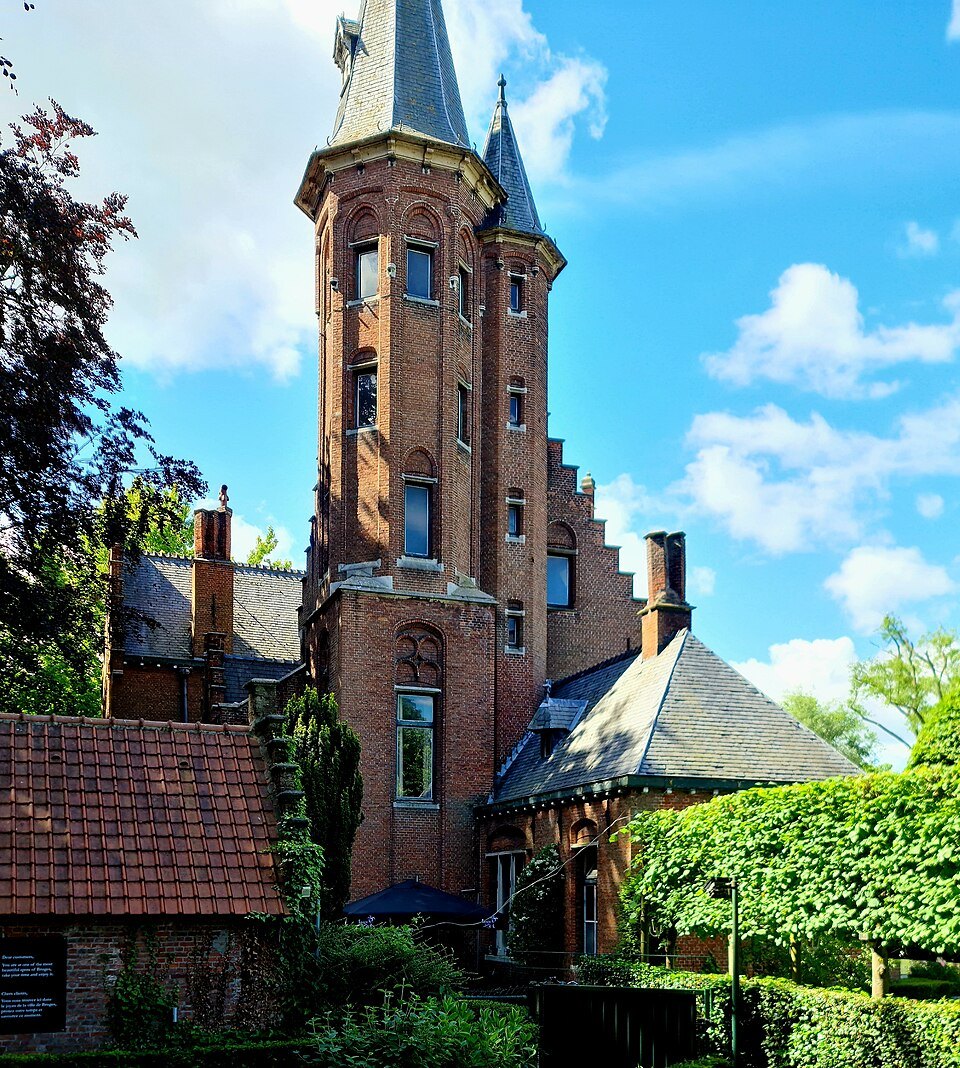
On the eastern shore, among trees, is Kasteel de la Faille, a neo-Gothic castle built in 1893 by the architect Karel De Wulf. It is a nineteenth-century romance in brick rather than a medieval fortress, and it suits the lake well. The western bank is an open public park with lawns and paths for walking or resting.
Where the ramparts begin
The Minnewater marks the southern end of the green ring that surrounds the old town. The ramparts were raised during the city's second expansion, between 1297 and 1301, first as earthen banks and moats with gates on the main roads; stone walls between the gates followed in the late fourteenth and early fifteenth centuries, with bastions added from 1614.
In 1782 the city decided to dismantle the fortifications, which no longer served any military purpose. Over the following century the ramparts were turned into a landscaped park, with designs approved from 1853 onward and projects continuing until 1915. The whole ring, with its paths, trees, gates and mills, was given protection as a cityscape in 2016.
For a visitor this is the best long walk in Bruges: a loop of green paths beside the outer canal, away from traffic, passing windmills and old city gates along the way. Starting at the Minnewater and heading east brings you past the Gentpoort toward the mills on the Kruisvest.
How to visit
The Minnewater and its park are public and free to enter, and walking round the lake takes about twenty minutes at an easy pace. It rewards patience: early morning for calm water and few people, or evening for the long light that makes the tree reflections strongest on the surface.
The lake sits a few minutes' walk from the train station, which makes it a gentle first view of Bruges for anyone arriving that way. Many visitors walk from the station through the Minnewater park and the Beguinage into the center, trading a direct route for a quieter, greener one.
From the southern end you can continue along the ramparts, the green belt of former walls circling the old town, toward the city gates and the windmills beyond. It is a natural way to see a working side of Bruges that most short visits miss entirely.
Nearby
The Beguinage sits right at the northern end of the Minnewater, close enough to visit in the same short outing. St. John's Hospital and the Church of Our Lady lie about ten minutes' walk further on, gathering several of the city's major sights within one unhurried stretch.
The Walplein, with its brewery and café terraces, lies between the lake and the center, and passing through it explains the logic of the walk from the station: quiet water first, then a working square, then the dense heart of the old town.
None of this needs a plan beyond comfortable shoes. The Minnewater works as a starting point, an end point, or simply a pause, and its position at the edge of the ramparts makes it easy to combine with almost any other direction a visitor chooses to take.
Read next
- The BeguinageVisiting the Beguinage quietly, and why the gate closes in the eveningWhy the Beguinage asks for quiet, who still lives there, and how to visit the gate, the lawn and the church respectfully.Read
- Church of Our LadySeeing Michelangelo's Madonna and Child in the Church of Our LadyHow to find and look at Michelangelo's Madonna and Child inside the Church of Our Lady in Bruges.Read
- Getting HereDriving to Bruges means parking at the edge and walking inWhy Bruges discourages cars in its old town, which car parks and park-and-ride sites to use, the free bus from the station car park, and rules for driving inside.Read