Why it matters
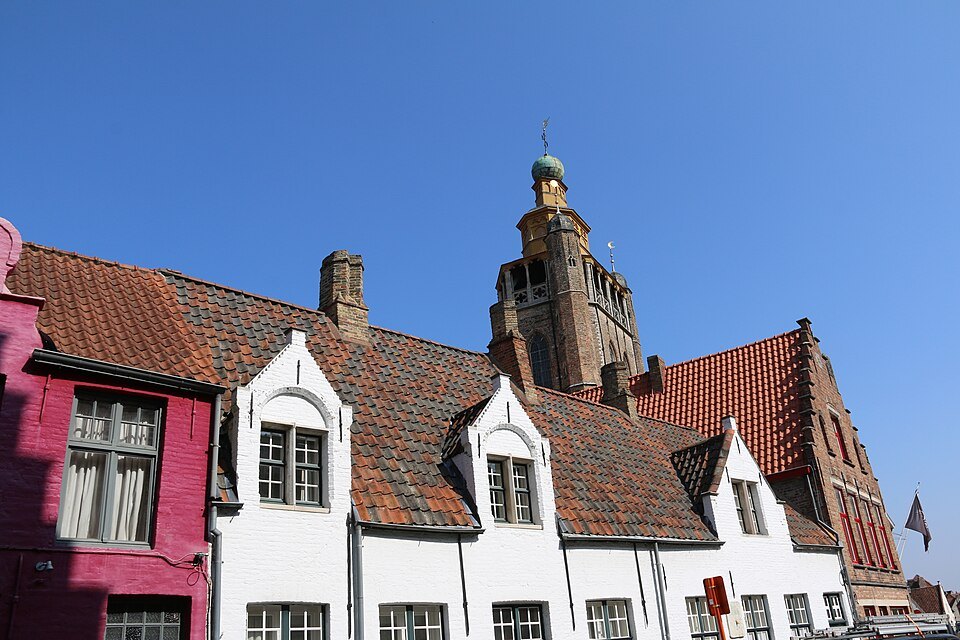
In the quiet lanes north-east of the center, a strange tower rises above the rooftops: octagonal, crowned with a cross, unlike any other in Bruges. It belongs to the Jerusalem Church, a private chapel built by one merchant family after a pilgrimage to the Holy Land, and still owned by their descendants.
It is one of the most unusual buildings in the city, and one of the least crowded. Inside are family tombs, portraits worked into stained glass, and a crypt holding a copy of the tomb of Christ, entered on bowed head, much as pilgrims once entered the original in Jerusalem.
The building rewards a visitor who slows down. It is easy to treat it as a quick stop between the center and the ramparts, but the details, in the glass, the stone, and the small eastern touches outside, repay a careful look before heading down into the crypt itself.
The Adornes family
The Adornes came from Genoa. Their ancestor Opicius Adornes settled in Flanders in the thirteenth century, and his descendants became wealthy Bruges merchants, officials, and diplomats, moving easily between trade and public life in a city then at the center of northern European commerce.
In the first half of the fifteenth century, after family members Jacob and Pieter II Adornes had made the pilgrimage to Jerusalem, they built this chapel inspired by the plan of the Church of the Holy Sepulchre. Visit Bruges gives 1429 as the year it was consecrated.
The most famous member of the family was Anselm Adornes, knight, diplomat, pilgrim, and businessman. He set out for the Holy Land on 19 February 1470 with other Flemings, on a journey lasting more than a year; in Jerusalem the party was allowed to spend two nights and a day inside the Church of the Holy Sepulchre itself. His son Jan later wrote an account of the journey in Latin.
Anselm also served the Scottish king James III, and the family held lands in Scotland as a result. On a diplomatic mission he was murdered in Scotland in 1483. According to Visit Bruges, his heart was brought home and lies beneath the family tomb in the chapel he helped complete.
What you actually see
The church is small and unusually shaped. The interior refers to the places of Christ's Passion, and the whole Gothic building has an eastern feel, emphasized outside by small side towers topped with a golden sun, star, and moon, and by the lantern tower crowned with the Jerusalem cross.
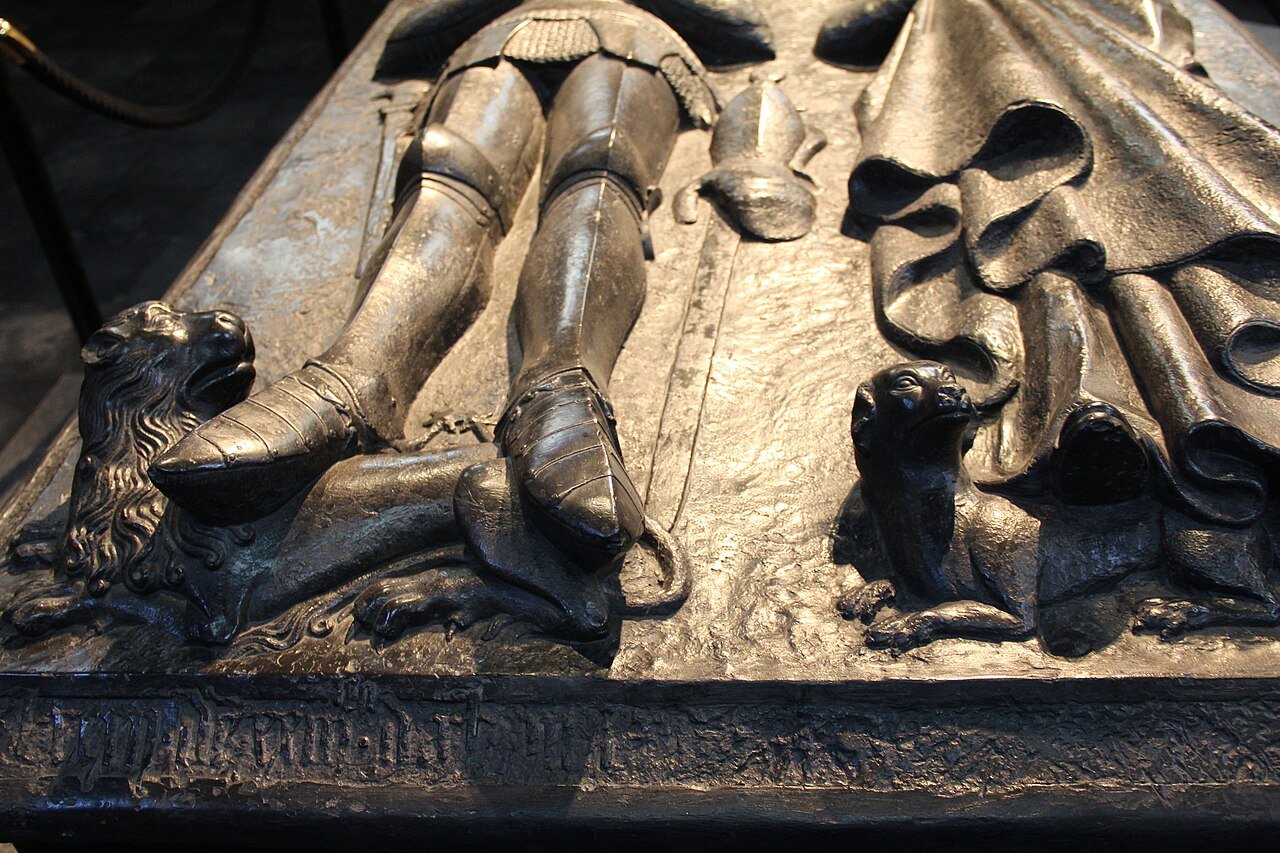
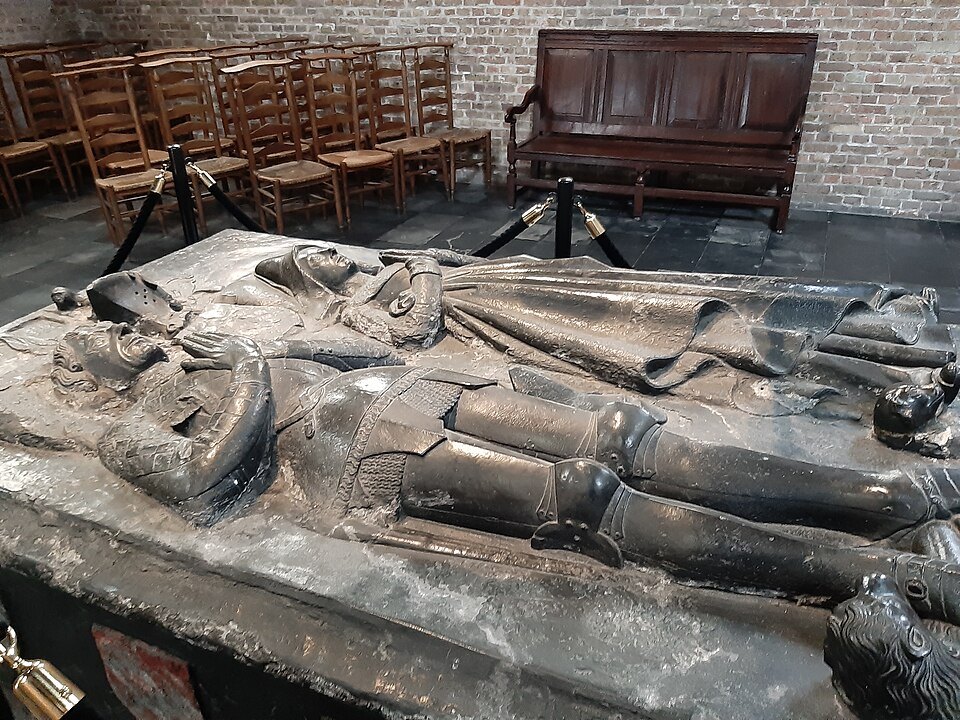
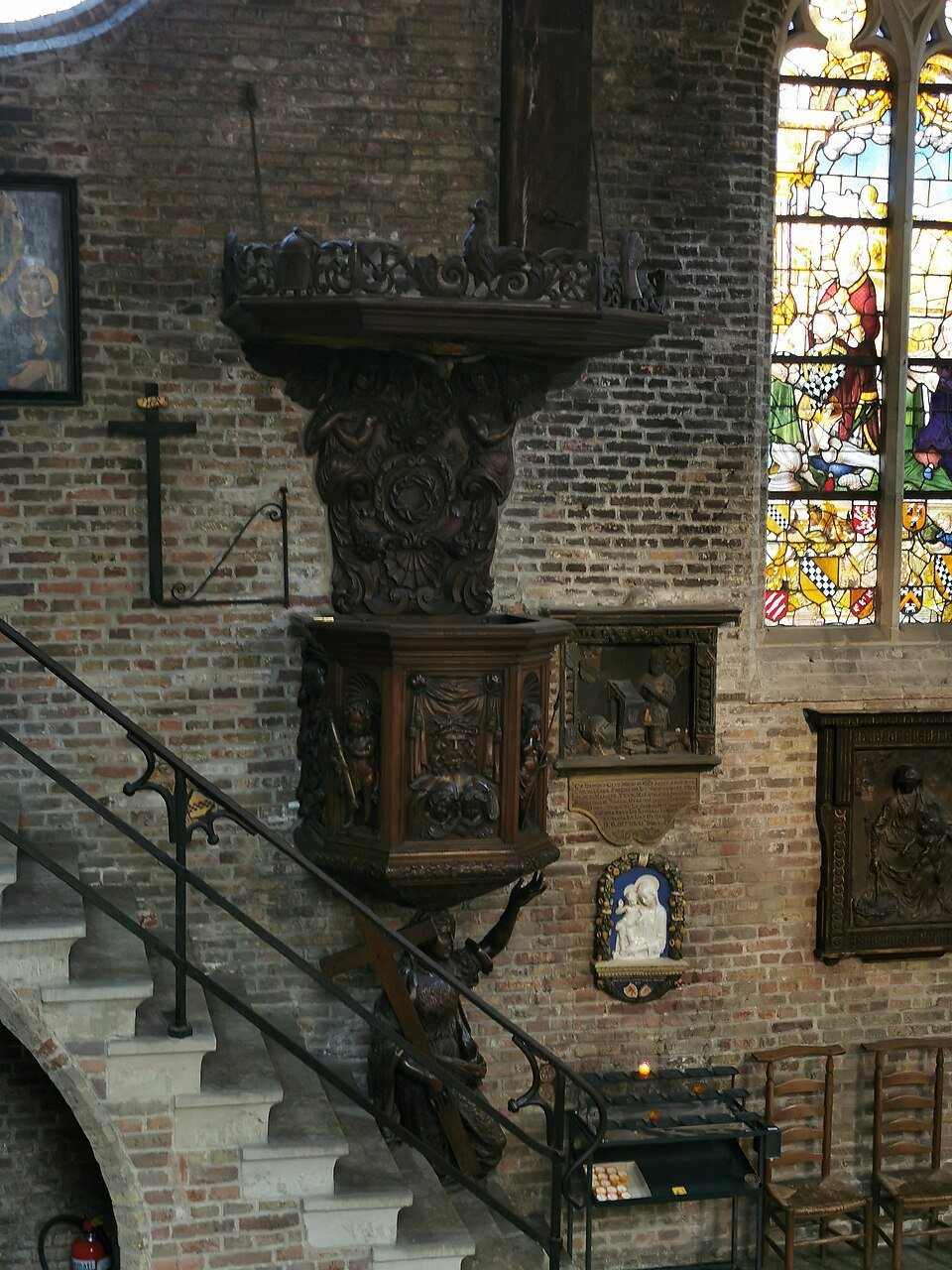
In the nave stands the monumental tomb of Anselm Adornes and his wife, Margareta van der Banck, their effigies lying side by side in quiet stone. The stained-glass windows, from the fifteenth and sixteenth centuries, show family members, including Pieter II Adornes and his wife, together with their coats of arms.
A sixteenth-century painting of the Crucifixion is attributed to Ambrosius Benson, one of several works that place the chapel within the wider story of Bruges and its painters told elsewhere at the Flemish Masters collections in the city.
Behind the lower chapel is the crypt. A low opening leads into a tiny chamber that can only be entered with a bowed head or on bent knees, and inside is an imitation of the Holy Sepulchre. It is a physical, slightly unnerving experience, and exactly what the builders intended: a pilgrimage to Jerusalem brought to a Bruges back street.
The Adornes estate
The church stands within the Adornes estate, open to the public since 2014. The former almshouses, built for the poor under the family's patronage, now house a museum about Anselm Adornes and the family's history, including objects such as a reliquary of the Holy Cross from around 1500.
Converted coach houses, the Pieter Halls, host exhibitions of contemporary Belgian art, a modern counterpoint to the medieval chapel next door. A room called the Scottish Lounge recalls the family's links with Scotland, a thread running from Anselm's service to King James III down to the present.
There is also a garden within the estate, a quiet green pocket behind the street facades of the Sint-Anna quarter. The domain is run by the family: it is one of the few private churches in Belgium, presided over by a descendant, Count Henri de Limburg-Stirum.
Taken together, the church, museum, and exhibition halls give a fuller picture than the chapel alone. Visitors who want only the Holy Sepulchre crypt can see that quickly, but those with more time will find the estate rewards a slower, fuller visit.
How to visit
The church, the museum, and the exhibitions are run by the Adornes estate, which sets its own tickets and opening arrangements; check its website before setting out, since these can change between seasons and are not listed here.
Allow about an hour for the church, the crypt, and the museum together, a little less if the exhibitions in the Pieter Halls are skipped. It is a manageable stop within a longer walk rather than a destination requiring a dedicated half day.
The crypt is cramped and low, so it is not suitable for everyone, and the old building has steps and uneven floors throughout. Visitors with limited mobility should ask the estate directly about access before planning a visit around it.
For getting here, see the general advice on getting around the city; the estate itself is best reached on foot, since the surrounding streets are narrow and residential and not well suited to other transport.
The quarter around it
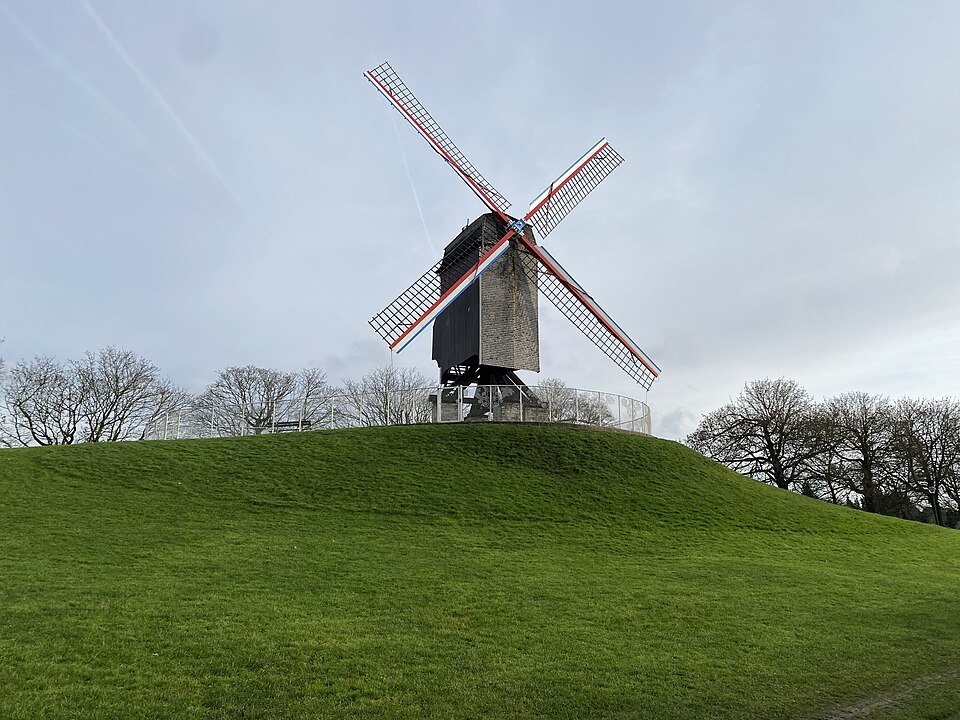
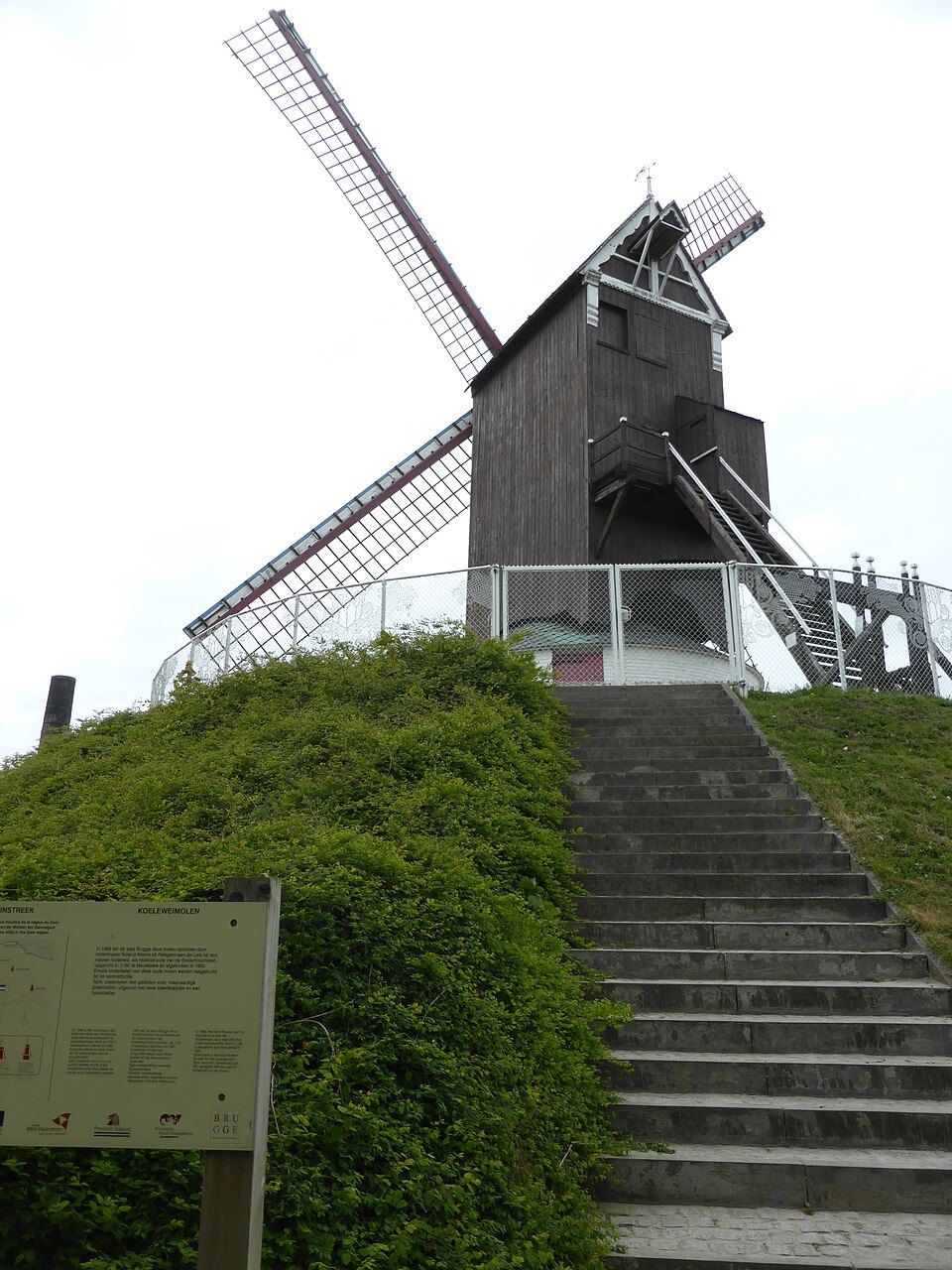
The estate is in Peperstraat, in the Sint-Anna quarter north-east of the center, about fifteen minutes' walk from the Markt. It fits naturally into a walk toward the windmills and the city gates on the eastern ramparts, a few minutes further on.
The Sint-Anna quarter is residential, with long straight streets of low brick houses, and it is one of the best places in Bruges to see the town as its residents actually live in it, away from the busier routes near the center.
The canals of the Groenerei and the Sint-Annarei lead here from the center, and the walk out along the water is part of the pleasure of the visit, quieter and slower than the routes around the main squares.
For staying in this part of town, see neighborhoods, and for a wider sense of what else sits nearby, the sights overview places the Jerusalem Church within the fuller map of the city.
Read next
- GroenereiFinding the quietest canal walk in Bruges behind the BurgHow to find and walk the Groenerei, the hushed green canal just steps from the Burg in Bruges.Read
- The Kruisvest WindmillsWalking the ramparts past the windmills, and which one you can go insideA walk past four windmills on the Bruges ramparts, with guidance on which ones can be visited inside.Read
- Jan van EyckpleinWalking the old merchants' quarter from Jan van Eyckplein to the PoorterslogeA short walk from the Markt to Jan van Eyckplein and the Poortersloge, through Bruges's old trading district.Read